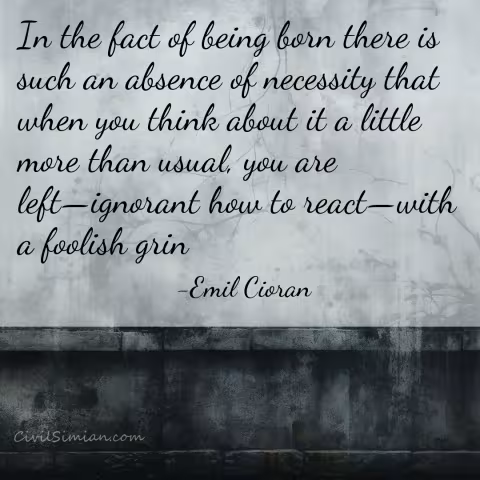

This quote is deceptively simple. There are not many people that could write from this place....


Technically speaking, since our complex societies are highly susceptible to interferences and accidents,they certainly offer ideal opportunities for a prompt disruption of normal activities. These disruptions can, with minimum expense, have considerably destructive consequences. Global terrorism is extreme both in its lack of realistic goals and in its cynical exploitation of the vulnerability of complex systems.
But yet they that have no Science, are in better, and nobler condition with their naturall Prudence; than men, that by their mis-reasoning, or by trusting them that reason wrong, fall upon false and absurd generall rules.

I plead guilty to valuing such a man beyond all other sorts of men. Smooth-shaven Respectabilities not a few one finds, that are not good for much. Small thanks to a man for keeping his hands clean, who would not touch the work but with gloves on!
No one will deny that the soul of Pythagoras was sent to mankind from Apollo's domain, having either been one of his attendants, or more intimate associates, which may be inferred both from his birth, and his versatile wisdom.
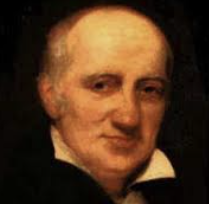
The illustrious archbishop of Cambray was of more worth than his chambermaid, and there are few of us that would hesitate to pronounce, if his palace were in flames, and the life of only one of them could be preserved, which of the two ought to be preferred ... Supposing the chambermaid had been my wife, my mother or my benefactor. This would not alter the truth of the proposition. The life of Fenelon would still be more valuable than that of the chambermaid; and justice, pure, unadulterated justice, would still have preferred that which was most valuable. Justice would have taught me to save the life of Fenelon at the expence of the other. What magic is there in the pronoun "my", to overturn the decisions of everlasting truth?
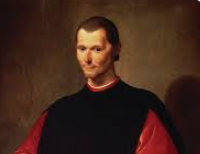
Cunning and deceit will every time serve a man better than force to rise from a base condition to great fortune.

I do not know what I may appear to the world, but to myself I seem to have been only like a boy playing on the sea-shore, and diverting myself in now and then finding a smoother pebble or a prettier shell than ordinary, whilst the great ocean of truth lay all undiscovered before me.
From each as they choose, to each as they are chosen.
The physicist who states a law of nature with the aid of a mathematical formula is abstracting a real feature of a real material world, even if he has to speak of numbers, vectors, tensors, state-functions, or whatever to make the abstraction.
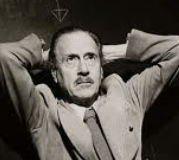
Literacy, in translating man out of the closed world of tribal depth and resonance, gave man an eye for an ear and ushered him into a visual open world of specialized and divided consciousness.
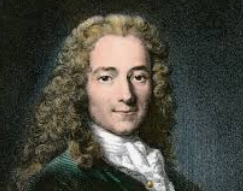
"Let us work without reasoning," said Martin; "it is the only way to make life endurable."
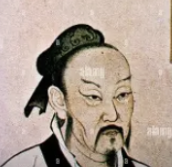
A real man is he whose goodness is a part of himself.
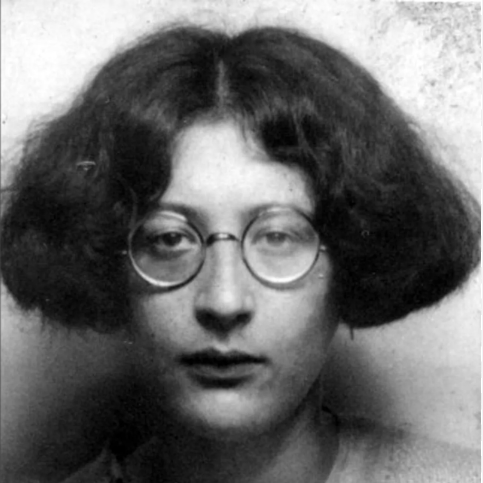
In a general way, the literature of the twentieth century is essentially psychological; and psychology consists of describing states of the soul by displaying them all on the same plane, without any discrimination of value, as though good and evil were external to them, as though the effort toward the good could be absent at any moment from the thought of any man.
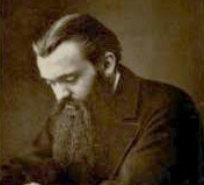
We have no right to believe a thing true because everybody says so unless there are good grounds for believing that some one person at least has the means of knowing what is true, and is speaking the truth so far as he knows it. However many nations and generations of men are brought into the witness-box they cannot testify to anything which they do not know. Every man who has accepted the statement from somebody else, without himself testing and verifying it, is out of court; his word is worth nothing at all. And when we get back at last to the true birth and beginning of the statement, two serious questions must be disposed of in regard to him who first made it: was he mistaken in thinking that he knew about this matter, or was he lying?
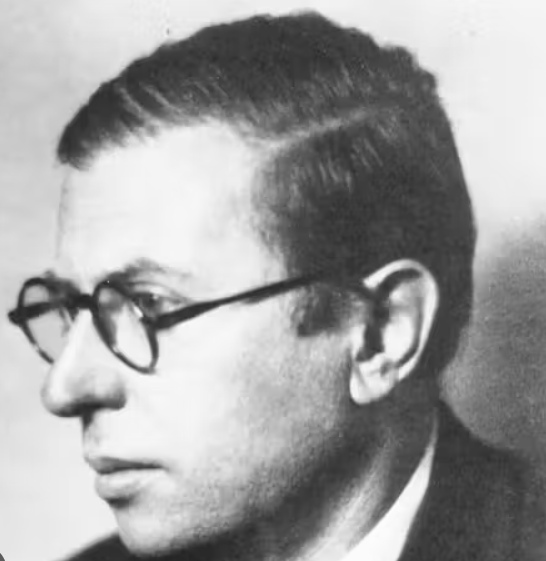
Be quiet! Anyone can spit in my face, and call me a criminal and a prostitute. But no one has the right to judge my remorse.

The Theophilanthropists do not call themselves the disciples of such or such a man. They avail themselves of the wise precepts that have been transmitted by writers of all countries and in all ages.

In the metaphysical elements of aesthetics the various nonmoral feelings are to be made use of; in the elements of moral metaphysics the various moral feelings of men, according to the differences in sex, age, education, and government, of races and climates, are to be employed.
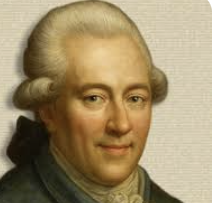
Good taste is either that which agrees with my taste or that which subjects itself to the rule of reason. From this we can see how useful it is to employ reason in seeking out the laws of taste.
I construct my memories with my present. I am lost, abandoned in the present. I try in vain to rejoin the past: I cannot escape.
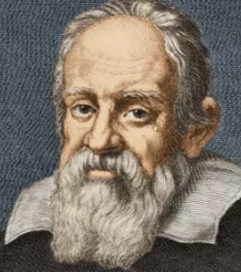
Well, since paradoxes are at hand, let us see how it might be demonstrated that in a finite continuous extension it is not impossible for infinitely many voids to be found.
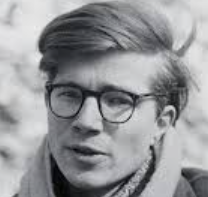
For this is our central human problem: that we are almost constantly the victims of our emotions, always being swept up and down on a kind of inner-switchback. We possess a certain control over them; we can 'direct our thoughts' -- or feelings -- in such a way as to intensify them. This is certainly our most remarkable human characteristic: imagination. Animals require actual physical stimuli to trigger their experience. A man can retreat into a book -- or a daydream -- and live through certain experiences quite independent of the physical world. He can even, for example, imagine a sexual encounter, and not only experience all the appropriate physical responses, but even the sexual climax. Such a curious ability is far beyond the power of any animal.
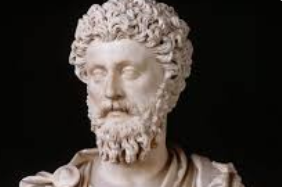
All is ephemeral - fame and the famous as well.
The role of the artist is to create an Anti-environment as a means of perception and adjustment.
The simultaneous existence of opposite virtues in the soul - like pincers to catch hold of God.

If you read history you will find that the Christians who did most for the present world were just those who thought most of the next... It is since Christians have largely ceased to think of the other world that they have become so ineffective in this. Aim at Heaven and you will get earth "thrown in": aim at earth and you will get neither.
If countries were named after the words you first hear when you go there, England would have to be called Damn It.
You are never too old to set another goal, or to dream a new dream. Unknown, but also attributed to Les Brown, a motivational speaker. Commonly attributed to C.S. Lewis, but never with a primary source listed.
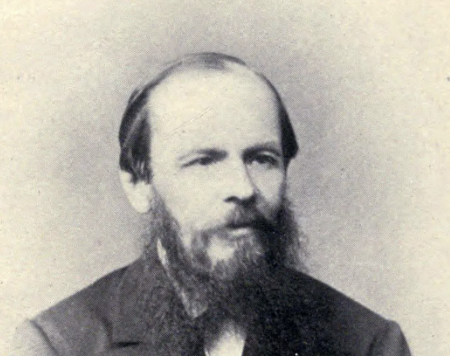
I think that the principal and most basic spiritual need of the Russian People is the need for suffering, incessant and unslakeable suffering, everywhere and in everything. I think the Russian People have been infused with this need to suffer from time immemorial. A current of martyrdom runs through their entire history, and it flows not only from external misfortunes and disasters but springs from the very heart of the People themselves. There is always an element of suffering even in the happiness of the Russian People, and without it their happiness is incomplete.
When I read the catechism of the Council of Trent, it seems as though I had nothing in common with the religion there set forth.
How easy it is to repel and to wipe away every impression which is troublesome or unsuitable, and immediately to be in all tranquility. To shrug it all off and wipe it clean--every annoyance and distraction--and reach utter stillness. Child's play.
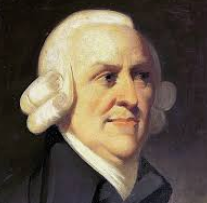
The establishment of any new manufacture, of any new branch of commerce, or any new practice in agriculture, is always a speculation, from which the projector promises himself extraordinary profits. These profits sometimes are very great, and sometimes, more frequently, perhaps, they are quite otherwise; but in general they bear no regular proportion to those of other older trades in the neighbourhood. If the project succeeds, they are commonly at first very high. When the trade or practice becomes thoroughly established and well known, the competition reduces them to the level of other trades.
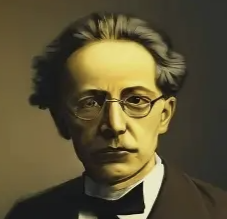
Human or general needs can be satisfied through society; for satisfaction of unique needs you must do some seeking. A friend and a friendly service, or even an individual's service, society cannot procure you. And yet you will every moment be in need of such a service, and on the slightest occasions require somebody who is helpful to you. Therefore do not rely on society, but see to it that you have the wherewithal to - purchase the fulfilment of your wishes.
Our principles fix what our life stands for, our aims create the light our life is bathed in, and our rationality, both individual and coordinate, defines and symbolizes the distance we have come from mere animality. It is by these means that our lives come to more than what they instrumentally yield. And by meaning more, our lives yield more.

The covetous man is ever in want.

It is not by prayer and humility that you cause things to go as you wish, but by acquiring a knowledge of natural laws.
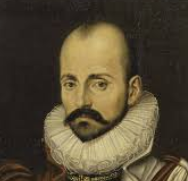
Let no man be ashamed to speak what he is not ashamed to think.
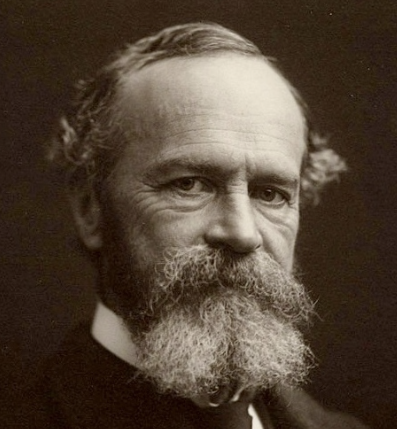
The normal process of life contains moments as bad as any of those which insane melancholy is filled with, moments in which radical evil gets its innings and takes its solid turn. The lunatic's visions of horror are all drawn from the material of daily fact. Our civilization is founded on the shambles, and every individual existence goes out in a lonely spasm of helpless agony. If you protest, my friend, wait till you arrive there yourself! ... Here on our very hearths and in our gardens the infernal cat plays with the panting mouse, or holds the hot bird fluttering in her jaws. Crocodiles and rattlesnakes and pythons are at this moment vessels of life as real as we are; their loathsome existence fills every minute of every day that drags its length along; and whenever they or other wild beasts clutch their living prey, the deadly horror which an agitated melancholiac feels is the literally right reaction on the situation.
For myself I say deliberately, it is better to have a millstone tied round the neck and be thrown into the sea than to share the enterprises of those to whom the world has turned, and will turn, because they minister to its weaknesses and cover up the awful realities which it shudders to look at.
Environments are invisible. Their groundrules, pervasive structure, and overall patterns elude easy perception.

The mother principle is that governments are republican only in proportion as they embody the will of their people, and execute it.
All things in nature become identical with the phenomena they present when submitted to the practices of our laboratories, whose problems no less than their apparatus express in turn the problems and interests of society as it is. This view may be compared with that of a criminologist maintaining that trustworthy knowledge of a human being can be obtained only by the well-tested and streamlined examining methods applied to a suspect in the hands of the metropolitan police.
And at once I saw with great clarity that human beings possess two bodies. One is the physical body, the other -- just as real, just as self-contained -- is the emotional body. Like the physical body, the emotional body reaches a certain level of growth, and then stops. But it stops rather sooner than the physical body. So most of us possess the emotional body of a retarded adolescent.
The next thing you can learn from the woman who was a sinner, something she herself understood, is that with regard to finding forgiveness she is able to do nothing at all.
A modern philosopher who has never once suspected himself of being a charlatan must be such a shallow mind that his work is probably not worth reading.
A law there is, an oracle of Doom, Of old enacted by the assembled gods, That if a Daemon-such as live for ages- Defile himself with foul and sinful murder, He must for seasons thrice ten thousand roam Far from the Blest; such is the path I tread, I too a wanderer and exile from heaven.
A wrongdoer is often a man who has left something undone, not always one who has done something.
CivilSimian.com created by AxiomaticPanic, CivilSimian, Kalokagathia