

6 months 2 weeks ago
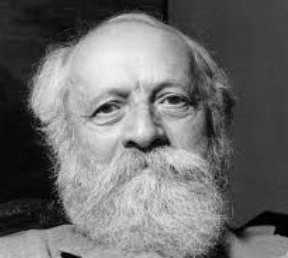
The great man, whether we comprehend him in the most intense activity of his work or in the restful equipoise of his forces, is powerful, involuntarily and composedly powerful, but he is not avid for power. What he is avid for is the realization of what he has in mind, the incarnation of the spirit.
▼
Source
source
p. 151
6 months 2 weeks ago
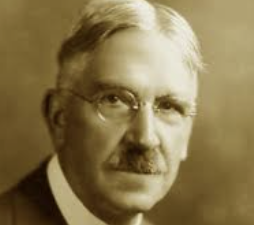
The true antithesis of nature is not art but arbitrary conceit, fantasy, and stereotyped convention.
▼
Source
source
p. 158

6 months 2 weeks ago
I foresee the day when we shall read nothing but telegrams and prayers.
7 months 3 weeks ago
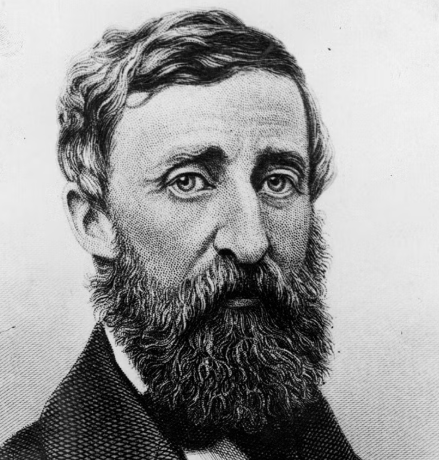
If you would convince a man that he does wrong, do right. But do not care to convince him. Men will believe what they see.
▼
Source
source
Let them see. Pearls of Thought (1881) p. 222
8 months 6 days ago
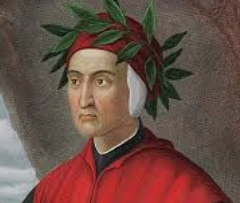
In his arms, my lady lay asleep, wrapped in a veil. He woke her then and trembling and obedient. She ate that burning heart out of his hand; Weeping I saw him then depart from me.
▼
Source
source
Chapter I, First Sonnet (tr. Mark Musa)
6 months 2 weeks ago
In order to conceive, and to steep ourselves in, unreality, we must have it constantly present to our minds. The day we feel it, see it, everything becomes unreal, except that unreality which alone makes existence tolerable.

7 months 3 weeks ago
Now shall we say that only the first men were well alive, and the existing generation is invalided and degenerate? ... A more subtle and severe criticism might suggest that some dislocation has befallen the race; that men are off their centre; that multitudes of men do not live with Nature, but behold it as exiles. People go out to look at sunrises and sunsets who do not recognize their own quietly and happily, but know that it is foreign to them. As they do by books, so they quote the sunset and the star, and do not make them theirs. Worse yet, they live as foreigners in the world of truth, and quote thoughts, and thus disown them. Quotation confesses inferiority.
▼
Source
source
Quotation and Originality
4 months 1 week ago
He has spent all his life in letting down empty buckets into empty wells; and he is frittering away his age in trying to draw them up again.
▼
Source
source
Vol. I, ch. 9, p. 310
3 months 3 weeks ago
"Since we cannot change reality, let us change the eyes which see reality," says one of my favorite Byzantine mystics. I did this when a child; I do it now as well in the most creative moments of my life.
▼
Source
source
"The Son", Ch. 4, p. 45
6 months 3 weeks ago
Virtue is reason which has become energy.
▼
Source
source
"Selected Ideas (1799-1800)", Dialogue on Poetry and Literary Aphorisms, Ernst Behler and Roman Struc, trans. (Pennsylvania University Press:1968) #23
7 months 3 weeks ago
Freedom of Men under Government is, to have a standing Rule to live by, common to every one of that Society, and made by the Legislative Power erected in it; a Liberty to follow my own Will in all things, where the Rule prescribes not; and not to be subject to the inconstant, uncertain, unknown, Arbitrary Will of another Man: as Freedom of Nature is, to be under no other restraint but the Law of Nature.
▼
Source
source
Second Treatise of Civil Government, Ch. IV, sec. 21
8 months 1 week ago
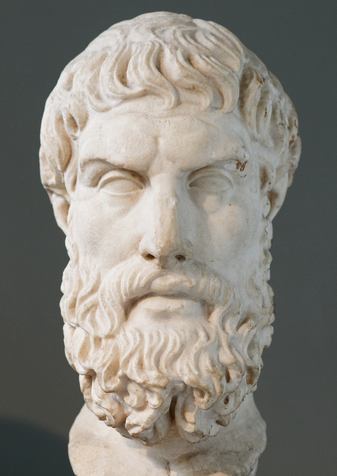
The end of living, or the ultimate good, which is to be sought for its own sake, according to the universal opinion of mankind, is happiness; yet men, for the most part, fail in the pursuit of this end, either because they do not form a right idea of the nature of happiness, or because they do not make use of proper means to attain it.
3 months 3 weeks ago
To preserve the freedom of the human mind then and freedom of the press, every spirit should be ready to devote itself to martyrdom; for as long as we may think as we will, and speak as we think, the condition of man will proceed in improvement. The generation which is going off the stage has deserved well of mankind for the struggles it has made, and for having arrested the course of despotism which had overwhelmed the world for thousands and thousands of years. If there seems to be danger that the ground they have gained will be lost again, that danger comes from the generation your contemporary. But that the enthusiasm which characterizes youth should lift its parricide hands against freedom and science would be such a monstrous phenomenon as I cannot place among possible things in this age and country.
▼
Source
source
Letter to William Green Mumford
6 months 4 weeks ago
To ruminate upon evils, to make critical notes upon injuries, and be too acute in their apprehensions, is to add unto our own tortures, to feather the arrows of our enemies, to lash ourselves with the scorpions of our foes, and to resolve to sleep no more.
▼
Source
source
Part III, Section XII
6 months 1 week ago
And what has Don Quixote left, do you ask? I answer, he has left himself, and a man, a living and eternal man, is worth all the theories and all the philosophies. Other peoples have left chiefly institutions, books; we have left souls; St. Teresa is worth any institution, any Critique of Pure Reason.
6 months 2 weeks ago
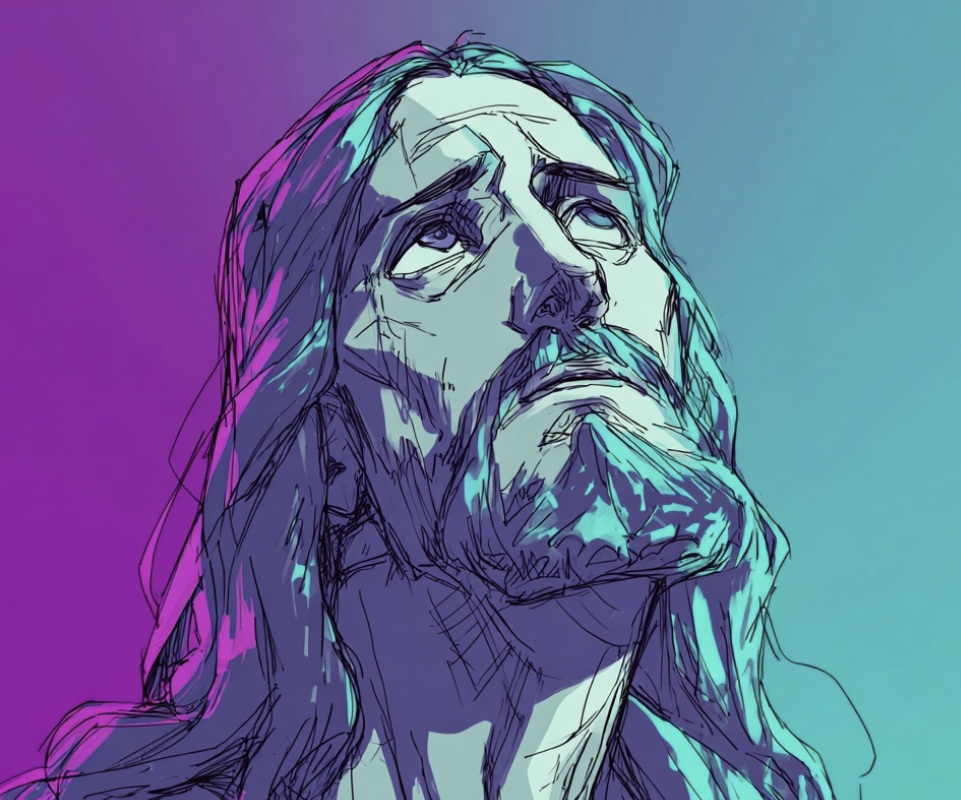
Touch me not; for I am not yet ascended to my Father: but go to my brethren, and say unto them, I ascend unto my Father, and your Father; and to my God, and your God.
▼
Source
source
John 20:17 (KJV)
5 months 3 weeks ago
We are swiftly moving at present from an era where business was our culture into an era when culture will be our business. Between these poles stand the huge and ambiguous entertainment industries.
▼
Source
source
(p. 384)

6 months 2 weeks ago
Lord, give me the capacity of never praying, spare me the insanity of all worship, let this temptation of love pass from me which would deliver me forever unto You. Let the void spread between my heart and heaven! I have no desire to people my deserts by Your presence, to tyrannize my nights by Your light, to dissolve my Siberias beneath Your sun.

7 months 2 weeks ago
There are more ideas on earth than intellectuals imagine. And these ideas are more active, stronger, more resistant, more passionate than "politicians" think. We have to be there at the birth of ideas, the bursting outward of their force: not in books expressing them, but in events manifesting this force, in struggles carried on around ideas, for or against them. Ideas do not rule the world. But it is because the world has ideas (and because it constantly produces them) that it is not passively ruled by those who are its leaders or those who would like to teach it, once and for all, what it must think.
▼
Source
source
As quoted in Michel Foucault (1991) by Didier Eribon, as translated by Betsy Wind, Harvard University Press, p. 282
5 months 3 weeks ago
There is no connection between the elements in an electric world, which is equivalent to being surrounded by the human unconscious.
▼
Source
source
(p. 260)
6 months 2 weeks ago
The present contains nothing more than the past, and what is found in the effect was already in the cause.
▼
Source
source
Creative Evolution (1907), Chapter I, as translated by Arthur Mitchell (1911), p. 14.; italicized in the original.
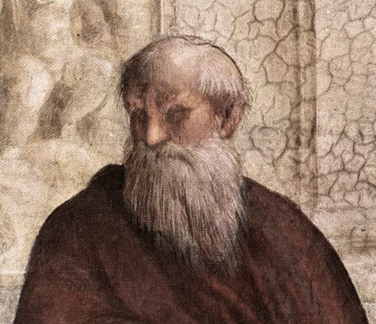
8 months 1 week ago
All teems with symbol; the wise man is the man who in any one thing can read another.
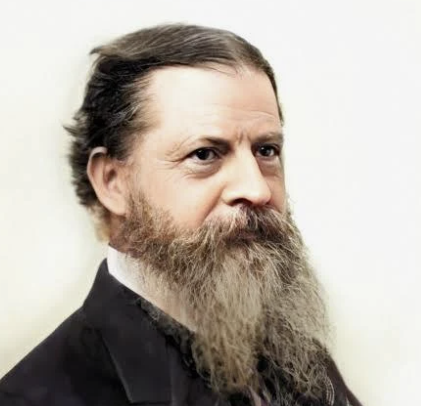
6 months 2 weeks ago
We have here a question of difficulty, analogous to the question of nominalism and realism.
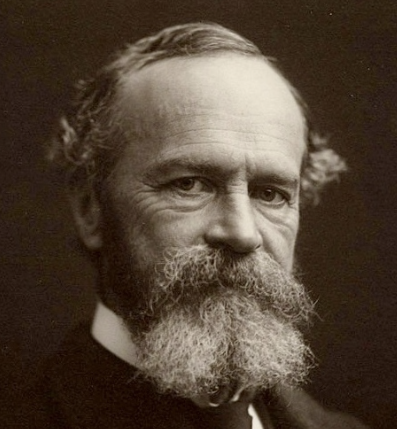
7 months 3 weeks ago
The stronghold of the determinist argument is the antipathy to the idea of chance...This notion of alternative possibility, this admission that any one of several things may come to pass is, after all, only a roundabout name for chance.
▼
Source
source
The Dilemma of Determinism (1884) p.153
3 months 2 weeks ago
Give thyself time to learn something new and good, and cease to be whirled around.
▼
Source
source
II, 7
8 months 1 week ago
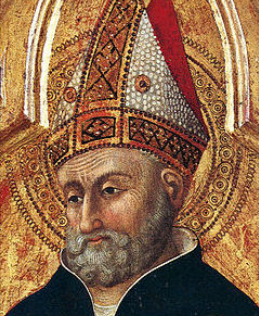
If you believe what you like in the gospels, and reject what you don't like, it is not the gospel you believe, but yourself.
▼
Source
source
Earliest attribution found in Who Said That?: More than 2,500 Usable Quotes and Illustrations (1995) by George Sweeting. Online sources always attribute the quote to Augustine, but never specify in which of his works it is to be found.
8 months 2 days ago
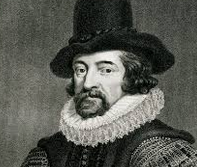
Since my logic aims to teach and instruct the understanding, not that it may with the slender tendrils of the mind snatch at and lay hold of abstract notions (as the common logic does), but that it may in very truth dissect nature, and discover the virtues and actions of bodies, with their laws as determined in matter; so that this science flows not merely from the nature of the mind, but also from the nature of things.
▼
Source
source
Aphorism 52
6 months 2 weeks ago
A certain maxim of Logic which I have called Pragmatism has recommended itself to me for diverse reasons and on sundry considerations. Having taken it as my guide for most of my thought, I find that as the years of my knowledge of it lengthen, my sense of the importance of it presses upon me more and more. If it is only true, it is certainly a wonderfully efficient instrument. It is not to philosophy only that it is applicable. I have found it of signal service in every branch of science that I have studied. My want of skill in practical affairs does not prevent me from perceiving the advantage of being well imbued with pragmatism in the conduct of life.
▼
Source
source
Lecture I : Pragmatism : The Normative Sciences, CP 5.14
3 months 2 weeks ago
Does the light of a lamp shine and keep its glow until its fuel is spent? Why shouldn't your truth, justice, and self-control shine until you are extinguished?
▼
Source
source
XII. 15:294
8 months 3 weeks ago
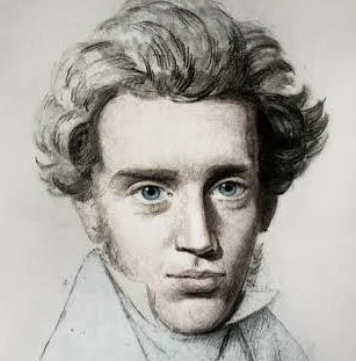
I have needed God every day to defend myself against the abundance of thoughts.
7 months 3 weeks ago
Since sounds have no natural connection with our ideas ... the doubtfulness and uncertainty of their signification ... has its cause more in the ideas they stand for than in any incapacity there is in one sound more than another to signify any idea.
▼
Source
source
Book III, Ch. 9, sec. 4
6 months 2 weeks ago
The only interesting philosophers are the ones who have stopped thinking and have begun to search for happiness.
7 months 3 weeks ago
Let me give two cautions. 1) The one is, that you keep them to the practice of what you would have grow into a habit with them, by kind words, and gentle admonitions, rather as minding them of what they forget, than by harsh rebukes and chiding, as if they were wilfully guilty. 2) Another thing you are to take care of, is, not to endeavour to settle too many habits at once, lest by variety you confound them, and so perfect none. When constant custom has made any one thing easy and natural to 'em, and they practice it without reflection, you may then go on to another.
▼
Source
source
Sec. 66
6 months 2 weeks ago
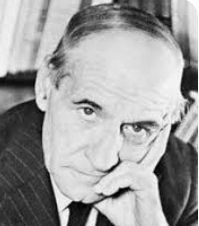
The specialist serves as a striking concrete example of the species, making clear to us the radical nature of the novelty. For, previously, men could be divided simply into the learned and the ignorant, those more or less the one, and those more or less the other. But your specialist cannot be brought in under either of these two categories. He is not learned , for he is formally ignorant of all that does not enter into his speciality; but neither is he ignorant, because he is "a scientist," and "knows" very well his own tiny portion of the universe. We shall have to say that he is a learned ignoramus, which is a very serious matter, as it implies that he is a person who is ignorant, not in the fashion of the ignorant man, but with an the petulance of one who is learned in his own special line.
▼
Source
source
Chapter XII: The Barbarism Of "Specialisation"
8 months 3 weeks ago
It occurs to me that artists go forward by going backward, something which I have nothing against intrinsically when it is a reproduced retreat - as is the case with the better artists. But it does not seem right that they stop with the historical themes already given and, so to speak, think that only these are suitable for poetic treatment, because these particular themes, which intrinsically are no more poetic than others, are now again animated and inspirited by a great poetic nature. In this case the artists advance by marching on the spot. - Why are modern heroes and the like not just as poetic? Is it because there is so much emphasis on clothing the content in order that the formal aspect can be all the more finished?
6 months 2 weeks ago
The pathfinders of modern thought did not derive what is good from the law. ... Their role in history was not that of adapting their words and actions to the text of old documents or generally accepted doctrines: they themselves created the documents and brought about the acceptance of their doctrines.
▼
Source
source
p. 33.
4 months 1 day ago
Be radical, have principles, be absolute, be that which the bourgeoisie calls an extremist: give yourself without counting or calculating, don't accept what they call 'the reality of life' and act in such a way that you won't be accepted by that kind of 'life', never abandon the principle of struggle.
6 months 2 weeks ago
But, braggart demons, we postpone our end: how could we renounce the display of our freedom, the show of our pride?
6 months 2 weeks ago
Sleep on now, and take your rest: behold, the hour is at hand, and the Son of man is betrayed into the hands of sinners. Rise, let us be going: behold, he is at hand that doth betray me.
▼
Source
source
26:45-46 (KJV)
6 months 5 days ago
Give us back our suffering, we cry to Heaven in our hearts - suffering rather than indifferentism; for out of nothing comes nothing. But out of suffering may come the cure. Better have pain than paralysis! A hundred struggle and drown in the breakers. One discovers the new world. But rather, ten times rather, die in the surf, heralding the way to that new world, than stand idly on the shore!
7 months 3 weeks ago
As usurpation is the exercise of power which another has a right to, so tyranny is the exercise of power beyond right, which nobody can have a right to...
▼
Source
source
Second Treatise of Government, Ch. XVIII, sec. 199
8 months 3 weeks ago
He who thinks a great deal is not suited to be a party man: he thinks his way through the party and out the other side too soon.
3 months 3 weeks ago
Any institution is only a political structure. In physics and in morals, the laws are the same; you cannot build a large structure on a narrow foundation, nor a durable structure on a moving or transient base. In the political order, therefore, if one wants to build on a large scale and for the centuries, one must rely on an opinion, on a large and profound belief. For if this opinion does not dominate a majority of minds and if it is not deeply rooted, it will furnish only a narrow and transient base.
8 months 1 week ago
The essence of the good is a certain kind of moral purpose, and that of the evil is a certain kind of moral purpose.
▼
Source
source
Book I, ch. 29, 1
4 months 1 week ago
Rooted in freedom, bonded in the fellowship of danger, sharing everywhere a common human blood, we declare again that all men are brothers, and that mutual tolerance is the price of liberty.
5 months 3 weeks ago
The assertion that art may be good art and at the same time incomprehensible to a great number of people is extremely unjust, and its consequences are ruinous to art itself...it is the same as saying some kind of food is good but most people can't eat it.
6 months 1 week ago
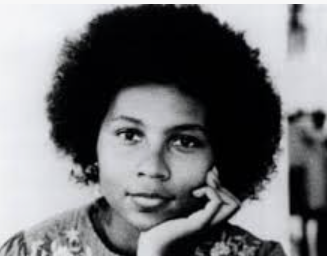
Lying takes the form of mass media creating the myth that feminist movement has completely transformed society, so much so that the politics of patriarchal power have been inverted and that men, particularly white men, just like emasculated black men, have become the victims of dominating women. So, it goes, all men (especially black men) must pull together (as in the Clarence Thomas hearings) to support and reaffirm patriarchal domination. Add to this the widely held assumptions that blacks, other minorities, and white women are taking jobs from white men, and that people are poor and unemployed because they want to be, and it becomes most evident that part of our contemporary crisis is created by a lack of meaningful access to truth.
▼
Source
source
Teaching to Transgress: Education as the Practice of Freedom
3 months 2 weeks ago
Not to display anger or other emotions. To be free of passion and yet full of love.
▼
Source
source
(Hays translation) I, 9
6 months 1 week ago
Since we live in a society that promotes faddism and temporary superficial adaptation of different values, we are easily convinced that changes have occurred in arenas where there has been little or no change.
CivilSimian.com created by AxiomaticPanic, CivilSimian, Kalokagathia