Losing my 20/20 vision killed me....


Goods can serve many other purposes besides purchasing money, but money can serve no other purpose besides purchasing goods.
There are four classes of Idols which beset men's minds. To these for distinction's sake I have assigned names - calling the first class, Idols of the Tribe; the second, Idols of the Cave; the third, Idols of the Market-Place; the fourth, Idols of the Theater.
The telegraph press mosaic is acoustic space as much as an electric circus.
Socrates thought that if all our misfortunes were laid in one common heap, whence every one must take an equal portion, most persons would be contented to take their own and depart.
The wise and virtuous man is at all times willing that his own private interests should be sacrificed to the public interest of his own particular society--that the interests of this order of society be sacrificed to the greater interest of the state. He should therefore he equally willing that all those inferior interests should be sacrificed to the greater society of all sensible and intelligent beings.
My appetite comes to me while eating.

Where this will end? In the Abyss, one may prophecy; whither all Delusions are, at all moments, travelling; where this Delusion has now arrived. For if there be a Faith, from of old, it is this, as we often repeat, that no Lie can live for ever. The very Truth has to change its vesture, from time to time; and be born again. But all Lies have sentence of death written down against them, and Heaven's Chancery itself; and, slowly or fast, advance incessantly towards their hour.
But of such writers the number is yet (and will I fear always be so) small, that I shall not need to make many exceptions, when I treat of the usefulness of writing books of essays, in comparison of that of writing systematically: or, at least... whilst I presume not to judge of other men's abilities, I hope it may be lawful for me to confess freely to you concerning myself, that I am very sensible of my being far from having such a stock of experiments and observations, as I judge requisite to write systematically; and I am apt to impute many of the deficiencies to be met with in the theories and reasonings of such great wits as Aristotle, Campanella, and some other celebrated philosophers, chiefly to this very thing, that they have too hastily, and either upon a few observations, or at least without a competent number of experiments, presumed to establish principles, and deliver axioms.
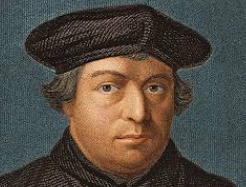
Insurrection ... never brings about the desired improvement. For insurrection lacks discernment; it generally harms the innocent more than the guilty. Hence, no insurrection is ever right, no matter how right the cause it seeks to promote.
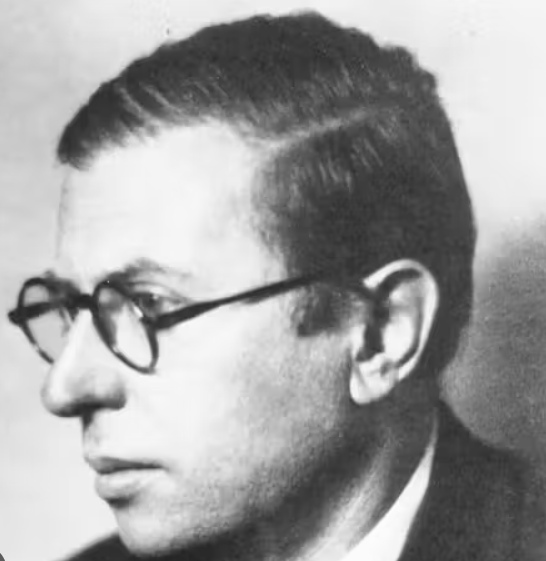
Existentialism is nothing else but an attempt to draw the full conclusions from a consistently atheistic position. Its intention is not in the least that of plunging men into despair. And if by despair one means as the Christians do - any attitude of unbelief, the despair of the existentialists is something different. Existentialism is not atheist in the sense that it would exhaust itself in demonstrations of the non-existence of God. It declares, rather, that even if God existed that would make no difference from its point of view. Not that we believe God does exist, but we think that the real problem is not that of His existence; what man needs is to find himself again and to understand that nothing can save him from himself, not even a valid proof of the existence of God. In this sense existentialism is optimistic. It is a doctrine of action, and it is only by self-deception, by confining their own despair with ours that Christians can describe us as without hope.
Man is a creature who lives not upon bread alone, but principally by catchwords; and the little rift between the sexes is astonishingly widened by simply teaching one set of catchwords to the girls and another to the boys.
The human understanding is unquiet; it cannot stop or rest, and still presses onward, but in vain. Therefore it is that we cannot conceive of any end or limit to the world, but always as of necessity it occurs to us that there is something beyond... But he is no less an unskilled and shallow philosopher who seeks causes of that which is most general, than he who in things subordinate and subaltern omits to do so.
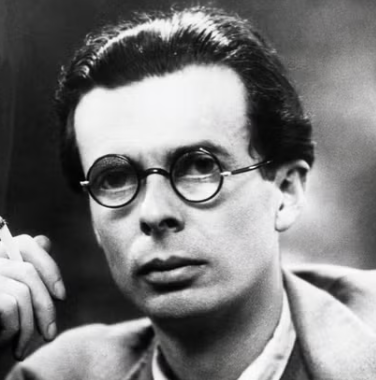
I was seeing what Adam had seen on the morning of his creation - the miracle, moment by moment, of naked existence.
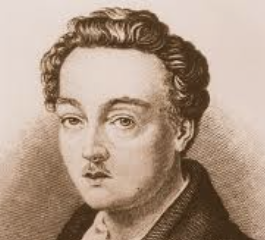
They say in the grave there is peace, and peace and the grave are one and the same.
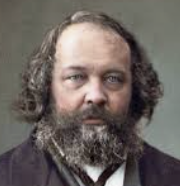
If there is a devil in human history, that devil is the principle of command. It alone, sustained by the ignorance and stupidity of the masses, without which it could not exist, is the source of all the catastrophes, all the crimes, and all the infamies of history.
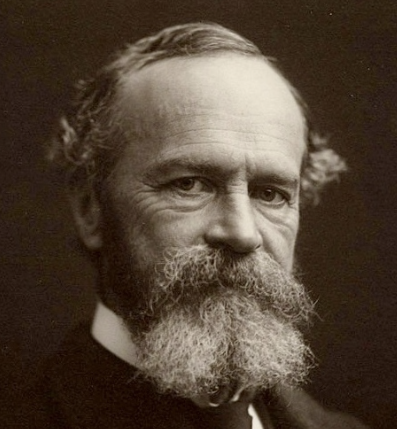
The individual, so far as he suffers from his wrongness and criticizes it, is to that extent consciously beyond it, and in at least possible touch with something higher, if anything higher exist. Along with the wrong part there is thus a better part of him, even though it may be but a most helpless germ. With which part he should identify his real being is by no means obvious at this stage; but when stage 2 (the stage of solution or salvation) arrives, the man identifies his real being with the germinal higher part of himself; and does so in the following way. He becomes conscious that this higher part is coterminous and continuous with a more of the same quality, which is operative in the universe outside of him, and which he can keep in working touch with, and in a fashion get on board of and save himself when all his lower being has gone to pieces in the wreck.
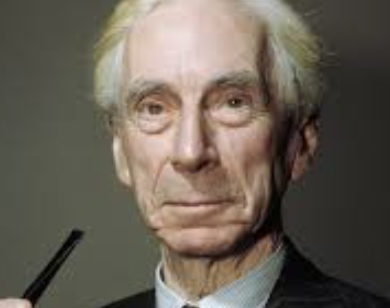
A life without adventure is likely to be unsatisfying, but a life in which adventure is allowed to take whatever form it will is sure to be short.
The world is his, who has money to go over it.
The infinite... happens to subsist in a way contrary to what is asserted by others: for the infinite is not that beyond which there is nothing, but it is that of which there is always something beyond. ...But that pertaining to which there is nothing beyond is perfect and whole. ...that of which nothing is absent pertaining to the parts ...the whole is that pertaining to which there is nothing beyond. But that pertaining to which something external is absent, that is not all ...But nothing is perfect which has not an end; and the end is a bound. On this account... Parmenides spoke better than Melissus: for the latter says that the infinite is a whole; but the former, that the whole is finite, and equally balanced from the middle: for to conjoin the infinite with the universe and the whole, is not to connect line with line.
Space and time are commonly regarded as the forms of existence of the real world, matter as its substance. A definite portion of matter occupies a definite part of space at a definite moment of time. It is in the composite idea of motion that these three fundamental conceptions enter into intimate relationship.
All the world's not a stage.
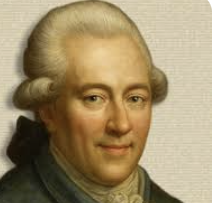
I am convinced we do not only love ourselves in others but hate ourselves in others too.

The evil that has resulted from the error of the schools in teaching natural philosophy as an accomplishment only has been that of generating in the pupils a species of atheism. Instead of looking through the works of creation to the Creator Himself, they stop short and employ the knowledge they acquire to create doubts of His existence. They labor with studied ingenuity to ascribe everything they behold to innate properties of matter and jump over all the rest by saying that matter is eternal.
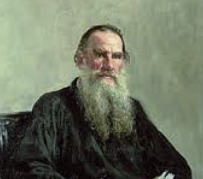
Ivan Ilych's life had been most simple and most ordinary and therefore most terrible.
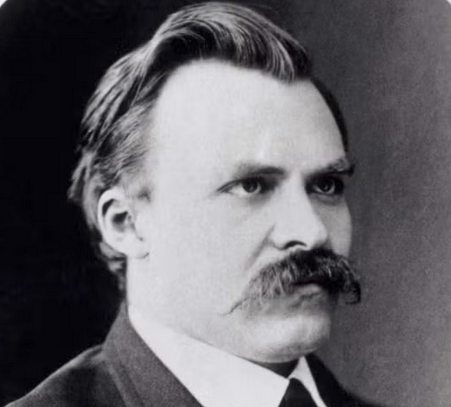
Let a man once overcome his selfish terror at his own finitude, and his finitude is, in one sense, overcome.
Whoever criticizes others must have something to replace them. Criticism without suggestion is like trying to stop flood with flood and put out fire with fire. It will surely be without worth.

Force without wisdom falls of its own weight.
Money appears as measure (in Homer, e.g. oxen) earlier than as medium of exchange,because in barter each commodity is still its own medium of exchange. But it cannot be its own or its own standard of comparison.
Ignorance is not a simple lack of knowledge but an active aversion to knowledge, the refusal to know, issuing from cowardice, pride or laziness of mind.
It is the safest to be moderately base - to be flexible in shame, and to be always ready for what is generous, good, and just, when anything is to be gained by virtue.
It must not be supposed that this conflict is, on the part of the Teuton, aggressive in substance, whatever it may be in form. In substance it is defensive, the attempt to preserve Central Europe for a type of civilisation indubitably higher and of more value to mankind than that of any Slav State. The existence of the Russian menace on the Eastern border is, quite legitimately, a nightmare to Germany.
I've always written at the top of my lungs and from some secret motives within. I have followed the advice of my good friend Federico Fellini who, when asked about his work, said, "Don't tell me what I'm doing, I don't want to know."
Virtue alone affords everlasting and peace-giving joy; even if some obstacle arise, it is but like an intervening cloud, which floats beneath the sun but never prevails against it.
How I wish I didn't know anything about myself and this world!
Rules for Definitions. I. Not to undertake to define any of the things so well known of themselves that the clearer terms cannot be had to explain them. II. Not to leave any terms that are at all obscure or ambiguous without definition. III. Not to employ in the definition of terms any words but such as are perfectly known or already explained.
What does it mean to have a god? or, what is God? Answer: A god means that from which we are to expect all good and to which we are to take refuge in all distress, so that to have a God is nothing else than to trust and believe Him from the [whole] heart; as I have often said that the confidence and faith of the heart alone make both God and an idol. If your faith and trust be right, then is your god also true; and, on the other hand, if your trust be false and wrong, then you have not the true God; for these two belong together faith and God. That now, I say, upon which you set your heart and put your trust is properly your god.
Important though the general concepts and propositions may be with which the modern industrious passion for axiomatizing and generalizing has presented us, in algebra perhaps more than anywhere else, nevertheless I am convinced that the special problems in all their complexity constitute the stock and core of mathematics; and to master their difficulties requires on the whole the harder labor.
Nothing is so fatal to Religion as indifference which is, at least, half Infidelity.
I have turned my entire attention to Greek. The first thing I shall do, as soon as the money arrives, is to buy some Greek authors; after that, I shall buy clothes.
Nature loves to hide her secrets, and she does not suffer the hidden truth about the essential nature of the gods to be flung in naked words to the ears of the profane...
The stupendous Fourth Estate, whose wide world-embracing influences what eye can take in?
In this choice of inheritance we have given to our frame of polity the image of a relation in blood, binding up the constitution of our country with our dearest domestic ties, adopting our fundamental laws into the bosom of our family affections, keeping inseparable and cherishing with the warmth of all their combined and mutually reflected charities our state, our hearths, our sepulchres, and our altars.
Jacques said that his master said that everything good or evil we encounter here below was written on high.
In civil law the existing property relationships are declared to be the result of the general will. The jus utendi et abutendi itself asserts on the one hand the fact that private property has become entirely independent of the community, and on the other the illusion that private property itself is based solely on the private will, the arbitrary disposal.
He who takes not counsel of the Unseen and Silent, from him will never come real visibility and speech.
The following general definition of an animal: a system of different organic molecules that have combined with one another, under the impulsion of a sensation similar to an obtuse and muffled sense of touch given to them by the creator of matter as a whole, until each one of them has found the most suitable position for it shape and comfort.
CivilSimian.com created by AxiomaticPanic, CivilSimian, Kalokagathia