



6 months 1 week ago
And he arrives at the cogito ergo sum, which St. Augustine had already anticipated... "I think therefore I am," can only mean "I think, therefore I am a thinker"; this being of "I am," which is deduced from "I think," is merely a knowing; this being is a knowledge, but not life. And the primary reality is not that I think, but that I live, for those also live who do not think. Although this living may not be a real living. God! what contradictions when we seek to join in wedlock life and reason!

3 months 3 weeks ago
All hypotheses respecting the manner in which the elements of inorganic bodies are arranged in space, must be constructed with regard to the general facts of crystallization.
3 months 2 weeks ago
We are faced with the curiously appalling trend of modern thought, in which the absolute which was once a means of entering into communion with the divine, has now become an instrument used by those who profit from it, to distort, pervert, and conceal the meaning of the present.

8 months 2 weeks ago
I see your vile implication. My only explanation for it is that you are criminally insane.

6 months 3 weeks ago
Tyrants seldom want pretexts.

7 months 2 weeks ago
The problem is not to discover in oneself the truth of one's sex, but, rather, to use one's sexuality henceforth to arrive at a multiplicity of relationships. And, no doubt, homosexuality is not a form of desire but something desirable. Therefore, we have to work at becoming homosexuals.
▼
Source
source
"Friendship as a Way of Life," interview in Gai pied, April 1981, as translated in Ethics, Subjectivity and Truth (1994), pp. 135-136

7 months 3 weeks ago
The Austrians are a highly civilised race, half-surrounded by Slavs in a relatively backward state of culture. ... Servia, a country so barbaric that a man can secure the throne by instigating the assassination of his predecessor, is engaged constantly in fermenting the racial discontent of men of the same race who are Austrian subjects.
▼
Source
source
War: The Offspring of Fear (1914), quoted in Ray Monk, Bertrand Russell: The Spirit of Solitude, 1872-1921 (1996), p. 373

6 months 4 days ago
Now, obviously, the human race is on the point of an extremely interesting evolutionary development. The first step towards escape from this vicious circle is to recognize that the apparent "ordinariness" of the world is a delusion. If we could become deeply and permanently convinced that the world "out there" is endlessly exciting, we would never again allow ourselves to become trapped in the swamp of "taken-for-grantedness". And we would become practically unkillable. Shaw says of his "Ancients" in Back to Methuselah "Even in the moment of death, their life does not fail them". "Life failure" is that feeling that there is nothing new under the sun, and that we all have to accept defeat in the end. If we could learn the mental trick of causing the dynamo to accelerate, this illusion would never again be able to exert its power over us.
▼
Source
source
p. 14

5 months 4 days ago
There are no signposts in the sky to show a man has passed that way before. There are no channels marked. The flier breaks each second into new uncharted seas.
▼
Source
source
North to the Orient (1935) Ch. 1

7 months 2 weeks ago
We will not go to Heaven,Goetz, and even if we both entered it, we would not have eyes to see each other, nor hands to touch each other. Up there, God gets all the attention.... We can only love on this earth and against God.
▼
Source
source
Acts 8 & 9
7 months 3 weeks ago
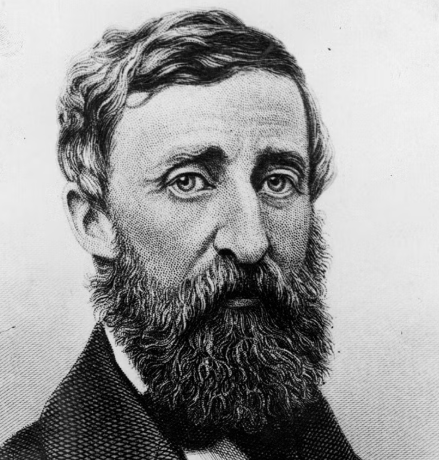
The Hindoos are most serenely and thoughtfully religious than the Hebrews. They have perhaps a purer, more independent and impersonal knowledge of God. Their religious books describe the first inquisitive and contemplative access to God; the Hebrew bible a conscientious return, a grosser and more personal repentance. Repentance is not a free and fair highway to God. A wise man will dispense with repentance. It is shocking and passionate. God prefers that you approach him thoughtful, not penitent, though you are chief of sinners. It is only by forgetting yourself that you draw near to him. The calmness and gentleness with which the Hindoo philosophers approach and discourse on forbidden themes is admirable. In 1853.
▼
Source
source
A Tribute to Hinduism, 2008

8 months 2 weeks ago
The important thing isn't the soundness or otherwise of the argument, but for it to make you think.
3 months 2 weeks ago
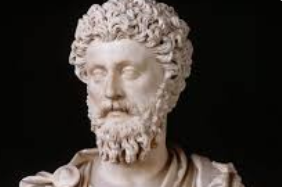
Constantly contemplate the whole of time and the whole of substance, and consider that all individual things as to substance are a grain of a fig, and as to time the turning of a gimlet.
▼
Source
source
X, 17
7 months 2 weeks ago
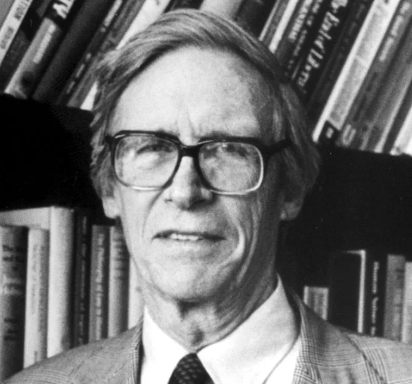
Our concern is solely with the basic structure of society and its major institutions and therefore with the standard cases of social justice.
▼
Source
source
Chapter II, Section 10, pg. 58
5 months 2 weeks ago
Primitivism has become the vulgar cliche of much modern art and speculation.
▼
Source
source
(p. 77)

5 months 4 weeks ago
Until the seventeenth century there was no concept of evidence with which to pose the problem of induction!
▼
Source
source
Chapter 4, Evidence, p. 31.
7 months 3 weeks ago
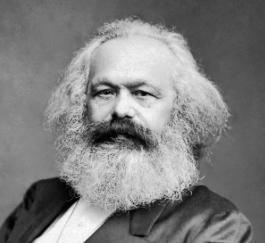
From another side: is Achilles possible with powder and lead? Or the Iliad with the printing press, not to mention the printing machine? Do not the song and saga of the muse necessarily come to an end with the printer's bar, hence do not the necessary conditions of epic poetry vanish?
▼
Source
source
Introduction, p. 31.
5 months 2 weeks ago
Violence is the effort to maintain and restore a weakened psyche.
▼
Source
source
(p. 377)

6 months 4 days ago
The 'intense life' advertised by the neoliberal regime is in truth simply a life of intense consumption.

7 months 3 weeks ago
The very port and gait of a swan, or turkey, or peacock show the high idea he has entertain'd of himself; and his contempt of all others. This is the more remarkable, that in the two last species of animals, the pride always attends the beauty, and is discover'd in the male only. The vanity and emulation of nightingales in singing have been commonly remark'd [...] All these are evident proofs, that pride and humility are not merely human passions, but extend themselves over the whole animal creation.
▼
Source
source
Part 1, Section 12
7 months 3 weeks ago
Nothing appears more surprising to those, who consider human affairs with a philosophical eye, than the easiness with which the many are governed by the few; and the implicit submission, with which men resign their own sentiments and passions to those of their rulers. When we enquire by what means this wonder is effected, we shall find, that, as Force is always on the side of the governed, the governors have nothing to support them but opinion. It is therefore, on opinion only that government is founded; and this maxim extends to the most despotic and most military governments, as well as to the most free and most popular.
▼
Source
source
Part I, Essay 4: Of The First Principles of Government

7 months 3 weeks ago
Many Catholic mystics have affirmed that, at a certain stage of that contemplative prayer in which, according to the most authoritative theologians, the life of Christian perfection ultimately consists, it is necessary to put aside all thought of the Incarnation as distracting from the higher knowledge of that which has been incarnated. From this fact have arisen misunderstandings in plenty and a number of intellectual difficulties.
5 months 3 weeks ago
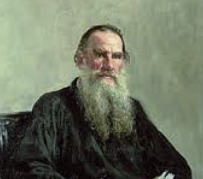
Understand that all the evils from which you suffer, you yourselves cause by yielding to the suggestions by which emperors, kings, members of parliament, governors, officers, capitalists, priests, authors, artists, and all who need this fraud of patriotism in order to live upon your labour, deceive you!
▼
Source
source
Patriotism and Government

8 months 6 days ago
If we are not stupid or insincere when we say that the good or ill of man lies within his own will, and that all beside is nothing to us, why are we still troubled?
▼
Source
source
Book I, ch. 25, § 1.
7 months 3 weeks ago
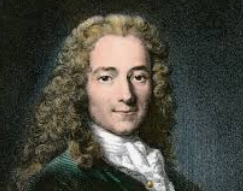
Ancient histories, as one of our wits has said, are but fables that have been agreed upon.
▼
Source
source
Jeannot et Colin, 1764
6 months 4 days ago
The rather more dubious side of Nietzsche's 'evolutionism' is his glorification of the warrior -- particularly when, as an exemplification of the warrior-hero, he chooses an archetypal 'spoilt brat' like Cesare Borgia. Nietzsche's own physical weakness and consequent inability to escape the atmosphere of the study leads him to take a rather unrealistic view of the man of action.
▼
Source
source
p. 87
3 months 2 weeks ago
The controlling Intelligence understands its own nature, and what it does, and whereon it works.
▼
Source
source
VI, 5
7 months 2 weeks ago
I was your luxury. For nineteen years I have been put in your man's world and was forbidden to touch anything and you made me think that all was going very well and that I did not have to worry about anything but putting flowers in vases. Why did you lie to me? Why did you keep me ignorant, if it was to admit to me one day that this world is cracking and that you are all powerless and to make me choose between a suicide and a murder?
▼
Source
source
Jessica to Hugo, Act 5, sc. 2
6 months 2 weeks ago
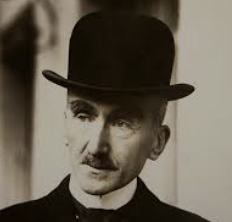
I cannot escape the objection that there is no state of mind, however simple, that does not change every moment.
▼
Source
source
An Introduction to Metaphysics (1903), translated by T. E. Hulme. New York: G. P. Putnam's Sons, 1912, p. 44

7 months 3 weeks ago
I did not know that mankind were suffering for want of gold. I have seen a little of it. I know that it is very malleable, but not so malleable as wit. A grain of gold will gild a great surface, but not so much as a grain of wisdom.
▼
Source
source
p. 488
6 months 3 weeks ago
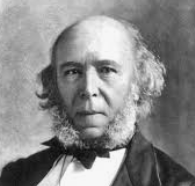
We have repeatedly observed that while any whole is evolving, there is always going on an evolution of the parts into which it divides itself; but we have not observed that this equally holds of the totality of things, which is made up of parts within parts from the greatest down to the smallest.
▼
Source
source
Pt. II, The Knowable; Ch. XV, The Law of Evolution (continued)
7 months 4 weeks ago
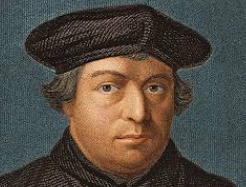
Our preaching does not stop with the law. That would lead to wounding without binding up, striking down and not healing, killing and not making alive, driving down to hell and not bringing back up, humbling and not exalting. Therefore, we must also preach grace and the promise of forgiveness - this is the means by which faith is awakened and properly taught. Without this word of grace, the law, contrition, penitence, and everything else are done and taught in vain.
▼
Source
source
pp. 78-79

4 months 2 weeks ago
Liberalism is... a protection of human autonomy.
▼
Source
source
11:06
7 months 3 weeks ago
This avidity alone, of acquiring goods and possessions for ourselves and our nearest friends, is insatiable, perpetual, universal, and directly destructive of society.
▼
Source
source
Part 2, Section 2
7 months 2 weeks ago
He chooses the most feared, most hated man in order to worship him as a god, feeling sure that he is alone in perceiving the god's secret virtues.
▼
Source
source
p. 165
6 months 3 weeks ago
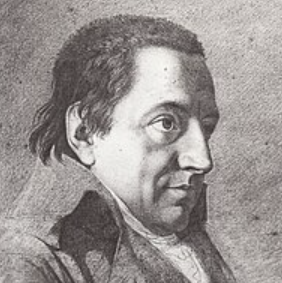
The Doctrine of a Perfect God; in whose nature nothing arbitrary or changeable can have a place; in whose Highest Being we all live, and in this Life may, and ought at all times to be, blessed;-this Doctrine, which ignorant men think they have sufficiently demolished when they have proclaimed it to be Mysticism, is by no means Mysticism, for it has an immediate reference to human action, and in deed to the inmost spirit which ought to inspire and guide all our actions. It can only become Mysticism when it is associated with the pretext that the insight into this truth proceeds from a certain inward and mysterious light, which is not accessible to all men, but is only bestowed upon a few favourites chosen from among the rest:-in which pretext the Mysticism consists, for it betrays a presumptuous contemplation of personal merit, and a pride in mere sensuous Individuality.
▼
Source
source
p, 122-123
5 months 3 weeks ago
History is the life of nations and of humanity. To seize and put into words, to describe directly the life of humanity or even of a single nation, appears impossible.
▼
Source
source
Epilogue II, ch. 1
6 months ago
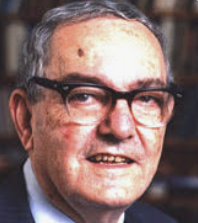
We need to augment and amend the existing body of classical and neoclassical economic theory to achieve a more realistic picture of economic process.
▼
Source
source
Herbert A. Simon (1986) in Preface to: Gilad & Kaish (eds.), Handbook of Behavioral Economics, p. xvi.


3 months 2 weeks ago
Frenchmen, it was to the noise of hellish songs, the blasphemy of atheism, the cries of death, and the prolonged moans of slaughtered innocence, it was by the light of flames, on the debris of throne and altar, watered by the blood of the best of kings and an innumerable host of other victims, it was by the contempt of morality and the established faith, it was in the midst of every crime that your seducers and your tyrants founded what they call your liberty.
▼
Source
source
Chapter X, p. 84
6 months 3 weeks ago
You have theories enough concerning the Rights of Men. It may not be amiss to add a small degree of attention to their Nature and disposition.
▼
Source
source
Letter to Charles-Jean-François Depont (November 1789), quoted in Alfred Cobban and Robert A. Smith (eds.), The Correspondence of Edmund Burke, Volume VI: July 1789-December 1791 (1967), p. 46
8 months 1 week ago
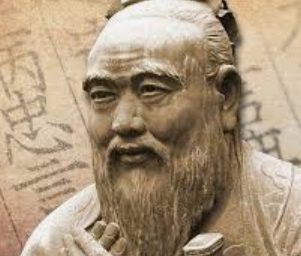
You [a disciple], shall I teach you about knowledge? What you know, you know, what you don't know, you don't know. This is true knowledge.
8 months 3 weeks ago
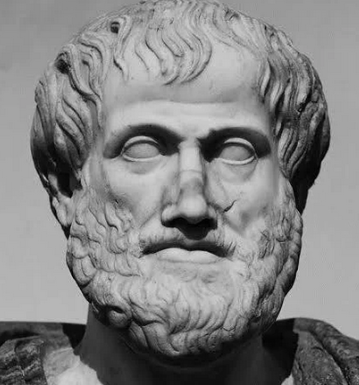
Concerning the generation of animals akin to them, as hornets and wasps, the facts in all cases are similar to a certain extent, but are devoid of the extraordinary features which characterize bees; this we should expect, for they have nothing divine about them as the bees have.

6 months 2 weeks ago
Two enemies - the same man divided.
7 months 3 weeks ago
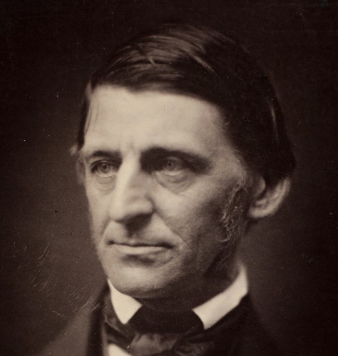
You can take better care of your secret than another can.
▼
Source
source
1863

7 months 1 week ago
Purity is for man, next to life, the greatest good that parity is procured by the Law of Mazda to him who cleanses his own self with Good Thoughts, Words, and Deeds.
▼
Source
source
(Extracts, p. 57)
CivilSimian.com created by AxiomaticPanic, CivilSimian, Kalokagathia