


7 months 3 weeks ago
There is no wish more natural than the wish to know.
▼
Source
source
Ch. 13
6 months 2 weeks ago
"No human laws are of any validity if contrary to the law of nature; and such of them as are valid derive all their force and all their authority mediately or immediately from this original." Thus writes Blackstone, to whom let all honour be given for having so far outseen the ideas of his time; and, indeed, we may say of our time. A good antidote, this, for those political superstitions which so widely prevail. A good check upon that sentiment of power-worship which still misleads us by magnifying the prerogatives of constitutional governments as it once did those of monarchs. Let men learn that a legislature is not "our God upon earth," though, by the authority they ascribe to it, and the things they expect from it, they would seem to think it is. Let them learn rather that it is an institution serving a purely temporary purpose, whose power, when not stolen, is at the best borrowed.
▼
Source
source
Pt. III, Ch. 19 : The Right to Ignore the State, § 2
3 months 2 weeks ago
My prayer is not the whimpering of a beggar nor a confession of love. Nor is it the petty reckoning of a small tradesman: Give me and I shall give you. My prayer is the report of a soldier to his general: This is what I did today, this is how I fought to save the entire battle in my own sector, these are the obstacles I encountered, this is how I plan to fight tomorrow.
6 months 5 days ago
There is a certain kind of morality which is even more alien to good and evil than amorality is.
▼
Source
source
"The responsibility of writers," p. 169

7 months 3 weeks ago
Beings who are so uniquely constituted must necessarily express themselves in other ways than ordinary men. It is impossible that with souls so differently modified, they should not carry over into the expression of their feelings and ideas the stamp of those modifications.
▼
Source
source
First Dialogue; translated by Judith R. Bush, Christopher Kelly, Roger D. Masters
5 months 3 weeks ago
It is perhaps not a surprise that photography developed as a technological medium in the industrial age, when reality started to disappear. It is even perhaps the disappearance of reality that triggered this technical form. Reality found a way to mutate into an image.
8 months 2 days ago
You are in the same manner surrounded with a small circle of persons... full of desire. They demand of you the benefits of desire... You are therefore properly the king of desire. ...equal in this to the greatest kings of the earth... It is desire that constitutes their power; that is, the possession of things that men covet.

6 months 2 weeks ago
A harmonious being cannot believe in God. Saints, criminals, and paupers have launched him, making him available to all unhappy people.

7 months 2 weeks ago
If the single man plant himself indomitably on his instincts, and there abide, the huge world will come round to him. 6. Nature, Addresses and Lectures.
▼
Source
source
The American Scholar
6 months 3 weeks ago
Be charitable before Wealth makes thee covetous.
3 months 2 weeks ago
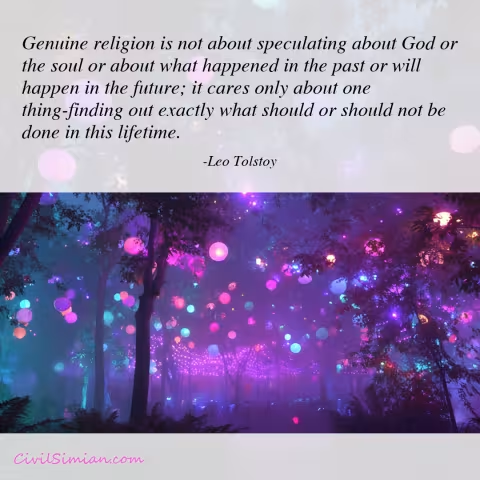
In religions which have lost their creative spark, the gods eventually become no more than poetic motifs or ornaments for decorating human solitude and walls.
▼
Source
source
Ch. 12
7 months 2 weeks ago
Ah! yes, I know: those who see me rarely trust my word: I must look too intelligent to keep it.
▼
Source
source
Act 2, sc. 3
7 months 3 weeks ago
Among civilized and thriving nations, on the contrary, though a great number of people do no labor at all, many of whom consume the produce of ten times, frequently of a hundred times more labour than the greater part of those who work; yet the produce of the whole labour of the society is so great, that all are often abundantly supplied, and a workman, even of the lowest and poorest order, if he is frugal and industrious, may enjoy a greater share of the necessaries and conveniencies of life than it is possible for any savage to acquire.
▼
Source
source
Introduction and Plan of the Work, p. 2.
6 months 3 weeks ago
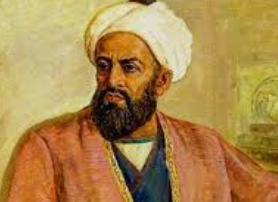
For those endowed with insight there is in reality no object of love but God, nor does anyone but He deserve love Love, Longing, Intimacy and Contentment.
▼
Source
source
Islamic Texts Society. 2011. p. 23. ISBN 978-1-903682-27-2. Translated with an introduction and notes by Eric Ormsby.
5 months 2 weeks ago
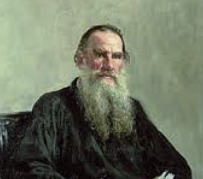
The activity of art is... as important as the activity of language itself, and as universal.
4 months 4 days ago
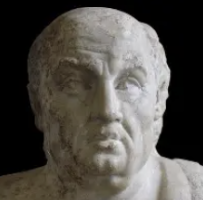
Do you seek Alcides' equal? None is, except himself.
▼
Source
source
line 84; (Juno)

7 months 2 weeks ago
For me, reason is the natural organ of truth; but imagination is the organ of meaning. Imagination, producing new metaphors or revivifying old, is not the cause of truth, but its condition.
▼
Source
source
"Bluspels and Flalansferes: A Semantic Nightmare", Rehabilitations and Other Essays, 1939
3 months 2 weeks ago
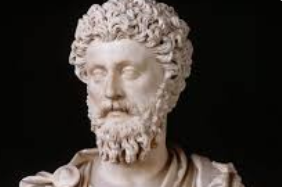
Do not think that what is hard for you to master is humanly impossible; but if a thing is humanly possible, consider it to be within your reach.
▼
Source
source
VI, 19
7 months 2 weeks ago
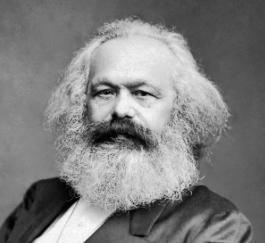
Considering the optimistic turn taken by world trade AT THIS MOMENT...it is some consolation at least that the revolution has begun in Russia, for I regard the convocation of 'notables' to Petersburg as such a beginning. ... On the Continent revolution is imminent and will, moreover, instantly assume a socialist character.
▼
Source
source
Letter to Friedrich Engels (8 October 1858), quoted in The Collected Works of Karl Marx and Friedrich Engels: Volume 40. Letters 1856-59 (2010), pp. 346-347

4 months 1 week ago
For is not a Symbol ever, to him who has eyes for it, some dimmer or clearer revelation of the God-like? B
▼
Source
source
k. III, ch. 3.

6 months 1 week ago
The transition from Hegel to Marx is, in all respects, a transition to an essentially different order of truth, no to be interpreted in terms of philosophy. We shall see that all the philosophical concepts of Marxian theory are social and economic categories, whereas Hegel's social and economic categories are all philosophical concepts.
▼
Source
source
P. 258

5 months 2 weeks ago
Well, Prince, so Genoa and Lucca are now just family estates of the Buonapartes. But I warn you, if you don't tell me that this means war, if you still try to defend the infamies and horrors perpetrated by that Antichrist-I really believe he is Antichrist-I will have nothing more to do with you and you are no longer my friend, no longer my 'faithful slave,' as you call yourself! But how do you do? I see I have frightened you-sit down and tell me all the news.
▼
Source
source
Bk. I, Ch. I
5 months 2 weeks ago
In tetrad form, the artefact is seen to be not netural or passive, but an active logos or utterance of the human mind or body that transforms the user and his ground.
▼
Source
source
p. 99

7 months 3 weeks ago
If the slavery of the parents be unjust, much more is their children's; if the parents were justly slaves, yet the children are born free; this is the natural, perfect right of all mankind; they are nothing but a just recompense to those who bring them up: And as much less is commonly spent on them than others, they have a right, in justice, to be proportionably sooner free.
6 months 2 weeks ago
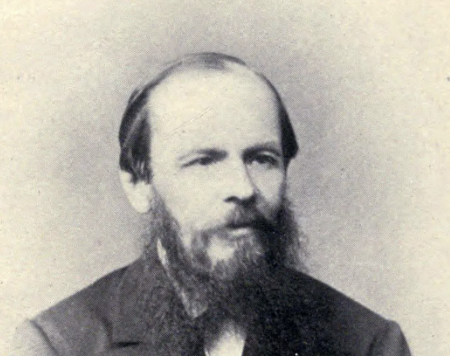
Granted I am a babbler, a harmless vexatious babbler, like all of us. But what is to be done if the direct and sole vocation of every intelligent man is babble, that is, the intentional pouring of water through a sieve?
▼
Source
source
Part 1, Chapter 5

6 months 3 weeks ago
Consider any individual at any period of his life, and you will always find him preoccupied with fresh plans to increase his comfort.
▼
Source
source
Book Three, Chapter XXI.

6 months 2 weeks ago
The need to devour oneself absolves one of the need to believe.
3 months 2 weeks ago
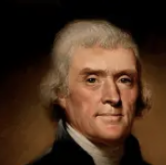
God forbid we should ever be twenty years without such a rebellion. The people cannot be all, and always, well informed. The part which is wrong will be discontented, in proportion to the importance of the facts they misconceive. If they remain quiet under such misconceptions, it is lethargy, the forerunner of death to the public liberty. What country before ever existed a century and half without a rebellion? And what country can preserve its liberties if their rulers are not warned from time to time that their people preserve the spirit of resistance? Let them take arms. The remedy is to set them right as to facts, pardon and pacify them. What signify a few lives lost in a century or two? The tree of liberty must be refreshed from time to time with the blood of patriots and tyrants. It is its natural manure.
▼
Source
source
Letter to William Stephens Smith (13 November 1787). Manuscript at the Library of Congress.
7 months 3 weeks ago
We must calm the mind of the common man, and tell him to abstain from the words and even the passions which lead to insurrection.
▼
Source
source
p. 62
7 months 2 weeks ago
Some old poet's grand imagination is imposed on us as adamantine everlasting truth, and God's own word! Pythagoras says, truly enough, "A true assertion respecting God, is an assertion of God"; but we may well doubt if there is any example of this in literature.
5 months 2 weeks ago
To hold the same views at forty as we held at twenty is to have been stupefied for a score of years, and take rank, not as a prophet, but as an unteachable brat, well birched and none the wiser. It is as if a ship captain should sail to India from the Port of London; and having brought a chart of the Thames on deck at his first setting out, should obstinately use no other for the whole voyage.
▼
Source
source
Crabbed Age and Youth.
3 months 2 weeks ago
Know the joy of life by piling good deed on good deed until no rift or cranny appears between them.
▼
Source
source
XII, 29
7 months 2 weeks ago
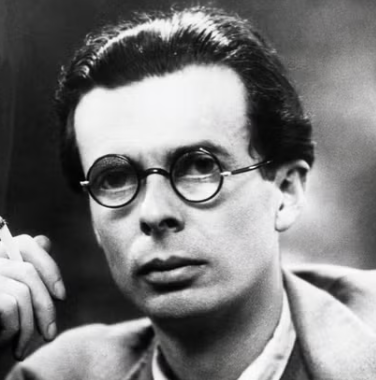
Maybe this world is another planet's Hell.
▼
Source
source
As quoted in Peter's Quotations: Ideas for Our Time (1979) by Laurence J. Peter, p. 239 Point Counter Point (New York: The Modern Library, 1928), Chapter XVII, p. 263
4 months 4 weeks ago
Much more seriously, in those traditional eco-systems that we chose to retain, millions of non-human animals will continue periodically to starve, die horribly of thirst and disease, or even get eaten alive. This is commonly viewed as "natural" and hence basically OK. It would indeed be comforting to think that in some sense this ongoing animal holocaust doesn't matter too much. We often find it convenient to act as though the capacity to suffer were somehow inseparably bound up with linguistic ability or ratiocinative prowess. Yet there is absolutely no evidence that this is the case, and a great deal that it isn't.
▼
Source
source
1.9 The Taste of Depravity

6 months 1 week ago
Everyone knows what made Berkeley notorious. He said that there were no material objects. He said the external world was in some sense immaterial, that nothing existed save ideas - ideas and their authors. His contemporaries thought him very ingenious and a little mad.
5 months 2 days ago
Marriage is tough, because it is woven of all these various elements, the weak and the strong. "In love-ness" is fragile for it is woven only with the gossamer threads of beauty. It seems to me absurd to talk about "happy" and "unhappy" marriages.
4 months 5 days ago
Political freedom means this: that the polis, the state, is free; religious freedom this: that religion is free, just as freedom of conscience indicates that conscience is free; thus, it does not that I am free from state, from religion, from conscience, or that I am rid of them. It does not mean my freedom, but the freedom of a power that rules and vanquishes me; it means that one of my oppressors, like state, religion, conscience, is free.
▼
Source
source
Landstreicher, p. 76
7 months 1 week ago
There is no work so mean, but it would amply serve me to furnish me with sustenance.
▼
Source
source
iv. 35
7 months 1 week ago
You must learn all things, both the unshaken heart of persuasive truth, and the opinions of mortals in which there is no true warranty.
▼
Source
source
Frag B 1.28-30, quoted by Sextus Empiricus, Against the Mathematicians, vii. 3
6 months 3 weeks ago
The New Englander is attached to his township because it is strong and independent; he has an interest in it because he shares in its management; he loves it because he has no reason to complain of his lot; he invests his ambition and his future in it; in the restricted sphere within his scope, he learns to rule society; he gets to know those formalities without which freedom can advance only through revolutions, and becoming imbued with their spirit, develops a taste for order, understands the harmony of powers, and in the end accumulates clear, practical ideas about the nature of his duties and the extent of his rights.
▼
Source
source
Chapter V.
6 months 2 weeks ago
With success and a literary career one becomes an unquestioning part of the mechanism, whereas the only truly important years are those in which one is unknown.
5 months 4 weeks ago
People nowadays have such high hopes of America and the political conditions obtaining there that one might say the desires, at least the secret desires, of all enlightened Europeans are deflected to the west, like our magnetic needles.
▼
Source
source
G 2
5 months 4 weeks ago
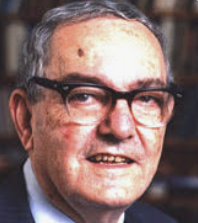
At the time of its initial publication, Public Administration helped to define this field of study and practice by introducing two major new emphases: an orientation toward human behavior and human relations in organizations, and an emphasis on the interaction between administration, politics, and policy. Without neglecting more traditional concerns with organization structure, Simon, Thompson, and Smithburg viewed administration in its behavioral and political contexts. The viewpoints they express still are at the center of public administration's concerns.
▼
Source
source
Book abstract, 1991
CivilSimian.com created by AxiomaticPanic, CivilSimian, Kalokagathia