

5 months 4 weeks ago
The great rule: If the little bit you have is nothing special in itself, at least find a way of saying it that is a little bit special.
▼
Source
source
E 55
8 months 2 weeks ago
Married people pledge love for each other throughout eternity. Well, now, that is easy enough but does not mean very much, for if one is finished with time one is probably finished with eternity. If, instead of saying "throughout eternity," the couple would say, "until Easter, until next May Day," then what they say would make some sense, for then they would be saying something and also something they perhaps could carry out.
7 months 2 weeks ago
The progress from an absolute to a limited monarchy, from a limited monarchy to a democracy, is a progress toward a true respect for the individual.
3 months 2 weeks ago
How easy it is to repel and to wipe away every impression which is troublesome or unsuitable, and immediately to be in all tranquility. To shrug it all off and wipe it clean--every annoyance and distraction--and reach utter stillness. Child's play.
▼
Source
source
(Hays translation) V, 2

3 months 2 weeks ago
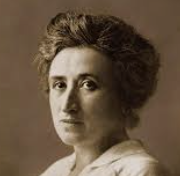
The Bolsheviks themselves will not want, with hand on heart, to deny that, step by step, they have to feel out the ground, try out, experiment, test now one way now another, and that a good many of their measures do not represent priceless pearls of wisdom. Thus it must and will be with all of us when we get to the same point-even if the same difficult circumstances may not prevail everywhere.
▼
Source
source
Chapter Six, "The Problem of Dictatorship"
4 months 5 days ago
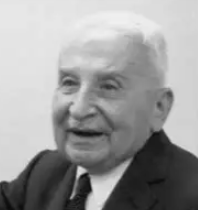
Permanent mass unemployment destroys the moral foundations of the social order. The young people, who, having finished their training for work, are forced to remain idle, are the ferment out of which the most radical political movements are formed. In their ranks the soldiers of the coming revolutions are recruited.
▼
Source
source
Part V : The Economics of a Socialist Community, § V : Destructionism, Ch. 33 : The Motive Powers of Destructionism, p. 440
3 months 2 weeks ago
The Sight cannot decompose a compound colour into simple colours, or distinguish a compound from a simple colour
7 months 2 weeks ago
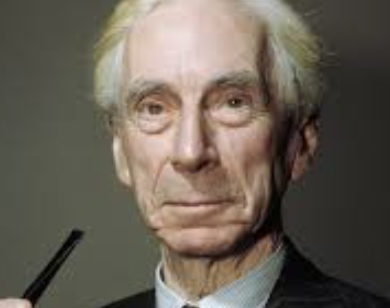
I do wish I believed in the life eternal, for it makes me quite miserable to think man is merely a kind of machine endowed, unhappily for himself, with consciousness.
▼
Source
source
Greek Exercises (1888); at the age of fifteen, Russell used to write down his reflections in this book, for fear that his people should find out what he was thinking.
8 months 1 week ago
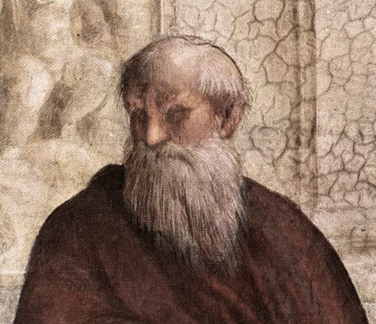
Withdraw into yourself and look. And if you do not find yourself beautiful yet, act as does the creator of a statue that is to be made beautiful: he cuts away here, he smoothes there, he makes this line lighter, this other purer. ... Cut away all that is excessive, straighten all that is crooked, bring light to all that is overcast, labor to make all one glow or beauty and never cease chiseling your statue, until there shall shine out on you from it the godlike splendor of virtue.
5 months 4 weeks ago
Administration is not unlike play-acting. The task of the good actor is to know and play his role, although different roles may differ greatly in content. The effectiveness of the performance will depend on the effectiveness of the play and the effectiveness with which it is played. The effectiveness of the administrative process will vary with the effectiveness of the organization and the effectiveness with which its members play their parts.
▼
Source
source
p. 252; As cited in: Herbert Simon (1996) The Sciences of the Artificial. page xii.
7 months 2 weeks ago
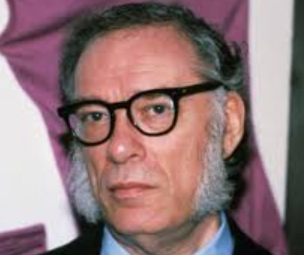
This idea of weapons of mass extermination is utterly horrible and is something which no one with one spark of humanity can tolerate. I will not pretend to obey a government which is organising a mass massacre of mankind.
▼
Source
source
Speech in Birmingham, England encouraging civil disobedience in support of nuclear disarmament, 4/15/1961
8 months 2 weeks ago
476 ... is usually taken as the date of the "fall of the Roman Empire." The date, however, is a false one. No one at this period of time considered that the Roman Empire had "fallen." Indeed, it still existed and was the most powerful realm in Europe. Its capital was at Constantinople and the Emperor was Zeno. It is only because we ourselves are culturally descended from the Roman west, that we tend to ignore the continued existence of the Roman Empire in the east.

4 months 3 weeks ago
The idea of a law of progress, or of an all but irresistible tendency to general improvement, is then merely a superstition, one of the tents of the modernist pseudo-religion of humanism. Even if such a law or tendency existed and were demonstrable, the liberal faith in progress would for Santayana be pernicious. For it leads to a corrupt habit of mind in which things are valued, not for their present excellence or perfection, but instrumentally, as leading to something better; and it insinuates into thought and feeling a sort of historical theodicy, in which past evil is justified as a means to present or future good. The idea of progress embodies a kind of time-worship (to adopt an expression used by Wyndham Lewis) in which the particularities of our world are seen and valued, not in themselves, but for what they might perhaps become, thereby leaving us destitute of the sense of the present and, at the same time, of the perspective of eternity.
▼
Source
source
'Santayana's Alternative' (p.67-8)
6 months 2 weeks ago
Society: an inferno of saviors!
7 months 3 weeks ago
It is the highest impertinence and presumption, therefore, in kings and ministers, to pretend to watch over the economy of private people, and to restrain their expence, either by sumptuary laws, or by prohibiting the importation of foreign luxuries. They are themselves always, and without any exception, the greatest spendthrifts in the society. Let them look well after their own expence, and they may safely trust private people with theirs. If their own extravagance does not ruin the state, that of their subjects never will.
▼
Source
source
Chapter III, p. 381.
7 months 2 weeks ago
How does it become a man to behave toward this American government today? I answered that he cannot without disgrace be associated with it.
3 months 2 weeks ago
The Plan of the System, may aim at a Natural or an Artificial System. But no classes can be absolutely artificial, for if they were, no assertions could be made concerning them.

6 months 4 days ago
The deepest definition of youth is life as yet untouched by tragedy.
▼
Source
source
p. 285.
8 months 2 weeks ago
Of all the books I have ever worked on, I think Asimov's Guide to Shakespeare gave me the most pleasure, day in, day out. For months and months I lived and thought Shakespeare, and I don't see how there can be any greater pleasure in the world, any pleasure, that is, that one can indulge in for as much as ten hours without pause, day after day indefinitely.
5 months 4 weeks ago
When an acquaintance goes by I often step back from my window, not so much to spare him the effort of acknowledging me as to spare myself the embarrassment of seeing that he has not done so.
▼
Source
source
F 155
4 months 3 weeks ago
The belief that torture is always wrong is a prejudice inherited from an obsolete philosophy. We need to shed the belief that human rights are violated when a terrorist is tortured. As Rawls and others have shown, basic freedoms must form a coherent whole. Self-evidently, there can be no right to attack basic human rights. Therefore, once the proper legal procedures are in place, torturing terrorists cannot violate their rights. In fact, in a truly liberal society, terrorists have an inalienable right to be tortured.This is what demonstrates the moral superiority of liberal societies over others, past and present. Other societies have degraded terrorists by subjecting them to lawless and unaccountable power. In the new world that is taking shape, terrorists, although they themselves degrade human rights by practising terrorism, will be afforded the full dignity of due legal process, even while being tortured.
4 months 1 week ago
In the long run my observations have convinced me that some men, reasoning preposterously, first establish some conclusion in their minds which, either because of its being their own or because of their having received it from some person who has their entire confidence, impresses them so deeply that one finds it impossible ever to get it out of their heads. Such arguments in support of their fixed idea as they hit upon themselves or hear set forth by others, no matter how simple and stupid these may be, gain their instant acceptance and applause. On the other hand whatever is brought forward against it, however ingenious and conclusive, they receive with disdain or with hot rage - if indeed it does not make them ill. Beside themselves with passion, some of them would not be backward even about scheming to suppress and silence their adversaries.
▼
Source
source
p. 322
5 months 2 weeks ago
Renaissance Italy became a kind of Hollywood collection of sets of antiquity, and the new visual antiquarianism of the Renaissance provided an avenue to power for men of any class.
▼
Source
source
(p. 136)
8 months 1 week ago
I prefer a short life with width to a narrow one with length.
6 months 2 weeks ago
A certain maxim of Logic which I have called Pragmatism has recommended itself to me for diverse reasons and on sundry considerations. Having taken it as my guide for most of my thought, I find that as the years of my knowledge of it lengthen, my sense of the importance of it presses upon me more and more. If it is only true, it is certainly a wonderfully efficient instrument. It is not to philosophy only that it is applicable. I have found it of signal service in every branch of science that I have studied. My want of skill in practical affairs does not prevent me from perceiving the advantage of being well imbued with pragmatism in the conduct of life.
▼
Source
source
Lecture I : Pragmatism : The Normative Sciences, CP 5.14
7 months 2 weeks ago
His obedience is real since he really and truly fulfills his mission, since he runs real risks in order to carry out the beloved's orders. But, on the other hand, it is imaginary because he submits only to a creature of his mind.
▼
Source
source
p. 152
6 months 2 weeks ago
In effect, to follow, not to force the public inclination; to give a direction, a form, a technical dress, and a specific sanction, to the general sense of the community, is the true end of legislature.
3 months 2 weeks ago
The best revenge is not to be like your enemy.
▼
Source
source
VI, 6
6 months 2 weeks ago
The evil of marriage, as is it practiced in the European countries, extends further than we have yet described. The method is for a thoughtless and romantic youth of each sex, to come together, to see each other, for a few times, and under circumstances full of delusion and then to vow eternal attachment. What is the consequence of this? In almost every instance they find themselves deceived. They are reduced to make the best of an irretrievable mistake. They are led to conceive it their wiser policy, to shut their eyes upon realities, happy, if by any perversion of intellect, they can persuade themselves that they were right in their first crude opinion of each other. Thus the institution of marriage is made a system of fraud; and men who carefully mislead their judgement in the daily affair of their life, must be expected to have a crippled judgement in every other concern.
6 months 4 days ago
Buddhism is the most colossal example in the history of applied metaphysics.
▼
Source
source
in Verhoeven, Martin J. 2001. "Buddhism and Science: Probing the Boundaries Of Faith and Reason." Religion East and West (1): 77-97.
7 months 3 weeks ago
The oldest and best known evil was ever more supportable than one that was new and untried.
▼
Source
source
Book III, Ch. 9. Of Vanity
6 months 2 days ago
Psychological disorders are symptoms of a blocked story... The patient is cured the moment she narrates herself free.
7 months 3 weeks ago
The Christian Religion not only was at first attended with miracles, but even at this day cannot be believed by any reasonable person without one. Mere reason is insufficient to convince us of its veracity: and whoever is moved by Faith to assent to it, is conscious of a continued miracle in his own person, which subverts all the principles of his understanding, and gives him a determination to believe what is most contrary to custom and experience.
▼
Source
source
Section 10 : Of Miracles Pt. 2
6 months 2 weeks ago
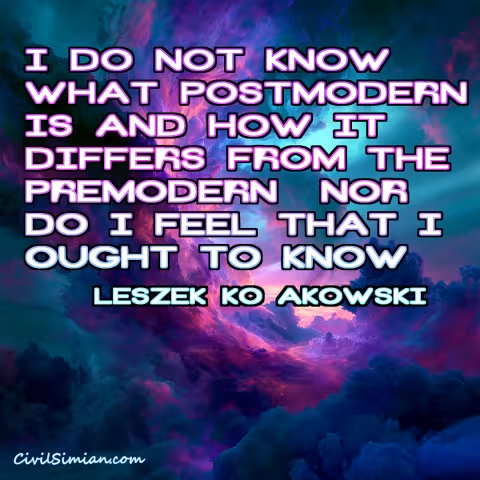
To have failed in everything, always, out of a love of discouragement.
5 months 1 week ago
The idea that the citizen owes loyalty to a country, a territory, a jurisdiction and all those who reside within it - the root assumption of democratic politics, and one that depends upon the nation as its moral foundation - that idea has no place in the minds and hearts of many who now call themselves citizens of European states.
5 months 5 days ago
There is no alleviation for the sufferings of mankind except veracity of thought and of action, and the resolute facing of the world as it is, when the garment of make-believe, by which pious hands have hidden its uglier features, is stripped off.
▼
Source
source
Autobiography
6 months 2 weeks ago
The power of discretionary disqualification by one law of Parliament, and the necessity of paying every debt of the Civil List by another law of Parliament, if suffered to pass unnoticed, must establish such a fund of rewards and terrors as will make Parliament the best appendage and support of arbitrary power that ever was invented by the wit of man. This is felt. The quarrel is begun between the Representatives and the People. The Court Faction have at length committed them. In such a strait the wisest may well be perplexed, and the boldest staggered. The circumstances are in a great measure new. We have hardly any land-marks from the wisdom of our ancestors, to guide us. At best we can only follow the spirit of their proceeding in other cases.
▼
Source
source
Volume i, p. 516
3 months 2 weeks ago
We are all attached to the throne of the Supreme Being by a supple chain that restrains us without enslaving us. Nothing is more admirable in the universal order of things than the action of free beings under the divine hand. Freely slaves, they act voluntarily and necessarily at the same time; they really do what they will, but without being able to disturb the general plans. Each of these beings occupies the centre of a sphere of activity whose diameter varies according to the will of the Eternal Geometer, who can extend, restrict, check, or direct the will without altering its nature.
8 months 1 week ago
What Heaven has conferred is called The Nature; an accordance with this nature is called The Path of duty; the regulation of this path is called Instruction. The path may not be left for an instant. If it could be left, it would not be the path. On this account, the superior man does not wait till he sees things, to be cautious, nor till he hears things, to be apprehensive.
7 months 2 weeks ago
Gradually the village murmur subsided, and we seemed to be embarked on the placid current of our dreams, floating from past to future as silently as one awakes to fresh morning or evening thoughts.
8 months 2 weeks ago
It occurs to me that artists go forward by going backward, something which I have nothing against intrinsically when it is a reproduced retreat - as is the case with the better artists. But it does not seem right that they stop with the historical themes already given and, so to speak, think that only these are suitable for poetic treatment, because these particular themes, which intrinsically are no more poetic than others, are now again animated and inspirited by a great poetic nature. In this case the artists advance by marching on the spot. - Why are modern heroes and the like not just as poetic? Is it because there is so much emphasis on clothing the content in order that the formal aspect can be all the more finished?
7 months 2 weeks ago
The tendency of our perceptions is to emphasise increasingly the objective elements in an impression, unless we have some special reason, as artists have, for doing the opposite.
▼
Source
source
An Outline of Philosophy Ch.15 The Nature of our Knowledge of Physics, 1927
6 months 3 weeks ago
Darkness and light divide the course of time, and oblivion shares with memory, a great part even of our living beings; we slightly remember our felicities, and the smartest strokes of affliction leave but short smart upon us. Sense endureth no extremities, and sorrows destroy us or themselves. To weep into stones are fables.
▼
Source
source
Chapter V
7 months 1 week ago
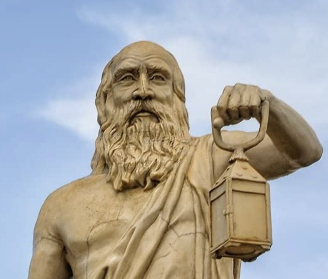
Virtue cannot dwell with wealth either in a city or in a house.
▼
Source
source
Stobaeus, iv. 31c. 88
7 months 2 weeks ago
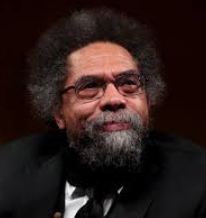
If the only alternative to fascism we produce is a corporate-driven, milquetoast, neoliberal Democratic Party, fascism will come to America. Let us be very clear. It's like a Weimar America.
▼
Source
source
Speaking to Chris Hedges on The Real News Network, Cornel West's presidential candidacy is 'for the least of these'. June 16, 2023.
3 months 3 weeks ago
The fundamental principle underlying all justifications of war, from the point of view of human personality, is 'heroism'. War, it is said, offers man the opportunity to awaken the hero who sleeps within him. War breaks the routine of comfortable life; by means of its severe ordeals, it offers a transfiguring knowledge of life, life according to death. The moment the individual succeeds in living as a hero, even if it is the final moment of his earthly life, weighs infinitely more on the scale of values than a protracted existence spent consuming monotonously among the trivialities of cities. From a spiritual point of view, these possibilities make up for the negative and destructive tendencies of war, which are one-sidedly and tendentiously highlighted by pacifist materialism. War makes one realise the relativity of human life and therefore also the law of a 'more-than-life', and thus war has always an anti-materialist value, a spiritual value.
▼
Source
source
p. 21
CivilSimian.com created by AxiomaticPanic, CivilSimian, Kalokagathia