

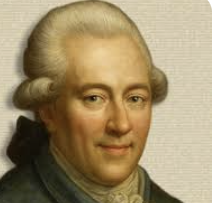
4 months 1 week ago
Affectation is a very good word when someone does not wish to confess to what he would none the less like to believe of himself.
▼
Source
source
F 149
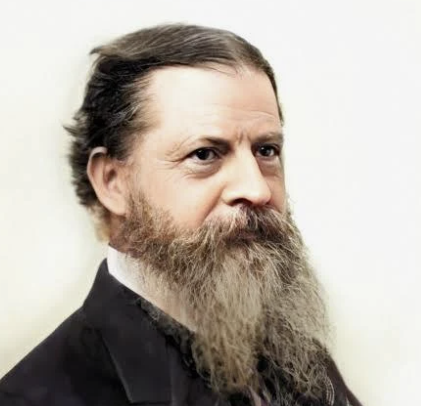
4 months 3 weeks ago
If we endeavor to form our conceptions upon history and life, we remark three classes of men. The first consists of those for whom the chief thing is the qualities of feelings. These men create art. The second consists of the practical men, who carry on the business of the world. They respect nothing but power, and respect power only so far as it [is] exercized. The third class consists of men to whom nothing seems great but reason. If force interests them, it is not in its exertion, but in that it has a reason and a law. For men of the first class, nature is a picture; for men of the second class, it is an opportunity; for men of the third class, it is a cosmos, so admirable, that to penetrate to its ways seems to them the only thing that makes life worth living.
▼
Source
source
Vol. I, par. 43

6 months 2 weeks ago
So the Church too, like Mary, enjoys perpetual virginity and uncorrupted fecundity.
▼
Source
source
195:2
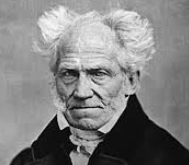
6 months 1 day ago
The discovery of truth is prevented more effectively, not by the false appearance things present and which mislead into error, not directly by weakness of the reasoning powers, but by preconceived opinion, by prejudice.
▼
Source
source
Vol. 2, Ch. 1, § 17
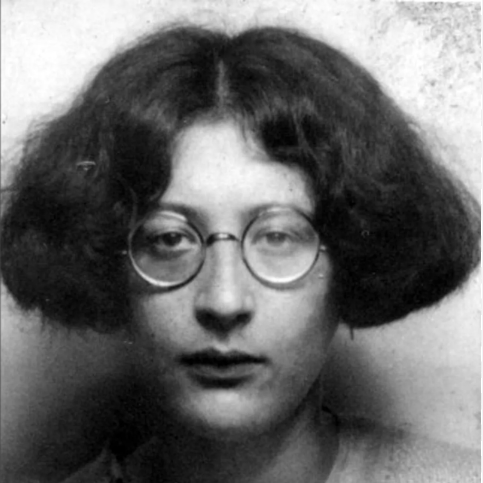
4 months 2 weeks ago
Might is that which makes a thing of anybody who comes under its sway. When exercised to the full, it makes a thing of man in the most literal sense, for it makes him a corpse.
▼
Source
source
in The Simone Weil Reader, p. 153
4 months 2 weeks ago
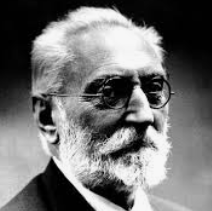
Yes, I know well that others before me have felt what I feel and express; that many others feel it today, although they keep silence about it. ...And I do not keep silence about it because it is for many the thing which must not be spoken, the abomination of abominations - infandum - and I believe that it is necessary now and again to speak the thing which must not be spoken. ...Even if it should lead only to irritating the devotees of progress, those who believe that truth is consolation, it would lead to not a little. To irritating them and making them say: "Poor fellow! if he would only use his intelligence to better purpose!... Someone perhaps will add that I do not know what I say, to which I shall reply that perhaps he may be right - and being right is such a little thing! - but that I feel what I say and I know what I feel and that suffices me. And that it is better to be lacking in reason than to have too much of it.
4 months 1 week ago
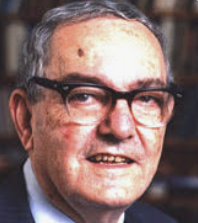
Global rationality, the rationality of neoclassical theory, assumes that the decision maker has a comprehensive, consistent utility function, knows all the alternatives that are available for choice, can compute the expected value of utility associated with each alternative, and chooses the alternative that maximizes expected utility. Bounded rationality, a rationality that is consistent with our knowledge of actual human choice behavior, assumes that the decision maker must search for alternatives, has egregiously incomplete and inaccurate knowledge about the consequences of actions, and chooses actions that are expected to be satisfactory (attain targets while satisfying constraints).
▼
Source
source
Simon (1997, p. 17); As cited in: Gustavo Barros (2010, p. 460).

6 months 2 weeks ago
We can open our hearts to God, but only with Divine help.
▼
Source
source
q. 24, art. 15, ad 2

6 months 1 week ago
Another argument of hope may be drawn from this - that some of the inventions already known are such as before they were discovered it could hardly have entered any man's head to think of; they would have been simply set aside as impossible. For in conjecturing what may be men set before them the example of what has been, and divine of the new with an imagination preoccupied and colored by the old; which way of forming opinions is very fallacious, for streams that are drawn from the springheads of nature do not always run in the old channels.
▼
Source
source
Aphorism 109

6 months 3 weeks ago
If there is a sin against life, it consists perhaps not so much in despairing of life as in hoping for another life and in eluding the implacable grandeur of this life.
6 months ago
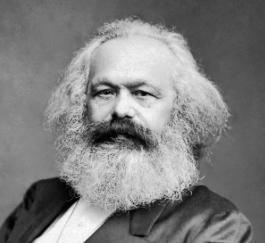
The need of a constantly expanding market for its products chases the bourgeoisie over the whole surface of the globe. It must nestle everywhere, settle everywhere, establish connections everywhere.
▼
Source
source
Section 1, paragraph 19

4 months 1 week ago
Why have women passion, intellect, moral activity - these three - and a place in society where no one of the three can be exercised? Men say that God punishes for complaining. No, but men are angry with misery. They are irritated with women for not being happy. They take it as a personal offence. To God alone may women complain without insulting Him!
6 months 2 days ago
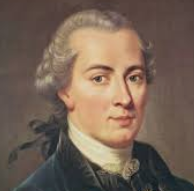
Nature, therefore, is subject with absolute precision to all the precepts of geometry as to all the properties of space there demonstrated, this being the subjective condition, not hypothetically but intuitively given, of every phenomenon in which nature can ever be revealed to the senses.
6 months 3 days ago
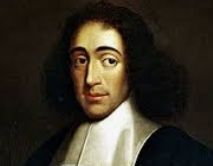
This endeavour to do a thing or leave it undone, solely in order to please men, we call ambition, especially when we so eagerly endeavour to please the vulgar, that we do or omit certain things to our own or another's hurt : in other cases it is generally called kindliness.
▼
Source
source
Part III, Prop. XXIX

5 months 3 weeks ago
Most of the texts... preserved from this period come from writers... either... affiliated with the aristocratic party, or... distrustful of democratic or radically democratic institutions.
6 months 1 week ago
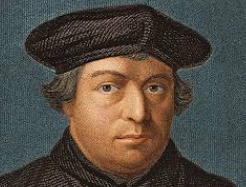
Regarding the plan to collect my writings in volumes, I am quite cool and not at all eager about it because, roused by a Saturnian hunger, I would rather see them all devoured. For I acknowledge none of them to be really a book of mine, except perhaps the one On the Bound Will and the Catechism.
▼
Source
source
Letter to Wolfgang Capito
2 months 3 weeks ago
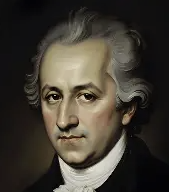
Should I not be proud, when for twenty years I have had to admit to myself that the great Newton and all the mathematicians and noble calculators along with him were involved in a decisive error with respect to the doctrine of color, and that I among millions was the only one who knew what was right in this great subject of nature?
▼
Source
source
Letter to Eckermann
5 months 4 weeks ago
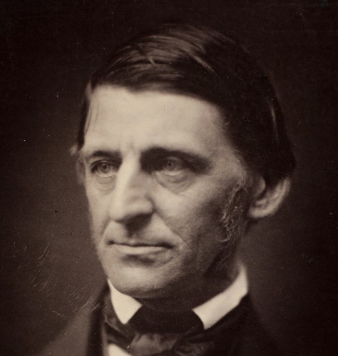
As there is a use in medicine for poisons, so the world cannot move without rogues.
▼
Source
source
Power

4 months 1 week ago
When, in the course of human development, existing institutions prove inadequate to the needs of man, when they serve merely to enslave, rob, and oppress mankind, the people have the eternal right to rebel against, and overthrow, these institutions.
7 months ago
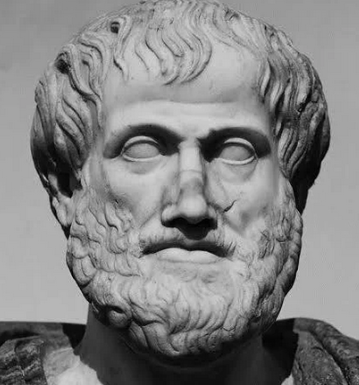
Just as it sometimes happens that deformed offspring are produced by deformed parents, and sometimes not, so the offspring produced by a female are sometimes female, sometimes not, but male, because the female is as it were a deformed male.
2 months 3 weeks ago
Names and attributes must be accommodated to the essence of things, and not the essence to the names, since things come first and names afterwards.
▼
Source
source
As quoted in Discoveries and Opinions of Galileo (1957) by Stillman Drake, p. 92

5 months 4 days ago
There is hardly a pioneer's hut which does not contain a few odd volumes of Shakespeare. I remember reading the feudal drama of Henry V for the first time in a log cabin.
▼
Source
source
Book One, Chapter XIII.
5 months 4 weeks ago
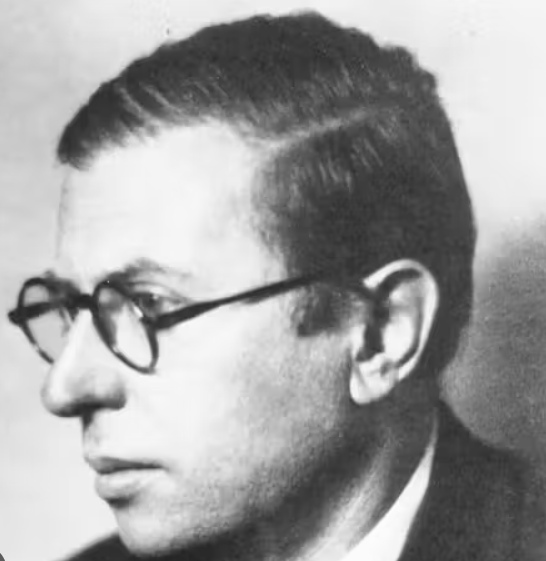
You must be afraid, my son. That is how one becomes an honest citizen.
▼
Source
source
Mother to her young son, Act 1
4 months 2 weeks ago
In the products of the culture industry human beings get into trouble only so that they can be rescued unharmed, usually by representatives of a benevolent collective; and then, in illusory harmony, they are reconciled with the general interest whose demands they had initially experienced as irreconcilable with their own.
▼
Source
source
Section 14
5 months 3 weeks ago
In the tragedies of the early seventeenth century, madness too provided the dénouement, but it did so in liberating the truth. It still opened onto language, to a renewed form of speech, that of explanation and of the real regained. The most it could ever be was the penultimate moment of tragedy. Not the closing moment, as in Andromaque, where no truth appears, other than, in Delirium, the truth of a passion that finds its fullest, most perfect expression in madness.
▼
Source
source
Part Two: 2. The Transcendence of Delirium
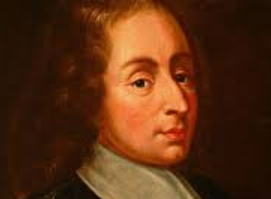
6 months 1 week ago
People almost invariably arrive at their beliefs not on the basis of proof but on the basis of what they find attractive.
▼
Source
source
De l'Art de persuader ["On the Art of Persuasion"], written 1658; published posthumously.
3 months 3 weeks ago
Man works when he is partially involved. When he is totally involved he is at play or leisure.
6 months ago
The theory of Communism may be summed up in the single sentence: Abolition of private property.
▼
Source
source
Section 2, paragraph 13.

5 months 5 days ago
Time which antiquates Antiquities, and hath an art to make dust of all things.
▼
Source
source
Chapter V

5 months 2 weeks ago
I am not bound over to swear allegiance to any master; where the storm drives me I turn in for shelter.
▼
Source
source
Book I, epistle i, line 14
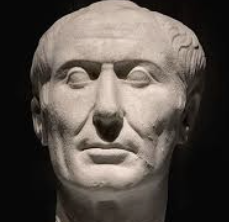
3 months 3 weeks ago
Even when the wound is healed, the scar remains.
▼
Source
source
Maxim 236
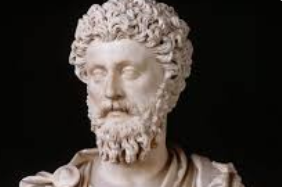
1 month 3 weeks ago
Death, like generation, is a secret of Nature.
▼
Source
source
IV, 5
6 months ago
The good life is one inspired by love and guided by knowledge.
5 months 4 weeks ago
The perception of the comic is a tie of sympathy with other men, a pledge of sanity, and protection from those perverse tendencies and gloomy insanities in which fine intellects sometimes lose themselves. A rogue alive to the ludicrous is still convertible.
▼
Source
source
The Comic
6 months ago
The law of causality, I believe, like much that passes muster among philosophers, is a relic of a bygone age, surviving, like the monarchy, only because it is erroneously supposed to do no harm.
▼
Source
source
Ch. 9: On the Notion of Cause
6 months ago
Ramsgate is full of Jews and fleas.
▼
Source
source
MEKOR IV, 490, 25 August 1879
1 month 3 weeks ago
Very little is needed to make a happy life.
▼
Source
source
VII, 67
6 months 1 day ago
Wherever Law ends, Tyranny begins.
▼
Source
source
Second Treatise of Government, Sec. 202

5 months 2 weeks ago
I would rather discover one cause than gain the kingdom of Persia.
▼
Source
source
Freeman (1948), p. 155
2 months ago
The centuries are thick, dark waves that rise and fall, steeped in blood. Every moment is a gaping abyss. Gaze on the dark sea without staggering, confront the abyss every moment without illusion or impudence or fear. ... But this is not enough; take a further step: battle to give meaning to the confused struggles of man.


2 months ago
Every village has its simpleton, and if one does not exist they invent one to pass the time.
▼
Source
source
Ch. 8
1 month 3 weeks ago
Thou art a little soul bearing about a corpse, as Epictetus used to say.
▼
Source
source
IV, 41
6 months 2 weeks ago
When the apostle James was talking about faith and works against those who thought their faith was enough, and didn't want to have good works, he said, You believe God is one; you do well; the demons also believe, and tremble.
▼
Source
source
(Jas 2:19) 183:13:2
6 months 1 week ago
Lastly, we must also know what Baptism signifies, and why God has ordained just such external sign and ceremony for the Sacrament by which we are first received into the Christian Church. But the act or ceremony is this, that we are sunk under the water, which passes over us, and afterwards are drawn out again. These two parts, to be sunk under the water and drawn out again, signify the power and operation of Baptism, which is nothing else than putting to death the old Adam, and after that the resurrection of the new man, both of which must take place in us all our lives, so that a truly Christian life is nothing else than a daily baptism, once begun and ever to be continued.
▼
Source
source
On Infant Baptism, Large Catechism
5 months 4 weeks ago
The cup of life is not so shallow
That we have drained the best
That all the wine at once we swallow
And lees make all the rest.
▼
Source
source
1827
6 months ago
What do you think of the aspect of the money market? ... This time, by the by, the thing has assumed European dimensions such as have never been seen before, and I don't suppose we'll be able to spend much longer here merely as spectators. The very fact that I've at last got round to setting up house again and sending for my books seems to me to prove that the 'mobilisation' of our persons is AT HAND.
▼
Source
source
Letter to Friedrich Engels (26 September 1856), quoted in The Collected Works of Karl Marx and Friedrich Engels: Volume 40. Letters 1856-59 (2010), pp. 71-72
3 months 3 weeks ago
The meaning of experience is typically one generation behind the experience. The content of new situations, both private and corporate, is typically the preceding situation.
▼
Source
source
quoted in "The Prospects of Recording" by Glenn Gould, The Glenn Gould reader, 1984, p. 345
6 months 3 days ago
The trade of insurance gives great security to the fortunes of private people, and by dividing among a great many that loss which would ruin an individual, makes it fall light and easy upon the whole society.
▼
Source
source
Chapter I, Part III, p. 821.
2 months 3 weeks ago
I can die when I wish to: that is my elixir of life.
▼
Source
source
The Republic.
CivilSimian.com created by AxiomaticPanic, CivilSimian, Kalokagathia