
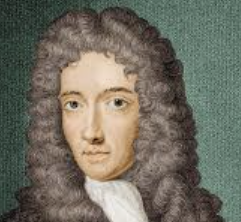
Robert Boyle — Experiment, Piety, and the Birth of Modern Chemistry (1627–1691)
Robert Boyle was an Irish natural philosopher, chemist, and theologian whose insistence on rigorous experiment and mechanical explanation helped transform natural philosophy into something recognizable as modern science.
A founding member of the Royal Society, a tireless experimenter, and a deeply sincere Christian who saw the investigation of nature as an act of worship, he occupied a pivotal position in the history of thought — at the hinge between the ancient world of Aristotle and alchemy and the modern world of chemistry and physics.
His central concern: that nature should be interrogated by experiment rather than explained by authority — and that honest, repeatable, publicly reported observation was the only foundation on which genuine knowledge could be built.
The Sceptical Chymist and the Death of Alchemy
Boyle's most celebrated work, published in 1661, subjected the foundational assumptions of both Aristotelian natural philosophy and Paracelsian alchemy to sustained critical scrutiny.
Aristotle had held that all matter was composed of four elements — earth, water, fire, and air. The alchemists had proposed three principles — salt, sulfur, and mercury. Boyle rejected both frameworks, arguing that neither had been established by experiment and that the concept of an element should be reserved for substances that experiment could not further decompose.
This was a methodological revolution as much as a chemical one — the insistence that chemical theory must answer to the laboratory, not to inherited philosophical frameworks, however ancient and venerable. It set the agenda for chemistry for the next two centuries, pointing directly toward Lavoisier's table of elements and the modern periodic table beyond it.
Boyle did not complete the revolution he began — he never produced a satisfactory account of what elements actually are — but he cleared the ground that made completion possible.
"I mean by elements certain primitive and simple bodies, which not being made of any other bodies, or of one another, are the ingredients of which all those called perfectly mixed bodies are immediately compounded."
Boyle's Law and the Air Pump
Boyle's most famous scientific contribution was his discovery of the relationship between the pressure and volume of a gas — the law that bears his name: at constant temperature, the pressure and volume of a gas are inversely proportional.
The discovery emerged from his work with the air pump — an instrument he improved and used to conduct a celebrated series of experiments on the properties of air and vacuum, demonstrating that sound cannot travel through a vacuum, that flame requires air to burn, and that animals require air to live.
These experiments were more than technical achievements. They were public performances of a new kind of knowledge-making — carefully staged, witnessed by observers, reported in detail with all the circumstances of the experiment, and explicitly invited the replication and scrutiny of others.
Boyle helped establish not just results but a culture of experiment — the shared norms of transparency, replication, and communal validation that constitute the practice of science as a social institution.
"The nature of things is best interpreted by experiment, not by the speculations of the schools."
The Mechanical Philosophy
Boyle was one of the principal architects of what became known as the mechanical philosophy — the program of explaining natural phenomena entirely in terms of matter and motion, without appeal to the occult qualities, substantial forms, or hidden sympathies of scholastic natural philosophy.
He argued that all chemical and physical phenomena could in principle be explained by the size, shape, and motion of invisible particles of matter — a corpuscular hypothesis that anticipated atomic theory and placed chemistry on a mechanical footing for the first time.
Crucially, Boyle held that the mechanical philosophy was not atheistic but theological — a world machine of such intricacy and order was stronger evidence for a divine designer than any appeal to occult forces or animistic nature. God was the great mechanic; natural philosophers were reading his blueprints.
This integration of mechanical science and Christian piety was characteristic of Boyle throughout his life — and made his work acceptable, even admirable, to audiences that might otherwise have found its implications threatening.
"The world is like a great clock, in which the several parts have such a relation to each other that you cannot well understand any one of them without considering its connection with the rest."
Theology, Piety, and the Boyle Lectures
Boyle's Christianity was not nominal or conventional — it was the animating center of his intellectual life. He learned Hebrew, Greek, and Syriac to read scripture in the original languages. He funded translations of the Bible into multiple languages, including Turkish and Irish. He declined the presidency of the Royal Society on the grounds that the required oath conflicted with his religious scruples.
In his will he endowed the Boyle Lectures — an annual series of sermons defending Christianity against what he called "notorious infidels" — a lecture series that continued into the eighteenth century and brought together natural theology and mechanical philosophy in the synthesis that shaped British religious thought for a hundred years after his death.
He saw no contradiction between experimental rigor and religious devotion — each, for him, was an expression of the same fundamental honesty before a creation he found inexhaustibly wonderful.
"God would not have given us the faculties we have for investigating nature if He had not intended us to use them."
Legacy — The Father of Chemistry and the Culture of Experiment
Boyle is often called the father of modern chemistry — a title that overstates his systematic achievements but captures something real about his role. He did not complete chemistry's transformation but he made that transformation imaginable and necessary, establishing both its methods and its aspirations.
His deeper legacy may be institutional and cultural rather than purely scientific. The norms he helped establish — public reporting of experimental conditions, invitation to replication and criticism, separation of natural philosophy from theological authority — are the norms that make science a self-correcting enterprise rather than another form of dogma.
In the company of Herschel, Whewell, and Clifford on CivSim, he stands as another figure in the long conversation about what honest inquiry demands — and about the kind of community that genuine knowledge requires.
He was a wealthy aristocrat who chose the laboratory when he could have chosen comfort, a devout Christian who chose experiment when he could have chosen authority, and a careful reasoner who chose uncertainty when certainty was available at the cost of honesty. In each case the choice defined him — and helped define the practice that followed.
"He that thoroughly understands the nature of ferments and fermentations shall probably be much better able than those that are ignorant of them to give a fair account of diverse phenomena of several diseases."
CivilSimian.com created by AxiomaticPanic, CivilSimian, Kalokagathia