
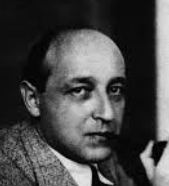
Karl Mannheim — Ideology, Utopia, and the Sociology of Knowledge (1893–1947)
Karl Mannheim was a Hungarian-born sociologist and philosopher whose foundational work on the sociology of knowledge transformed how the twentieth century understood the relationship between thought, society, and power.
Working at the intersection of sociology, philosophy, and political theory, he asked a question that had been avoided by most previous thinkers: if all knowledge is shaped by the social position of the knower, what happens to the claim that any knowledge is simply true?
His central concern: that ideas do not float free of the social conditions that produce them — and that understanding those conditions is not a relativist concession but the only honest path to genuine knowledge in a world divided by ideology.
Ideology and Utopia
Mannheim's masterwork, published in 1929, drew a sharp and illuminating distinction between two modes of thought that distort our understanding of social reality.
Ideology, in his usage, refers to thought that serves the interests of those who benefit from the existing order — ideas that present the current arrangement of society as natural, necessary, or divinely ordained, concealing the historical contingency of arrangements that benefit the powerful.
Utopia, by contrast, refers to thought that transcends the existing order — visions of a different world that are oriented toward transformation rather than preservation. Utopian thought is not simply false; it is incongruent with reality as it currently exists because it reaches toward a reality not yet achieved.
Both modes distort, but in opposite directions — ideology downward into the past, utopia upward toward an imagined future. Mannheim's sociology of knowledge aimed to make both visible, and in doing so to create the conditions for a more honest apprehension of the present.
"The concept of utopian thinking reflects the opposite discovery of the political struggle — namely that certain oppressed groups are intellectually so strongly interested in the destruction of the existing order that they unwittingly see only those elements which tend to negate it."
The Sociology of Knowledge
Mannheim's deepest contribution was his systematic exploration of the thesis that knowledge is socially situated — that what people believe, and how they reason, is shaped by their class position, their generation, their national and cultural location, and their place within the historical moment they inhabit.
This was not a new observation — Marx had argued that ruling ideas are the ideas of the ruling class. Mannheim's innovation was to apply the critique universally, including to Marxism itself. If all thought is socially conditioned, then the Marxist critique of ideology is also conditioned — the proletariat's perspective, however politically valuable, is not a view from nowhere any more than the bourgeoisie's.
This universalization of the social conditioning of thought raised what Mannheim acknowledged was a painful problem: if every perspective is partial, is any claim to truth possible? His answer was careful — not relativism, but relationism: the recognition that all perspectives are partial does not mean they are equally valid or equally blind, only that none of them can claim final completeness.
The task is to hold multiple perspectives in view simultaneously, mapping their partialities against each other in the hope of a more adequate, if never final, synthesis.
"The sociology of knowledge is concerned not with the truth-value of knowledge but with the varying ways in which objects present themselves to the observer according to the social setting."
The Free-Floating Intelligentsia
Mannheim's most controversial proposal was his concept of the relatively unattached intelligentsia — what he called the freischwebende Intelligenz, usually translated as the free-floating intelligentsia.
Intellectuals, he argued, occupy a peculiar social position — recruited from multiple classes, trained in traditions that cross national and cultural boundaries, subject to competing loyalties and perspectives. This relative detachment from any single class position gives them a potential, though never guaranteed, capacity for the kind of synthetic, multi-perspectival thinking that the sociology of knowledge demands.
Critics attacked this as naive — intellectuals are no less embedded in social interests than anyone else, and often more self-serving. Mannheim conceded the point but held the aspiration: the intelligentsia might not achieve genuine synthesis, but they were better positioned to attempt it than any class whose thought is wholly determined by its immediate material interests.
The concept remains productive and contested — a serious attempt to identify where, within a socially conditioned world, something like genuine critical reflection might take root.
"The possibility of transcending one's own social perspective is never complete — but neither is it impossible."
Planning, Democracy, and the Crisis of Culture
Mannheim's later work, written after his flight from Nazi Germany to Britain in 1933, turned from diagnosis to prescription. "Man and Society in an Age of Reconstruction" and "Freedom, Power and Democratic Planning" grappled with the question of how democratic societies could survive the twin threats of fascism and Stalinist communism.
He argued for what he called "planning for freedom" — a middle path between laissez-faire liberalism, which he saw as producing the social disintegration that made fascism possible, and totalitarian planning, which destroyed the individual freedoms that gave democratic life its meaning.
Democratic societies needed enough collective coordination to maintain social cohesion and shared values — but coordination that preserved rather than eliminated the diversity and spontaneity from which genuine cultural life grows. It was a difficult balance he never fully resolved, but the question he posed has never been more pressing.
"We are living in an age of social and intellectual transition — in such an age, planned thinking is a necessity, not a luxury."
Legacy — The Indispensable Uncomfortable Question
Mannheim died in London in 1947, just as the postwar world was beginning to take shape around the very tensions he had spent his life analyzing.
His influence on sociology, the philosophy of social science, cultural studies, and the theory of ideology has been enormous and frequently unacknowledged — the concepts he introduced have become so foundational that they are often used without reference to their source.
The question he put at the center of intellectual life — whose knowledge, from whose position, in whose interest — has never been more alive than in a media environment where the social situatedness of every perspective is both more visible and more weaponized than at any previous moment in history.
He offers no comfortable resolution to this — only the insistence that the discomfort of acknowledging the partiality of one's own perspective is the beginning of honest thought, not its defeat.
"The person who has experienced many different kinds of reality will naturally be suspicious of any claim to have achieved a final and complete picture of the world."
CivilSimian.com created by AxiomaticPanic, CivilSimian, Kalokagathia