
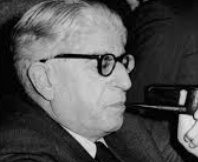
Ernst Bloch — Hope, Utopia, and the Not-Yet (1885–1977)
Ernst Bloch was a German Marxist philosopher whose sprawling, visionary body of work placed hope at the center of human experience and utopian longing at the heart of history itself.
Combining Marxist historical analysis with messianic theology, Expressionist aesthetics, and an encyclopedic range that swept from fairy tales to architecture to music to revolution, he constructed a philosophy unlike anything else in the Western tradition.
His central concern: that the human being is fundamentally an anticipatory creature — that what drives us is not memory of the past but the pull of a future that has not yet arrived, and that this orientation toward the not-yet is the deepest truth about what we are.
The Principle of Hope
Bloch's masterwork, "The Principle of Hope," written in American exile during the Second World War and published in three volumes between 1954 and 1959, is one of the most ambitious philosophical projects of the twentieth century.
Spanning over thirteen hundred pages, it catalogues the entire archive of human hoping — daydreams, fairy tales, folk songs, carnival, travel, cinema, medical utopias, social utopias, architectural utopias, religious visions of paradise and redemption — reading all of them as expressions of a single underlying drive: the hunger for a world that is not yet but could be.
Bloch argued that this drive is not escapism or illusion. It is the most serious thing about human beings — the recognition, however distorted, that reality is unfinished, that the world contains possibilities not yet actualized, and that the task of philosophy is to make those possibilities conscious and available for transformation.
Hope, for Bloch, is not wishful thinking. It is a cognitive act — a way of reading the world for what it is straining to become.
"The world is full of propensity toward something, tendency toward something, latency of something — and this intended something means fulfillment of the intending."
The Not-Yet and the Ontology of the Future
At the core of Bloch's philosophy is a radical reorientation of ontology — the philosophical study of what exists.
Traditional ontology, he argued, is biased toward the past and the present — toward what has been and what is. Being is treated as something fixed, completed, available for description. But Bloch insisted that reality is fundamentally open — that the present moment contains within it a surplus that has not yet been realized, a not-yet-conscious and not-yet-become that is as real as anything already actual.
The not-yet is not nothing. It is the horizon toward which all living things tend — the dimension of reality that is genuinely new, genuinely possible, genuinely at stake.
To take the not-yet seriously is to understand that the world is not finished — and that human beings, uniquely among creatures, can become conscious of this unfinishedness and act on it deliberately.
"Thinking means venturing beyond."
Marxism, Messianism, and the Warmth Stream
Bloch was a Marxist, but of a deeply unorthodox kind. Where orthodox Marxism emphasized scientific analysis of historical and economic forces, Bloch insisted that the revolutionary tradition also carried a warmth — an emotional and spiritual energy — without which it would collapse into cold mechanism.
He distinguished the "cold stream" of Marxism — sober analysis, materialist critique, structural understanding — from the "warm stream" — the utopian imagination, the longing for genuine human fulfillment, the inheritance of religious hope translated into secular and political terms.
Both were necessary. Cold stream without warm stream produces technocratic tyranny. Warm stream without cold stream produces sentimentality and delusion. Only together could they generate a politics adequate to the full range of human need.
His engagement with religious traditions was genuine — he saw in the prophetic and messianic strands of Judaism and Christianity a revolutionary content that orthodox Marxism had wrongly discarded.
"Where there is danger, there grows also what saves — but equally: where there is salvation, there is also the most extreme danger."
Music, Art, and the Traces of Utopia
Bloch's early work "The Spirit of Utopia," written in 1918, opened with an extended meditation on music — and music remained for him throughout his life the art form closest to the utopian impulse.
Music, he argued, does not represent or describe a better world. It embodies the movement toward one — the experience of being drawn forward into something not yet arrived, the anticipation made sensory.
He extended this analysis to architecture, painting, and literature, reading great works of art as "traces" or "anticipatory illuminations" of a human wholeness not yet achieved — moments in which the not-yet breaks through into present experience.
The aesthetic and the political were for Bloch inseparable — both were expressions of the same fundamental human drive toward a home that has not yet been built.
"Music is the only art that brings us right up to the frontier of the beyond — not what has been, but what is coming."
Legacy — The Philosopher of Unfinished Reality
Bloch's long life spanned the Weimar Republic, Nazi exile, the East German state — where he taught until fleeing to the West in 1961 — and the student movements of the late 1960s, which embraced him as a philosophical patron saint.
His influence runs through liberation theology, the Frankfurt School, ecological utopianism, and contemporary political philosophy — wherever thinkers have refused to accept that what exists exhausts what is possible.
In a cultural moment dominated by cynicism, by the collapse of grand narratives, by the sense that history has ended and only management remains, Bloch's insistence that hope is cognitive rather than naive — that the future is genuinely open — reads less like wishful thinking than like defiance.
He remains the twentieth century's most thorough philosopher of what has not yet happened — and of why that matters more than anything that has.
"The root of history is the working, creating human being who reshapes and overhauls the given facts. Once he has grasped himself and established what is his without expropriation and alienation, there arises in the world something which shines into the childhood of all and in which no one has yet been: homeland."
CivilSimian.com created by AxiomaticPanic, CivilSimian, Kalokagathia