
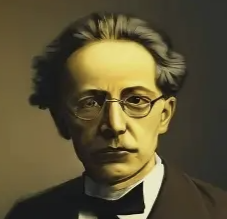
Max Stirner — The Radical Individualist (1806–1856)
Max Stirner was a German philosopher who pushed individualism to its most extreme and provocative form.
He rejected all external authorities — including the state, religion, morality, and even abstract ideals — arguing that they are “spooks” that dominate the human mind.
For Stirner, the only true reality is the individual self — unique, concrete, and irreducible.
Against All Absolutes
Stirner’s most famous work, The Ego and Its Own (1844), is a relentless critique of every form of fixed belief.
He argued that concepts such as “truth,” “justice,” “nation,” and even “humanity” are abstractions that individuals are taught to serve.
These ideas, he claimed, take on a life of their own — demanding obedience and sacrifice.
Stirner called them spooks — illusions that govern people as if they were real.
“I have set my cause upon nothing.”
The Sovereign Individual
At the center of Stirner’s philosophy is the idea of the ego — the unique individual who exists prior to all categories.
He rejected the notion that individuals should conform to moral duties or social expectations imposed from outside.
Instead, he advocated for self-ownership — the idea that each person belongs only to themselves.
The individual, in this view, creates their own values rather than inheriting them.
“I am not nothing in the sense of emptiness, but nothing in the sense of creative power.”
The Union of Egoists
Although often seen as purely individualistic, Stirner did not reject cooperation entirely.
He proposed the idea of a union of egoists — voluntary associations formed by individuals for their own mutual benefit.
Unlike traditional institutions, these unions are not based on obligation or duty.
They exist only as long as they serve the interests of their participants.
When they no longer do, individuals are free to leave.
“Association is something you use — not something you serve.”
Conflict with His Time
Stirner wrote in a period dominated by German idealism and rising political ideologies.
He sharply criticized contemporaries who placed faith in universal principles, including philosophers like Hegel and even early socialists.
His work was largely ignored during his lifetime, and he lived in relative obscurity and poverty.
Yet his ideas would later influence anarchism, existentialism, and radical individualist thought.
“All things are nothing to me.”
Legacy — The Challenge of Absolute Freedom
Max Stirner remains one of the most radical voices in the history of philosophy.
His work challenges every assumption about morality, authority, and collective identity.
While some see his philosophy as a path to liberation, others view it as dangerously destabilizing.
Yet his central question endures:
To what extent are our beliefs truly our own — and how many are inherited “spooks” that quietly rule our lives?
“Freedom is not given — it is taken by the individual.”
CivilSimian.com created by AxiomaticPanic, CivilSimian, Kalokagathia