
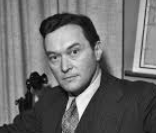
Walter Lippmann — The Philosopher of Public Opinion, Democracy, and the Limits of Knowledge (1889–1974)
Walter Lippmann was one of the most influential political thinkers of the twentieth century — a journalist-philosopher who examined how modern societies think, decide, and misunderstand themselves. His work explores a troubling reality: democracy depends on informed citizens, yet the modern world is too complex for any citizen to fully understand.
A Mind Between Journalism and Philosophy
Born in New York City, Lippmann was educated at Harvard and quickly entered the world of political journalism. Over decades he became one of America’s most respected public commentators, writing influential newspaper columns and advising political leaders.
Yet beneath his journalism lay a deeper philosophical concern: how people form beliefs about a world they cannot directly observe.
Politics, he argued, is largely shaped by mental pictures rather than reality itself.
“We do not first see and then define; we define first and then see.”
The Concept of the “Pseudo-Environment”
In his landmark book Public Opinion (1922), Lippmann introduced one of the most important ideas in modern political theory: the pseudo-environment.
Because the real world is vast and complicated, people rely on simplified images, stereotypes, and narratives to make sense of it.
These mental models become a substitute for reality — guiding political judgment even when they are inaccurate.
Modern politics therefore takes place not in the world itself, but in the pictures people carry in their heads.
“The real environment is altogether too big, too complex, and too fleeting for direct acquaintance.”
Democracy and the Problem of Expertise
Lippmann became skeptical of the traditional democratic ideal that citizens could collectively guide public policy through informed judgment.
Modern societies involve complicated economic systems, global diplomacy, and technological change. Expecting the average citizen to master these domains is unrealistic.
Lippmann therefore proposed a controversial solution: governance should rely more heavily on experts, analysts, and specialized institutions capable of understanding complex realities.
The public’s role, he argued, is often reactive rather than directive.
“The public must be put in its place.”
Propaganda and the Power of Media
Lippmann was among the first thinkers to recognize the immense influence of mass media.
Newspapers, radio, and later television do not simply report events — they shape the narratives through which events are understood.
This creates opportunities for propaganda, manipulation, and emotional mobilization.
The struggle for democratic integrity therefore includes the struggle to maintain reliable information.
“Where all think alike, no one thinks very much.”
Liberalism Reconsidered
Although critical of naive democratic optimism, Lippmann remained committed to liberal values: individual liberty, rule of law, and open debate.
His aim was not to abandon democracy, but to make it intellectually honest about its limitations.
Democratic societies must design institutions that compensate for human cognitive limits.
Legacy — Seeing the Invisible Forces of Opinion
Walter Lippmann helped reveal how modern political reality operates. Long before the digital age, he recognized that perception, narrative, and media representation shape public life as much as events themselves.
His work remains central to discussions of journalism, propaganda, political psychology, and democratic theory.
In a world saturated with information, Lippmann’s warning continues to echo: understanding public opinion requires understanding how minds construct reality.
“What each man does is based not on direct and certain knowledge, but on pictures made by himself or given to him.”
CivilSimian.com created by AxiomaticPanic, CivilSimian, Kalokagathia