

6 days 14 hours ago
In future, nerve cell responsiveness to naturally occurring endogenous opioids can be increased via receptor enrichment in the brain too. In principle, we can modulate their lifelong "overexpression", intermittently heightened (or gently diminished) by whatever kinds of personal and environmental contingencies we judge fit. Both functionally and anatomically, our reward pathways can be made "bigger and better". But intelligent emotional self-mastery will involve re-engineering the mind-brain so we derive the most intense rewards from activities we deem most lastingly worthwhile: i.e. prioritising our higher-order desires over legacy first-order appetites. Natural selection has "encephalised" our emotions to benefit our genes. Rational agents can "re-encephalise" our emotions to benefit us.
▼
Source
Utopian Neuroscience, BLTC Research, 2019
6 days 14 hours ago
True hedonic engineering, as distinct from mindless hedonism or reckless personal experimentation, can be profoundly good for our character. Character-building technologies can benefit utilitarians and non-utilitarians alike. Potentially, we can use a convergence of biotech, nanorobotics and information technology to gain control over our emotions and become better (post-)human beings, to cultivate the virtues, strength of character, decency, to become kinder, friendlier, more compassionate: to become the type of (post)human beings that we might aspire to be, but aren't, and biologically couldn't be, with the neural machinery of unenriched minds. Given our Darwinian biology, too many forms of admirable behaviour simply aren't rewarding enough for us to practise them consistently: our second-order desires to live better lives as better people are often feeble echoes of our baser passions.
▼
Source
Utopian Neuroscience, BLTC Research, 2019
6 days 14 hours ago
As well as seriously - indeed exhaustively - researching everything that could conceivably go wrong, I think we should also investigate what could go right. The world is racked by suffering. The hedonic treadmill might more aptly be called a dolorous treadmill. Hundreds of millions of people are currently depressed, pain-ridden or both. Hundreds of billions of non-human animals are suffering too. If we weren't so inured to a world of pain and misery, then the biosphere would be reckoned in the throes of a global medical emergency. Thanks to breakthroughs in biotechnology, pain-thresholds, default anxiety levels, hedonic range and hedonic set-points are all now adjustable parameters in human and non-human animals alike. We are living in the final century of life on Earth in which suffering is biologically inevitable. As a society, we need an ethical debate about how much pain and misery we want to preserve and create. How do you break the hedonic treadmill?"
▼
Source
, Quora, 6 Apr. 2019
6 days 14 hours ago
All moral tradeoffs are messy. However, on some fairly modest ethical assumptions, when a severe and irreconcilable conflict of interests occurs, then the interests of the more sentient take precedence over the less sentient. This rule of thumb holds regardless of the age, race or species of the victim. Reply to "Why is David Pearce a vegan and a negative utilitarian given industrial agriculture's decimation of insect populations and, therefore, suffering the greater number of insects than farm animals? Shouldn't insects outweigh farm animals?
▼
Source
, Quora, 3 Sept. 2019
6 days 14 hours ago
...it won't just be the quality and quantity of consciousness in the world that will be transformed in the post-Darwinian Transition. As (post-)humanity emerges from the neurochemical Dark Ages, enriched dopaminergic function in particular may sharpen the sheer intensity and meaningfulness of every moment of conscious existence. For a generation whose lifetimes span both modes of awareness, it will be as if they had just woken up. They will feel they had hitherto been sleep-walking through life in a twilit stupor. Thereafter their former mundane and minimal existence may be recalled only as some kind of zombified trance-state whose nature they were physiologically incapable of recognising...
▼
Source
The Hedonistic Imperative: Heaven on Earth?, "Eden", BLTC Research
6 days 14 hours ago
It is easy to romanticise, say, tigers or lions and cats. We admire their magnificent beauty, strength and agility. But we would regard their notional human counterparts as wanton psychopaths of the worst kind.
▼
Source
1.10 On the Misguided Romanticisation of Feline Psychopaths
6 days 14 hours ago
Much more seriously, in those traditional eco-systems that we chose to retain, millions of non-human animals will continue periodically to starve, die horribly of thirst and disease, or even get eaten alive. This is commonly viewed as "natural" and hence basically OK. It would indeed be comforting to think that in some sense this ongoing animal holocaust doesn't matter too much. We often find it convenient to act as though the capacity to suffer were somehow inseparably bound up with linguistic ability or ratiocinative prowess. Yet there is absolutely no evidence that this is the case, and a great deal that it isn't.
▼
Source
1.9 The Taste of Depravity
6 days 14 hours ago
The functional regions of the brain which subserve physical agony, the "pain centres", and the mainly limbic substrates of emotion, appear in phylogenetic terms to be remarkably constant in the vertebrate line. The neural pathways involving serotonin, the periaquaductal grey matter, bradykinin, dynorphin, ATP receptors, the major opioid families, substance P etc all existed long before hominids walked the earth. Not merely is the biochemistry of suffering disturbingly similar where not effectively type-identical across a wide spectrum of vertebrate (and even some invertebrate) species. It is at least possible that members of any species whose members have more pain cells exhibiting greater synaptic density than humans sometimes suffer more atrociously than we do, whatever their notional "intelligence".
▼
Source
1.9 The Taste of Depravity
6 days 14 hours ago
No amount of happiness enjoyed by some organisms can notionally justify the indescribable horrors of Auschwitz. [...] Nor can the fun and games outweigh the sporadic frightfulness of pain and despair that occurs every second of every day. For there's nothing inherently wrong with non-sentience or [...] non-existence; whereas there is something frightfully and self-intimatingly wrong with suffering.
▼
Source
2.7 Why Be Negative?
6 days 14 hours ago
Negative-utilitarianism is only one particular denomination of a broad church to which the reader may well in any case not subscribe. Fortunately, the program can be defended on grounds that utilitarians of all stripes can agree on. So a defence will be mounted against critics of the theory and application of a utilitarian ethic in general. For in practice the most potent and effective means of curing unpleasantness is to ensure that a defining aspect of future states of mind is their permeation with the molecular chemistry of ecstasy: both genetically precoded and pharmacologically fine-tuned. Orthodox utilitarians will doubtless find the cornucopian abundance of bliss this strategy delivers is itself an extra source of moral value. Future generations of native ecstatics are unlikely to disagree.
▼
Source
2.7 Why Be Negative?
6 days 14 hours ago
One should be wary of assuming that we're the folk who can properly look after ourselves, whereas our descendants, if they become genetically pre-programmed ecstatics, will get trapped in robot-serviced states of infantile dependence. For it shouldn't be forgotten that exuberantly happy people also have a fierce will to survive. They love life dearly. They take on daunting challenges against seemingly impossible odds. One of the hallmarks of many endogenous depressive states, on the other hand, is so-called behavioural despair. If one learns that apparently no amount of effort can rescue one from an aversive stimulus, then one tends to sink into a lethargic stupor. This syndrome of "learned helplessness" may persist even when the opportunity to escape from the nasty stimulus subsequently arises.
▼
Source
4. Objections, 4.2
6 days 14 hours ago
Taking the abolitionist project to the rest of the galaxy and beyond sounds crazy today; but it's the application of technology to a very homely moral precept writ large, not the outgrowth of a revolutionary new ethical theory. So long as sentient beings suffer extraordinary unpleasantness - whether on Earth or perhaps elsewhere - there is a presumptive case to eradicate such suffering wherever it is found.
▼
Source
4. Objections, No 32
6 days 14 hours ago
Any plea ... for institutionalized risk-assessment, beefed-up bioethics panels, academic review bodies, worse-case scenario planning, more intensive computer simulations, systematic long-term planning and the institutionalized study of existential risks is admirable. But so is urgent action to combat the global pandemic of suffering. "The easiest pain to bear is someone else's"
▼
Source
Objections, No 34

6 days 15 hours ago
Universal Humanism:
1) Preserve Life (end)
Precludes those who think they get to decide who lives and who dies.
2) Avoid and limit suffering (means)
Precludes those who use absurd exceptions to turn their backs on functional rules.

1 week ago
Whoever imposes severe punishment becomes repulsive to the people; while he who awards mild punishment becomes contemptible. But whoever imposes punishment as deserved becomes respectable. For punishment when awarded with due consideration, makes the people devoted to righteousness and to works productive of wealth and enjoyment; while punishment, when ill-awarded under the influence of greed and anger or owing to ignorance, excites fury even among hermits and ascetics dwelling in forests, not to speak of householders.
▼
Source
Book I : "Concerning Discipline" Chapter 4 "Determination of the Place of Varta and of Dandaniti"
1 week ago
If a king is energetic, his subjects will be equally energetic. If he is reckless, they will not only be reckless likewise, but also eat into his works. Besides, a reckless king will easily fall into the hands of his enemies. Hence the king shall ever be wakeful.
▼
Source
Book I : "Concerning Discipline" Chapter 19 "The Duties of a King"
1 week ago
All urgent calls he shall hear at once, but never put off; for when postponed, they will prove too hard or impossible to accomplish.
▼
Source
Book I : "Concerning Discipline" Chapter 19
1 week ago
The king who is situated anywhere immediately on the circumference of the conqueror's territory is termed the enemy.The king who is likewise situated close to the enemy, but separated from the conqueror only by the enemy, is termed the friend (of the conqueror).
▼
Source
Book VI, "The Source of Sovereign States"
1 week ago
Don't judge the future of a person based on his present conditions, because time has the power to change black coal to shiny diamond.
1 week ago
Our bodies are perishable, wealth is not at all permanent and death is always nearby. Therefore we must immediately engage in acts of merit.
1 week ago
The serpent, the king, the tiger, the stinging wasp, the small child, the dog owned by other people, and the fool: these seven ought not to be awakened from sleep.
1 week ago
Skills are called hidden treasure as they save like a mother in a foreign country.
1 week ago
The world's biggest power is the youth and beauty of a woman.
1 week ago
Treat your kid like a darling for the first five years. For the next five years, scold them. By the time they turn sixteen, treat them like a friend. Your grown up children are your best friends.
1 week ago
Lakshmi, the Goddess of wealth, comes of Her own accord where fools are not respected, grain is well stored up, and the husband and wife do not quarrel.
1 week ago
There is no disease so destructive as lust.
1 week ago
The wise man should restrain his senses like the crane and accomplish his purpose with due knowledge of his place, time and ability.
1 week ago
We should always speak what would please the man of whom we expect a favour, like the hunter who sings sweetly when he desires to shoot a deer.
1 week ago
It is better to live under a tree in a jungle inhabited by tigers and elephants, to maintain oneself in such a place with ripe fruits and spring water, to lie down on grass and to wear the ragged barks of trees than to live amongst one's relations when reduced to poverty.
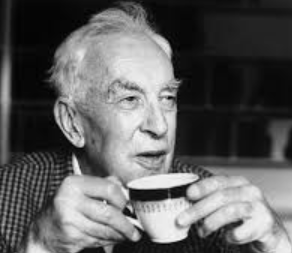
1 week 3 days ago
Our western science is a child of moral virtues; and it must now become the father of further moral virtues if its extraordinary material triumphs in our time are not to bring human history to an abrupt, unpleasant and discreditable end.
▼
Source
"A Turning Point in Man's Destiny", The New York Times Magazine (26 December 1954) p. 5
1 week 3 days ago
I don't believe a committee can write a book. ... It can, oh, govern a country, perhaps. But I don't believe it can write a book.
▼
Source
Interviewed by Christopher Wright (1955). Printed in James Nelson (ed.) Wisdom: Conversations with the Elder Wise Men of Our Day (New York: Norton, 1958) p. 208
1 week 3 days ago
The equation of religion with belief is rather recent.
▼
Source
Christianity Among the Religions of the World (New York: Scribner's, 1957) p. 7
1 week 3 days ago
The human race's prospects of survival were considerably better when we were defenceless against tigers than they are today when we have become defenceless against ourselves.
▼
Source
"Man and Hunger: The Perspectives of History", Speech to the World Food Congress (4 June 1963)
1 week 3 days ago
We have been Godlike in our planned breeding of our domesticated plants and animals, but we have been rabbitlike in our unplanned breeding of ourselves.
▼
Source
Man and Hunger: The Perspectives of History, entered into the Congressional Record by Senator Ernest Gruening
1 week 3 days ago
Every oasis is an island that has water inside it but not round it.
▼
Source
Between Niger and Nile (London: Oxford UP, 1965) 20. Cyrenaïca's Green Mountain
1 week 3 days ago
A city that outdistances Man's walking powers is a trap for Man. It threatens to become a prison from which he cannot escape unless he has mechanical means of transport, the thoroughfares for carrying these, and the purchasing power for commanding the use of artificial means of communication.
▼
Source
"Has Man's Metropolitan Environment Any Precedents?", Ekistics, vol. 22, no. 133 (December 1966) pp. 385-7
1 week 3 days ago
When I was a child, the institution of war, which, by then, had been in existence for perhaps about five thousand years, was still being taken for granted by most people in the World as a normal and acceptable fact of life. One small religious community, the Society of Friends, was at that time singular in condemning war as immoral and in consequently refusing to have any part or lot in war-making.
▼
Source
Experiences (New York: Oxford UP, 1969) pt. 2, sect. 4
1 week 3 days ago
We shall have to share out the fruits of technology among the whole of mankind. The notion that the direct and immediate producers of the fruits of technology have a proprietary right to these fruits will have to be forgotten. After all, who is the producer? Man is a social animal, and the immediate producer has been helped to produce by the whole structure of society, beginning with his own education.
▼
Source
Surviving the Future (1971; Oxford UP, 1972) p. 95
1 week 3 days ago
Compassion is the desire that moves the individual self to widen the scope of its self-concern to embrace the whole of the universal self.
▼
Source
The Toynbee-Ikeda Dialogue: Man Himself Must Choose
1 week 3 days ago
Right and wrong are the same in Palestine as anywhere else. What is peculiar about the Palestine conflict is that the world has listened to the party that has committed the offence and has turned a deaf ear to the victims.
▼
Source
Foreword to The Transformation of Palestine
1 week 3 days ago
Societies, not states, are 'the social atoms' with which students of history have to deal.
▼
Source
Vol. 1
1 week 3 days ago
No collection of facts is ever complete, because the Universe is without bounds. And no synthesis or interpretation is ever final, because there are always fresh facts to be found after the first collection has been provisionally arranged.
▼
Source
Vol. 1
1 week 3 days ago
Compared with the life-span of a human being the time-span of a civilization is so vast that a human observer cannot hope to take the measure of its curve unless he is in a position to view it in a distant perspective; and he can only obtain this perspective vis-a-vis some society that is extinct. He can never stand back sufficiently far from the history of the society in which he himself lives and moves and has his being. In other words, to assert of any living society, at any moment in its life, that it is the consummation of human history is to hazard a guess which is intrinsically unsusceptible of immediate verification. When we find that a majority of the members of all societies at all times make this assertion about their own civilizations, it becomes evident that their guesses have really nothing to do with any objective calculation of probabilities but are pure expressions of the egocentric illusion.
▼
Source
Vol. 1
1 week 3 days ago
No being can be what he is unless he is putting his essence into action in his field.
▼
Source
Vol. 3
1 week 3 days ago
On this showing, the nature of the breakdowns of civilizations can be summed up in three points: a failure of creative power in the minority, an answering withdrawal of mimesis on the part of the majority, and a consequent loss of social unity in the society as a whole.
▼
Source
Vol. 4 (1955 ), part B, p. 6
1 week 3 days ago
It is a paradoxical but profoundly true and important principle of life that the most likely way to reach a goal is to be aiming not at that goal itself but at some more ambitious goal beyond it.
▼
Source
Vol. 7 (1954). Also in Civilization on Trial (1957 ) p. 247
1 week 3 days ago
The difference between a Humanist and a lunatic is in fact one of degree.
▼
Source
Vol. 9
1 week 3 days ago
A life which does not go into action is a failure.
▼
Source
Vol. 10
1 week 3 days ago
The value of the goal lies in the goal itself; and therefore the goal cannot be attained unless it is pursued for its own sake.
▼
Source
Vol. 12
1 week 3 days ago
So-called racial characteristics are not really racial at all but are due to the historical experiences of the communities in question.
▼
Source
Abridgement of Vols. 1-6 by D. C. Somervell
CivilSimian.com created by AxiomaticPanic, CivilSimian, Kalokagathia