

4 days 9 hours ago
In a traditional reading eating the apple was the original sin; but, as Gnostics understood the story, the two primordial humans were right to eat the apple. The God that commanded them not to do so was not the true God but only a demiurge, a tyrannical underling exulting in its power, while the serpent came to free them from slavery. True, when they ate the apple Adam and Eve fell from grace. This was indeed the Fall of Man - a fall into the dim world of everyday consciousness. But the Fall need not be final. Having eaten its fill from the Tree of Knowledge, humankind can then rise into a state of conscious innocence. When this happens, Herr C. declares, it will be 'the final chapter in the history of the world'.
▼
Source
The Faith of Puppets: The Freedom of the Marionette (p. 8)
4 days 9 hours ago
Many people today hold to a Gnostic view of things without realizing the fact. Believing that human beings can be fully understood in the terms of scientific materialism, they reject any idea of free will. But they cannot give up hope of being masters of their destiny. So they have come to believe that science will somehow enable the human mind to escape the limitations that shape its natural condition. Throughout much of the world, and particularly in western countries, the Gnostic faith that knowledge can give humans a freedom no other creature can possess has become the predominant religion.
▼
Source
The Faith of Puppets: The Freedom of the Marionette (p. 9)
4 days 9 hours ago
In Kleist's essay humans are caught between the graceful automatism of the puppet and the conscious freedom of a god. The jerky, stuttering quality of their actions comes from their feeling that they must determine the course of their lives. Other animals live without having to choose their path through life. Whatever uncertainty they may feel sniffing their way through the world is not a permanent condition; once they reach a place of safety, they are at rest. In contrast, human life is spent anxiously deciding how to live.
▼
Source
The Faith of Puppets: Leopardi and the Souls of Machines (p.25-6)
4 days 9 hours ago
For Leopardi evil is integral to the way the world works; but when he talks of evil he does not mean any kind of malign agency of the sort that Gnostics imagined. Evil is the suffering that is built into the scheme of things. 'What hope is there when evil is ordinary?' he asks. 'I mean, in an order where evil is necessary?' These rhetorical questions show why Leopardi had no interest in projects of revolution and reform. No type of human action - least of all the harlequinade of politics - could fundamentally alter a world in which evil was ordinary.
▼
Source
The Faith of Puppets: Leopardi and the Souls of Machines (p.35-6)
4 days 9 hours ago
The modern world inherits the Christian view in which salvation is played out in history. In Christian myth human events follow a design known only to God; the history of humankind is an ongoing story of redemption. This is an idea that informs virtually all of western thought - not least when it is intensely hostile to religion. From Christianity onwards, human salvation would be understood (at least in the west) as involving movement through time. All modern philosophies in which history is seen as a process of human emancipation - whether through revolutionary change or incremental improvement - are garbled versions of this Christian narrative, itself a garbled version of the original message of Jesus.
▼
Source
The Faith of Puppets: The Revelation of Philip K. Dick (p. 60)
4 days 9 hours ago
Rather than trying to escape violence, human beings more often become habituated to it. History abounds with long conflicts - the Thirty Years' War in early seventeenth-century Europe, the Time of Troubles in Russia, twentieth-century guerrilla conflicts - in which continuous slaughter has been accepted as normal. Famously adaptable, the human animal quickly learns to live with violence and soon comes to find satisfaction in it.
▼
Source
In the Puppet Theatre: Roof Gardens, Feathers and Human Sacrifice (p. 80)
4 days 9 hours ago
Humans kill one another - and in some cases themselves - for many reasons, but none is more human than the attempt to make sense of their lives. More than the loss of life, they fear loss of meaning.
▼
Source
In the Puppet Theatre: Roof Gardens, Feathers and Human Sacrifice (p. 87)
4 days 9 hours ago
Today those who peer into the future want only relief from anxiety. Unable to face the prospect that the cycles of war will continue, they are desperate to find a pattern of improvement in history. It is only natural that believers in reason, lacking any deeper faith and too feeble to tolerate doubt, should turn to the sorcery of numbers. Happily there are some who are ready to assist them. Just as the Elizabethan magus transcribed tables shown to him by angels, the modern scientific scryer deciphers numerical auguries of angels hidden in ourselves.
▼
Source
In the Puppet Theatre: Dark mirrors, Hidden Angels and an Algorithmic Prayer-Wheel (p. 99)

6 days 8 hours ago
I'll admit, I was a naive globalist. I still believe in the ideal, but, I realize that those that hated the idea so much are the authors of the problem they see in it.
Now, I understand clearly, those that author the problem that makes globalization near impossible are also the ones who insist it will never work, nevertheless, human necessity remains a monolith and universal.
6 days 10 hours ago
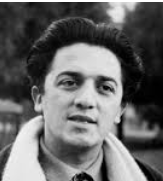
All art is autobiographical; the pearl is the oyster's autobiography.
▼
Source
On the autobiographical nature of his films, in The Atlantic
6 days 10 hours ago
Even if I set out to make a film about a fillet of sole, it would be about me.
▼
Source
On the autobiographical nature of his films, in The Atlantic
6 days 10 hours ago
Cinema is an old whore, like circus and variety, who knows how to give many kinds of pleasure. Besides, you can't teach old fleas new dogs.
▼
Source
As quoted in in The Atlantic
6 days 10 hours ago
Talking about dreams is like talking about movies, since the cinema uses the language of dreams; years can pass in a second and you can hop from one place to another. It's a language made of image. And in the real cinema, every object and every light means something, as in a dream.
▼
Source
As quoted in Rolling Stone no. 421
6 days 10 hours ago
What is an artist? A provincial who finds himself somewhere between a physical reality and a metaphysical one... It's this in-between that I'm calling a province, this frontier country between the tangible world and the intangible one - which is really the realm of the artist.
▼
Source
Every Time We Say Goodbye in Sight and Sound [London]
6 days 10 hours ago
There is no end. There is no beginning. There is only the infinite passion of life.
▼
Source
Fellini on Fellini (1976) edited by Anna Keel and Christian Strich; translated by Isabel Quigly.
6 days 10 hours ago
I don't believe in total freedom for the artist. Left on his own, free to do anything he likes, the artist ends up doing nothing at all. If there's one thing that's dangerous for an artist, it's precisely this question of total freedom, waiting for inspiration and the rest of it.
▼
Source
Artistic Freedom
6 days 10 hours ago
I discovered that what's really important for a creator isn't what we vaguely define as inspiration or even what it is we want to say, recall, regret, or rebel against. No, what's important is the way we say it. Art is all about craftsmanship. Others can interpret craftsmanship as style if they wish. Style is what unites memory or recollection, ideology, sentiment, nostalgia, presentiment, to the way we express all that. It's not what we say but how we say it that matters.
▼
Source
Craftsmanship
6 days 10 hours ago
A created thing is never invented and it is never true: it is always and ever itself.
▼
Source
Creation
6 days 10 hours ago
Everyone knows that time is Death, that Death hides in clocks. Imposing another time powered by the Clock of the Imagination, however, can refuse his law. Here, freed of the Grim Reaper's scythe, we learn that pain is knowledge and all knowledge pain.
▼
Source
"Death"
6 days 10 hours ago
The public has lost the habit of movie-going because the cinema no longer possesses the charm, the hypnotic charisma, the authority it once commanded. The image it once held for us all - that of a dream we dreamt with our eyes open - has disappeared. Is it still possible that one thousand people might group together in the dark and experience the dream that a single individual has directed?
▼
Source
"Decline of Cinema"
6 days 10 hours ago
Experience is what you get while looking for something else.
▼
Source
"Experience"
6 days 10 hours ago
It's easier to be faithful to a restaurant than it is to a woman.
▼
Source
Fidelity
6 days 10 hours ago
No critic writing about a film could say more than the film itself, although they do their best to make us think the opposite.
▼
Source
"Film Critics"
6 days 10 hours ago
Nietzsche claimed that his genius was in his nostrils and I think that is a very excellent place for it to be.
▼
Source
Genius
6 days 10 hours ago
God may not play dice but he enjoys a good round of Trivial Pursuit every now and again.
▼
Source
"God"
6 days 10 hours ago
Hype is the awkward and desperate attempt to convince journalists that what you've made is worth the misery of having to review it.
▼
Source
"Hype"
6 days 10 hours ago
If I'm a cruel satirist at least I'm not a hyprocrite: I never judge what other people do. Neither a politician nor a priest, I never censor what others do. Neither a philospher nor a psychiatrist, I never bother trying to analyze or resolve my fears and neuroses.
▼
Source
"Hypocrisy"
6 days 10 hours ago
Money is everywhere but so is poetry. What we lack are the poets.
▼
Source
Poets
6 days 10 hours ago
A good opening and a good ending make for a good film provided they come close together.
▼
Source
Recipe for a Good Film
6 days 10 hours ago
The young watch television twenty-four hours a day, they don't read and they rarely listen. This incessant bombardment of images has developed a hypertrophied eye condition that's turning them into a race of mutants. They should pass a law for a total reeducation of the young, making children visit the Galleria Borghese on a daily basis.
▼
Source
"Younger Generation"
6 days 10 hours ago
I think television has betrayed the meaning of democratic speech, adding visual chaos to the confusion of voices. What role does silence have in all this noise?
▼
Source
"Television"
6 days 10 hours ago
I've always written at the top of my lungs and from some secret motives within. I have followed the advice of my good friend Federico Fellini who, when asked about his work, said, "Don't tell me what I'm doing, I don't want to know."
▼
Source
Ray Bradbury, "Author's Introduction" to 2003 Folio Society edition of Fahrenheit 452
6 days 11 hours ago
Philosophy is an everlasting fire, sometimes damped down by setting itself limits, then flaring into new life as it consumes them. Every field of inquiry is limited, but philosophy has an essential relation to the question of limits, to its own limits.
▼
Source
Introduction, p. xiii
6 days 11 hours ago
Language steps in where the angels of experience fear to tread.
▼
Source
Chapter 1, The Faces of Silence, p. 5
6 days 11 hours ago
To recognize a difficulty is not to solve it.
▼
Source
Chapter 1, The Faces of Silence, p. 9
6 days 11 hours ago
Philosophy is said to have taken the 'linguistic turn' in this century. One hundred years ago, a philosopher would think in terms of mind, spirit, experience, consciousness; now the by-word is language.
▼
Source
Chapter 2, Metaphysics and Metaphor, p. 26
6 days 11 hours ago
To say that all philosophy is writing is, minimally, to say that it is never the transparent expression of thought.
▼
Source
Chapter 3, Deconstruction and Criticism, p. 46
6 days 11 hours ago
Like literature, philosophy is not distinguished from other subjects by a specific approach to a subject-matter independent of it. Chemistry deals with chemicals, biology with life and astronomy with very large, very distant objects. Philosophy can boast no such definite subject-matter.
▼
Source
Chapter 4, Philosophy As Writing: The Case Of Hegel, p. 69
6 days 11 hours ago
The educated man is the man who does not live in immediate intuition, but in his recollection so that little is new to him any longer.
▼
Source
Chapter 4, Philosophy As Writing: The Case Of Hegel, p. 74
6 days 11 hours ago
Philosophy in its very act is a process of translation!
▼
Source
Chapter 4, Philosophy As Writing: The Case Of Hegel, p. 81
6 days 11 hours ago
After Hegel, philosophy confronts the possibility of its own death, and in some sense has to do so if it is to remain the most fundamental kind of thinking.
▼
Source
Chapter 4, Philosophy As Writing: The Case Of Hegel, p. 88
6 days 11 hours ago
The point is that philosophy is seen to have come full circle, and to have exhausted itself.
▼
Source
Chapter 5, Nietzsche's Styles, p. 95
6 days 11 hours ago
Nietzsche's problem is how to be a philosopher once he has grasped the finitude of philosophy.
▼
Source
Chapter 5, Nietzsche's Styles, p. 96
6 days 11 hours ago
To understand how indirect communication is possible we must grasp what it is about ordinary communication that is being changed.
▼
Source
Chapter 6, Indirect Communication, p. 110
6 days 11 hours ago
Dialogue never ends not for lack of time or opportunity but for essential reasons.
▼
Source
Chapter 7, Vigilance and Interruption, p. 121
6 days 11 hours ago
Nietzsche would say my friends lacked ears.
▼
Source
Chapter 8, Performative Reflexivity, p. 133
6 days 11 hours ago
What I would like to show is that there is a vital dimension of their writing, which I call performative reflexivity, which if ignored or misunderstood will impede an adequate response to it.
▼
Source
Chapter 8, Performative Reflexivity, p. 134
6 days 11 hours ago
We are passengers, comprehended and displaced by metaphor.
▼
Source
Chapter 8, Performative Reflexivity, p. 137
6 days 11 hours ago
[I]n the wake of the growth of the animal-rights movement, there has recently arisen a hitherto unfelt need to demonise and demean our non-human victims - and those who try to help them - now that our previously well-nigh unquestioned right to kill and exploit them is being challenged. Bloodsports enthusiasts, for instance, currently spend a lot of time cataloguing the alleged depredations of our victims on the environment. Recreational animal-killers go to extraordinarily lengths to avoid admitting that they themselves enjoy hunting and killing other creatures for fun. But then until a few years ago such rationalisations seemed scarcely called for. Selfish DNA had honed our intuitions so that the most agonising bloodshed seemed simply "natural". "The Post-Darwinian Transition", The Animal Rights Library, 1996
6 days 11 hours ago
By far my greatest dread in life [...] is that (some variant of) the Everett interpretation of Quantum Mechanics is true. Dave's Diary, BLTC Research, May 1996
CivilSimian.com created by AxiomaticPanic, CivilSimian, Kalokagathia