

2 months 3 weeks ago
Virtue is harder to be got than knowledge of the world; and, if lost in a young man, is seldom recovered.
▼
Source
source
Sec. 70
1 month 1 week ago
Berdyaev has been categorized as a Christian existentialist and a mystical philosopher. He never avoided the label of "mystic" since he felt it was the mystics of the world who came closest to understanding the role of spirit. Many of the philosophers he quoted were mystics - Meister Eckhart, Angelus Silesius and especially Jacob Boehme. The influence of Dostoevsky was central to his thought. Nevertheless, Berdyaev is not a naively irrational thinker; he brings an enormous fund of philosophical knowledge combined with the profundity of his own thought to support his view of existence. There are no dogmas in his writings to offend one's intellectual conscience.
▼
Source
source
Richard Schain, in In Love with Eternity : Philosophical Essays and Fragments (2005), Ch. 7 : Nikolai Alexandrovich Berdyaev - A Champion of the Spirit, p. 47
1 month 2 weeks ago
Your suffering like your fate is without motive. To suffer, truly to suffer, is to accept the invasion of ills without the excuse of causality, as a favor of demented nature, as a negative miracle...
2 months 3 weeks ago
Man is a useless passion.
▼
Source
source
Part 4, Chapter 2, III

3 months 3 weeks ago
If God stops a man on the road, and calls him with a revelation and sends him armed with divine authority among men, they say to him; from whom dost thou come? He answers: from God. But now God cannot help his messenger physically like a king, who gives him soldiers or policemen, or his ring or his signature, which is known to all; in short, God cannot help men by providing them with physical certainty that an Apostle is an Apostle-which would, moreover, be nonsense. Even miracles, if the Apostle has that gift, give no physical certainty; for the miracle is the object of faith.
1 month 1 week ago
The issue over there being classes seems more a question of convenient conceptual scheme; the issue over there being centaurs, or brick houses on Elm Street, seems more a question of fact. But I have been urging that this difference is only one of degree, and that it turns upon our vaguely pragmatic inclination to adjust one strand of the fabric of science rather than another in accommodating some particular recalcitrant experience. Conservatism figures in such choices, and so does the quest for simplicity.
▼
Source
source
"Two Dogmas of Empiricism"
1 month 2 weeks ago
Therefore whoever hears these sayings of Mine, and does them, I will liken him to a wise man who built his house on the rock: and the rain descended, the floods came, and the winds blew and beat on that house; and it did not fall, for it was founded on the rock.
2 months 3 weeks ago
There are two motives for reading a book: one, that you enjoy it; the other, that you can boast about it.

1 month 4 weeks ago
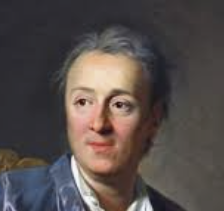
The wisest among us is very lucky never to have met the woman, be she beautiful or ugly, intelligent or stupid, who could drive him crazy enough to be fit to be put into an asylum.
▼
Source
source
Ceci n'est pas un conte [This Is No Tale] (1796),
2 weeks 4 days ago
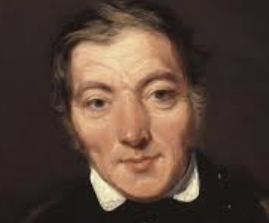
My life was not useless; I gave important truths to the world, and it was only for want of understanding that they were disregarded. I have been ahead of my time.
▼
Source
source
Deathbed statement (November 1858), in response to a church minister who asked if he regretted wasting his life on fruitless projects; as quoted in Harold Hill : A People's History
3 months 2 days ago
Reason is the greatest enemy that faith has: it never comes to the aid of spiritual things, but--more frequently than not--struggles against the divine Word, treating with contempt all that emanates from God.
▼
Source
source
353
2 months 2 weeks ago
The perfect disciplinary apparatus would make it possible for a single haze to see everything constantly. A central point would be both the source of light illuminating everything, and a locus of convergence for everything that must be known: a perfect eye that nothing would escape and a centre towards which all gazes would be turned.
▼
Source
source
Part Three, The Means of Correct Training
1 month 6 days ago
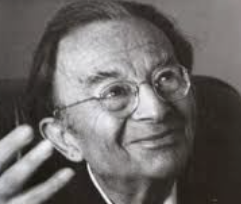
If a person loves only one other person and is indifferent to all others, his love is not love but a symbiotic attachment, or an enlarged egotism.
2 months 3 weeks ago
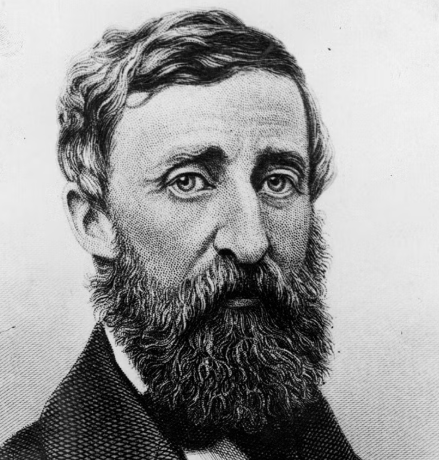
It is remarkable that, notwithstanding the universal favor with which the New Testament is outwardly received, and even the bigotry with which it is defended, there is no hospitality shown to, there is no appreciation of, the order of truth with which it deals.
1 month 3 weeks ago
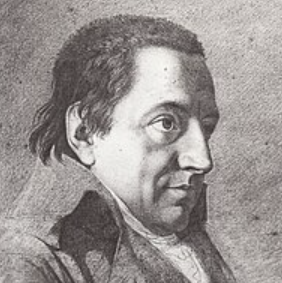
These Lectures, conjoined with those which have already appeared under the titles of "The Characteristics of the Present Age," and "The Nature of the Scholar," in the latter of which the tone of thought that governs the present course is applied to a particular subject, form a complete scheme of popular instruction, of which the present work exhibits the highest and clearest summit; and, taken together, they are the result of a process of self-culture, unceasingly pursued during the last six or seven years of my life, with greater leisure and in riper maturity, by means of that Philosophy in which I have been a partaker for thirteen years, and which, although, I hope, it has changed many things in me, has nevertheless itself suffered no change whatever during that period.
▼
Source
source
Preface

2 months 3 weeks ago
God!' said the Ghost, glancing around the landscape. 'God what?' asked the Spirit. 'What do you mean, "God what"?' asked the Ghost. 'In our grammar God is a noun' said the Spirit.
▼
Source
source
Ch. 9
3 weeks 5 days ago
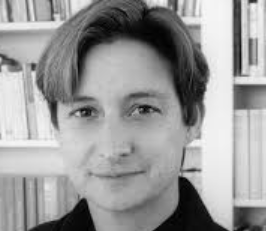
It is precisely because we can destroy that we are under an obligation to know why we ought not to do it, and to summon those countervailing powers that curb our destructive capacity. Nonviolence becomes an ethical obligation by which we are bound precisely because we are bound to one another; it may well be an obligation against which we rail, in which ambivalent swings of the psyche make themselves known, but the obligation to preserve the social bond can be resolved upon without precisely resolving that ambivalence. The obligation not to destroy each other emerges from, and reflects, the vexed social form of our lives, and it leads us to reconsider whether self-preservation is not linked to preserving the lives of others.
▼
Source
source
p. 148
3 months 3 days ago
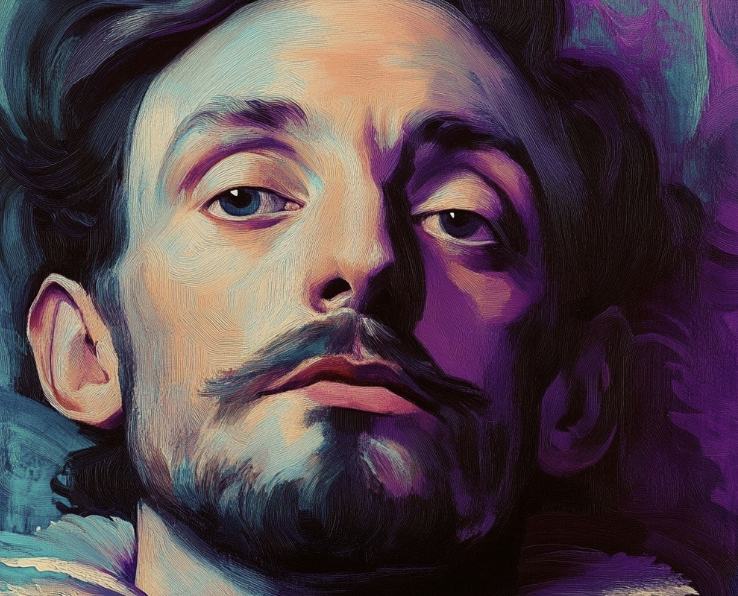
Cosmus, Duke of Florence, was wont to say of perfidious friends, that "We read that we ought to forgive our enemies; but we do not read that we ought to forgive our friends."
▼
Source
source
No. 206
1 month 1 week ago
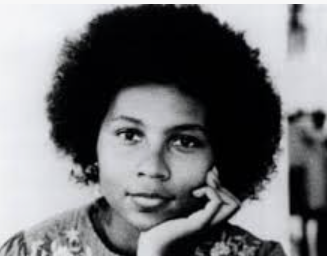
The first act of violence that patriarchy demands of males is not violence toward women. Instead patriarchy demands of all males that they engage in acts of psychic self-mutilation, that they kill off the emotional parts of themselves. If an individual is not successful in emotionally crippling himself, he can count on patriarchal men to enact rituals of power that will assault his self-esteem.
▼
Source
source
The Will To Change: Men, Masculinity, and Love (2004), p. 66
2 months 2 weeks ago
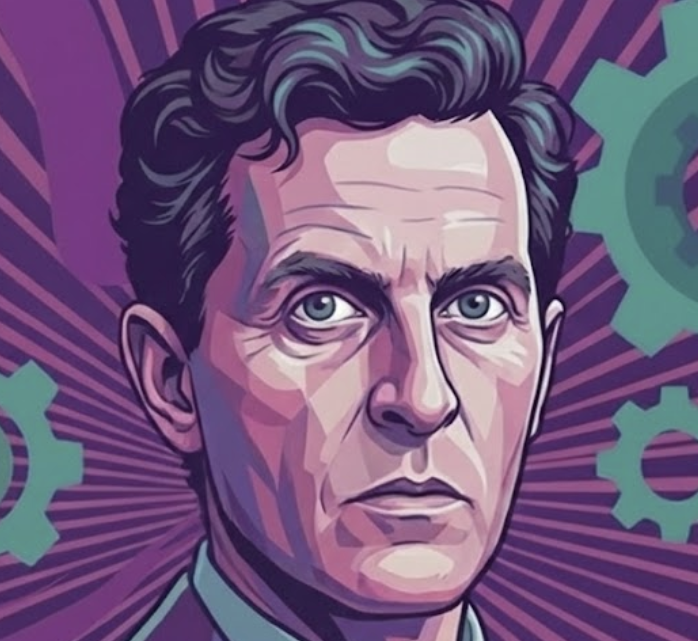
Kierkegaard was by far the most profound thinker of the last century. Kierkegaard was a saint.
▼
Source
source
As quoted in "Wittgenstein and Kierkegaard on the ethico-religious" by Roe Fremstedal in Ideas in History Vol. 1

2 months 2 weeks ago
Now drown care in wine.
▼
Source
source
Book I, ode vii, line 32

3 months 3 weeks ago
We obtain the concept, as we do the form, by overlooking what is individual and actual; whereas nature is acquainted with no forms and no concepts, and likewise with no species, but only with an X which remains inaccessible and undefinable for us.
2 months 3 weeks ago
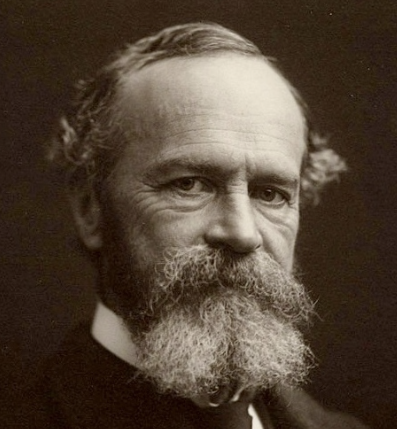
Immediate luminousness, in short, philosophical reasonableness and moral helpfulness are the only available criteria. Saint Teresa might have had the nervous system of the placidest cow, and it would not now save her theology, if the trial of the theology by these other tests should show it to be contemptible. And conversely if her theology can stand these other tests, it will make no difference how hysterical or nervously off balance Saint Teresa may have been when she was with us here below.
▼
Source
source
Lecture I, "Religion and Neurology"
2 weeks 6 days ago
Decisive actions are often taken in a moment and without any conscious deliverance from the rational parts of man.
▼
Source
source
The Rajah's Diamond, Story of the Young Man in Holy Orders.
3 weeks 3 days ago
We cannot pretend that we do not see the armed policeman who marches up and down beneath our window to guarantee our security while we eat our luxurious dinner, or look at the new piece at the theater, or that we are unaware of the existence of the soldiers who will make their appearance with guns and cartridges directly our property is attacked.
▼
Source
source
Chapter XII, Conclusion-Repent Ye, for the Kingdom of Heaven is at Hand
3 weeks ago
You should hammer your iron when it is glowing hot.
▼
Source
source
Maxim 262
1 month 2 weeks ago
Illusion begets and sustains the world; we do not destroy one without destroying the other. Which is what I do every day. An apparently ineffectual operation, since I must begin all over again the next day.
3 months 3 weeks ago
It's better to bet on this life than on the next.

1 month 1 week ago
Human nature asserts itself regardless of all laws, nor is there any plausible reason why nature should adapt itself to a perverted conception of morality.
3 weeks 1 day ago
Since Sputnik and the satellites, the planet is enclosed in a manmade environment that ends "Nature" and turns the globe into a repertory theater to be programmed.
▼
Source
source
Shakespeare at the Globe mentioning "All the world's a stage, and all the men and women merely players" (As You Like It, Act II, Scene 7)
2 months 3 weeks ago
As geological time goes, it is but a moment since the human race began and only the twinkling of an eye since the arts of civilization were first invented. In spite of some alarmists, it is hardly likely that our species will completely exterminate itself. And so long as man continues to exist, we may be pretty sure that, whatever he may suffer for a time, and whatever brightness may be eclipsed, he will emerge sooner or later, perhaps strengthened and reinvigorated by a period of mental sleep. The universe is vast and men are but tiny specks on an insignificant planet. But the more we realize our minuteness and our impotence in the face of cosmic forces, the more astonishing becomes what human beings have achieved.
▼
Source
source
"If We are to Survive this Dark Time", The New York Times Magazine, 9/3/1950
3 days ago
After Hegel, philosophy confronts the possibility of its own death, and in some sense has to do so if it is to remain the most fundamental kind of thinking.
▼
Source
source
Chapter 4, Philosophy As Writing: The Case Of Hegel, p. 88
2 months 3 weeks ago
There cannot be a greater rudeness, than to interrupt another in the current of his discourse... To which, if there be added, as is usual, a correcting of any mistake, or a contradiction of what has been said, it is a mark of yet greater pride and self-conceitedness, when we thus intrude our selves for teachers, and take upon us either to set another right in his story, or shew the mistakes of his judgement.
▼
Source
source
Sec. 145
3 months 1 week ago
Whilst in speaking of human things, we say that it is necessary to know them before we can love them...the saints on the contrary say in speaking of divine things that it is necessary to love them in order to know them, and that we only enter truth through charity.
1 month 2 weeks ago
What does the future, that half of time, matter to the man who is infatuated with eternity?
1 month 2 weeks ago
To live life well is to express life poorly; if one expresses life too well, one is living it no longer.
▼
Source
source
A Retrospective Glance at the Lifework of a Master of Books
1 week 3 days ago
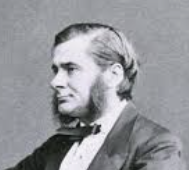
The question of questions for mankind-the problem which underlies all others, and is more deeply interesting than any other-is the ascertainment of the place which Man occupies in nature and of his relations to the universe of things.
▼
Source
source
Ch.2, p. 71
2 months 2 weeks ago
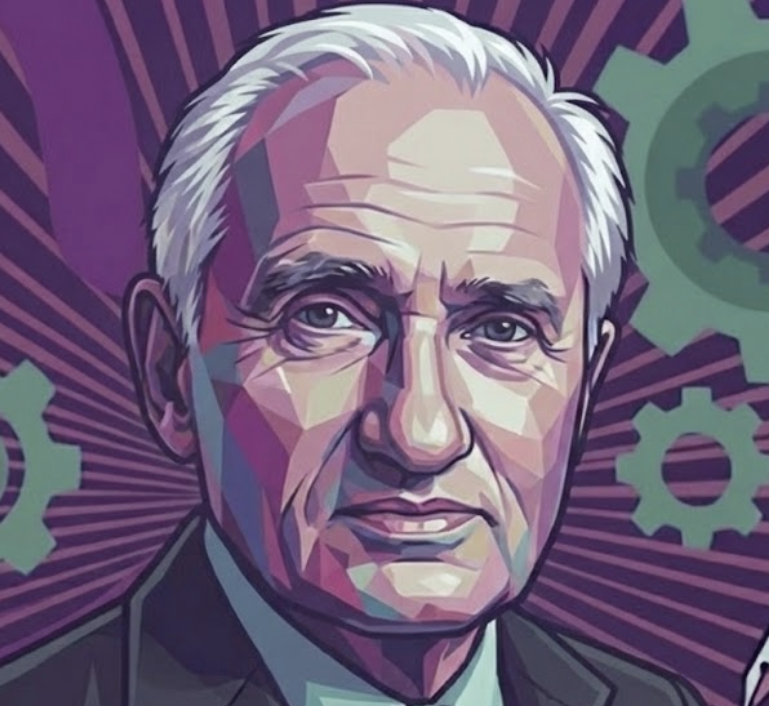
Christianity has functioned for the normative self-understanding of modernity as more than a mere precursor or a catalyst. Egalitarian universalism, from which sprang the ideas of freedom and social solidarity, of an antonomous conduct of life and emancipation, of the individual morality of conscience, human rights, and democracy, is the direct heir to the judaic ethic of justice and the Christian ethic of love. This legacy, substantially unchanged, has been the object of continual critical appropriation and reinterpretation. To this day, there is no alternative to it. And in the light of the current challenges of a postnational constellation, we continue to draw on the substance of this heritage. Everything else is just idle postmodern talk.
▼
Source
source
Habermas (2006) "Conversation about God and the World." Time of transitions. Cambridge: Polity Press, p. 150-151.
3 weeks 3 days ago
To recognize this clearly is enough to drive a man out of his senses or to make him shoot himself. And this is just what does happen, and especially often among military men. A man need only come to himself for an instant to be impelled inevitably to such an end.
▼
Source
source
Chapter V, Contradiction Between our Life and our Christian Conscience
2 weeks 3 days ago
I discovered that rejections are not altogether a bad thing. They teach a writer to rely on his own judgment and to say in his heart of hearts, "To hell with you."
▼
Source
source
Quoted in "Feeling Rejected? Join Updike, Mailer, Oates..." by Barbara Bauer and Robert F. Moss, New York Times (21 July 1985), section 7, page 1, column 1
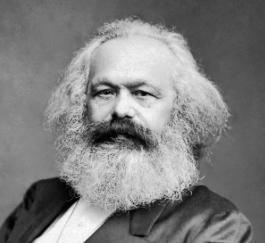
2 months 3 weeks ago
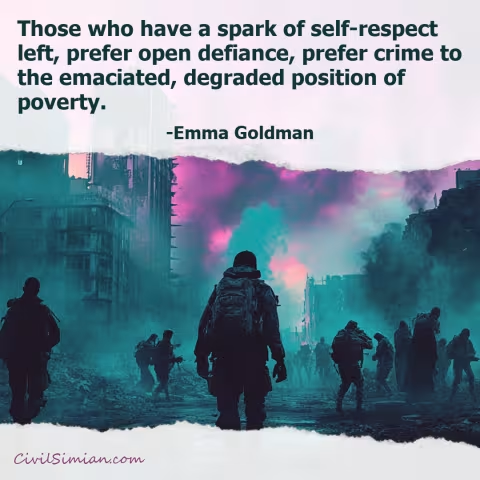
No production without a need. But consumption reproduces the need.
▼
Source
source
Introduction, p. 12.
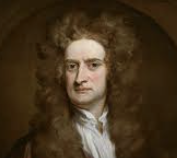
4 weeks ago
The other part of the true religion is our duty to man. We must love our neighbour as our selves, we must be charitable to all men for charity is the greatest of graces, greater then even faith or hope & covers a multitude of sins. We must be righteous & do to all men as we would they should do to us.
▼
Source
source
Of Humanity
1 month 2 weeks ago
On fact, the whole machinery of our intelligence, our general ideas and laws, fixed and external objects, principles, persons, and gods, are so many symbolic, algebraic expressions. They stand for experience; experience which we are incapable of retaining and surveying in its multitudinous immediacy. We should flounder hopelessly, like the animals, did we not keep ourselves afloat and direct our course by these intellectual devices.
▼
Source
source
Theory helps us to bear our ignorance of fact. Pt. III, Form; § 30: "The average modified in the direction of pleasure.", p. 125
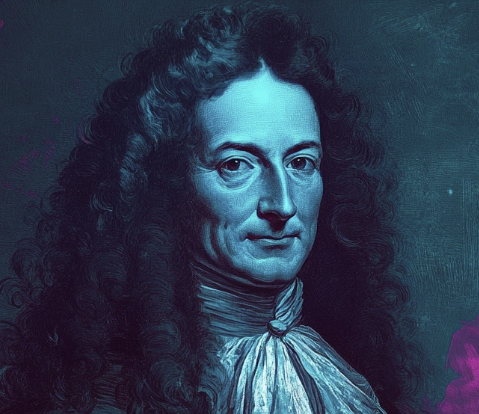
2 months 4 weeks ago
Thus it may be said that not only the soul, the mirror of an indestructible universe, is indestructible, but also the animal itself, though its mechanism may often perish in part and take off or put on an organic slough.
▼
Source
source
La monadologie (77). Sometimes paraphrased as: The soul is the mirror of an indestructible universe.
1 month 3 weeks ago
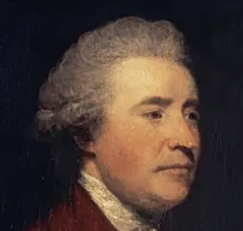
Nothing made a happy slave, but a degraded man. In proportion as the mind grew callous to its degradation, and all sense of manly pride was lost, the slave felt comfort. In fact, he was no longer a man. If he were to define a man, he would say with Shakspeare,"Man is a being, holding large discourse,Looking before and after."A slave was incapable of either looking before or after.
▼
Source
source
Speech in the House of Commons (12 May 1789), quoted in The Parliamentary History of England, From the Earliest Period to the Year 1803, Vol. XXVIII (1816), column 71
1 month 3 weeks ago
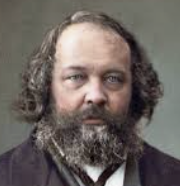
Every state, like every theology, assumes man to be fundamentally bad and wicked.
▼
Source
source
As quoted in Michael Bakunin (1937), E.H. Carr, p. 453
2 months 2 weeks ago
This aristocratic thesis is... the demos, the people, are the most numerous... also comprised of the most ordinary, and... even the worst, citizens. Therefore... what is best for the demos cannot be what is best for the polis... the city.
2 months 3 weeks ago
Morality is not properly the doctrine of how we may make ourselves happy, but how we may make ourselves worthy of happiness.
CivilSimian.com created by AxiomaticPanic, CivilSimian, Kalokagathia