

1 month 2 weeks ago
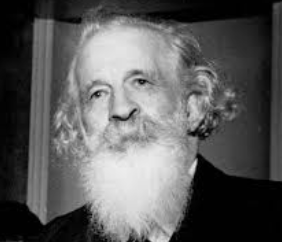
Ideas are refined and multiplied in the commerce of minds. In their splendor, images effect a very simple communion of souls.
▼
Source
source
Introduction, sect. 4

3 months 1 week ago
It must be said that charity can, in no way, exist along with mortal sin.
▼
Source
source
Disputed Questions: On Charity, c. 1270
1 week 3 days ago
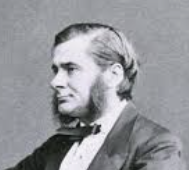
God give me strength to face a fact though it slay me.
▼
Source
source
As quoted in Nature Vol. 149 (Jan-Jun) 1942 p. 291, and A Philosophy for Our Time (1954) by Bernard Mannes Baruch, p. 13
2 months 3 weeks ago
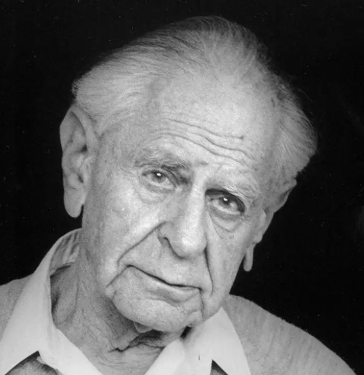
The game of science is, in principle, without end. He who decides one day that scientific statements do not call for any further test, and that they can be regarded as finally verified, retires from the game.
▼
Source
source
Ch. 2 "On the Problem of a Theory of Scientific Method", Section 11: Methodological Rules as Conventions, p. 32.
1 month 2 weeks ago
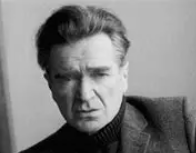
Paradise was unendurable, otherwise the first man would have adapted to it; this world is no less so, since here we regret paradise or anticipate another one. What to do? Where to go? Do nothing and go nowhere, easy enough.
2 weeks 6 days ago
The attitude that living things are placed here for our benefit still dominates our culture, even where its underpinnings have disappeared. We now need, for purposes of scientific understanding, to find a less human-centered view of the natural world.
▼
Source
source
Chapter 8, "Pollen Grains and Magic Bullets" (p. 258)
1 week 3 days ago
I now propose briefly to... set forth, in a form intelligible to those who possess no special acquaintance with anatomical science, the chief facts upon which all conclusions respecting the nature and the extent of the bonds which connect man with the brute world must be based: I shall then indicate the one immediate conclusion which, in my judgment, is justified by those facts, and I shall finally discuss the bearing of that conclusion upon the hypotheses which have been entertained respecting the Origin of Man.
▼
Source
source
Ch.2, p. 74
1 month 3 weeks ago
That unwise body, the United Irishmen, have had the folly to represent those Evils as owing to this Country, when in truth its chief guilt is in its total neglect, its utter oblivion, its shameful indifference and its entire ignorance, of Ireland and of every thing that relates to it, and not in any oppressive disposition towards that unknown region.
▼
Source
source
Letter to Thomas Hussey (9 December 1796), quoted in R. B. McDowell (ed.)

2 months 3 weeks ago
The standard of permanent Christianity must be kept clear in our minds and it is against that standard that we must test all contemporary thought. In fact, we must at all costs not move with the times.
▼
Source
source
"Christian Apologetics" (1945), p. 92
2 months 3 weeks ago
Organic life, we are told, has developed gradually from the protozoon to the philosopher, and this development, we are assured, is indubitably an advance. Unfortunately it is the philosopher, not the protozoon, who gives us this assurance.
▼
Source
source
Ch. 6: On the Scientific Method in Philosophy
1 month 2 weeks ago
All living souls welcome whatsoever they are ready to cope with; all else they ignore, or pronounce to be monstrous and wrong, or deny to be possible.
▼
Source
source
Ch. 3, P. 62
3 months 2 days ago
Malice sucks up the greatest part of its own venom, and poisons itself.
▼
Source
source
Of Repentance, Book III, Ch. 2

3 months 3 weeks ago
Science is a systematic method for studying and working out those generalizations that seem to describe the behavior of the universe. It could exist as a purely intellectual game that would never affect the practical life of human beings either for good or evil, and that was very nearly the case in ancient Greece, for instance. Technology is the application of scientific findings to the tools of everyday life, and that application can be wise or unwise, useful or harmful. Very often, those who govern technological decisions are not scientists and know little about science.
2 months 3 weeks ago
The politician may change sides so frequently as to find himself always in the majority, but most politicians have a preference for one party to the other, and subordinate their love of power to this preference.
1 month 3 weeks ago
Paper, they say, does not blush, but I assure you it's not true and that it's blushing just as I am now, all over.
3 weeks 1 day ago
Man in the electronic age has no possible environment except the globe and no possible occupation except information-gathering.
2 months 3 weeks ago
It is the slowest pulsation which is the most vital. The hero will then know how to wait, as well as to make haste. All good abides with him who waiteth wisely.
▼
Source
source
Pearls of Thought (1881) p. 273
1 month 2 weeks ago
Even when nothing happens, everything seems too much for me. What can be said, then, in the presence of an event, any event?
1 week 6 days ago
It seems that the creative faculty, and the critical faculty, cannot exist together in their highest perfection.
▼
Source
source
p. 186
1 month 1 week ago
There are only two cases in which war is just: first, in order to resist the aggression of an enemy, and second, in order to help an ally who has been attacked.
▼
Source
source
No. 95. (Usbek writing to Rhedi)
2 months 3 weeks ago
Since the great foundation of fear is pain, the way to harden and fortify children against fear and danger is to accustom them to suffer pain. This 'tis possible will be thought, by kind parents, a very unnatural thing towards their children; and by most, unreasonable...
▼
Source
source
Sec. 115
1 month 2 weeks ago
I have always thought that clarity is a form of courtesy that the philosopher owes; moreover, this discipline of ours considers it more truly a matter of honor today than ever before to be open to all minds ... This is different from the individual sciences which increasingly [interpose] between the treasure of their discoveries and the curiosity of the profane the tremendous dragon of their closed terminology.
▼
Source
source
p. 19

1 month 1 week ago
The real issue is not whether two and two make four or whether two and two make five, but whether life advances by men who love words or men who love living.
▼
Source
source
Chapter Nine, Breaking the Circuit

3 months 3 weeks ago
To become god is merely to be free on this earth, not to serve an immortal being.
2 months 3 weeks ago
Human reason has this peculiar fate that in one species of its knowledge it is burdened by questions which, as prescribed by the very nature of reason itself, it is not able to ignore, but which, as transcending all its powers, it is also not able to answer.
▼
Source
source
Preface, A vii
2 months 3 weeks ago
If there is equality, it is in His love, not in us.
1 month 1 week ago
We should desire neither the immortality nor the death of any human being, whoever he may be, with whom we have to do.
▼
Source
source
p. 260

3 months 3 weeks ago
Korell is that frequent phenomenon in history: the republic whose ruler has every attribute of the absolute monarch but the name. It therefore enjoyed the usual despotism unrestrained even by those two moderating influences in the legitimate monarchies: regal, honor and court etiquette.

1 month 4 weeks ago
I think that democratic communities have a natural taste for freedom: left to themselves, they will seek it, cherish it, and view any privation of it with regret. But for equality, their passion is ardent, insatiable, incessant, invincible: they call for equality in freedom; and if they cannot obtain that, they still call for equality in slavery.
▼
Source
source
Book Two, Chapter I.
2 months 3 weeks ago
I observe that a very large portion of the human race does not believe in God and suffers no visible punishment in consequence. And if there were a God, I think it very unlikely that he would have such an uneasy vanity as to be offended by those who doubt his existence.
▼
Source
source
Bertrand Russell's Best: Silhouettes in Satire (1958), "On Religion".
2 months 3 weeks ago
I myself believe that the evidence for God lies primarily in inner personal experiences.
▼
Source
source
Lecture III, Some Metaphysical Problems Pragmatically Considered
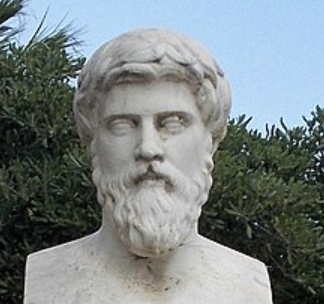
2 months 1 week ago
As Cæsar was at supper the discourse was of death,-which sort was the best. "That," said he, "which is unexpected."
▼
Source
source
Cæsar
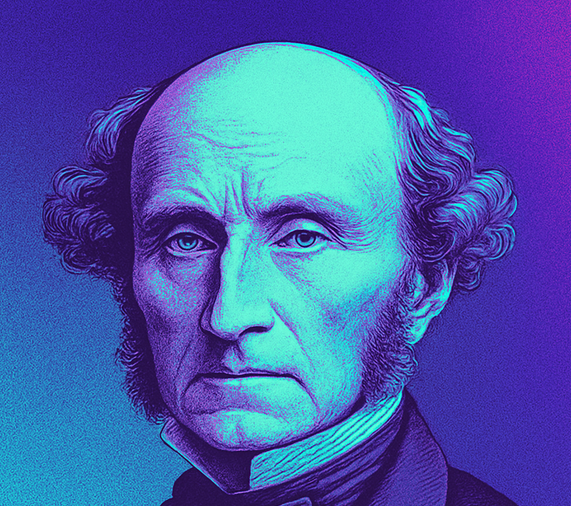
2 months 3 weeks ago
We are not so absurd as to propose that the teacher should not set forth his own opinions as the true ones and exert his utmost powers to exhibit their truth in the strongest light. To abstain from this would be to nourish the worst intellectual habit of all, that of not finding, and not looking for, certainty in any teacher. But the teacher himself should not be held to any creed; nor should the question be whether his own opinions are the true ones, but whether he is well instructed in those of other people, and, in enforcing his own, states the arguments for all conflicting opinions fairly.
▼
Source
source
"Civilization," London and Westminster Review, April 1836
2 months 3 weeks ago
The method of "postulating" what we want has many advantages; they are the same as the advantages of theft over honest toil.
▼
Source
source
Ch. 7: Rational, Real and Complex Numbers
2 months 3 weeks ago
If in this book harsh words are spoken about some of the greatest among the intellectual leaders of mankind, my motive is not, I hope, the wish to belittle them. It springs rather from my conviction that, if our civilization is to survive, we must break with the habit of deference to great men. Great men may make great mistakes; and as the book tries to show, some of the greatest leaders of the past supported the perennial attack on freedom and reason. Their influence, too rarely challenged, continues to mislead those on whose defence civilization depends, and to divide them. The responsibility of this tragic and possibly fatal division becomes ours if we hesitate to be outspoken in our criticism of what admittedly is a part of our intellectual heritage. By reluctance to criticize some of it, we may help to destroy it all.
▼
Source
source
Preface to the First Edition
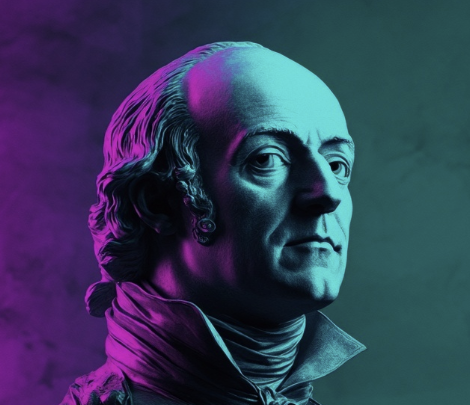
2 months 4 weeks ago
It seldom happens, however, that a great proprietor is a great improver.
▼
Source
source
Chapter IV, p. 420.
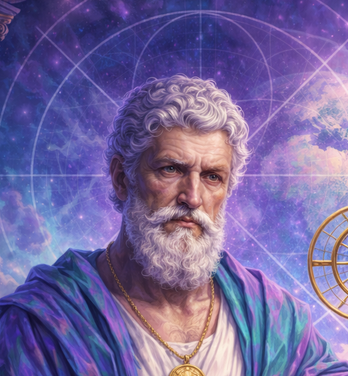
2 months 6 days ago
Placing your stick at the end of the shadow of the pyramid, you made by the sun's rays two triangles, and so proved that the pyramid [height] was to the stick [height] as the shadow of the pyramid to the shadow of the stick.
▼
Source
source
W. W. Rouse Ball, A Short Account of the History of Mathematics
2 months 3 weeks ago
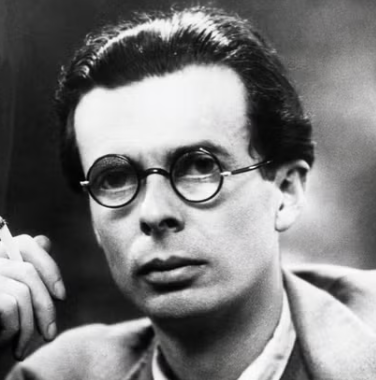
If we could sniff or swallow something that would, for five or six hours each day, abolish our solitude as individuals, atone us with our fellows in a glowing exaltation of affection and make life in all its aspects seem not only worth living, but divinely beautiful and significant, and if this heavenly, world-transfiguring drug were of such a kind that we could wake up next morning with a clear head and an undamaged constitution-then, it seems to me, all our problems (and not merely the one small problem of discovering a novel pleasure) would be wholly solved and earth would become paradise.
▼
Source
source
Wanted, A New Pleasure
1 month 4 days ago
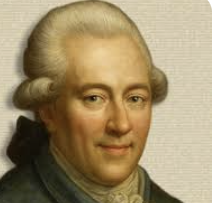
Affectation is a very good word when someone does not wish to confess to what he would none the less like to believe of himself.
▼
Source
source
F 149
3 months 3 weeks ago
[B]ecause that which is finite is always bounded with reference to something... it is necessary that there should be no end... [N]umber also appears to be infinite, and mathematical magnitudes, and that which is beyond the heavens. And since that which is beyond is infinite, body also appears to be infinite, and it would seem that there are infinite worlds; for why is there rather void here than there? ...If also there is a vacuum, and an infinite place, it is necessary that there should be an infinite body: for in things which have a perpetual subsistence, capacity differs nothing from being. The speculation of the infinite is, however, attended with doubt: for many impossibilities happen both to those who do not admit that it has a subsistence, and to those who do. ...It is ...especially the province of a natural philosopher to consider if there be a sensible infinite magnitude.
2 months 4 weeks ago
We speak not strictly and philosophically when we talk of the combat of passion and of reason. Reason is, and ought only to be the slave of the passions, and can never pretend to any other office than to serve and obey them.
▼
Source
source
Part 3, Section 3
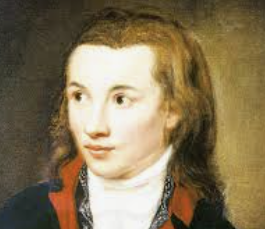
1 month 3 weeks ago
Where children are, there is a golden age.
▼
Source
source
Fragment No. 97
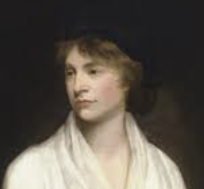
1 month 3 weeks ago
Women becoming, consequently weaker, in mind and body, than they ought to be...have not sufficient strength to discharge the first duty of a mother; and sacrificing to lasciviousness the parental affection...either destroy the embryo in the womb, or cast if off when born. Nature in every thing demands respect, and those who violate her laws seldom violate them with impunity.
▼
Source
source
Ch. 8
2 months 3 weeks ago
As a rule we disbelieve all the facts and theories for which we have no use.
▼
Source
source
"The Will to Believe" p. 10

2 weeks 1 day ago
I'm delighted to hear someone make the claim that there is moral progress because it can be such a incendiary thing to say, and its something that I say and deeply believe in.
1 month 3 weeks ago
It appears to me impossible that I should cease to exist, or that this active, restless spirit, equally alive to joy and sorrow, should only be organised dust - ready to fly abroad the moment the spring snaps, or the spark goes out which kept it together. Surely something resides in this heart that is not perishable, and life is more than a dream.
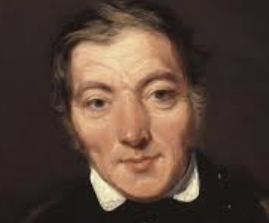
2 weeks 4 days ago
All the measures now proposed are only a compromise with the errors of the present systems; but as these errors now almost universally exist, and must be overcome solely by the force of reason; and as reason, to effect the most beneficial purposes, makes her advance by slow degrees, and progressively substantiates one truth of high import after another, it will be evident, to minds of comprehensive and accurate thought, that by these and similar compromises alone can success be rationally expected in practice. For such compromises bring truth and error before the public; and whenever they are fairly exhibited together, truth must ultimately prevail.

3 months 1 week ago
Those who deny the first principle should be flogged or burned until they admit that it is not the same thing to be burned and not burned, or whipped and not whipped.
2 months 2 weeks ago
Practice no sloth, so that the duty and good work, which it is necessary for thee to do, may not remain undone.
▼
Source
source
(p. 59)
CivilSimian.com created by AxiomaticPanic, CivilSimian, Kalokagathia