

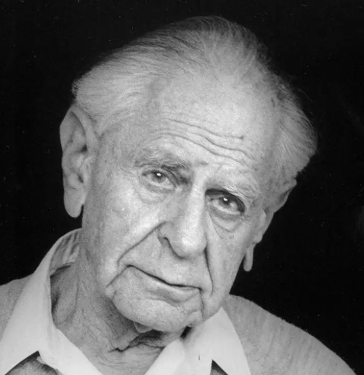
1 month 2 weeks ago
I do not overlook the fact that there are irrationalists who love mankind, and that not all forms of irrationalism engender criminality. But I hold that he who teaches that not reason but love should rule opens up the way for those who rule by hate. (Socrates, I believe, saw something of this when he suggested that mistrust or hatred of argument is related to mistrust or hatred of man).
▼
Source
source
Vol. 2, Ch. 24 "Oracular Philosophy and the Revolt against Reason"

3 weeks 2 days ago
I pray you, magnificent Sir, do not trouble yourself to return to us, but await our coming to you.
▼
Source
source
Third Dialogue
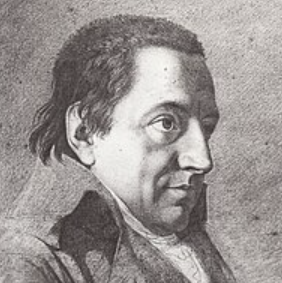
2 weeks 2 days ago
No nation which has sunk into this state of dependence can raise itself out of it by the means which have usually been adopted hitherto. Since resistance was useless to it when it was still in possession of all its powers, what can such resistance avail now that it has been deprived of the greater part of them?
▼
Source
source
Introduction p. 9-10

1 month 1 week ago
The blues is relevant today because when we look down through the corridors of time, the black American interpretation of tragicomic hope in the face of dehumanizing hate and oppression will be seen as the only kind of hope that has any kind of maturity in a world of overwhelming barbarity and bestiality. That barbarity is found not just in the form of terrorism but in the form of the emptiness of our lives - in terms of the wasted human potential that we see around the world. In this sense, the blues is a great democratic contribution of black people to world history.
▼
Source
source
(p20)
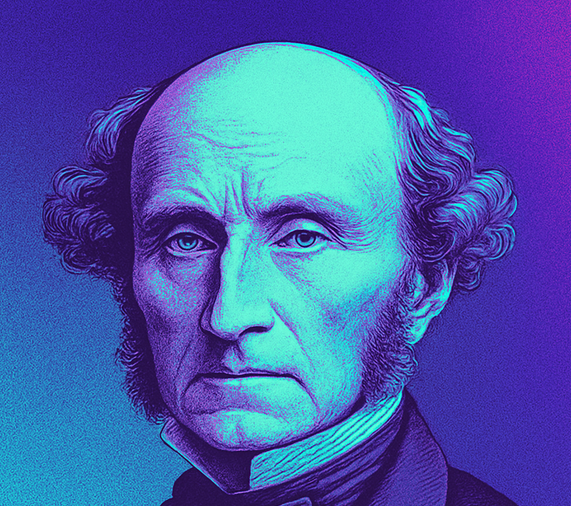
1 month 2 weeks ago
..Whenever it ceases to be true that mankind, as a rule, prefer themselves to others, and those nearest to them to those more remote, from that moment Communism is not only practicable, but the only defensible form of society...
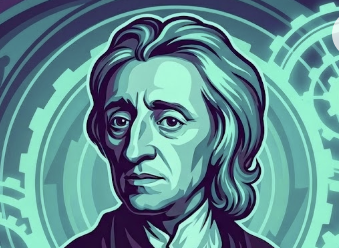
1 month 2 weeks ago
A father would do well, as his son grows up, and is capable of it, to talk familiarly with him; nay, ask his advice, and consult with him about those things wherein he has any knowledge or understanding. By this, the father will gain two things, both of great moment. The sooner you treat him as a man, the sooner he will begin to be one; and if you admit him into serious discourses sometimes with you, you will insensibly raise his mind above the usual amusements of youth, and those trifling occupations which it is commonly wasted in. For it is easy to observe, that many young men continue longer in thought and conversation of school-boys than otherwise they would, because their parents keep them at that distance, and in that low rank, by all their carriage to them.
▼
Source
source
Sec. 95
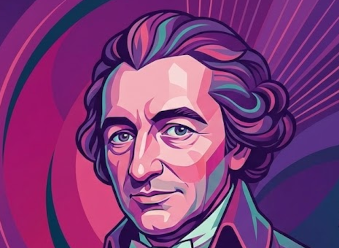
1 month 2 weeks ago
We think it also necessary to express our astonishment that a government, desirous of being called free, should prefer connection with the most despotic and arbitrary powers in Europe.
▼
Source
source
Address and Declaration at a Select Meeting of the Friends of Universal Peace and Liberty (August 20, 1791) p. 5
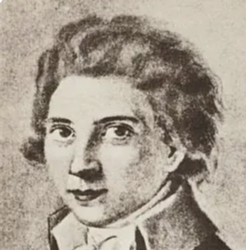
2 weeks 3 days ago
There are people with whom everything they consider a means turns mysteriously into an end.
▼
Source
source
Philosophical Fragments, P. Firchow, trans. (1991) § 428
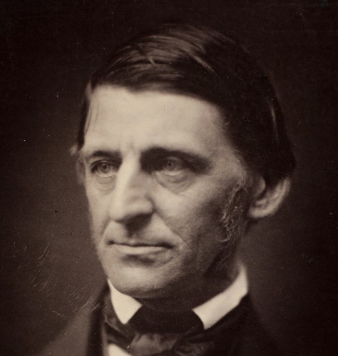
1 month 2 weeks ago
Fear not, then, thou child infirm, There's no god dare wrong a worm.
▼
Source
source
Compensation, st. 2
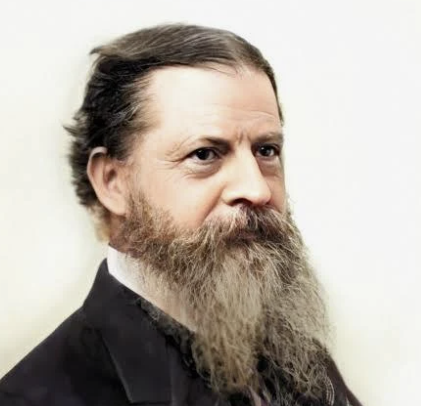
1 week 5 days ago
Consider what effects that might conceivably have practical bearings you conceive the objects of your conception to have. Then, your conception of those effects is the whole of your conception of the object.
▼
Source
source
Vol. V, par. 438
3 weeks ago
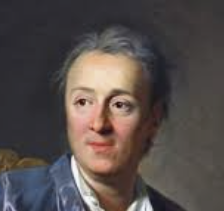
We are constantly railing against the passions; we ascribe to them all of man's afflictions, and we forget that they are also the source of all his pleasures ... But what provokes me is that only their adverse side is considered ... and yet only passions, and great passions, can raise the soul to great things. Without them there is no sublimity, either in morals or in creativity. Art returns to infancy, and virtue becomes small-minded.
▼
Source
source
As translated in Diderot (1977) by Otis Fellows, p. 39
1 day ago
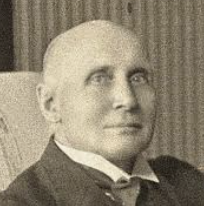
It is the business of the future to be dangerous; and it is among the merits of science that it equips the future for its duties.
▼
Source
source
Ch. 13: "Requisites for Social Progress", p. 291
2 days ago
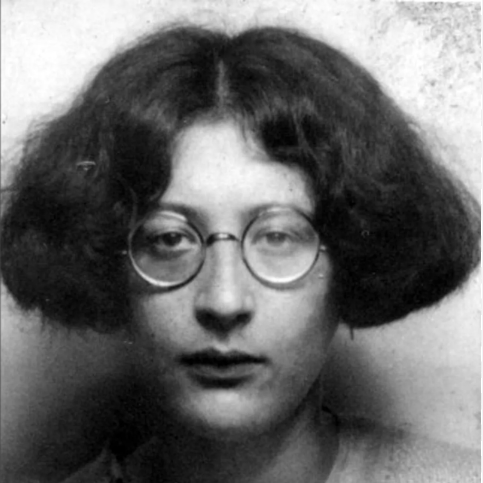
Our patriotism comes straight from the Romans. This is why French children are encouraged to seek inspiration for it in Corneille. It is a pagan virtue, if these two words are compatible. The word pagan, when applied to Rome, early possesses the significance charged with horror which the early Christian controversialists gave it. The Romans really were an atheistic and idolatrous people; not idolatrous with regard to images made of stone or bronze, but idolatrous with regard to themselves. It is this idolatry of self which they have bequeathed to us in the form of patriotism.
▼
Source
source
p. 220, also in The Need for Roots : prelude towards a declaration of duties towards mankind
3 days ago
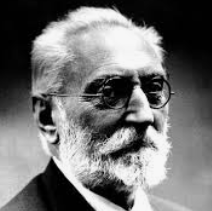
But Don Quixote was converted. Yes - and died, poor soul. But the other, the real Don Quixote, he who remained on earth and lives among us with his spirit - this Don Quixote was not converted, this Don Quixote continues to incite us to make ourselves ridiculous, this Don Quixote must never die.
1 month 2 weeks ago
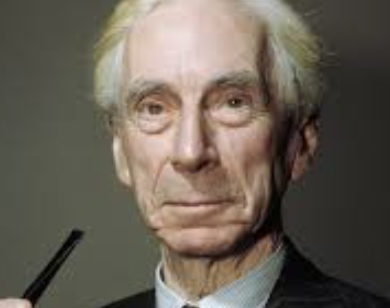
Thee might observe incidentally that if the state paid for child-bearing it might and ought to require a medical certificate that the parents were such as to give a reasonable result of a healthy child - this would afford a very good inducement to some sort of care for the race, and gradually as public opinion became educated by the law, it might react on the law and make that more stringent, until one got to some state of things in which there would be a little genuine care for the race, instead of the present haphazard higgledy-piggledy ways.
▼
Source
source
Letter to Alys Pearsall Smith (1894); published in The Selected Letters of Bertrand Russell, Volume 1: The Private Years (1884-1914)

1 week 1 day ago
The chief requirement of the good life... is to live without any image of oneself.
▼
Source
source
The Bell (1958), ch. 9; 2001, p. 119.

1 month 3 weeks ago
Out of special hatred for our faith, the devil has sent some whores here to destroy our poor young men . . . such a syphilitic whore can poison ten, twenty, thirty or more of the children of good people, and thus is to be considered a murderer, or worse, as a poisoner.
2 weeks ago
Till mankind be satisfied with the naked statement of what they really perceive, till they confess virtue to be then most illustrious, when she more disdains the aid of ornament, they will never arrive at that manly justice of sentiment at which they seem destined one day to arrive. By his scheme of naked virtue will be every day a gainer; every succeeding observer willl more fully do her justice, while vice, deprived of that varnish with which she delighted to glow her actions of that gaudy exhibition which may be made alike by every pretender will speedily sink into unheeded contempt.
▼
Source
source
Book V, Chapter 12, "Of Titles"
1 month 3 weeks ago
We must remove the Decalogue out of sight and heart.
▼
Source
source
Wilhelm Martin Leberecht De Wette, 4, 188. As cited by Jonathan Ramachandran (January 1, 2019), Lake of Fire - Hope for the Wicked One Day? - Essays in First Christianity, 5 Loaf 2 Fish Publications, p. 1264.
1 month 2 weeks ago
Lands for the purposes of pleasure and magnificence, parks, gardens, public walks, &c. possessions which are every where considered as causes of expence, not as sources of revenue, seem to be the only lands which, in a great and civilized monarchy, ought to belong the crown.
▼
Source
source
Chapter II, Part I, p. 891.
2 weeks ago
Where children are, there is a golden age.
▼
Source
source
Fragment No. 97
2 weeks 3 days ago
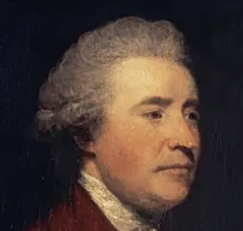
...if the Catholick religion is destroyd by the Infidels, it is a most contemptible and absurd Idea, that, this, or any Protestant Church, can survive that Event. ... in Ireland particularly, the R[oman] C[atholic] Religion should be upheld in high respect and veneration. ... I am more serious on the positive encouragement to be given to this religion...because the serious and earnest belief and practice of it by its professors forms, as things stand, the most effectual Barrier, if not the sole Barrier, against Jacobinism.
▼
Source
source
Letter to William Smith, Member of the Irish Parliament (29 January 1795), quoted in R. B. McDowell (ed.)
1 week 5 days ago
The next simplest feature that is common to all that comes before the mind, and consequently, the second category, is the element of Struggle.
▼
Source
source
Lecture II : The Universal Categories, § 2 : Struggle, CP 5.45

1 month 2 weeks ago
When it is a question of money, everybody is of the same religion.
▼
Source
source
Letter to Mme. d'Épinal, Ferney (26 December 1760) from Oeuvres Complètes de Voltaire: Correspondance (Garnier frères, Paris, 1881), vol. IX, letter # 4390 (p. 124)
1 week 6 days ago
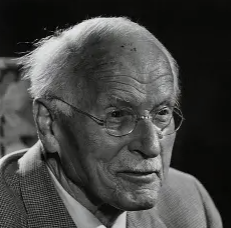
Every civilized human being, whatever his conscious development, is still an archaic man at the deeper levels of his psyche. Just as the human body connects us with the mammals and displays numerous relics of earlier evolutionary stages going back to even the reptilian age, so the human psyche is likewise a product of evolution which, when followed up to its origins, show countless archaic traits.
▼
Source
source
p. 126
1 month 2 weeks ago
I remember the very place in Hyde Park where, in my fourteenth year, on the eve of leaving my father's house for a long absence, he told me that I should find, as I got acquainted with new people, that I had been taught many things which youths of my age did not commonly know; and that many persons would be disposed to talk to me of this, and to compliment me upon it. What other things he said on this topic I remember very imperfectly; but he wound up by saying, that whatever I knew more than others, could not be ascribed to any merit in me, but to the very unusual advantage which had fallen to my lot.
▼
Source
source
(p. 34)
1 week 1 day ago
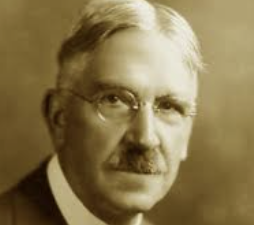
I do not think that the dancing and singing of even little children can be explained wholly on the basis of unlearned and unformed responses to then existing objective conditions. Clearly there must be something in the present to evoke happiness. But the act is expressive only a there is in it a unison of something stored from past experience, something therefore generalized, with present conditions. In the case of expressions of happy children the marriage of past values and present incidents takes place easily; there are few obstructions to be overcome, few wounds to heal, few conflicts to resolve. With maturer persons, the reverse is the case. Accordingly the achievement of complete unison is rare; but when it occurs it is so on a deeper level and with a fuller content of meaning. And then, even though after long incubation and after precedent pangs of labor, the final expression may issue with the spontaneity of the cadenced speech or rhythmic movement of happy childhood.
▼
Source
source
p. 74
1 month 2 weeks ago
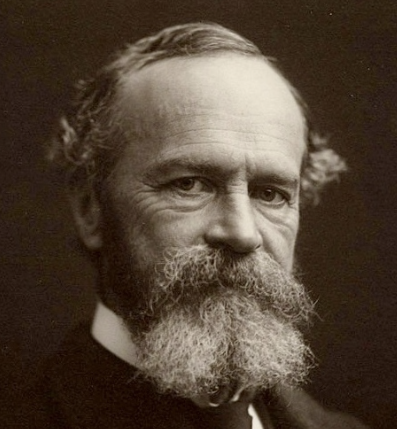
The practical consequence of such a[n individualistic] philosophy is the well-known democratic respect for the sacredness of individuality,-is, at any rate, the outward tolerance of whatever is not itself intolerant. These phrases are so familiar that they sound now rather dead in our ears. Once they had a passionate inner meaning. Such a passionate inner meaning they may easily acquire again if the pretension of our nation to inflict its own inner ideals and institutions vi et armis upon Orientals should meet with a resistance as obdurate as so far it has been gallant and spirited. Religiously and philosophically, our ancient national doctrine of live and let live may prove to have a far deeper meaning than our people now seem to imagine it to possess.
▼
Source
source
"Preface"
1 month 2 weeks ago
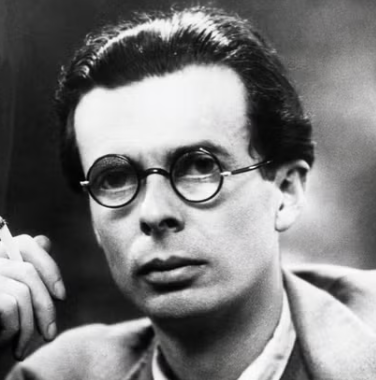
Speed, it seems to me, provides the one genuinely modern pleasure.
▼
Source
source
Wanted, A New Pleasure
1 month 2 weeks ago
"...faith and repentance, i. e. believing Jesus to be the Messiah, and a good life, are the indispensable conditions of the new covenant, to be performed by all those who would obtain eternal life. (The reasonableness, or rather necessity of which, that we may the better comprehend, we must a little look back to what was said in the beginning"
▼
Source
source
§ 106
1 week 2 days ago
No man is bound by the words themselves, either to kill himselfe, or any other man.
▼
Source
source
The Second Part, Chapter 21, p. 112
1 month 2 weeks ago
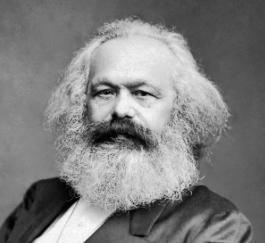
But if the labourers could live on air they could not be bought at any price.
▼
Source
source
Vol. I, Ch. 24, Section 4, pg. 657.
1 month 2 weeks ago
... the fight against suffering must be considered a duty, while the right to care for the happiness of others must be considered a privilege confined to the close circle of their friends. ... Pain, suffering, injustice, and their prevention, these are the eternal problems of public morals, the 'agenda' of public policy ...
▼
Source
source
Vol. 2, Ch. 24 "Oracular Philosophy and the Revolt against Reason"
1 month 3 weeks ago
It may be observed, that provinces amid the vicissitudes to which they are subject, pass from order into confusion, and afterward recur to a state of order again; for the nature of mundane affairs not allowing them to continue in an even course, when they have arrived at their greatest perfection, they soon begin to decline. In the same manner, having been reduced by disorder, and sunk to their utmost state of depression, unable to descend lower, they, of necessity, reascend; and thus from good they gradually decline to evil, and from evil again return to good. The reason is, that valor produces peace; peace, repose; repose, disorder; disorder, ruin; so from disorder order springs; from order virtue, and from this, glory and good fortune.
▼
Source
source
Book V, Chapter 1
1 month 2 weeks ago
And striving to be man, the worm Mounts through all the spires of form.
▼
Source
source
May-Day
2 weeks ago
Before abstraction everything is one, but one like chaos; after abstraction everything is united again, but this union is a free binding of autonomous, self-determined beings. Out of a mob a society has developed, chaos has been transformed into a manifold world.
▼
Source
source
Fragment No. 95

2 months 1 week ago
The world evades us because it becomes itself again. That stage scenery masked by habit becomes what it is. It withdraws at a distance from us.
Just now
A further turn is to be found in some "unmasking" accounts of natural science, which aim to show that its pretensions to deliver the truth are unfounded, because of social forces that control its activities. Unlike the case of history, these do not use truths of the same kind; they do not apply science to the criticism of science. They apply the social sciences, and typically depend on the remarkable assumption that the sociology of knowledge is in a better position to deliver truth about science than science is to deliver truth about the world.
▼
Source
source
p. 2

1 month 2 weeks ago
I do not think the resemblance between the Christian and the merely imaginative experience is accidental. I think that all things, in their own way, reflect heavenly truth, the imagination not least. "Reflect" is the important word. This lower life of the imagination is not a beginning of, nor a step toward, the higher life of the spirit, merely an image.
1 week ago
The ultimate goal of the arriviste's aspirations is not to acquire a thing of value, but to be more highly esteemed than others. He merely uses the "thing" as an indifferent occasion for overcoming the oppressive feeling of inferiority which results from his constant comparisons.
▼
Source
source
L. Coser, trans. (1973), pp. 55-56
1 month 2 weeks ago
It is sometimes maintained that racial mixture is biologically undesirable. There is no evidence whatever for this view. Nor is there, apparently, any reason to think that Negroes are congenitally less intelligent than white people, but as to that it will be difficult to judge until they have equal scope and equally good social conditions.
▼
Source
source
Part II: Man and Man, Ch. 12: Racial Antagonism, p. 108
1 week 5 days ago
The Austrian Germans and Magyars will be set free and wreak a bloody revenge on the Slav barbarians. The general war which will then break out will smash this Slav Sonderbund and wipe out all these petty hidebound nations, down to their very names. The next world war will result in the disappearance from the face of the earth not only of reactionary classes and dynasties, but also of entire reactionary peoples. And that, too, is a step forward.
▼
Source
source
The Magyar Struggle in Neue Rheinische Zeitung (13 January 1849) Referring to the Serb uprising of 1848-49

1 month 3 weeks ago
Anyone who actually admires money as the most precious thing in life, and rests his security on it to the extent of believing that as long as he possesses it he will be happy, has fashioned too many false gods for himself. Too many people put money in the place of Christ, as if it alone has the key to their happiness or unhappiness.
▼
Source
source
p. 100

2 months 2 weeks ago
The two guides call out to a man early and late. And yet, no, for when remorse calls to a man it is always late. The call to find the way again by seeking out God in the confession of sins is always at the eleventh hour. Whether you are young or old, whether you have sinned much or little, whether you have offended much or neglected much, the guilt makes this call come at the eleventh hour. The inner agitation of the heart understands what remorse insists upon, that the eleventh hour has come. For in the sense of time, the old man's age is the eleventh hour; and the instant of death, the final moment in the eleventh hour. The indolent youth speaks of a long life that lies before him. The indolent old man hopes that his death is still a long way off. But repentance and remorse belong to the eternal in a man.
1 month 2 weeks ago
Fools admire everything in an author of reputation.
1 month 2 weeks ago
But the man is a humbug - a vulgar, shallow, self-satisfied mind, absolutely inaccessible to the complexities and delicacies of the real world. He has the journalist's air of being a specialist in everything, of taking in all points of view and being always on the side of the angels: he merely annoys a reader who has the least experience of knowing things, of what knowing is like. There is not two pence worth of real thought or real nobility in him. But he isn't dull.
▼
Source
source
Part of a diary entry dated "Wednesday-Wednesday 9-16 July", 1924, regarding Thomas Babington Macaulay
1 month 2 weeks ago
Modern transcendental idealism, Emersonianism, for instance, also seems to let God evaporate into abstract Ideality. Not a deity in concreto, not a superhuman person, but the immanent divinity in things, the essentially spiritual structure of the universe, is the object of the transcendentalist cult. In that address of the graduating class at Divinity College in 1838 which made Emerson famous, the frank expression of this worship of mere abstract laws was what made the scandal of the performance.
▼
Source
source
Lecture II, "Circumscription of the Topic"
2 weeks 3 days ago
A definition may be very exact, and yet go but a very little way towards informing us of the nature of the thing defined.
▼
Source
source
Introduction On Taste
1 month 2 weeks ago
It is, of course, clear that a country with a large foreign population must endeavour, through its schools, to assimilate the children of immigrants. It is, however, unfortunate that a large part of this process should be effected by means of a somewhat blatant nationalism.
▼
Source
source
Ch. 10: Modern Homogeneity
1 week 2 days ago
Religions are not true or false, but better or worse.
▼
Source
source
This statement is presented in quotes in The Philosophy of Religion and Advaita Vedanta (2008) by Arvind Sharma, p. 216
CivilSimian.com created by AxiomaticPanic, CivilSimian, Kalokagathia