

2 months 5 days ago
He that in his studies wholly applies himself to labour and exercise, and neglects meditation, loses his time, and he that only applies himself to meditation, and neglects labour and exercise, only wanders and loses himself.

1 month 2 weeks ago
If the stars should appear one night in a thousand years, how would men believe and adore, and preserve for many generations the remembrance of the city of God which had been shown! But every night come out these envoys of beauty, and light the universe with their admonishing smile.
▼
Source
source
Nature
2 months 5 days ago
The institutions of the Ruler are rooted in his own character and conduct, and sufficient attestation of them is given by the masses of the people. He examines them by comparison with those of the three kings, and finds them without mistake. He sets them up before Heaven and Earth, and finds nothing in them contrary to their mode of operation. He presents himself with them before spiritual beings, and no doubts about them arise. He is prepared to wait for the rise of a sage a hundred ages after, and has no misgivings. His presenting himself with his institutions before spiritual beings, without any doubts arising about them, shows that he knows Heaven. His being prepared, without any misgivings, to wait for the rise of a sage a hundred ages after, shows that he knows men.

3 weeks 1 day ago
If it is not true, it is a good story.
▼
Source
source
as quoted in A Book of Quotations, Proverbs and Household Words (1907) edited by Sir William Gurney Benham
2 months ago
What should a philosopher say, then, in the face of each of the hardships of life? "It was for this that I've been training myself, it was for this that I was practising."
▼
Source
source
Book III, ch. 10,7.

1 month 1 week ago
Resting on your laurels is as dangerous as resting when you are walking in the snow. You doze off and die in your sleep.
▼
Source
source
p. 35e
1 week ago
The primary meaning of the words "modern," "modernity," with which recent times have baptised themselves, brings out very sharply that feeling of "the height of time" which I am at present analysing. "Modern" is what is "in the fashion, "that is to say, the new fashion or modification which has arisen over against the old traditional fashions used in the past. The word "modern" then expresses a consciousness of a new life, superior to the old one, and at the same time an imperative call to be at the height of one's time. For the "modern" man, not to be "modern" means to fall below the historic level.
▼
Source
source
Chap. III: The Height Of The Times
1 week 4 days ago
The Austrian Germans and Magyars will be set free and wreak a bloody revenge on the Slav barbarians. The general war which will then break out will smash this Slav Sonderbund and wipe out all these petty hidebound nations, down to their very names. The next world war will result in the disappearance from the face of the earth not only of reactionary classes and dynasties, but also of entire reactionary peoples. And that, too, is a step forward.
▼
Source
source
The Magyar Struggle in Neue Rheinische Zeitung (13 January 1849) Referring to the Serb uprising of 1848-49
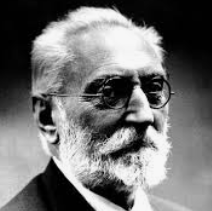
3 days ago
Faith feels itself secure neither with universal consent, nor with tradition, nor with authority. It seeks support of its enemy, reason.
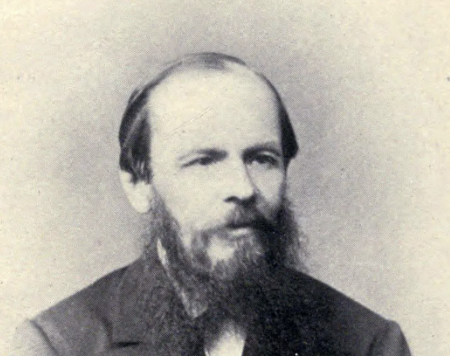
2 weeks 2 days ago
Paper, they say, does not blush, but I assure you it's not true and that it's blushing just as I am now, all over.
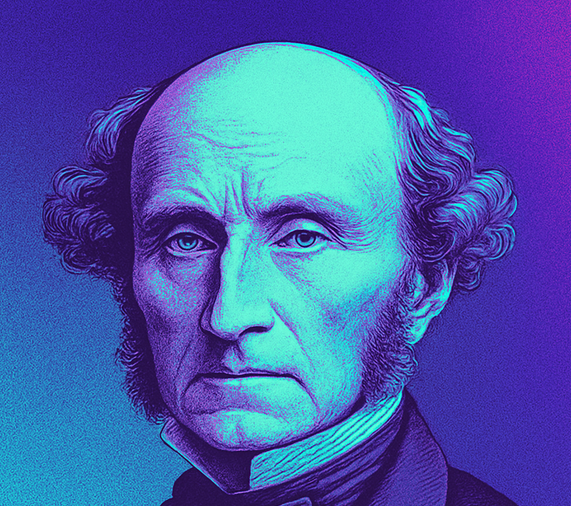
1 month 2 weeks ago
I am thus one of the very few examples, in this country, of one who has, not thrown off religious belief, but never had it...
▼
Source
source
(p. 43)
1 month 2 weeks ago
Thought is the property of him who can entertain it, and of him who can adequately place it.
▼
Source
source
Shakespeare; or, The Poet
2 weeks 2 days ago
Honour is the mysticism of legality.
▼
Source
source
Aphorism 77, of Ideas as translated in The Early Political Writings of the German Romantics (1996) edited by Frederick C. Beiser, p. 131
1 month 2 weeks ago
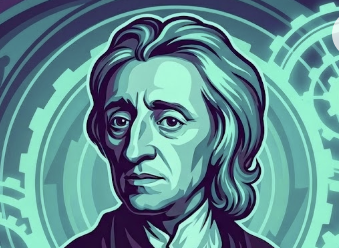
Stop Traveller! Near this place lieth John Locke. If you ask what kind of a man he was, he answers that he lived content with his own small fortune. Bred a scholar he made his learning subservient only to the cause of truth. This thou will learn from his writings, which will show thee everything else concerning him, with greater truth, than the suspect praises of an epitaph. His virtues, indeed, if he had any, were too little for him to propose as matter of praise to himself, or as an example to thee. Let his vices be buried together. As to an example of manners, if you seek that, you have it in the Gospels; of vices, to wish you have one nowhere; if mortality, certainly, (and may it profit thee), thou hast one here and everywhere.
▼
Source
source
Epitaph, as translated from the Latin.
1 month 2 weeks ago
All the entertainment and talk of history is nothing almost but fighting and killing: and the honour and renown that is bestowed on conquerers (who for the most part are but the great butchers of mankind) farther mislead growing youth, who by this means come to think slaughter the laudible business of mankind, and the most heroick of virtues. By these steps unnatural cruelty is planted in us; and what humanity abhors, custom reconciles and recommends to us, by laying it in the way to honour. Thus, by fashioning and opinion, that comes to be a pleasure, which in itself neither is, nor can be any.
▼
Source
source
Sec. 116

1 month 2 weeks ago
Lightly men talk of saying what they mean. Often when he was teaching me to write in Greek the Fox would say, "Child, to say the very thing you really mean, the whole of it, nothing more or less or other than what you really mean; that's the whole art and joy of words." A glib saying. When the time comes to you at which you will be forced at last to utter the speech which has lain at the center of your soul for years, which you have, all that time, idiot-like, been saying over and over, you'll not talk about joy of words. I saw well why the gods do not speak to us openly, nor let us answer. Till that word can be dug out of us, why should they hear the babble that we think we mean? How can they meet us face to face till we have faces?
▼
Source
source
Orual

1 month 1 week ago
You can't lead the people if you don't love the people. You can't save the people, if you don't serve the people.
▼
Source
source
Hope on a Tightrope: Words and Wisdom (2008); also on "The Way I See It" Starbucks Coffee Cup #284
1 month 2 weeks ago
As to the having and possessing of things, teach them to part with what they have, easily and freely to their friends, and let them find by experience that the most liberal has always the most plenty, with esteem and commendation to boot, and they will quickly learn to practise it.
▼
Source
source
Sec. 110
1 month 2 weeks ago
Indeed, if we consider the unblushing promises of reward and the staggering nature of the rewards promised in the Gospels, it would seem that Our Lord finds our desires, not too strong, but too weak. We are half-hearted creatures, fooling about with drink and sex and ambition when infinite joy is offered us, like an ignorant child who wants to go on making mud pies in a slum because he cannot imagine what is meant by the offer of a holiday at the sea. We are far too easily pleased.
1 month 2 weeks ago
The speaker with whom I was most struck, though I dissented from nearly every word he said, was Thirlwall, the historian, since Bishop of St. David's, then a Chancery barrister, unknown except by a high reputation for eloquence acquired at the Cambridge Union before the era of Austin and Macaulay. His speech was in answer to one of mine. Before he had uttered ten sentences, I set him down as the best speaker I had ever heard, and I have never since heard any one whom I placed above him.
▼
Source
source
(p. 125)
1 week 5 days ago
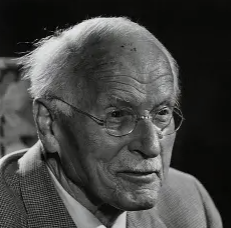
People will do anything, no matter how absurd, in order to avoid facing their own souls. They will practice Indian yoga and all its exercises, observe a strict regimen of diet, learn the literature of the whole world-all because they cannot get on with themselves and have not the slightest faith that anything useful could ever come out of their own souls. Thus the soul has gradually been turned into a Nazareth from which nothing good can come.
▼
Source
source
CW 12, par. 126 (p 99)

1 week 5 days ago
If to describe a misery were as easy to live through it!
1 month 3 weeks ago
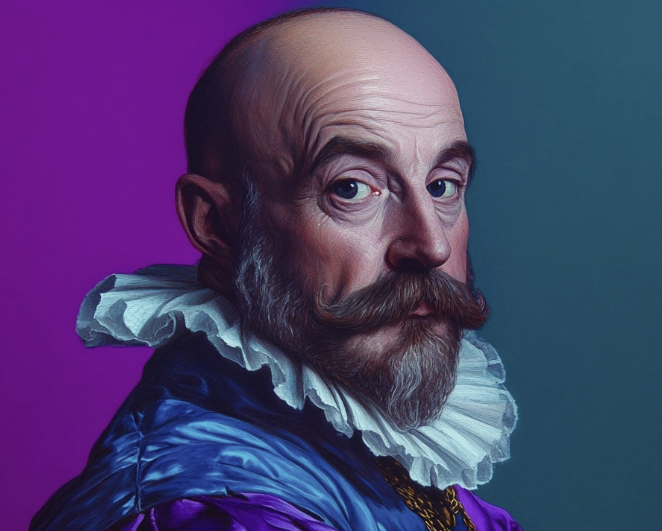
Fashion is the science of appearances, and it inspires one with the desire to seem rather than to be.
1 week 1 day ago
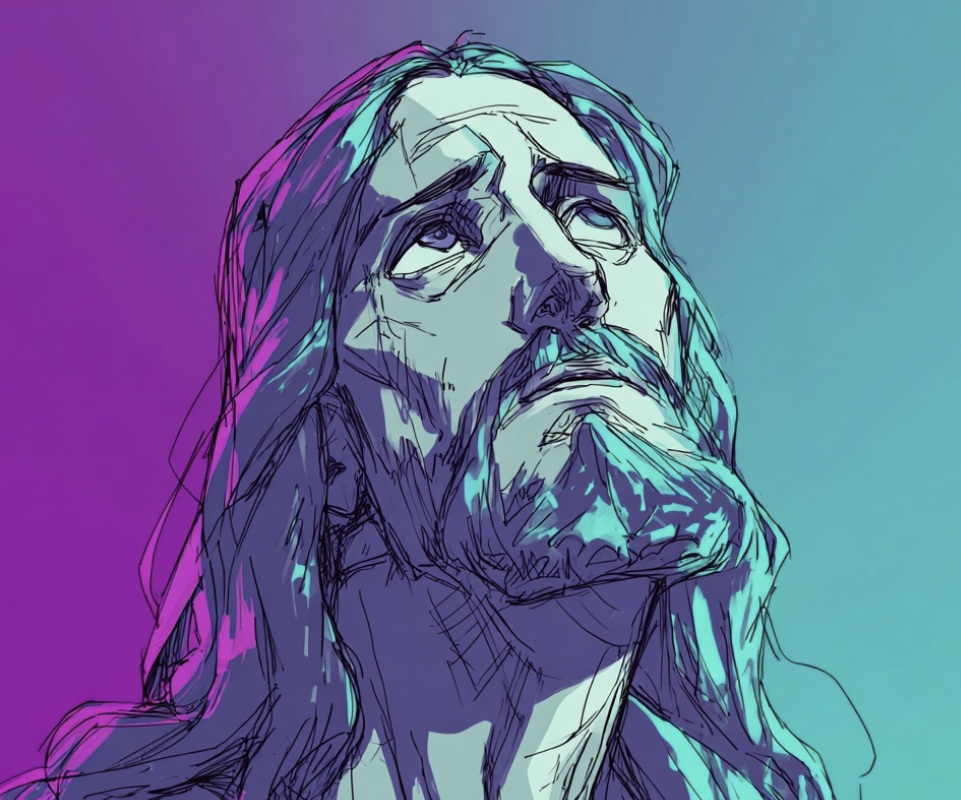
Why trouble ye the woman? for she hath wrought a good work upon me. For ye have the poor always with you; but me ye have not always. For in that she hath poured this ointment on my body, she did it for my burial. Verily I say unto you, Wheresoever this gospel shall be preached in the whole world, there shall also this, that this woman hath done, be told for a memorial of her.
▼
Source
source
26:10-13 (KJV)
6 days ago
The French symbolists had a special term to express their love for things that had lost their objective significance, namely, 'spleen.' The conscious, challenging arbitrariness in the choice of objects, its 'absurdity' and 'perverseness,' as if by a silent gesture discloses the irrationality of utilitarian logic, which it then slaps in the face in order to demonstrate its inadequacy with regard to human experience. And while making it conscious, by this shock, of the fact that it forgets the subject, the gesture simultaneously expresses the subject's sorrow over his inability to achieve an objective order. Twentieth-century society is not troubled by such inconsistencies. For it, meaning can be achieved in only one way-service for a purpose.
▼
Source
source
p. 38.
1 month 1 week ago
A great prison structure was planned, whose different levels would correspond exactly to the levels of the centralized administration. The scaffold, where the body of the tortured criminal had been exposed to the ritually manifested force of the sovereign, the punitive theatre in which the representation of punishment was permanently available to the social body, was replaced by a great enclosed, complex and hierarchized structure that was integrated into the very body of the state apparatus.
▼
Source
source
Chapter Three, The Gentle Way in Punishment
1 month 2 weeks ago
You shall have joy, or you shall have power, said God; you shall not have both.
▼
Source
source
October 1842
2 weeks 2 days ago
To study the meaning of man and of life - I am making significant progress here. I have faith in myself. Man is a mystery: if you spend your entire life trying to puzzle it out, then do not say that you have wasted your time. I occupy myself with this mystery, because I want to be a man.
▼
Source
source
Personal correspondence (1839), as quoted in Dostoevsky: His Life and Work (1971) by Konstantin Mochulski, as translated by Michael A. Minihan, p. 17
1 month 2 weeks ago
Wherever there is great property, there is great inequality.
▼
Source
source
Chapter I, Part II, p. 770.

1 month 5 days ago
O Fortune, cruellest of heavenly powers, why make such game of this poor life of ours?
▼
Source
source
Book II, satire viii, line 61 (trans. Conington)
2 months 5 days ago
Things have their root and their branches. Affairs have their end and their beginning. To know what is first and what is last will lead near to what is taught in the Great Learning.

1 week 1 day ago
The tangible source of exploitation disappears behind the façade of objective rationality.
▼
Source
source
p. 32


2 months 1 week ago
There can be no question of holding forth on ethics. I have seen people behave badly with great morality and I note every day that integrity has no need of rules. There is but one moral code that the absurd man can accept, the one that is not separated from God: the one that is dictated. But it so happens that he lives outside that God. As for the others (I mean also immoralism), the absurd man sees nothing in them but justifications and he has nothing to justify. I start out here from the principle of his innocence. That innocence is to be feared. "Everything is permitted," exclaims Ivan Karamazov. That, too, smacks of the absurd. But on condition that it not be taken in a vulgar sense. I don't know whether or not it has been sufficiently pointed out that it is not an outburst of relief or of joy, but rather a bitter acknowledgment of a fact.
Just now
The science of pure mathematics, in its modern developments, may claim to be the most original creation of the human spirit.
▼
Source
source
Ch. 2: "Mathematics as an Element in the History of Thought", p. 28
1 month 6 days ago
'Tis not in strength of body nor in gold that men find happiness, but in uprightness and in fulness of understanding.
2 weeks 6 days ago
Reorganisation, irrespectively of God or king, by the worship of Humanity, systematically adopted. Man's only right is to do his duty. The Intellect should always be the servant of the Heart, and should never be its slave.
▼
Source
source
Title Page
1 month 3 weeks ago
Few are the women and maidens who would let themselves think that one could at the same time be joyous and modest. They are all bold and coarse in their speech, in their demeanor wild and lewd. That is now the fashion of being in good cheer. But it is specially evil that the young maiden folk are exceedingly bold of speech and bearing, and curse like troopers, to say nothing of their shameful words and scandalous coarse sayings, which one always hears and learns from another.

2 weeks 3 days ago
Gentrification isn't neighborhood improvement - it's displacement. Working-class communities are made unaffordable, long-time residents forced out, culture erased, replaced with boutiques serving new affluent populations. Urban colonization by cappuccino, making cities playgrounds for the rich while exiling the poor.
2 weeks 2 days ago
What terrible tragedies realism inflicts on people.'
1 month 1 week ago
I believe that one of the things Christianity says is that sound doctrines are all useless. That you have to change your life. (Or the direction of your life.)
▼
Source
source
p. 53e
1 week 5 days ago
The erotic instinct is something questionable, and will always be so whatever a future set of laws may have to say on the matter. It belongs, on the one hand, to the original animal nature of man, which will exist as long as man has an animal body. On the other hand, it is connected with the highest forms of the spirit. But it blooms only when the spirit and instinct are in true harmony. If one or the other aspect is missing, then an injury occurs, or at least there is a one-sided lack of balance which easily slips into the pathological. Too much of the animal disfigures the civilized human being, too much culture makes a sick animal.
1 month 2 weeks ago
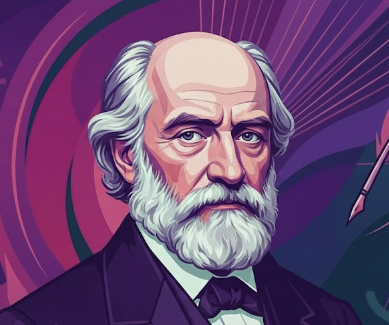
An unbiased reader, on opening one of their [Fichte's, Schelling's or Hegel's] books and then asking himself whether this is the tone of a thinker wanting to instruct or that of a charlatan wanting to impress, cannot be five minutes in any doubt. ... The tone of calm investigation, which had characterized all previous philosophy, is exchanged for that of unshakeable certainty, such as is peculiar to charlatanry of every kind and at all times. ... From every page and every line, there speaks an endeavor to beguile and deceive the reader, first by producing an effect to dumbfound him, then by incomprehensible phrases and even sheer nonsense to stun and stupefy him, and again by audacity of assertion to puzzle him, in short, to throw dust in his eyes and mystify him as much as possible.
▼
Source
source
E. Payne, trans. (1974) Vol. 1, p. 23
1 week 4 days ago
The abolition of private property has become not only possible but absolutely necessary. ... The outcome can only be the victory of the proletariat.
1 month 2 weeks ago
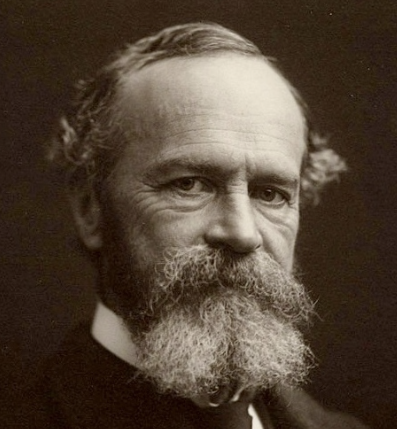
Keep the faculty of effort alive in you by a little gratuitous exercise every day. That is, be systematically ascetic or heroic in little unnecessary points, do every day or two something for no other reason than that you would rather not do it, so that when the hour of dire need draws nigh, it may find you not unnerved and untrained to stand the test. So with the man who has daily inured himself to habits of concentrated attention, energetic volition, and self-denial in unnecessary things. He will stand like a tower when everything rocks around him, and when his softer fellow-mortals are winnowed like chaff in the blast.
▼
Source
source
Ch. 4
1 month 2 weeks ago
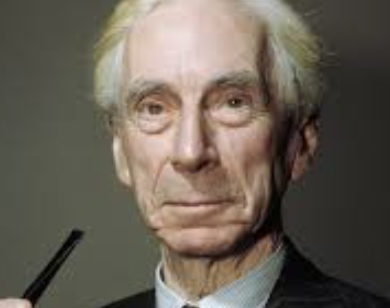
Passing from quantity to quality of population, we come to the question of eugenics. We may perhaps assume that, if people grow less superstitious, government will acquire the right to sterilize those who are not considered desirable as parents. This power will be used, at first, to diminish imbecility, a most desirable object. But probably, in time, opposition to the government will be taken to prove imbecility, so that rebels of all kinds will be sterilized. Epileptics, consumptives, dipsomaniacs and so on will gradually be included; in the end, there will be a tendency to include all who fail to pass the usual school examinations. The result will be to increase the average intelligence; in the long run, it may be greatly increased. But probably the effect upon really exceptional intelligence will be bad. Mr. Micawber, who was Dickens's father, would hardly have been regarded as a desirable parent. How many imbeciles ought to outweigh one Dickens I do not profess to know.
1 month 1 week ago
People are deeply imbedded in philosophical, i.e., grammatical confusions. And to free them presupposes pulling them out of the immensely manifold connections they are caught up in.
▼
Source
source
Ch. 9 : Philosophy, p. 185
1 month 6 days ago
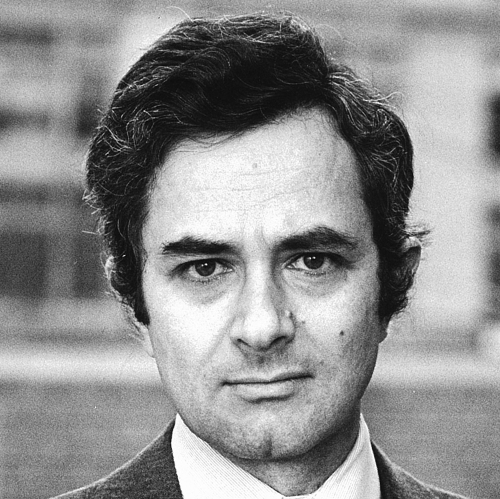
If we tried to rely entirely on reason, and pressed it hard, our lives and beliefs would collapse - a form of madness that may actually occur if the inertial force of taking the world and life for granted is somehow lost. If we lose our grip on that, reason will not give it back to us.
▼
Source
source
"The Absurd" (1971), p. 20.
1 week 6 days ago
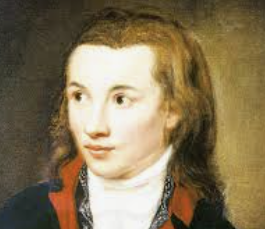
The ideal of Morality has no more dangerous rival than the ideal of highest Strength, of most powerful life; which also has been named (very falsely as it was there meant) the ideal of poetic greatness. It is the maximum of the savage; and has, in these times, gained, precisely among the greatest weaklings, very many proselytes. By this ideal, man becomes a Beast-Spirit, a Mixture; whose brutal wit has, for weaklings, a brutal power of attraction.
1 month 2 weeks ago
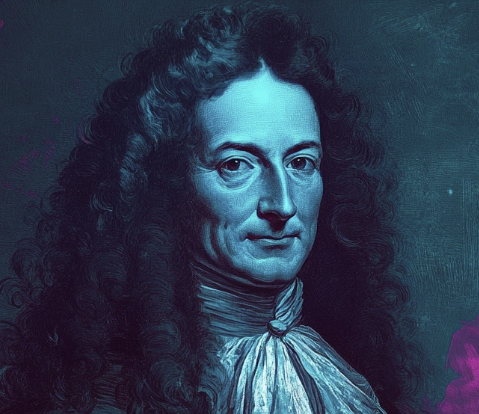
The love of God consists in an ardent desire to procure the general welfare, and reason teaches me that there is nothing which contributes more to the general welfare of mankind than the perfection of reason.
▼
Source
source
Closing sentence of the Preface to the general science (1677) (in P. Wiener (ed.), Leibniz Selections, Macmilland Press Ltd, 1951).
CivilSimian.com created by AxiomaticPanic, CivilSimian, Kalokagathia