


1 week 5 days ago
We are so lonely in life that we must ask ourselves if the loneliness of dying is not a symbol of our human existence.
1 week 4 days ago
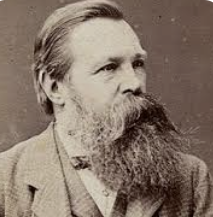
The manufacturing worker almost always lives in the countryside and in a more or less patriarchal relation to his landlord or employer; the proletarian lives, for the most part, in the city and his relation to his employer is purely a cash relation. The manufacturing worker is torn out of his patriarchal relation by big industry, loses whatever property he still has, and in this way becomes a proletarian.
1 month 6 days ago
The animals themselves are incapable of demanding their own liberation, or of protesting against their condition with votes, demonstrations, or boycotts. Human beings have the power to continue to oppress other species forever, or until we make this planet unsuitable for living beings. Will our tyranny continue, proving that morality counts for nothing when it clashes with selfinterest, as the most cynical of poets and philosophers have always said? Or will we rise to the challenge and prove our capacity for genuine altruism by ending our ruthless exploitation of the species in our power, not because we are forced to do so by rebels or terrorists, but because we recognize that our position is morally indefensible? The way in which we answer this question depends on the way in which each one of us, individually, answers it.
▼
Source
source
Ch. 6: Speciesism Today
1 month 6 days ago
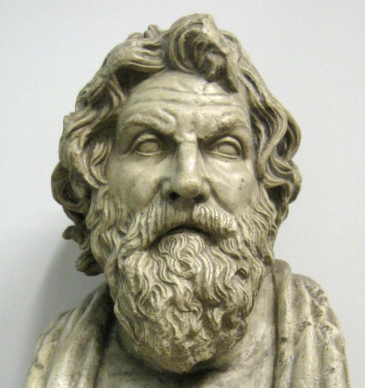
Count all wickedness foreign and alien.
▼
Source
source
§ 5
1 month 2 weeks ago
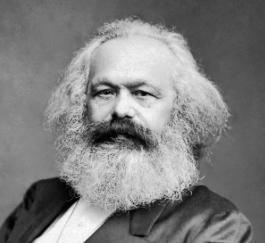
We have just seen that, apart from money-capital, circulating capital is only another name for commodity-capital. But to the extent that labour power circulates in the market,it is not capital, no form of commodity-capital. It is not capital at all; the labourer is not a capitalist, although he brings a commodity to market, namely his own skin.
▼
Source
source
Vol. II, Ch. X, p. 211.
2 days ago
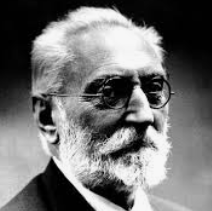
Egoism you say? There is nothing more universal than the individual, for what is the property of each is the property of all. Each man is worth more than the whole of humanity, nor will it do to sacrifice each to all save in so far as all sacrifice themselves to each. That which we call egoism is the principle of psychic gravity, the necessary postulate. "Love thy neighbor as thyself," we are told, the presupposition being that each man loves himself; and it is not said "Love thyself." And nevertheless, we do not know how to love ourselves.
6 days ago
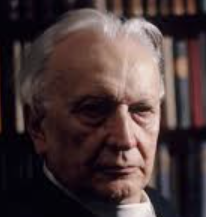
I approach the presentation of Kierkegaard with some trepidation. Next to Nietzsche, or rather, prior to Nietzsche, I consider him to be the most important thinker of our post-Kantian age. With Goethe and Hegel, an epoch had reached its conclusion, and our prevalent way of thinking - that is, the positivistic, natural-scientific one - cannot really be considered as philosophy.
▼
Source
source
The Great Philosophers
2 days ago
And the conversion of the other Don Quixote - he who was converted only to die - was possible because he was mad, and it was his madness, and not his death or his conversion that immortalized him, earning him forgiveness for this crime of having been born. Felix culpa! And neither was his madness cured, but only transformed. His death was his last knightly adventure; in dying he stormed heaven, which suffereth violence.

1 month 2 weeks ago
You could send your soul after the good you had expected, instead of turning it to the good you had got. You could refuse the real good; you could make the real fruit taste insipid by thinking of the other.
1 month 2 weeks ago
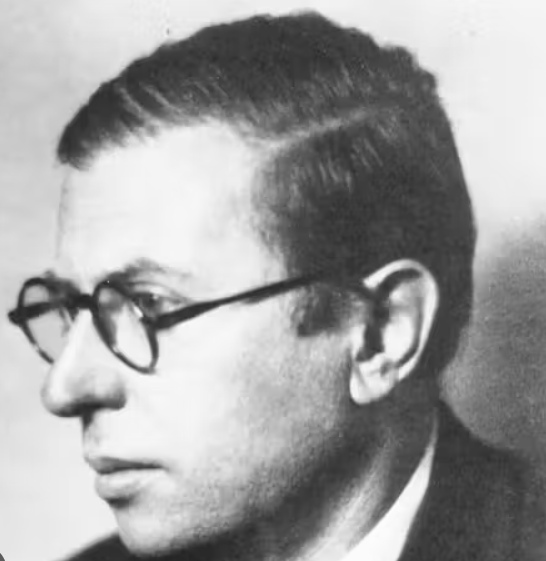
If we must absolutely mention this state of affairs, I suggest that we call ourselves "absent", that is more proper.
▼
Source
source
Estelle, refusing to use the word "dead", Act 1, sc. 5
2 months 1 week ago
Zeus, the god of gods, who rules according to law, and is able to see into such things, perceiving that an honourable race was in a woeful plight, and wanting to inflict punishment on them, that they might be chastened and improve, collected all the gods into their most holy habitation, which, being placed in the centre of the world, beholds all created things.
1 week 1 day ago
Oblivious of Democritus, the unwilling materialists of our day have generally been awkwardly intellectual and quite incapable of laughter. If they have felt anything, they have felt melancholy. Their allegiance and affection were still fixed on those mythical sentimental worlds which they saw to be illusory. The mechanical world they believed in could not please them, in spite of its extent and fertility. Giving rhetorical vent to their spleen and prejudice, they exaggerated nature's meagreness and mathematical dryness. When their imagination was chilled they spoke of nature, most unwarrantably, as dead, and when their judgment was heated they took the next step and called it unreal.
▼
Source
source
Ch. 3 "Mechanism"

2 weeks 3 days ago
Pollution isn't equally distributed - it's strategically placed in poor and minority communities. Factories, incinerators, toxic waste: all carefully situated where people have least political power to resist. Environmental racism is class warfare through poisoned air and contaminated water.
1 month 2 weeks ago
In a social order dominated by capitalist production even the non-capitalist producer is gripped by capitalist conceptions.
▼
Source
source
Vol. III, Ch. I, Cost Price and Profit, p. 39.

2 months 2 weeks ago
The Philology of Christianity. How little Christianity cultivates the sense of honesty can be inferred from the character of the writings of its learned men. They set out their conjectures as audaciously as if they were dogmas, and are but seldom at a disadvantage in regard to the interpretation of Scripture. Their continual cry is: am right, for it is written and then follows an explanation so shameless and capricious that a philologist, when he hears it, must stand stock-still between anger and laughter, asking himself again and again: Is it possible? Is it honest? Is it even decent?It is only those who never or always attend church that underestimate the dishonesty with which this subject is still dealt in Protestant pulpits; in what a clumsy fashion the preacher takes advantage of his security from interruption; how the Bible is pinched and squeezed; and how the people are made acquainted with every form of the art of false reading.
1 month 2 weeks ago
Figure to yourself the mixture of surprise and delight which has this instant been poured into my mind by the sound of my name, as uttered by you, in the speech just read to me out of the Morning Herald... By one and the same man, not only Parliamentary Reform, but Law Reform advocated. Advocated? and by what man? By one who, in the vulgar sense of profit and loss, has nothing to gain by it... Yes, only from Ireland could such self-sacrifice come; nowhere else: least of all in England, cold, selfish, priest-ridden, lawyer-ridden, lord-ridden, squire-ridden, soldier-ridden England, could any approach to it be found.
▼
Source
source
Letter to Daniel O'Connell (15 July 1828) , quoted in The Works of Jeremy Bentham, Vol. X (1843), pp. 594-595
2 months 5 days ago
To worship to other than one's own ancestral spirits is brown-nosing. If you see what is right and fail to act on it, you lack courage. Variant: To see what is right, and not to do it, is want of courage or of principle.

1 week 1 day ago
In the form of the oeuvre, the actual circumstances are placed in another dimension where the given reality shows itself as that which it is. Thus it tells the truth about itself; its language ceases to be that of deception, ignorance, and submission. Fiction calls the facts by their name and their reign collapses; fiction subverts everyday experience and shows it to be mutilated and false.
▼
Source
source
p. 62
1 month 4 weeks ago
Whilst in speaking of human things, we say that it is necessary to know them before we can love them...the saints on the contrary say in speaking of divine things that it is necessary to love them in order to know them, and that we only enter truth through charity.
1 month 2 weeks ago
Since property here exists in the form of stock, its movement and transfer become purely a result of gambling on the stock exchange, where the little fish are swallowed by the sharks and the lambs by the stock exchange wolves.
▼
Source
source
Vol. III, Ch. XXVII, The Role of Credit, p. 440.
1 day ago
Music for entertainment ... seems to complement the reduction of people to silence, the dying out of speech as expression, the inability to communicate at all. It inhabits the pockets of silence that develop between people molded by anxiety, work and undemanding docility.
▼
Source
source
p. 271

1 month 3 weeks ago
Wherever you encounter truth, look upon it as Christianity.
▼
Source
source
As quoted in Erasmus of Rotterdam (1934) by Stefan Zweig, Eden Paul, and Cedar Paul, p. 91; reprinted in Erasmus - The Right to Heresy (2008) by Stefan Zweig, p. 62

6 days ago
When an active individual of sound common sense perceives the sordid state of the world, desire to change it becomes the guiding principle by which he organizes given facts and shapes them into a theory. The methods and categories as well as the transformation of the theory can be understood only in connection with his taking of sides. This, in turn, discloses both his sound common sense and the character of the world. Right thinking depends as much on right willing as right willing on right thinking.
▼
Source
source
p. 162.
1 month 2 weeks ago
Though the Earth, and all inferior Creatures be common to all Men, yet every Man has a Property in his own Person. Thus no Body has any Right to but himself.
▼
Source
source
Second Treatise of Government, Ch. V, sec. 27
1 month 2 weeks ago
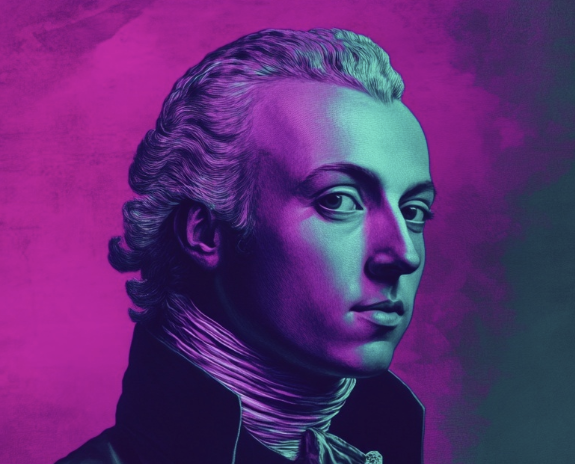
I do not, therefore, need any penetrating acuteness to see what I have to do in order that my volition be morally good. Inexperienced in the course of the world, incapable of being prepared for whatever might come to pass in it, I ask myself only: can you also will that your maxim become a universal law?
2 months 5 days ago
To throw oneself into strange teachings is quite dangerous.
Just now
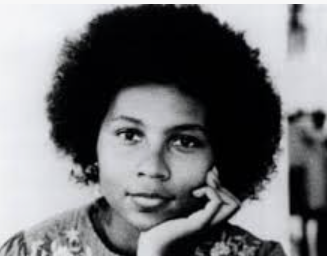
Marcus Garvey, Elijah Muhammad, Malcolm X, Martin Luther King, Stokely Carmichael, Amiri Baraka and other black male leaders have righteously supported patriarchy. They have all argued that it is absolutely necessary for black men to relegate black women to a subordinate position both in the political sphere and in home life.
1 month 2 weeks ago
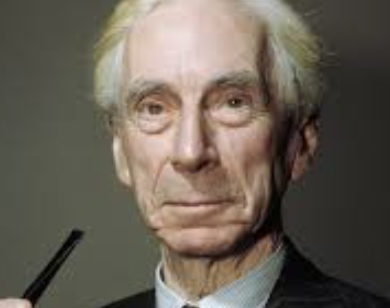
There is one very serious defect to my mind in Christ's moral character, and that is that He believed in hell. I do not myself feel that any person who is really profoundly humane can believe in everlasting punishment.
▼
Source
source
"The Moral Problem"
2 days ago
Not by way of reason, but only by way of love and suffering, do we come to the living God, the human God. Reason rather separates us from Him. We cannot first know Him in order that afterward we may love Him; we must begin by loving Him, longing for Him, hungering after Him, before knowing Him. The knowledge of God proceeds from the love of God, and this love has little or nothing of the rational in it. For God is indefinable. To seek to define Him is to seek to confine Him within the limits of our mind - that is to say, to kill Him. In so far as we attempt to define Him, there rises up before us - Nothingness.

2 months 2 weeks ago
In the Church which was founded at Corinth, St. Paul had special difficulties of the kind I have mentioned. In that flourishing commercial city, which through its shipping and situation, maintained a vital connexion between East and West, numerous crowds of people flocked together from all quarters, different in speech and in culture. As they mingled with the inhabitants, they produced, by contacts and contrasts, new and ever new differences. Even in the Church this differentiation endeavoured to make itself felt in sects and parties; and a kind of pagan wisdom made a special attempt to force itself forward as a teacher of truth. In his first letter to this church, from which the text I read is taken, St. Paul strongly combats this tendency.

2 months ago
All things must needs be borne on through the calm void moving at equal rate with unequal weights.
▼
Source
source
Book II, lines 238-239 (tr. Bailey)
2 weeks 1 day ago
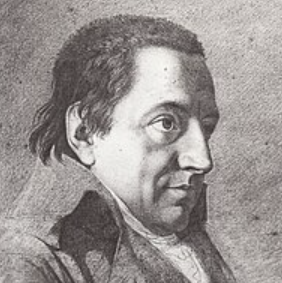
I believe it to be this; that my will, absolutely of itself, and without the intervention of any instrument that might weaken its effect, shall act in a sphere perfectly congenial - reason upon reason, spirit upon spirit; in a sphere to which it does not give the laws of life, of activity, of progress, but which has them in itself, therefore, upon self-active reason. But spontaneous, self-active reason is will. The law of the transcendental world must, therefore, be a Will.
▼
Source
source
Jane Sinnett, trans 1846 p.110

2 days ago
An eternal purgatory, then, rather than a heaven of glory; an eternal ascent. If there is an end to all suffering, however pure and spiritualized we may suppose it to be, if there is an end to all desire, what is it that makes the blessed in paradise go on living? If in paradise they do not suffer for want of God, how shall they love Him? And if there, in the heaven of glory, while they behold God little by little and closer and closer, yet without ever wholly attaining Him, there does not always remain something more for them to know and desire, if there does not always remain a substratum of doubt, how shall they not fall asleep?
1 month 2 weeks ago
Moral Teleology supplies the deficiency in physical Teleology, and first establishes a Theology; because the latter, if it did not borrow from the former without being observed, but were to proceed consistently, could only found a Demonology, which is incapable of any definite concept.
▼
Source
source
Immanuel Kant, Kant's Critique of Judgment (1892) Tr. J.H. Bernard
1 month 2 weeks ago
Whenever the general disposition of the people is such, that each individual regards those only of his interests which are selfish, and does not dwell on, or concern himself for, his share of the general interest, in such a state of things, good government is impossible.
▼
Source
source
Ch. II: The Criterion of a Good Form of Government (p. 167)
1 month 2 weeks ago
There was once a millionaire who bought an infinite number of pairs of shoes and, whenever he bought a pair of shoes, he also bought a pair of socks. We can make a selection choosing one out of each pair of shoes, because we can choose always the right shoe or always the left shoe. Thus, so far as the shoes are concerned, selections exist. But, as regards the socks, where there is no distinction of right and left, we cannot use this rule of selection.
▼
Source
source
pp. 93-93
1 month 2 weeks ago
I was seeing what Adam had seen on the morning of his creation - the miracle, moment by moment, of naked existence.
▼
Source
source
Pages 160-61
1 month 2 weeks ago
Philosophy, from the earliest times, has made greater claims, and achieved fewer results, than any other branch of learning.
▼
Source
source
Lecture I, Current Tendencies, p. 11, New American Library edition, 1960
1 week 6 days ago
If there is a state, then necessarily there is domination and consequently slavery. A state without slavery, open or camouflaged, is inconceivable - that is why we are enemies of the state.
2 months 1 week ago
Just you think first, and don't bother to speak afterward, either.
1 week 6 days ago
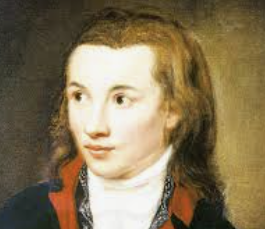
Man is a sun and his senses are the planets.
2 weeks 2 days ago
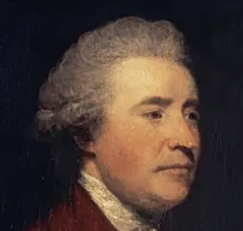
My Lords, to obtain empire is common; to govern it well has been rare indeed. To chastise the guilt of those who have been instruments of imperial sway over other nations by the high superintending justice of the sovereign state has not many striking examples among any people.
▼
Source
source
Speech in opening the impeachment of Warren Hastings (16 February 1788), quoted in The Works of the Right Honourable Edmund Burke, Volume the Ninth (1899), p. 398
2 months ago
Whatever you would make habitual, practice it; and if you would not make a thing habitual, do not practice it, but accustom yourself to something else.
▼
Source
source
Book II, ch. 18, 4.
1 month 3 weeks ago
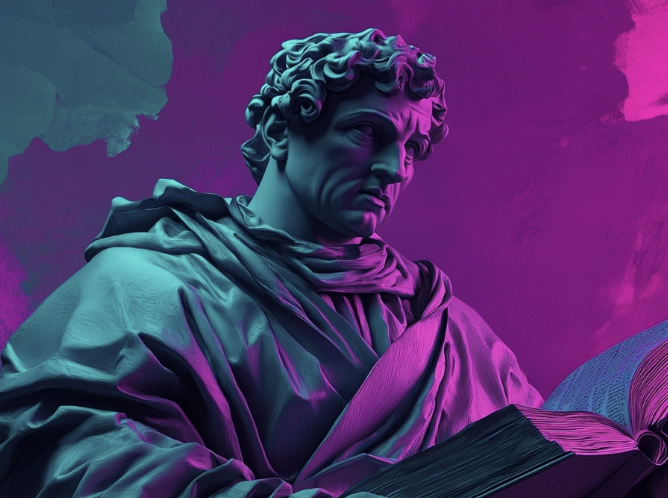
One should hasten to put such witches to death. Statement of 20 August 1538;
▼
Source
source
as quoted in Conversations With Martin Luther (1915), translated and edited by Preserved Smith and Herbert Percival Gallinger, p. 163

1 month 1 week ago
All testing, all confirmation and disconfirmation of a hypothesis takes place already within a system. And this system is not a more or less arbitrary and doubtful point of departure for all our arguments; no it belongs to the essence of what we call an argument. The system is not so much the point of departure, as the element in which our arguments have their life.
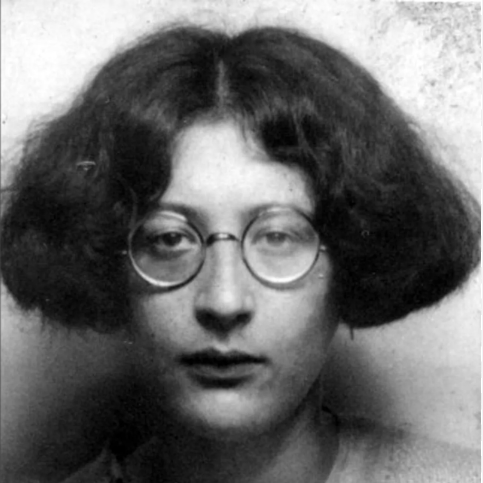
1 day ago
Liberty, taking the word in its concrete sense, consists in the ability to choose.
▼
Source
source
Ch. 3, Liberty
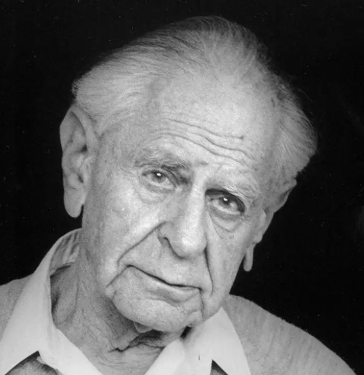
1 month 2 weeks ago
I appeal to the philosophers of all countries to unite and never again mention Heidegger or talk to another philosopher who defends Heidegger. This man was a devil. I mean, he behaved like a devil to his beloved teacher, and he has a devilish influence on Germany. ... One has to read Heidegger in the original to see what a swindler he was.
▼
Source
source
As quoted in "At 90, and Still Dynamic : Revisiting Sir Karl Popper and Attending His Birthday Party" by Eugene Yue-Ching Ho, in Intellectus 23
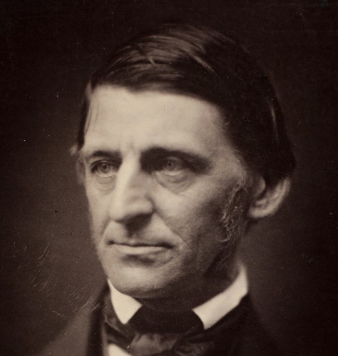
1 month 2 weeks ago
Nor mourn the unalterable Days That Genius goes and Folly stays.
▼
Source
source
In Memoriam E. B. E., st. 9
CivilSimian.com created by AxiomaticPanic, CivilSimian, Kalokagathia