

Just now
It is a safe rule to apply that, when a mathematical or philosophical author writes with a misty profundity, he is talking nonsense.
▼
Source
source
ch. 15.
1 month 2 weeks ago
Even if a civil society were to be dissolved by the consent of all its members (e.g., if a people inhabiting an island decided to separate and disperse throughout the world), the last murderer remaining in prison would first have to be executed, so that each has done to him what his deeds deserve and blood guilt does not cling to the people for not having insisted upon this punishment; for otherwise the people can be regarded as collaborators in his public violation of justice.
▼
Source
source
Kt6:333

1 month 2 weeks ago
In history, we are concerned with what has been and what is; in philosophy, however, we are concerned not with what belongs exclusively to the past or to the future, but with that which is, both now and eternally - in short, with reason.
▼
Source
source
As translated by H. B. Nisbet, 1975
1 week 1 day ago
Is it always permissible to speak of the extension of a concept, of a class? And if not, how do we recognize the exceptional cases? Can we always infer from the extension of one concept's coinciding with that of a second, that every object which falls under the first concept also falls under the second?
▼
Source
source
Vol. 2, p. 127. Replying to Bertrand Russell's letter about Russell's Paradox; quoted in The Stanford Encyclopedia of Philosophy
2 weeks 6 days ago
We do not know nature; causes hidden in her breast might have produced everything. In your turn, observe the polyp of Trembley: does it not contain in itself the causes which bring about regeneration? Why then would it be absurd to think that there are physical causes by reason of which everything has been made, and to which the whole chain of this vast universe is so necessarily bound and held that, nothing which happens, could have failed to happen,-causes, of which we are so invincibly ignorant that we have had recourse to a God, who, as some aver, is not so much as a logical entity? Thus to destroy chance is not to prove the existence of a supreme being, since there may be some other thing which is neither chance nor God-I mean, nature. It follows that the study of nature can make only unbelievers; and the way of thinking of all its more successful investigators proves this.
▼
Source
source
As quoted by Julien Offray de La Mettrie, Man a Machine (1747) Tr. Gertrude Carman Bussey
1 month 2 weeks ago
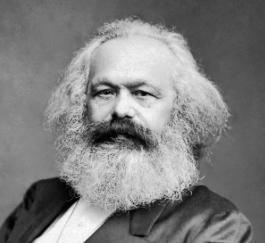
It is a bad thing to perform menial duties even for the sake of freedom; to fight with pinpricks, instead of with clubs. I have become tired of hypocrisy, stupidity, gross arbitrariness, and of our bowing and scraping, dodging, and hair-splitting over words. Consequently, the government has given me back my freedom.
▼
Source
source
Letter from Marx to Arnold Ruge (25 January 1843)
1 month 3 days ago
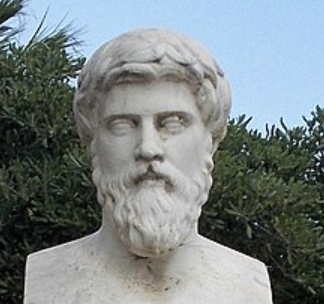
Alcibiades had a very handsome dog, that cost him seven thousand drachmas; and he cut off his tail, "that," said he, "the Athenians may have this story to tell of me, and may concern themselves no further with me."
▼
Source
source
50 Alcibiades
2 months 1 day ago
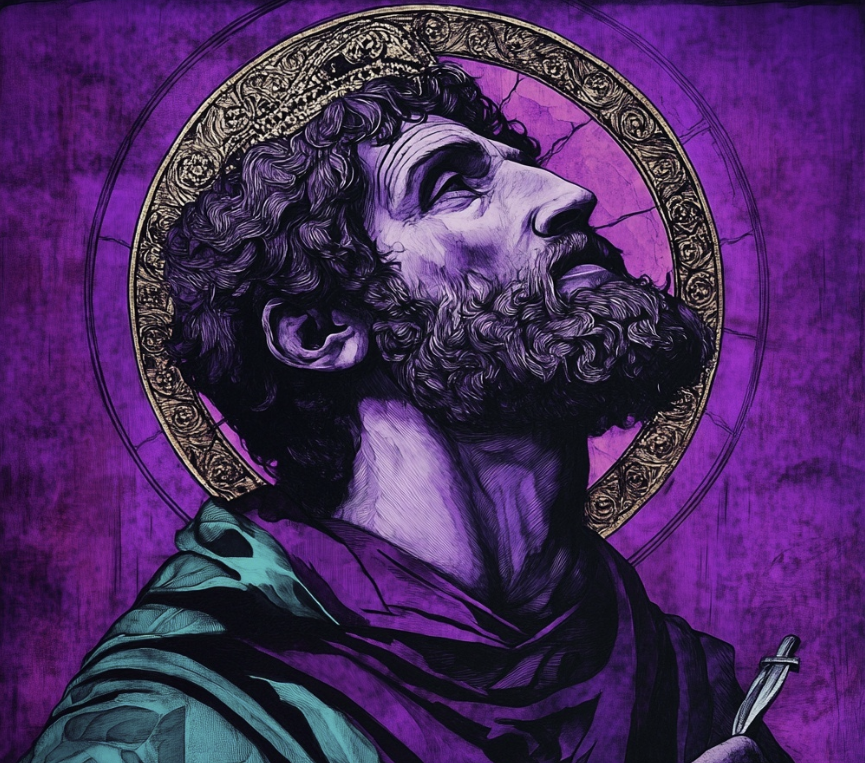
O sons of Peace, sons of the One Catholic [Church], walk in your way, and sing as you walk. Travelers do this in order to keep up their spirits.
▼
Source
source
p.427

2 months 5 days ago
Let the superior man never fail reverentially to order his own conduct, and let him be respectful to others and observant of propriety: then all within the four seas, all men are brothers. What has the superior man to do with being distressed because he has no brothers?
1 month 2 weeks ago
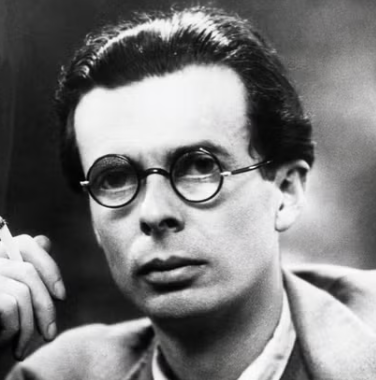
At least two thirds of our miseries spring from human stupidity, human malice, and those great motivators and justifiers of malice and stupidity, idealism, dogmatism and proselytizing zeal on behalf of religious or political idols.
▼
Source
source
Tomorrow and Tomorrow and Tomorrow, 1952
2 months 1 week ago
Junz found revulsion growing strong within him. A planet full of people meant nothing against the dictates of economic necessity!
2 months 5 days ago
I am not concerned that I have no place; I am concerned how I may fit myself for one. I am not concerned that I am not known; I seek to be worthy to be known.

1 week 4 days ago
The mind advances only when it has the patience to go in circles, in other words, to deepen.

1 month 2 weeks ago
When we hear news, we should always wait for the sacrament of confirmation.
▼
Source
source
Letter to Charles-Augustin Ferriol, comte d'Argental, 28 August 1760]]
1 day ago
Encratic language (the language produced and spread under the protection of power) is statutorily a language of repetition; all official institutions of language are repeating machines: schools, sports, advertising, popular songs, news, all continually repeat the same structure, the same meaning, often the same words.
▼
Source
source
The Pleasure of the Text

1 month 2 weeks ago
I have been writing & speaking what were once called novelties, for twenty five or thirty years, & have not now one disciple. Why? Not that what I said was not true; not that it has not found intelligent receivers but because it did not go from any wish in me to bring men to me, but to themselves. I delight in driving them from me. What could I do, if they came to me? - they would interrupt and encumber me. This is my boast that I have no school & no follower. I should account it a measure of the impurity of insight, if it did not create independence.
▼
Source
source
April 1859
1 month 6 days ago
The principles of ethics come from our own nature as social, reasoning beings.
▼
Source
source
Chapter 6, A New Understanding Of Ethics, p. 149
1 month 4 weeks ago
They [men] have corrupted this [God's supernatural] order by making profane things what they should make of holy things, because in fact, we believe scarcely any thing except which pleases us.

2 months 2 weeks ago
That which distinguishes the Christian narrow way from the common human narrow way is the voluntary. Christ was not someone who coveted earthly things but had to be satisfied with poverty, no, he chose poverty.
2 weeks 1 day ago
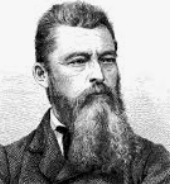
Man has many wishes that he does not really wish to fulfil, and it would be a misunderstanding to suppose the contrary. He wants them to remain wishes, they have value only in his imagination; their fulfilment would be a bitter disappointment to him. Such a desire is the desire for eternal life. If it were fulfilled, man would become thoroughly sick of living eternally, and yearn for death. In reality man wishes merely to avoid a premature, violent or gruesome death. Everything has its measure, says a pagan philosopher; in the end we weary of everything, even of life; a time comes when man desires death. Consequently there is nothing frightening about a normal, natural death, the death of a man who has fulfilled himself and lived out his life.
▼
Source
source
Lecture XXX, Atheism alone a Positive View
1 month 2 weeks ago
Too busy with the crowded hour to fear to live or die.
▼
Source
source
Quatrains, Nature
1 week 1 day ago
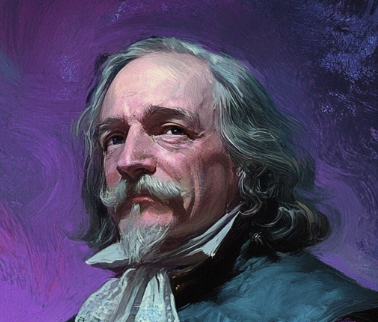
But if one Subject giveth Counsell to another, to do anything contrary to the Lawes, whether that Counsell proceed from evil intention, or from ignorance onely, it is punishable by the Common-wealth; because ignorance of the Law, is no good excuse, where every man is bound to take notice of the Lawes to which he is subject.
▼
Source
source
The Second Part, Chapter 25, p. 132
1 month 2 weeks ago
Several excuses are always less convincing than one.
▼
Source
source
Ch. 1

2 weeks 3 days ago
Eviction is poverty's engine. You lose housing, then jobs, then children, then hope. Evictions concentrate in poor Black neighborhoods, devastate communities, enrich landlords. The eviction machine churns through lives, destroying stability while extracting maximum rent. Homelessness is profitable for property owners.
Just now
Often things realised in thought are more vivid than than the same things in inattentive physical experience. But the things apprehended as mental are always subject to the condition that we come to a stop when we come to explore ever higher grades of complexity in their realised relationships. We always find tat we have thought of just this - whatever it may be - and of no more.
▼
Source
source
Ch. 10: "Abstraction", p. 239

1 month 2 weeks ago
I am a democrat because I believe in the Fall of Man. I think most people are democrats for the opposite reason.
2 weeks 1 day ago
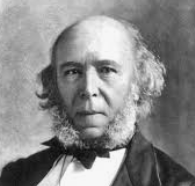
The saying that beauty is but skin deep is but a skin-deep saying.
▼
Source
source
Vol. 2, Ch. XIV, Personal Beauty
1 week 4 days ago
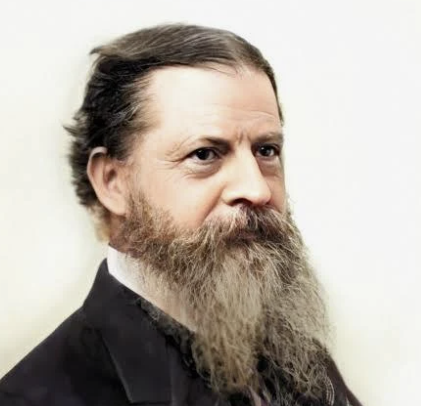
Our whole past experience is continually in our consciousness, though most of it sunk to a great depth of dimness. I think of consciousness as a bottomless lake, whose waters seem transparent, yet into which we can clearly see but a little way.
▼
Source
source
Vol. VII, par. 547
1 week 4 days ago
Only those are happy who never think or, rather, who only think about life's bare necessities, and to think about such things means not to think at all. True thinking resembles a demon who muddies the spring of life or a sickness which corrupts its roots. To think all the time, to raise questions, to doubt your own destiny, to feel the weariness of living, to be worn out to the point of exhaustion by thoughts and life, to leave behind you, as symbols of your life's drama, a trail of smoke and blood - all this means you are so unhappy that reflection and thinking appear as a curse causing a violent revulsion in you.
1 week 4 days ago
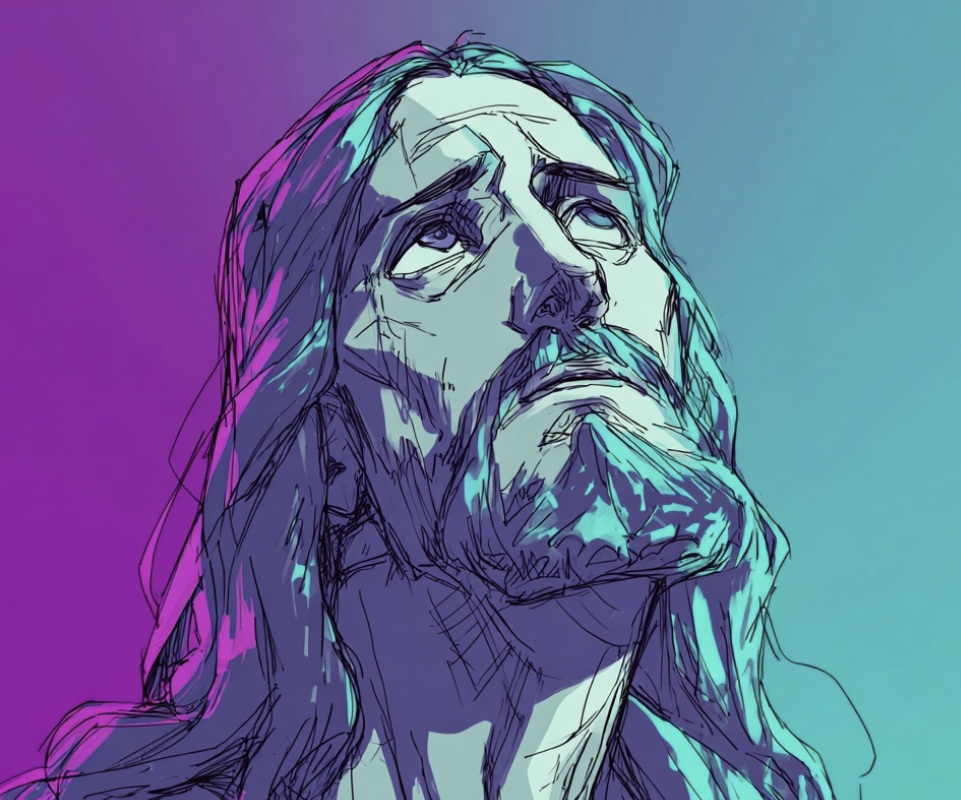
How good would it be if one could die by throwing oneself into an infinite void.
1 week 1 day ago
Suffer it to be so now: for thus it becometh us to fulfil all righteousness.
▼
Source
source
3:15 (KJV) Said to John the Baptist.
1 month 2 weeks ago
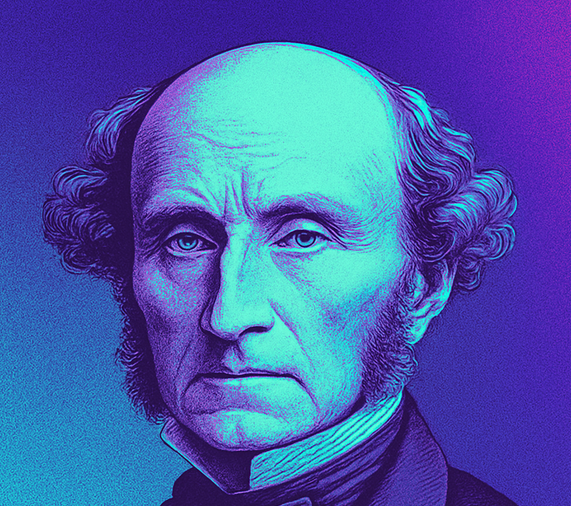
In the course of evolution nature has gone to endless trouble to see that every individual is unlike every other individual.... Physically and mentally, each one of us is unique. Any culture which, in the interests of efficiency or in the name of some political or religious dogma, seeks to standardize the human individual, commits an outrage against man's biological nature.
▼
Source
source
Chapter 3 (p. 21)
1 month 2 weeks ago
Capacity for the nobler feelings is in most natures a very tender plant, easily killed, not only by hostile influences, but by the mere want of sustenance; and in the majority of young persons it speedily dies away if the occupations to which their position in life has devoted them, and the society into which it has thrown them, are not favourable to keeping that higher capacity in existence.
▼
Source
source
Ch. 2
1 month 2 weeks ago
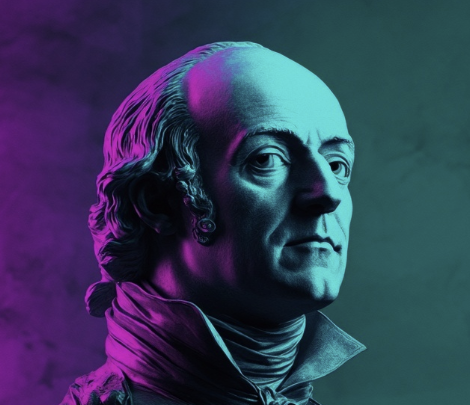
...wickedness, when you examine it, turns out to be the pursuit of some good in the wrong way. You can be good for the mere sake of goodness: you cannot be bad for the mere sake of badness. You can do a kind action when you are not feeling kind and when it gives you no pleasure, simply because kindness is right; but no one ever did a cruel action simply because cruelty is wrong - only because cruelty was pleasant or useful to him. in other words badness cannot succeed even in being bad in the same way in which goodness is good. Goodness is, so to speak, itself: badness is only spoiled goodness.
▼
Source
source
Book II, Chapter 2, "The Invasion"
1 month 2 weeks ago
Monopoly of one kind or another, indeed, seems to be the sole engine of the mercantile system.
▼
Source
source
Chapter VII, Part Third, p. 684.

1 month 3 weeks ago
It is an unsufferable blasphemy to reject the public ministry or to say that people can become holy without sermons and Church. This involves a destruction of the Church and rebellion against ecclesiastical order; such upheavals must be warded off and punished like all other revolts.
▼
Source
source
In Luther, Hartmann Grisar, 1915, London, Kegan Paul, Trench, vol. 4, p. 126,

2 weeks 6 days ago
They all attributed the peaceful dominion of religion in their country mainly to the separation of church and state. I do not hesitate to affirm that during my stay in America I did not meet a single individual, of the clergy or the laity, who was not of the same opinion on this point.
▼
Source
source
Chapter XVII.
1 month 2 weeks ago
Societies are composed of individuals and are good only insofar as they help individuals to realize their potentialities and to lead a happy and creative life.
▼
Source
source
Chapter 3 (p. 20)
1 month 2 weeks ago
The king Frederic has sent me some of his dirty linen to wash; I will wash yours another time.
▼
Source
source
Reply to General Manstein. Voltaire writes to his niece Dennis, July 24, 1752, "Voilà le roi qui m'envoie son linge à blanchir"; reported in Bartlett's Familiar Quotations, 10th ed.,1919
2 weeks 3 days ago
Technology could reduce necessary labor, giving humanity leisure, creativity, fulfillment. Instead, automation threatens workers while enriching owners. We could work less; instead we're insecure about working at all. Automation under capitalism is threat, not liberation. The machines should free us, but ownership determines outcomes.
1 month 5 days ago
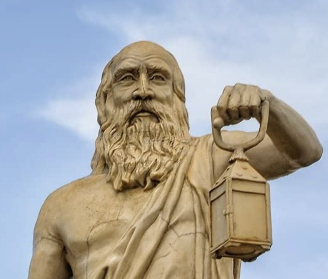
To Xeniades, who had purchased Diogenes at the slave market, he said, "Come, see that you obey orders."
▼
Source
source
Diogenes Laërtius, vi. 36

2 months 3 days ago
The greatest states have been overthrown by the young and sustained and restored by the old. ... Rashness is the product of the budding-time of youth, prudence of the harvest-time of age.
▼
Source
source
section 20
6 days ago
The species with eyes appears suddenly, capriciously as it were, and it is this species which changes the environment by creating its visible aspect. The eye does not come into being because it is needed. Just the contrary; because the eye appears it can henceforth be applied as a serviceable instrument. Each species builds up its stock of useful habits by selecting among, and taking advantage of, the innumerable useless actions which a living being performs out of sheer exuberance.
▼
Source
source
p. 17
1 month 2 weeks ago
I have received, sir, your new book against the human species, and I thank you for it. You will please people by your manner of telling them the truth about themselves, but you will not alter them. The horrors of that human society-from which in our feebleness and ignorance we expect so many consolations-have never been painted in more striking colours: no one has ever been so witty as you are in trying to turn us into brutes: to read your book makes one long to go on all fours. Since, however, it is now some sixty years since I gave up the practice, I feel that it is unfortunately impossible for me to resume it: I leave this natural habit to those more fit for it than are you and I.
▼
Source
source
Letter to Jean-Jacques Rousseau, August 30, 1755 referring to Rousseau's Discourse on Inequality.
1 month 2 weeks ago
I wished, by treating Psychology like a natural science, to help her to become one.
▼
Source
source
A Plea for Psychology as a Natural Science, 1892
2 months 1 day ago
Inasmuch as love grows in you, in so much beauty grows; for love is itself the beauty of the soul.
▼
Source
source
as translated by H. Browne and J. H. Meyers, The Nicene and Post Nicene Fathers (1995)
1 month 2 weeks ago
The stars awaken a certain reverence, because though always present, they are inaccessible; but all natural objects make a kindred impression, when the mind is open to their influence. Nature never wears a mean appearance. Neither does the wisest man extort her secret, and lose his curiosity by finding out all her perfection. Nature never became a toy to a wise spirit. The flowers, the animals, the mountains, reflected the wisdom of his best hour, as much as they had delighted the simplicity of his childhood.
▼
Source
source
Nature

2 months 1 week ago
"What on earth prompted you to take a hand in this?""I don't know. My... my code of morals, perhaps.""Your code of morals. What code, if I may ask?" "Comprehension."
1 month 2 weeks ago
It is not the same thing. You are perhaps not lying, but you are not telling the truth.
▼
Source
source
Act 1
2 months 2 weeks ago
Death induces the sensual person to say: Let us eat and drink, because tomorrow we shall die – but this is sensuality's cowardly lust for life, that contemptible order of things where one lives in order to eat and drink instead of eating and drinking in order to live.
CivilSimian.com created by AxiomaticPanic, CivilSimian, Kalokagathia