

2 months 2 weeks ago
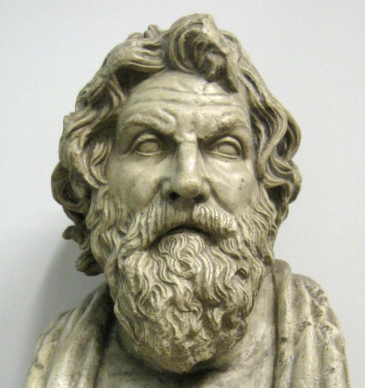
I have enough to eat till my hunger is stayed, to drink till my thirst is sated; to clothe myself withal; and out of doors not Callias there, with all his riches, is more safe than I from shivering; and when I find myself indoors, what warmer shirting do I need than my bare walls? what ampler greatcoat than the tiles above my head?
▼
Source
source
iv. 34

2 months 5 days ago
All things are full of gods.
▼
Source
source
As quoted in Aristotle, De Anima, 411a

1 month 2 weeks ago
When we are young, we take a certain pleasure in our infirmities. They seem so new, so rich! With age, they no longer surprise us, we know them too well. Now, without anything unexpected in them, they do not deserve to be endured.
2 months 3 weeks ago
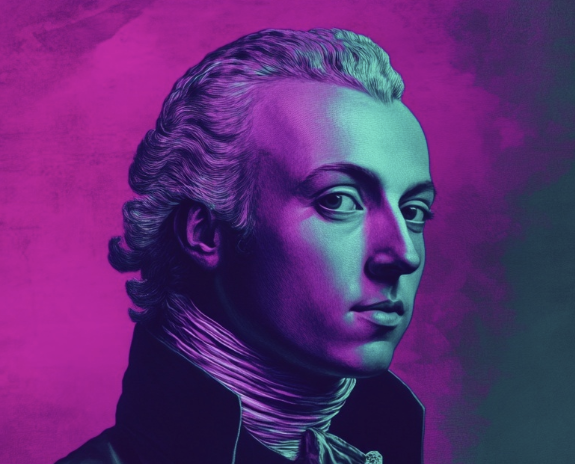
The guidelines for achieving wisdom consist of three leading maxims: 1) Think for yourself; 2) (in communication with other people) Put yourself in the place of the other person; 3) Always think by remaining faithful to your own self.
▼
Source
source
Kant, Immanuel (1996), page 95

1 month 4 weeks ago
Persecution is a bad and indirect way to plant Religion.
▼
Source
source
Section 25

3 months 3 weeks ago
I joke sometimes to the effect that when I approach a part of a book where I must explain something I don't understand, I just type faster and faster and faster. Then, when I get to the part I don't understand, sheer inertia pushes me through. That's not literally true, of course, but there's something to it psychologically.
2 months 3 weeks ago
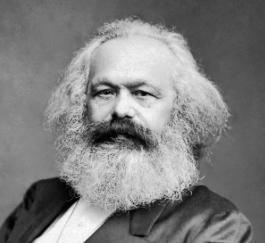
Every commodity is compelled to chose some other commodity for its equivalent.
▼
Source
source
Vol. I, Ch. 1, Section 3, pg. 65.
1 month 2 days ago
Even though the model referred to satisfies the theory, etc., it is 'unintended'; and we recognize that it is unintended from the description through which it is given (as in the intuitionist case). Models are not lost noumenal waifs looking for someone to name them; they are constructions within our theory itself. and they have names from birth.
▼
Source
source
Models and Reality
1 week 3 days ago
The man-like Apes... have certain characters of structure and of distribution in common.
▼
Source
source
Ch.1, p. 34
2 months 3 weeks ago
In all affairs - love, religion, politics, or business - it's a healthy idea, now and then, to hang a question mark on the things you have long taken for granted.
▼
Source
source
As quoted in The Reader's Digest, Vol. 37 (1940), p. 90; no specific source given.

2 months 3 weeks ago
Of course a war is entertaining. The immediate fear and suffering of the humans is a legitimate and pleasing refreshment for our myriads of toiling workers. But what permanent good does it do us unless we make use of it for bringing souls to Our Father Below? When I see the temporal suffering of humans who finally escape us, I feel as if I had been allowed to taste the first course of a rich banquet and then denied all the rest. It is worse than not to have tasted it at all. The Enemy, true to His barbarous methods of warfare, allows us to see the short misery of His favourites only to tantalize and torment us - to mock the incessant hunger, which, during this present phase of great conflict, His blockade is admittedly imposing.
▼
Source
source
Letter V
2 months 3 weeks ago
The question of "unreality," which confronts us at this point, is a very important one. Misled by grammar, the great majority of those logicians who have dealt with this question have dealt with it on mistaken lines. They have regarded grammatical form as a surer guide in analysis than, in fact, it is. And they have not known what differences in grammatical form are important.
▼
Source
source
Ch. 16: Descriptions

1 day ago
An old fairy tale has it that science began with the rejection of superstition. In fact it was the rejection of rationalism that gave birth to scientific inquiry. Ancient and medieval thinkers believed the world could be understood by applying first principles. Modern science begins when observation and experiment come first, and the results are accepted even when what they show seems to be impossible.
▼
Source
source
Foreword: Two Attempts to Cheat Death (pp. 5-6)
2 months 4 weeks ago
People of the same trade seldom meet together, even for merriment and diversion, but the conversation ends in a conspiracy against the public, or in some contrivance to raise prices. It is impossible indeed to prevent such meetings, by any law which either could be executed, or would be consistent with liberty or justice. But though the law cannot hinder people of the same trade from sometimes assembling together, it ought to do nothing to facilitate such assemblies; much less to render them necessary.
▼
Source
source
Chapter X, Part II, p. 152.

2 months 3 weeks ago
He who is in love is wise and is becoming wiser, sees newly every time he looks at the object beloved, drawing from it with his eyes and his mind those virtues which it possesses.
▼
Source
source
The Method of Nature, 1841
2 months 3 weeks ago
From another side: is Achilles possible with powder and lead? Or the Iliad with the printing press, not to mention the printing machine? Do not the song and saga of the muse necessarily come to an end with the printer's bar, hence do not the necessary conditions of epic poetry vanish?
▼
Source
source
Introduction, p. 31.
1 month 1 week ago
In its solitariness the spirit asks, What, in the way of value, is the attainment of life? And it can find no such value till it has merged its individual claim with that of the objective universe.
▼
Source
source
Religion is world-loyalty. Religion in the Making (February 1926), Lecture II: "Religion and Dogma".
2 months 3 weeks ago
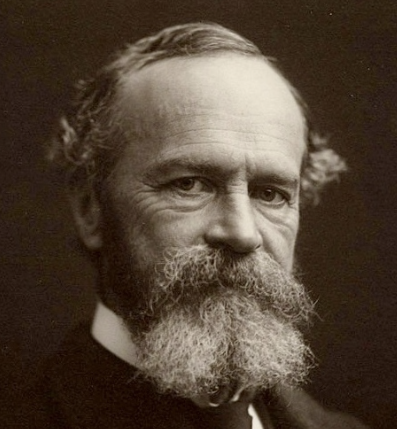
One mode of emotional excitability is exceedingly important in the composition of the energetic character, from its peculiarly destructive power over inhibitions. I mean what in its lower form is mere irascibility, susceptibility to wrath, the fighting temper; and what in subtler ways manifests itself as impatience, grimness, earnestness, severity of character. Earnestness means willingness to live with energy, though energy bring pain. The pain may be pain to other people or pain to one's self - it makes little difference; for when the strenuous mood is on one, the aim is to break something, no matter whose or what. Nothing annihilates an inhibition as irresistibly as anger does it; for, as Moltke says of war, destruction pure and simple is its essence.

1 month 1 week ago
In conclusion, I wish to say that my attitude to the whole tragic question is not dictated by my Jewish antecedents. It is motivated by my abhorrence of injustice, and man's inhumanity to man. It is because of this that I have fought all my life for anarchism which alone will do away with the horrors of the capitalist régime and place all races and peoples, including the Jews, on a free and equal basis. Until then I consider it highly inconsistent for socialists and anarchists to discriminate in any shape or form against the Jews.
1 month 3 weeks ago
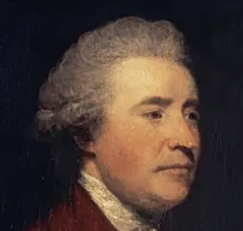
In their nomination to office they will not appoint to the exercise of authority as to a pitiful job, but as to a holy function.
▼
Source
source
Volume iii, p. 356

2 months 2 weeks ago
If life becomes hard to bear we think of a change in our circumstances. But the most important and effective change, a change in our own attitude, hardly even occurs to us, and the resolution to take such a step is very difficult for us.
▼
Source
source
p. 53e
1 month 3 weeks ago
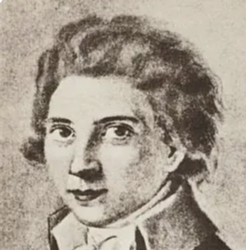
Life is writing. The sole purpose of mankind is to engrave the thoughts of divinity onto the tablets of nature.
▼
Source
source
"On Philosophy: To Dorothea," in Theory as Practice (1997), p. 420
3 weeks 1 day ago
Without an understanding of causality there can be no theory of communication. What passes as information theory today is not communication at all, but merely transportation.
▼
Source
source
(p. 362)
2 months 2 weeks ago
What cannot be imagined cannot even be talked about.
▼
Source
source
Journal entry (12 October 1916), p. 84e


2 months 2 weeks ago
The capacity to reason is a special sort of capacity because it can lead us to places that we did not expect to go.
▼
Source
source
Chapter 4, Reason, p. 88
1 month 2 weeks ago
Nothing is a better proof of how far humanity has regressed than the impossibility of finding a single nation, a single tribe, among whom birth still provokes mourning and lamentations.
3 weeks 3 days ago
Remember then: there is only one time that is important-Now! It is the most important time because it is the only time when we have any power. The most necessary man is he with whom you are, for no man knows whether he will ever have dealings with any one else: and the most important affair is, to do him good, because for that purpose alone was man sent into this life!
▼
Source
source
Part VII: Stories Given to Aid Persecuted Jews (1903) "Three Questions", translated by Louise and Aylmer Maude, p271.
2 months 2 weeks ago
Speciesism-the word is not an attractive one, but I can think of no better term-is a prejudice or attitude of bias in favor of the interests of members of one's own species and against those of members of other species.
▼
Source
source
Ch. 1: All Animals Are Equal
2 months 4 weeks ago
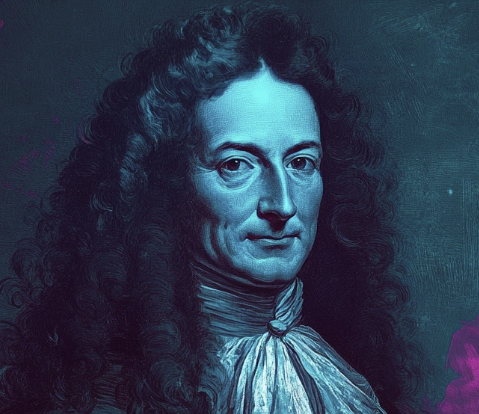
My philosophical views approach somewhat closely those of the late Countess of Conway, and hold a middle position between Plato and Democritus, because I hold that all things take place mechanically as Democritus and Descartes contend against the views of Henry More and his followers, and hold too, nevertheless, that everything takes place according to a living principle and according to final causes - all things are full of life and consciousness, contrary to the views of the Atomists.
▼
Source
source
Letter to Thomas Burnet (1697), as quoted in Platonism, Aristotelianism and Cabalism in the Philosophy of Leibniz (1938) by Joseph Politella, p. 18
1 month 2 weeks ago
Thou shalt do no murder, Thou shalt not commit adultery, Thou shalt not steal, Thou shalt not bear false witness, Honour thy father and thy mother: and, Thou shalt love thy neighbour as thyself.
▼
Source
source
19:18-19 (KJV)
2 months 3 weeks ago
Marriage is for women the commonest mode of livelihood, and the total amount of undesired sex endured by women is probably greater in marriage than in prostitution.
2 months 3 weeks ago
There is needed, no doubt, a body of servants (ministerium) of the invisible church, but not officials (officiales), in other words, teachers but not dignitaries, because in the rational religion of every individual there does not yet exist a church as a universal union (omnitudo collectiva).
▼
Source
source
Book IV, Part 1, Section 1, "The Christian religion as a natural religion"
2 months 3 weeks ago
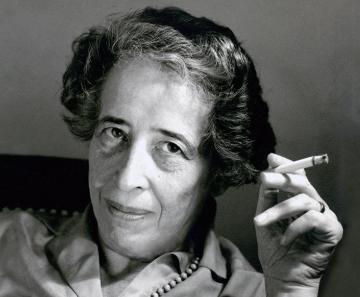
Clichés, stock phrases, adherence to conventional, standardized codes of expression and conduct have the socially recognized function of protecting us against reality.
▼
Source
source
p. 4
1 month 1 week ago
Nothing would prove more disastrous to our ideas, we contended, than to neglect the effect of the internal upon the external, of the psychological motives and needs upon existing institutions.
▼
Source
source
(p. 402)

2 months 3 weeks ago
In every province, the chief occupations, in order of importance, are lovemaking, malicious gossip, and talking nonsense.
2 months 2 weeks ago
A philosopher who is not taking part in discussions is like a boxer who never goes into the ring.
▼
Source
source
Conversation of 1930
1 month 2 weeks ago
Prosperity, both for individuals and for states, means possessions; and possessions mean burdens and harness and slavery; and slavery for the mind, too, because it is not only the rich man's time that is pre-empted, but his affections, his judgement, and the range of his thoughts.
▼
Source
source
"The Irony of Liberalism"
1 month 2 weeks ago
His master was angry, and delivered him to the torturers until he should pay all that was due to him. "So My heavenly Father also will do to you if each of you, from his heart, does not forgive his brother his trespasses."
▼
Source
source
18:34-35
2 months 4 weeks ago
Secrets in manufactures are capable of being longer kept than secrets in trade.
▼
Source
source
Chapter VII, p. 72.

1 month 1 week ago
This in turn suggests an answer to our question: what happened between the birth of De Sade and the birth of Krafft-Ebbing? The rise of the novel taught Europe to use its imagination. And when imagination was applied to sex, the result was the rise of pornography -- and of "sexual perversion."
▼
Source
source
p. 86
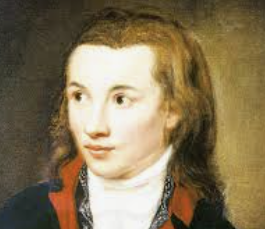
1 month 3 weeks ago
To get to know a truth properly, one must polemicize it.
▼
Source
source
Quoted in The Viking Book of Aphorisms by Wystan Hugh Auden (1962) p. 323
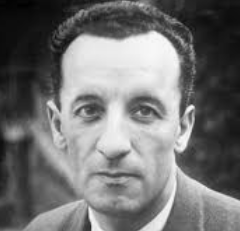
1 month 2 weeks ago
Lichtenberg ... held something of the following kind: one should neither affirm the existence of God nor deny it. ... It is not that he wished to leave certain perspectives open, nor to please everyone. It is rather that he was identifying himself, for his part, with a consciousness of self, of the world, and of others that was "strange" (the word is his) in a sense which is equally well destroyed by the rival explanations.
▼
Source
source
pp. 45-46
1 month 3 weeks ago
Now to Some it appears not at all worth while to follow out the endless divisions of Nature; and moreover a dangerous undertaking, without fruit and issue. As we can never reach, say they, the absolutely smallest grain of material bodies, never find their simplest compartments, since all magnitude loses itself, forwards and backwards, in infinitude; so likewise is it with the species of bodies and powers; here too one comes on new species, new combinations, new appearances, even to infinitude. These seem only to stop, continue they, when our diligence tires; and so it is spending precious time with idle contemplations and tedious enumerations; and this becomes at last a true delirium, a real vertigo over the horrid Deep.

2 months 1 day ago
The Universe is one, infinite, immobile. The absolute potential is one, the act is one, the form or soul is one, the material or body is one, the thing is one, the being in one, one is the maximum and the best... It is not generated, because there is no other being it could desire or hope for, since it comprises all being. It does not grow corrupt. because there is nothing else into which it could change, given that it is itself all things. It cannot diminish or grow, since it is infinite.
▼
Source
source
As translated by Paul Harrison

2 months 6 days ago
When a reasonable Soul forsaketh his divine nature, and becometh beast-like, it dieth. For though the substance of the Soul be incorruptible: yet, lacking the use of Reason, it is reputed dead; for it loseth the Intellective Life.
3 months 2 days ago
He who does not give himself leisure to be thirsty cannot take pleasure in drinking.
▼
Source
source
Ch. 42
2 months 3 weeks ago
Communism differs from all previous movements in that it overturns the basis of all earlier relations of production and intercourse, and for the first time consciously treats all natural premises as the creatures of hitherto existing men, strips them of their natural character and subjugates them to the power of the united individuals. Its organisation is, therefore, essentially economic, the material production of the conditions of this unity; it turns existing conditions into conditions of unity. The reality, which communism is creating, is precisely the true basis for rendering it impossible that anything should exist independently of individuals, insofar as reality is only a product of the preceding intercourse of individuals themselves.
▼
Source
source
Vol. I, Part 4.
CivilSimian.com created by AxiomaticPanic, CivilSimian, Kalokagathia