


1 month 2 weeks ago
Even atheists rebel and express, like Hardy and Housman, their rage against God although (or because) He does not, on their view, exist...
2 weeks 1 day ago
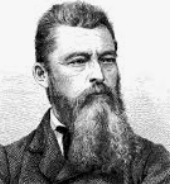
We have busied ourselves and contented ourselves long enough with speaking and writing; now at last we demand that the word become flesh, the spirit matter; we are as sick of political as we are of philosophical idealism; we are determined to become political materialists.
▼
Source
source
Lecture I, Occasion and Context
1 week 1 day ago
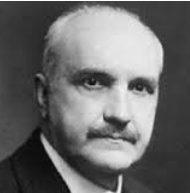
Persons who feel themselves to be exiles in this world-and what noble mind, from Empedocles down, has not had that feeling?-are mightily inclined to believe themselves citizens of another.
▼
Source
source
pp. 39-40
1 week 5 days ago
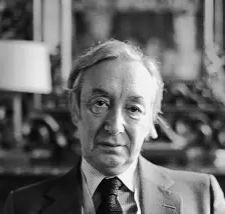
The problem of induction is, roughly speaking, the problem of finding a way to prove that certain empirical generalizations which are derived from past experience will hold good also in the future. There are only two ways of approaching this problem on the assumption that it is a genuine problem, and it is easy to see that neither of them can lead to its solution.
▼
Source
source
p. 49.
1 month 2 weeks ago
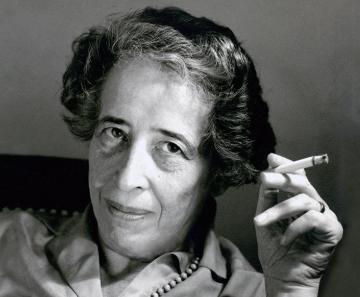
For the trouble with lying and deceiving is that their efficiency depends entirely upon a clear notion of the truth that the liar and deceiver wishes to hide. In this sense, truth, even if it does not prevail in public, possesses an ineradicable primacy over all falsehoods.
▼
Source
source
"Lying in Politics"
Just now
The ancient world takes its stand upon the drama of the Universe, the modern world upon the inward drama of the Soul.
▼
Source
source
Ch. 9: "Science and Philosophy", p. 196

2 months 2 weeks ago
It is love that leniently and mercifully says: I forgive you everything-if you are forgiven only little, then it is because you love only little. Justice severely sets the boundary and says: No further! This is the limit. For you there is no forgiveness, and there is nothing more to be said.
1 month 2 weeks ago
No rules, however wise, are a substitute for affection and tact.
▼
Source
source
Ch. 12: Education and Discipline
1 month 2 weeks ago
It is simply no good trying to keep any thrill: that is the very worst thing you can do. Let the thrill go-let it die away-go on through that period of death into the quieter interest and happiness that follow-and you will find you are living in a world of new thrills all the time. But if you decide to make thrills your regular diet and try to prolong them artificially, they will all get weaker and weaker, and fewer and fewer, and you will be a bored, disillusioned old man for the rest of your life. It is because so few people understand this that you find many middle-aged men and women maundering about their lost youth, at the very age when new horizons ought to be appearing and new doors opening all round them. It is much better fun to learn to swim than to go on endlessly (and hopelessly) trying to get back the feeling you had when you first went paddling as a small boy.
▼
Source
source
Book III, Chapter 6, "Christian Marriage"
1 week 4 days ago
When you love someone, you hope - the more closely to be attached - that a catastrophe will strike your beloved.
1 month 2 weeks ago
A reproach can only hurt if it hits the mark. Whoever knows that he does not deserve a reproach can treat it with contempt.
1 week 5 days ago
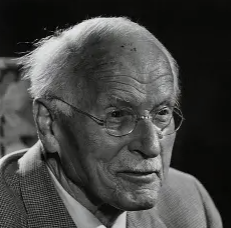
Man needs difficulties; they are necessary for health.
▼
Source
source
The Transcendent Function ("Die Transzendente Funktion") (1916) Volume 8: Structure & Dynamics of the Psyche, The Collected Works of C. G. Jung
1 month 2 weeks ago
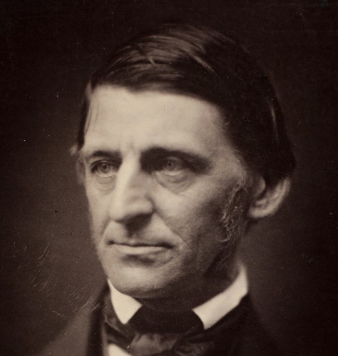
Though love repine, and reason chafe, There came a voice without reply, - "'T is man's perdition to be safe When for the truth he ought to die."
▼
Source
source
Sacrifice
1 week 4 days ago
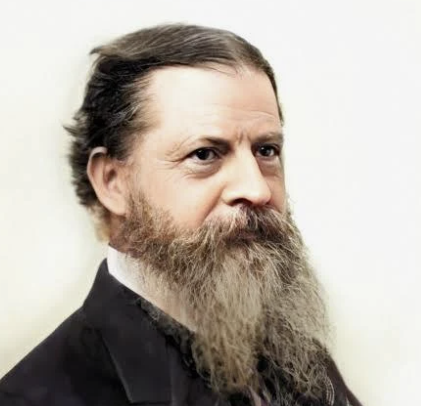
Feeling which has not yet emerged into immediate consciousness is already affectible and already affected. In fact, this is habit, by virtue of which an idea is brought up into the present consciousness by a bond that has already been established between it and another idea while it was still in futuro.

1 month 1 week ago
Our elucidations of the preliminary concept of phenomenology show that its essential character does not consist in its actuality as a philosophical "movement." Higher than actuality stands possibility. We can understand phenomenology solely by seizing upon it as a possibility.
▼
Source
source
Introduction: The Exposition of the Question of the Meaning of Being (Stambaugh translation)

2 months 1 week ago
Printing will tell you such useful things and such interesting things that not being able to read would be as bad as not being able to see.
1 week 4 days ago
"Where do you get those superior airs of yours?" "I've managed to survive, you see, all those nights when I wondered: am I going to kill myself at dawn?"

1 month 6 days ago
A reflective, contented mind is the best possession.
▼
Source
source
Ushtavaiti Gatha; Yasna 43, 15.
1 month 3 weeks ago
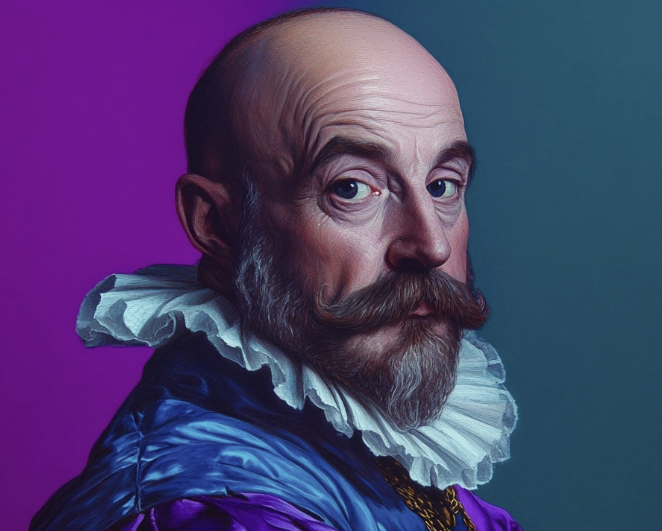
It is good to rub and polish our brain against that of others.
▼
Source
source
Book I, Ch. 26
2 weeks 1 day ago
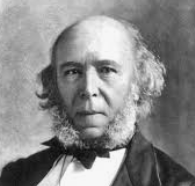
We have a priori reasons for believing that in every sentence there is some one order of words more effective than any other; and that this order is the one which presents the elements of the proposition in the succession in which they may be most readily put together.
▼
Source
source
Pt. I, sec. 3, "The Principle of Economy Applied to Sentences"
6 days ago
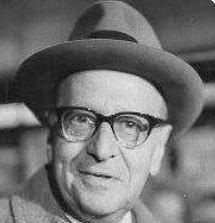
When even the dictators of today appeal to reason, they mean that they possess the most tanks. They were rational enough to build them; others should be rational enough to yield to them.
▼
Source
source
p. 28.

2 months 3 days ago
Natural inclinations are present in things from God, who moves all things. So it is impossible for the natural inclinations of a species to be toward evil in itself. But there is in all perfect animals a natural inclination toward carnal union. Therefore it is impossible for carnal union to be evil in itself.
▼
Source
source
III, 126, 3

2 weeks 6 days ago
The territorial aristocracy of former ages was either bound by law, or thought itself bound by usage, to come to the relief of its serving-men and to relieve their distresses. But the manufacturing aristocracy of our age first impoverishes and debases the men who serve it and then abandons them to be supported by the charity of the public.
▼
Source
source
Book Two, Chapter XX.

2 months 1 week ago
He marveled at the strange blindness by which men, though they are so alert to what changes in themselves, impose on their friends an image chosen for them once and for all. He was being judged by what he had been. Just as dogs don't change character, men are dogs to one another.

1 month 3 weeks ago
And I myself, in Rome, heard it said openly in the streets, "If there is a hell, then Rome is built on it." That is, "After the devil himself, there is no worse folk than the pope and his followers."
▼
Source
source
Against the Roman Papacy, An Institution of the Devil

1 week 1 day ago
The tangible source of exploitation disappears behind the façade of objective rationality.
▼
Source
source
p. 32
2 weeks 1 day ago
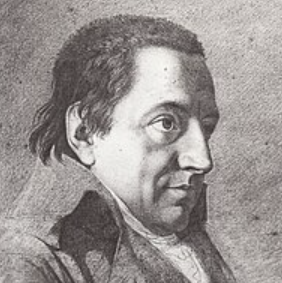
The administrators of the executive power may be either elective or not; and in the former case all or only some of them may be elective. They are elective in a proper democracy, that is to say, in a democracy which recognizes representation. If all the public officials are directly elected by the whole people, the democracy is a pure democracy; if only some, it is a mixed democracy. The public officials may also fill vacancies themselves; this is the case in a pure aristocracy. But if only some of the magistrates are thus replaced by the public officers, and if the others are again directly elected by the people, then the form of government is that of a democratic aristocracy. A permanent president (monarch) may also be elected to exercise the executive power during his lifetime. In all these cases, either all citizens of the commonwealth, or only some of them, are eligible to office. Eligibility may, therefore, be limited or unlimited.

1 month 2 weeks ago
The beginning of religion, more precisely its content, is the concept of religion itself, that God is the absolute truth, the truth of all things, and subjectively that religion alone is the absolutely true knowledge.

1 month 1 week ago
The critical ontology of ourselves has to be considered not, certainly, as a theory, a doctrine, nor even as a permanent body of knowledge that is accumulating; it has to be conceived as an attitude, an ethos, a philosophical life in which the critique of what we are is at one and the same time the historical analysis of the limits that are imposed on us and an experiment with the possibility of going beyond them.
2 weeks 2 days ago
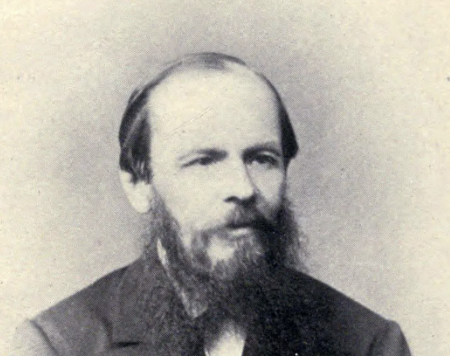
First of all, this prince is an idiot, and, secondly, he is a fool--knows nothing of the world, and has no place in it.
▼
Source
source
Part 4, Chapter 5
5 months 3 weeks ago
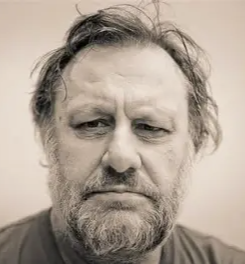
Tibetan prayer wheels: you write a prayer on a paper, put the rolled paper on a wheel, and turn it automatically, without thinking. In this way, the wheel itself is praying for me, instead of me - or more precisely, I myself am praying through the medium of the wheel. The beauty of it all is that in my psychological inferiority I can think about whatever I want, I can yield to the most dirty and obscene fantasies, and it does not matter because - to use a good old Stalinist expression - 'whatever I am thinking, objectively I am praying.'
1 week ago
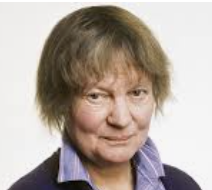
Being good is just a matter of temperament in the end.
▼
Source
source
The Nice and the Good (1968), ch. 14, p. 127. Murdoch attributed this opinion to her character Kate Gray. It was not her own.
1 month 2 weeks ago
We are told that Christ was killed for us, that His death has washed out our sins, and that by dying He has disabled death itself. That is the formula. That is Christianity. That is what has to be believed. Any theories we build up as to how Christ's death did all this are, in my view, quite secondary: mere plans or diagrams to be left alone if they do not help us, and, if they do help us, not to be confused with the thing itself.
▼
Source
source
Book II, Chapter 4, "The Perfect Penitent"
1 month 2 weeks ago
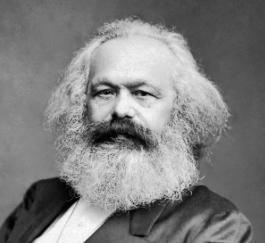
The individual produces an object and, by consuming it, returns to himself, but returns as a productive and self reproducing individual. Consumption thus appears as a moment of production.
▼
Source
source
Introduction, p. 14.

3 weeks 6 days ago
Wisdom thoroughly learned, will never be forgotten. Science is got by diligence; but Discretion and Wisdom cometh of GOD.
1 month 2 weeks ago
To acquire immunity to eloquence is of the utmost importance to the citizens of a democracy.
▼
Source
source
Ch. 18: The Taming of Power


2 months 1 week ago
The Bible and science agree in being unable to say anything certainly about what happened before the beginning. There is this difference. The Bible will never be able to tell us. It has reached its final form, and it simply doesn't say. Science, on the other hand, is still developing, and the time may come when it can answer questions that, at present, it cannot.

3 weeks ago
I am in no way facetious, nor disposed for the mirth and galliardize of company, yet in one dream I can compose a whole Comedy, behold the action, apprehend the jests, and laugh myself awake at the conceits thereof.
▼
Source
source
Section 11

1 month 3 weeks ago
If thou shalt aspire after the glorious acts of men, thy working shall be accompanied with compunction and strife, and thy remembrance followed with distaste and upbraidings; and justly doth it come to pass towards thee, O man, that since thou, which art God's work, doest him no reason in yielding him well-pleasing service, even thine own works also should reward thee with the like fruit of bitterness.
▼
Source
source
Of The Works Of God and Man
1 month 2 weeks ago
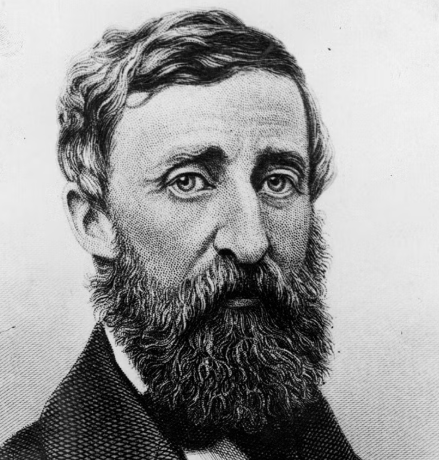
He who gives himself entirely to his fellow-men appears to them useless and selfish; but he who gives himself partially to them is pronounced a benefactor and philanthropist.

1 month 2 weeks ago
Let us cultivate our garden.
1 month 2 weeks ago
Democracy is the road to socialism.
▼
Source
source
Attributed to Marx in recent years, including in Communism (2007) by Tom Lansford, p. 48
2 weeks 1 day ago
We have, indeed, in the part taken by many scientific men in this controversy of "Law versus Miracle," a good illustration of the tenacious vitality of superstitions. Ask one of our leading geologists or physiologists whether he believes in the Mosaic account of the creation, and he will take the question as next to an insult. Either he rejects the narrative entirely, or understands it in some vague non-natural sense. ...Whence ...this notion of "special creations"...Why, after rejecting all the rest of the story, he should strenuously defend this last remnant of it, as though he had received it on valid authority, he would be puzzled to say.
1 day ago
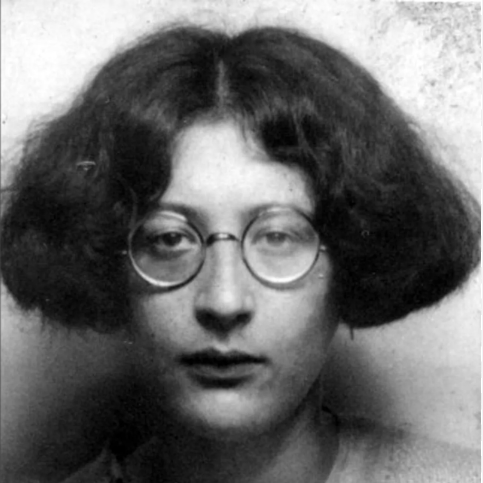
Any madness in us gains from being expressed, because in this way one gives a human form to what separates us from humanity.
▼
Source
source
p. 76

1 month 2 weeks ago
With regard to politics and the character of princes and great men, I think I am very moderate. My views of things are more conformable to Whig principles; my representation of persons to Tory prejudices. Nothing can so much prove that men commonly regard more persons than things, as to find that I am commonly numbered among the Tories.
▼
Source
source
E. C. Mossner, Life of David Hume (Clarendon Press, 2001), p. 311.
1 month 2 weeks ago
Consumption is also immediately production, just as in nature the consumption of the elements and chemical substances is the production of the plant.
▼
Source
source
Introduction, p. 10.

1 month 1 week ago
There is no more light in a genius than in any other honest man-but he has a particular kind of lens to concentrate this light into a burning point.
▼
Source
source
p. 41e
2 days ago
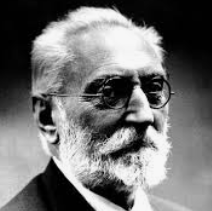
Your own philosophy condemns you and supports us.
▼
Source
source
Salbatore Mitxelena (1958): Unamuno eta Abendats, Baiona: Darracq
1 month 2 weeks ago
Now, to-day, this moment, is our chance to choose the right side. God is holding back to give us that chance. It will not last for ever. We must take it or leave it.
▼
Source
source
Book II, Chapter 5, "The Practical Conclusion"
CivilSimian.com created by AxiomaticPanic, CivilSimian, Kalokagathia