


2 weeks 2 days ago
Schools in poor communities increasingly resemble prisons: metal detectors, police presence, zero tolerance policies. This isn't safety - it's criminalization. Young people learn they're threats to be contained rather than students to be nurtured. Pipeline from classroom to cell.
1 month 2 weeks ago
The more one presupposes that his own power will suffice him to realize what he desires the more practical is that desire. When I treat a man contemptuously, I can inspire him with no practical desire to appreciate my grounds of truth. When I treat any one as worthless, I can inspire him with no desire to do right.
▼
Source
source
Part III : Selection on Education from Kant's other Writings, Ch. I Pedagogical Fragments, # 15

1 month 2 weeks ago
None shall rule but the humble, And none but Toil shall have.
▼
Source
source
Boston Hymn
2 weeks 1 day ago
Where popular authority is absolute and unrestrained, the people have an infinitely greater, because a far better founded, confidence in their own power. They are themselves, in a great measure, their own instruments. They are nearer to their objects. Besides, they are less under responsibility to one of the greatest controlling powers on the earth, the sense of fame and estimation. The share of infamy that is likely to fall to the lot of each individual in public acts is small indeed; the operation of opinion being in the inverse ratio to the number of those who abuse power. Their own approbation of their own acts has to them the appearance of a public judgment in their favor. A perfect democracy is, therefore, the most shameless thing in the world. As it is the most shameless, it is also the most fearless. No man apprehends in his person that he can be made subject to punishment.
2 weeks 2 days ago
Housing scarcity drives up prices, which benefits landlords and developers. Empty homes outnumber homeless people, but homelessness persists because housing is treated as investment commodity, not human necessity. The housing crisis is manufactured by those who profit from artificial scarcity and desperation.
1 month 2 weeks ago
No man who believes that all is for the best in this suffering world can keep his ethical values unimpaired, since he is always having to find excuses for pain and misery.
▼
Source
source
The Collected Papers of Bertrand Russell: A fresh look at empiricism, 1927-42 (G. Allen & Unwin, 1996), p. 217

1 month 1 week ago
The appearance in nineteenth-century psychiatry, jurisprudence, and literature of a whole series of discourses on the species and subspecies of homosexuality, inversion, pederasty, and "psychic hermaphroditism" made possible a strong advance of social controls into this area of "perversity"; but it also made possible the formation of a "reverse" discourse: homosexuality began to speak in its own behalf, to demand that its legitimacy or "naturality" be acknowledged, often in the same vocabulary, using the same categories by which it was medically disqualified.
▼
Source
source
Vol. I, p. 101
1 month 5 days ago
I believe that there is a necessary connection in both directions between the physical and the mental, but that it cannot be discovered a priori. Opinion is strongly divided on the credibility of some kind of functionalist reductionism, and I won't go through my reasons for being on the antireductionist side of that debate. Despite significant attempts by a number of philosophers to describe the functional manifestations of conscious mental states, I continue to believe that no purely functionalist characterization of a system entails - simply in virtue of our mental concepts - that the system is conscious.
▼
Source
source
"Conceiving the Impossible and the Mind-Body Problem," Royal Institute of Philosophy annual lecture, given in London on February 18, 1998, published in Philosophy vol. 73 no. 285, July 1998, pp 337-352, Cambridge University Press, p. 337.
2 weeks 1 day ago
If I understand at all the true Spirit of the present contest, We are engaged in a Civil War ... I consider the Royalists of France, or, as they are (perhaps more properly) called, the Aristocrates, as of the party which we have taken in this civil war.
▼
Source
source
Letter to Sir Gilbert Elliot (22 September 1793), quoted in P. J. Marshall and John A. Woods (eds.)
1 month 2 weeks ago
The soul of wit may become the very body of untruth.
▼
Source
source
Foreward (p. vii)
1 month 2 weeks ago
Language is a city to the building of which every human being brought a stone; yet he is no more to be credited with the grand result than the acaleph which adds a cell to the coral reef which is the basis of the continent.
▼
Source
source
Quotation and Originality
1 month 2 weeks ago
The evident justice and utility of the foregoing maxims have recommended them more or less to the attention of all nations.
▼
Source
source
Chapter II, Part II, p. 894.
1 month 2 weeks ago
Among human beings, the subjection of women is much more complete at a certain level of civilization than it is among savages. And the subjection is always reinforced by morality.
▼
Source
source
Ch. 15: Power and moral codes
1 month 2 weeks ago
What is prudence in the conduct of every private family, can scarce be folly in that of a great kingdom.
▼
Source
source
Chapter II, p. 490.

1 month 1 week ago
I remind young people everywhere I go, one of the worst things the older generation did was to tell them for twenty-five years "Be successful, be successful, be successful" as opposed to "Be great, be great, be great". There's a qualitative difference.
▼
Source
source
Speech in San Francisco: Democracy Matters
1 month 2 weeks ago
I wish that life should not be cheap, but sacred. I wish the days to be as centuries, loaded, fragrant.
▼
Source
source
Considerations by the Way

1 month 1 week ago
It seems to me that, in every culture, I come across a chapter headed Wisdom. And then I know exactly what is going to follow: Vanity of vanities, all is vanity.
▼
Source
source
Conversation of 1934
1 month 2 weeks ago
Few people can be happy unless they hate some other person, nation, or creed.
▼
Source
source
Attributed to Russell in Prochnow's Speakers Handbook of Epigrams and Witticisms (1955), p. 132
Just now
The issue over there being classes seems more a question of convenient conceptual scheme; the issue over there being centaurs, or brick houses on Elm Street, seems more a question of fact. But I have been urging that this difference is only one of degree, and that it turns upon our vaguely pragmatic inclination to adjust one strand of the fabric of science rather than another in accommodating some particular recalcitrant experience. Conservatism figures in such choices, and so does the quest for simplicity.
▼
Source
source
"Two Dogmas of Empiricism"
1 week ago
And in these foure things, Opinion of Ghosts, Ignorance of second causes, Devotion towards what men fear, and Taking of things Casuall for Prognostics, consisteth the Natural seed of Religion; which by reason of the different Fancies, Judgements, and Passions of severall men, hath grown up into ceremonies so different, that those which are used by one man, are for the most part ridiculous to another.
▼
Source
source
The First Part, Chapter 12, p. 54

2 months 1 week ago
There lay certitude; there, in the daily round. All the rest hung on mere threads and trivial contingencies; you couldn't waste your time on it. The thing was to do your job as it should be done.
Just now
The necessity for power is obvious, because life cannot be lived without order; but the allocation of power is arbitrary because all men are alike, or very nearly. Yet power must not seem to be arbitrarily allocated, because it will not then be recognized as power. Therefore prestige, which is illusion, is of the very essence of power.
▼
Source
source
p. 235

1 month 4 weeks ago
O pitiable minds of men, O blind intelligences! In what gloom of life, in how great perils is passed all your poor span of time! not to see that all nature barks for is this, that pain be removed away out of the body, and that the mind, kept away from care and fear, enjoy a feeling of delight!
▼
Source
source
Book II, lines 14-19 (tr. Rouse)
1 month 2 weeks ago
Avarice, the spur of industry, is so obstinate a passion, and works its way through so many real dangers and difficulties, that it is not likely to be scared by an imaginary danger, which is so small, that it scarcely admits of calculation. Commerce, therefore, in my opinion, is apt to decay in absolute governments, not because it is there less secure, but because it is less honourable.
▼
Source
source
Part I, Essay 12: Of Civil Liberty

1 month 2 weeks ago
The essence of the modern state is the union of the universal with the full freedom of the particular, and with the welfare of individuals.
▼
Source
source
Sect. 260
1 month 2 weeks ago
There is no worse lie than a truth misunderstood by those who hear it.
▼
Source
source
Lectures XIV and XV, "The Value of Saintliness"

1 week ago
Everyone who has left houses or brothers or sisters or father or mother or children or fields for my sake will receive a hundred times as much and will inherit eternal life.
▼
Source
source
19:29
1 week 3 days ago
The first character of a general idea so resulting is that it is living feeling. A continuum of this feeling, infinitesimal in duration, but still embracing innumerable parts, and also, though infinitesimal, entirely unlimited, is immediately present. And in its absence of boundedness a vague possibility of more than is present is directly felt.
1 month 2 weeks ago
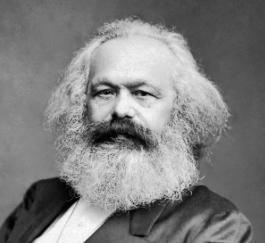
Private property has made us so stupid and one-sided that an object is only ours when we have it - when it exists for us as capital, or when it is directly possessed, eaten, drunk, worn, inhabited, etc., - in short, when it is used by us. Although private property itself again conceives all these direct realizations of possession as means of life, and the life which they serve as means is the life of private property - labour and conversion into capital. In place of all these physical and mental senses there has therefore come the sheer estrangement of all these senses - the sense of having. The human being had to be reduced to this absolute poverty in order that he might yield his inner wealth to the outer world.
▼
Source
source
p. 87, The Marx-Engels Reader
1 week 5 days ago
The seat of the soul is where the inner world and the outer world meet. Where they overlap, it is in every point of the overlap.
1 month 4 weeks ago
For on these matters we should not trust the multitude who say that none ought to be educated but the free, but rather to philosophers, who say that the educated alone are free. Variant: ...Only the educated are free.
▼
Source
source
Book II, ch. 1, 22.
1 month 2 weeks ago
If production be capitalistic in form, so, too, will be reproduction.
▼
Source
source
Vol. I, Ch. 23, pg. 620.
2 weeks 5 days ago
Africans are always vicious... mostly inclined to lasciviousness, vengeance, theft and lies.
▼
Source
source
As quoted in David Johnson, 'Representing the Cape "Hottentots"
1 month 2 weeks ago
All true metaphysics is taken from the essential nature of the thinking faculty itself, and therefore in nowise invented, since it is not borrowed from experience, but contains the pure operations of thought, that is, conceptions and principles à priori, which the manifold of empirical presentations first of all brings into legitimate connection, by which it can become empirical knowledge, i.e. experience. ...mathematical physicists were thus quite unable to dispense with such metaphysical principles...
▼
Source
source
Preface, Tr. Bax, 1883
1 month 1 week ago
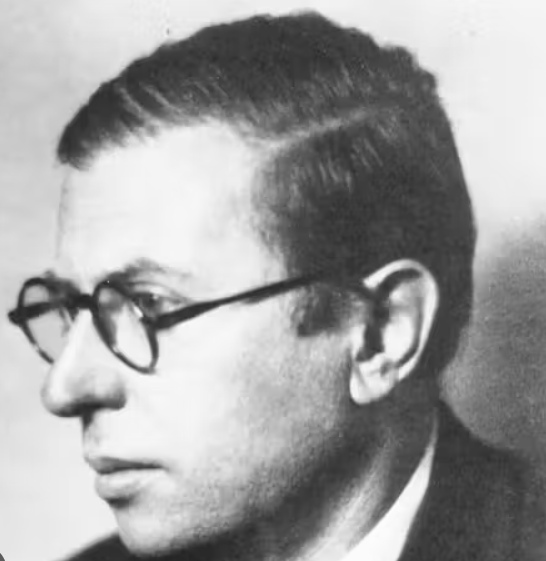
Genet is a man-failure: he wills the impossible in order to derive from the tragic grandeur of this defeat the assurance that there is something other than the possible.
▼
Source
source
p. 213
2 weeks ago
The first philosophers were astronomers. The heavens remind man ... that he is destined not merely to act, but also to contemplate.
▼
Source
source
Introduction, Z. Hanfi, trans., in The Fiery Brook (1972), pp. 101-102

1 week 3 days ago
Scientists believe there is a hierarchy of facts and that among them may be made a judicious choice. They are right, since otherwise there would be no science... One need only open the eyes to see that the conquests of industry which have enriched so many practical men would never have seen the light, if these practical men alone had existed and if they had not been preceded by unselfish devotees who died poor, who never thought of utility, and yet had a guide far other than caprice.As Mach says, these devotees have spared their successors the trouble of thinking.
▼
Source
source
Henri Poincaré, The Value of Science (1907) Author's Essay Prefatory to the Translation: "The Choice of Facts," p.4, Tr. George Bruce Halsted
2 months 1 week ago
You have already grasped that Sisyphus is the absurd hero. He is, as much through his passions as through his torture. His scorn of the gods, his hatred of death, and his passion for life won him that unspeakable penalty in which the whole being is exerted toward accomplishing nothing. This is the price that must be paid for the passions of this earth. Nothing is told us about Sisyphus in the underworld. Myths are made for the imagination to breathe life into them.
5 days ago
Avoid melancholy with all your might. It hurts the service of God more than sin. Satan takes less pleasure in sin than in a man's melancholy over having sinned again and so feeling that he is a slave to sin. Thus the Evil One has caught the poor soul in the net of despair.
▼
Source
source
Rabbi Jaacob Yitzchak, p. 7
2 weeks 5 days ago
I believe in God, although I live very happily with atheists... It is very important not to mistake hemlock for parsley; but not at all so to believe or not in God.
▼
Source
source
As quoted in Against the Faith (1985) by Jim Herrick, p. 75
2 months 2 weeks ago
For some identify happiness with virtue, some with practical wisdom, others with a kind of philosophic wisdom, others with these, or one of these, accompanied by pleasure or not without pleasure; while others include also external prosperity. Now ... it is not probable that these should be entirely mistaken, but rather that they should be right in at least some one respect or even in most respects.
1 week 5 days ago
An ardent affection for the human race makes enthusiastic characters eager to produce alteration in laws and governments prematurely. To render them useful and permanent, they must be the growth of each particular soil, and the gradual fruit of the ripening understanding of the nation, matured by time, not forced by an unnatural fermentation.
▼
Source
source
Appendix
1 week ago
Because the peculiarity of man is that his machinery for reaction on external things has involved an imaginative transcript of these things, which is preserved and suspended in his fancy; and the interest and beauty of this inward landscape, rather than any fortunes that may await his body in the outer world, constitute his proper happiness. By their mind, its scope, quality, and temper, we estimate men, for by the mind only do we exist as men, and are more than so many storage-batteries for material energy. Let us therefore be frankly human. Let us be content to live in the mind.
▼
Source
source
p. 64
1 month 1 week ago
Kierkegaard writes: If Christianity were so easy and cozy, why should God in his Scriptures have set Heaven and Earth in motion and threatened eternal punishments? - Question: But then in that case why is this Scriptures so unclear?
▼
Source
source
p. 31e
1 month 2 weeks ago
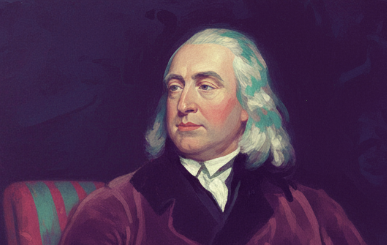
I am at heart more of a United-States-man than an Englishman.
▼
Source
source
Letter to Andrew Jackson (14 June 1830), quoted in Correspondence of Andrew Jackson, Volume 4, ed. David Maydole Matteson (1929), p. 146
1 month 2 weeks ago
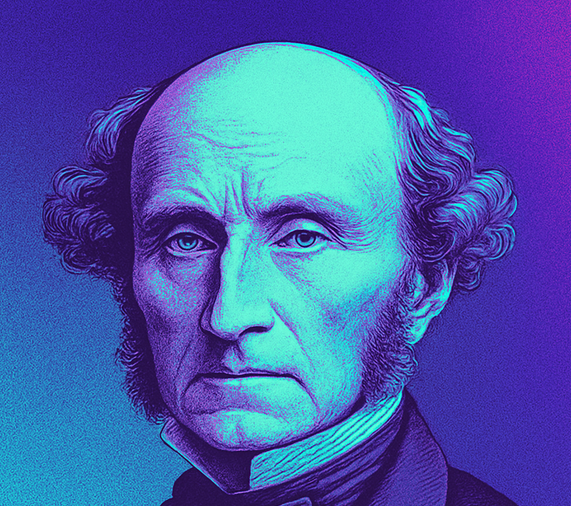
Society can and does execute its own mandates: and if it issues wrong mandates instead of right, or any mandates at all in things with which it ought not to meddle, it practises a social tyranny more formidable than many kinds of political oppression, since, though not usually upheld by such extreme penalties, it leaves fewer means of escape, penetrating much more deeply into the details of life, and enslaving the soul itself. Protection, therefore, against the tyranny of the magistrate is not enough: there needs protection also against the tyranny of the prevailing opinion and feeling; against the tendency of society to impose, by other means than civil penalties, its own ideas and practices as rules of conduct on those who dissent from them; to fetter the development, and, if possible, prevent the formation, of any individuality not in harmony with its ways, and compel all characters to fashion themselves upon the model of its own.
▼
Source
source
Ch. 1: Introductory
1 week 5 days ago
Man is a Sun; his Senses are the Planets.

1 month 4 days ago
One should emulate works and deeds of virtue, not arguments about it.
1 month 2 weeks ago
One must look into hell before one has any right to speak of heaven.
▼
Source
source
Letter to Colette O'Niel, October 23, 1916; published in The Selected Letters of Bertrand Russell: The Public Years, 1914-1970, p. 87
CivilSimian.com created by AxiomaticPanic, CivilSimian, Kalokagathia