

2 weeks 1 day ago
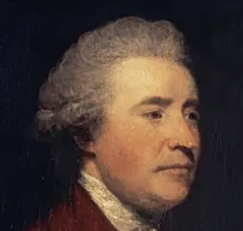
All persons possessing any portion of power ought to be strongly and awfully impressed with an idea that they act in trust and that they are to account for their conduct in that trust to the one great Master, Author, and Founder of society.
1 week 4 days ago
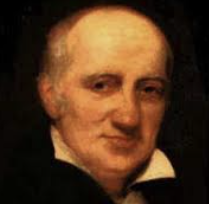
The benefit of the governed is made to lie on one side and the benefit of the governors on the other.
▼
Source
source
Book III, Chapter 9
2 weeks 1 day ago
The Leaders have ever since gone...to propagate the principles of French Levelling and confusion, by which no house is safe from its Servants, and no Officer from his Soldiers, and no State or constitution from conspiracy and insurrection. I will not enter into the baseness and depravity of the System they adopt; but one thing I will remark, that its great Object is not, (as they pretend to delude worthy people to their Ruin) the destruction of all absolute Monarchies, but totally to root out that thing called an Aristocrate or Noblemen and Gentleman.
▼
Source
source
Letter to Lord Fitzwilliam (21 November 1791), quoted in Alfred Cobban and Robert A. Smith (eds.), The Correspondence of Edmund Burke, Volume VI: July 1789-December 1791 (1967), p. 451
1 month 4 weeks ago
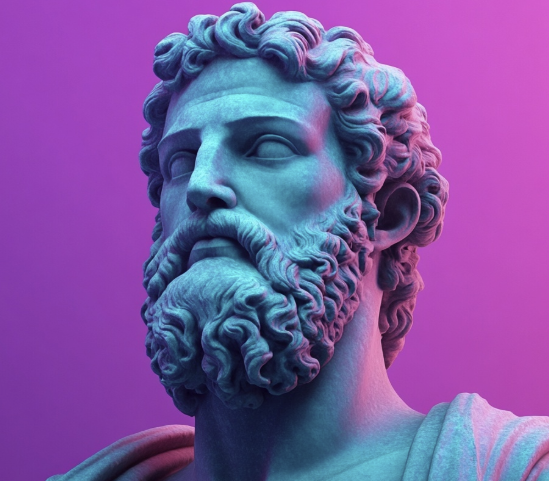
No thing great is created suddenly, any more than a bunch of grapes or a fig. If you tell me that you desire a fig, I answer you that there must be time. Let it first blossom, then bear fruit, then ripen.
▼
Source
source
Book I, ch. 15, 7.
1 month 2 weeks ago
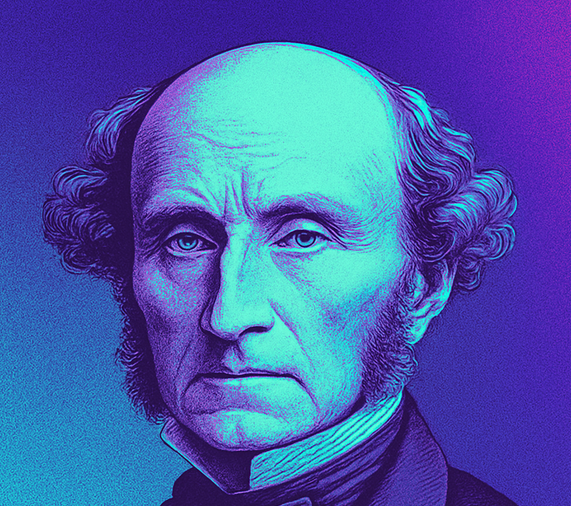
In my education, as in that of everyone, the moral influences, which are so much more important than all others, are also the most complicated, and the most difficult to specify with any approach to completeness.
▼
Source
source
(p. 38)
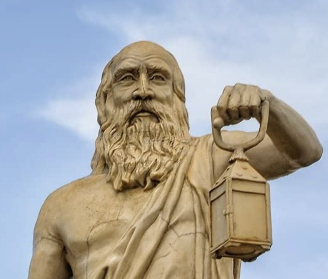
1 month 4 days ago
To the question what wine he found pleasant to drink, he replied, "That for which other people pay."
▼
Source
source
Diogenes Laërtius, vi. 54

2 months 4 days ago
The superior man has neither anxiety nor fear. When internal examination discovers nothing wrong, what is there to be anxious about, what is there to fear?

2 months 1 week ago
Blessed are the hearts that can bend; they shall never be broken.
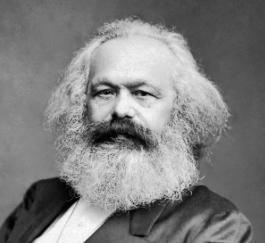
1 month 2 weeks ago
The criticism of religion ends with the doctrine that man is the supreme being for man, hence the categorical imperative to overthrow all those conditions in which man is degraded, enslaved, neglected, contemptible being-conditions which can hardly be better described than in the exclamation of a Frenchman on the occasion of a proposed tax upon dogs: 'Wretched dogs! They want to treat you like men!'
2 weeks 4 days ago
We swallow greedily any lie that flatters us, but we sip only little by little at a truth we find bitter.

1 month 2 weeks ago
This final aim is God's purpose with the world; but God is the absolutely perfect Being, and can, therefore, will nothing but himself.
1 month 4 days ago
Of all things the worst to teach the young is dalliance, for it is this that is the parent of those pleasures from which wickedness springs.

2 months 2 weeks ago
Lord Jesus Christ, the birds had nests, the foxes had dens, and you had no place where you could lay your head. You were homeless in the world-yet you yourself were a hiding place, the only place where the sinner could flee. And so even this very day you are a hiding place. When the sinner flees to you, hides himself with you, is hidden in you, he is eternally kept safe, since love hides a multitude of sins.
4 days ago
In the ancient notion of love, on the other hand, there is an element of anxiety. The noble fears the descent to the less noble, is afraid of being infected and pulled down. The "sage" of antiquity does not have the same firmness, the same inner certainty of himself and his own value, as the genius and hero of Christian love.
▼
Source
source
L. Coser, trans. (1961), p. 92
1 day ago
Faith makes us live by showing us that life, although it is dependent upon reason, has its well spring and source of power elsewhere, in something supernatural and miraculous. Cournot the mathematician, a man of singularly well-balanced and scientifically equipped mind has said that it is this tendency towards the supernatural and miraculous that gives life, and that when it is lacking, all the speculations of reason lead to nothing but affliction of the spirit. ...And in truth we wish to live.

1 week 3 days ago
The surest means of not losing your mind on the spot: remembering that everything is unreal, and will remain so...

2 weeks 5 days ago
In the United States, except for slaves, servants and the destitute fed by townships, everyone has the vote and this is an indirect contributor to law-making. Anyone wishing to attack the law is thus reduced to adopting one of two obvious courses: they must either change the nation's opinion or trample its wishes under foot.
▼
Source
source
Chapter XIV.
1 month 2 weeks ago
An increase in the productivity of labour means nothing more than that the same capital creates the same value with less labour, or that less labour creates the same product with more capital.
▼
Source
source
Notebook IV, The Chapter on Capital, p. 308.
1 month 5 days ago
In speaking of the fear of religion, I don't mean to refer to the entirely reasonable hostility toward certain established religions and religious institutions, in virtue of their objectionable moral doctrines, social policies, and political influence. Nor am I referring to the association of many religious beliefs with superstition and the acceptance of evident empirical falsehoods. I am talking about something much deeper-namely, the fear of religion itself. I speak from experience, being strongly subject to this fear myself: I want atheism to be true and am made uneasy by the fact that some of the most intelligent and well-informed people I know are religious believers. It isn't just that I don't believe in God and, naturally, hope that I'm right in my belief. It's that I hope there is no God! I don't want there to be a God; I don't want the universe to be like that.
▼
Source
source
The Last Word, Oxford University Press, 1997, pp. 130-131.

1 month 1 week ago
What can you ever really know of other people's souls - of their temptations, their opportunities, their struggles? One soul in the whole creation you do know: and it is the only one whose fate is placed in your hands. If there is a God, you are, in a sense, alone with Him. You cannot put Him off with speculations about your next door neighbours or memories of what you have read in books.
▼
Source
source
Book IV, Chapter 10, "Nice People or New Men"
1 month 2 weeks ago
In these frequent talks about the books I read, he used, as opportunity offered, to give me explanations and ideas respecting civilization, government, morality, mental cultivation, which he required me afterwards to restate to him in my own words. He also made me read, and give him a verbal account of, many books which would not have interested me sufficiently to induce me to read them of myself: among others, Millar's Historical View of the English Government, a book of great merit for its time, and which he highly valued; Mosheim's Ecclesiastical History, McCrie's Life of John Knox, and even Sewel's and Rutty's Histories of the Quakers. He was fond of putting into my hands books which exhibited men of energy and resource in unusual circumstances, struggling against difficulties and overcoming them: of such works I remember Beaver's African Memoranda, and Collins's account of the first settlement of New South Wales.
▼
Source
source
(p. 8)
1 month 1 week ago
I disbelieve in specialization and... experts. ...[P]aying too much respect to the specialist ...[is] destroying the commonwealth of learning, the rationalist tradition, and science ...

2 months 2 weeks ago
Style ought to prove that one believes in an idea; not only that one thinks it but also feels it.
4 weeks ago
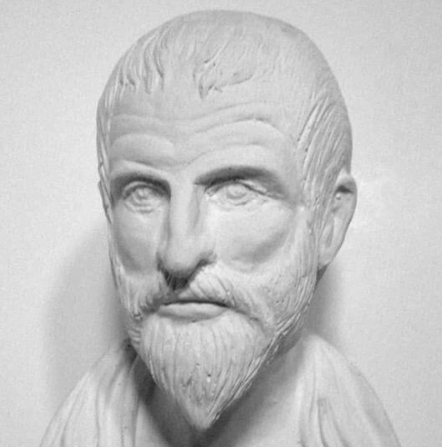
If two right lines cut one another, they will form the angles at the vertex equal. ...This... is what the present theorem evinces, that when two right lines mutually cut each other, the vertical angles are equal. And it was first invented according to Eudemus by Thales...
▼
Source
source
Proposition XV. Thereom VIII.
5 days ago
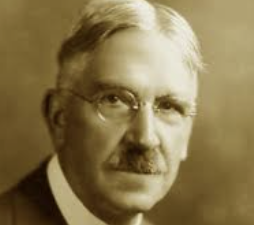
Well both original seizure and subsequent critical discrimination have equal claims, each to its own complete development and must not be forgotten that direct and unreasoned impression comes first. There is such occasions something of the quality of the wind that bloweth where it listeth. Sometimes it comes and sometimes it does not, even in the presence of the same object. It cannot be forced and when it does not arrive it is not wise to seek to recover by direct action the first fine rapture.
▼
Source
source
p. 151
2 weeks 4 days ago
Evil always turns up in this world through some genius or other.
▼
Source
source
As quoted in Dictionary of Foreign Quotations (1980) by Mary Collison, Robert L. Collison, p. 98
2 weeks 5 days ago
The territorial aristocracy of former ages was either bound by law, or thought itself bound by usage, to come to the relief of its serving-men and to relieve their distresses. But the manufacturing aristocracy of our age first impoverishes and debases the men who serve it and then abandons them to be supported by the charity of the public.
▼
Source
source
Book Two, Chapter XX.

1 month 1 week ago
The aspects of things that are most important for us are hidden because of their simplicity and familiarity. (One is unable to notice something - because it is always before one's eyes.) The real foundations of his enquiry do not strike a man at all. Unless that fact has at some time struck him. - And this means: we fail to be struck by what, once seen, is most striking and most powerful.
▼
Source
source
§ 129
1 month 4 weeks ago
Be bold to look towards God and say, "Use me henceforward for whatever you want; I am of one mind with you; I am yours; I refuse nothing that seems good to you; lead me where you will; wrap me in what clothes you will."
▼
Source
source
Book II, ch. 16, 42

1 month 2 weeks ago
This body which called itself and which still calls itself the Holy Roman Empire was in no way holy, nor Roman, nor an empire.
▼
Source
source
Essai sur l'histoire générale et sur les mœurs et l'esprit des nations, Chapter 70, 1756
1 month 2 weeks ago
It is in this way that all my books have been composed. They were always written at least twice over; a first draft of the entire work was completed to the very end of the subject, then the whole begun again de novo; but incorporating, in the second writing, all sentences and parts of sentences of the old draft, which appeared as suitable to my purpose as anything which I could write in lieu of them. I have found great advantages in this system of double redaction. It combines, better than any other mode of composition, the freshness and vigour of the first conception, with the superior precision and completeness resulting from prolonged thought. In my own case, moreover, I have found that the patience necessary for a careful elaboration of the details of composition and expression, costs much less effort after the entire subject has been once gone through, and the substance of all that I find to say has in some manner, however imperfect, been got upon paper.
▼
Source
source
(p. 222)
1 month 4 weeks ago
But tell me this: did you never love any person... were you never commanded by the person beloved to do something which you did not wish to do? Have you never flattered your little slave? Have you never kissed her feet? And yet if any man compelled you to kiss Caesar's feet, you would think it an insult and excessive tyranny. What else then is slavery?
▼
Source
source
Book IV, ch. 1, 17.
1 week ago
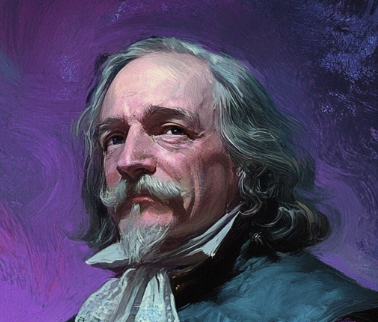
To understand this for sense it is not required that a man should be a geometrician or a logician, but that he should be mad. On the proposition that the volume generated by revolving the region under 1/x from 1 to infinity has finite volume.
▼
Source
source
Quoted in Mathematical Maxims and Minims by N. Rose
1 month 1 week ago
All things living are in search of a better world.
▼
Source
source
Preface
1 month 2 weeks ago
Everybody knows that the same sum of money is of much greater value to a poor man that to a rich one. Give £10 a year to the man who has but £10 a year, you double his income, and you nearly double his enjoyments. Add £10 more, you do not add to his enjoyments so much as you did by the first £10. The third £10 is less valuable than the second, and the fourth less valuable than the third. To the possessor of £1,000 a year the addition of £10 would be scarcely perceptible; to the possessor of £10,000 it would not be worth slooping for.The richer a man is the less he is benefited by any further addition to his income. The man of £4,000 a year has four times the income of the man who has but £1,000; but does anybody suppose that he has four times the happiness?
▼
Source
source
John Stuart Mill, Primogeniture, in The Collected Works of John Stuart Mill, Toronto, 1988, vol. 26, p. 336
1 month 2 weeks ago
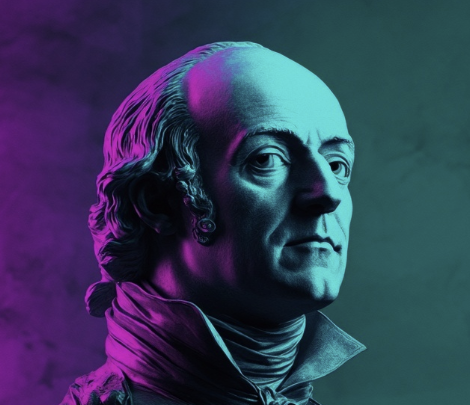
Among civilized and thriving nations, on the contrary, though a great number of people do no labor at all, many of whom consume the produce of ten times, frequently of a hundred times more labour than the greater part of those who work; yet the produce of the whole labour of the society is so great, that all are often abundantly supplied, and a workman, even of the lowest and poorest order, if he is frugal and industrious, may enjoy a greater share of the necessaries and conveniencies of life than it is possible for any savage to acquire.
▼
Source
source
Introduction and Plan of the Work, p. 2.
1 week 3 days ago
If there is anyone who owes everything to Bach, it is certainly God.
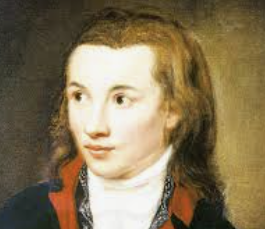
1 week 5 days ago
The ideal of Morality has no more dangerous rival than the ideal of highest Strength, of most powerful life; which also has been named (very falsely as it was there meant) the ideal of poetic greatness. It is the maximum of the savage; and has, in these times, gained, precisely among the greatest weaklings, very many proselytes. By this ideal, man becomes a Beast-Spirit, a Mixture; whose brutal wit has, for weaklings, a brutal power of attraction.
1 month 2 weeks ago
We cannot always choose the vocation to which we believe we are called. Our social relations, to some extent, have already begun to form before we are in a position to determine them.
▼
Source
source
Writings of the Young Marx on Philosophy and Society, L. Easton, trans. (1967), p. 37
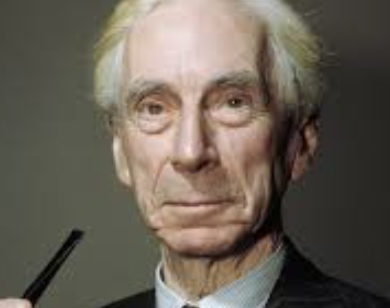
1 month 2 weeks ago
Two men who differ as to the ends of life cannot hope to agree about education.
▼
Source
source
Ch. 12: Education and Discipline
1 day ago
What the sorrowful Jew of Amsterdam called the essence of a thing, the effort that it makes to persist indefinitely in its own being, self-love, the longing for immortality, is it not perhaps the primal and fundamental condition of all reflective or human knowledge? And is it not therefore the true base, the real starting-point, of all philosophy, although the philosophers, perverted by intellectualism, do not recognize it?

1 month 3 weeks ago
Every rich man is avaricious, in my opinion.
▼
Source
source
Ch. 14
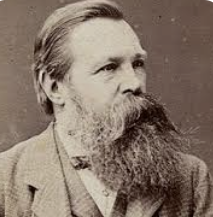
1 week 2 days ago
By bourgeoisie is meant the class of modern capitalists, owners of the means of social production and employers of wage labor. By proletariat, the class of modern wage laborers who, having no means of production of their own, are reduced to selling their labor power in order to live.
▼
Source
source
The Communist Manifesto, footnote
1 month 2 weeks ago
In ease of body and peace of mind, all the different ranks of life are nearly upon a level, and the beggar, who suns himself by the side of the highway, possesses that security which kings are fighting for.
▼
Source
source
Chap. I.

1 month 3 weeks ago
I bequeath my soul to God (...). My body to be buried obscurely. For my name and memory, I leave it to men's charitable speeches, and to foreign nations, and the next age.
▼
Source
source
His Will, 1626
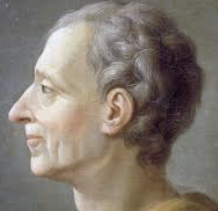
1 day ago
The laws of Rome had wisely divided public power among a large number of magistracies, which supported, checked and tempered each other. Since they all had only limited power, every citizen was qualified for them, and the people - seeing many persons pass before them one after the other - did not grow accustomed to any in particular. But in these times the system of the republic changed. Through the people the most powerful men gave themselves extraordinary commissions - which destroyed the authority of the people and magistrates, and placed all great matters in the hands of one man, or a few.
▼
Source
source
Chapter XI.
1 month 2 weeks ago
The infliction of cruelty with a good conscience is a delight to moralists. That is why they invented Hell.
▼
Source
source
Ch. 1: The Value of Scepticism
2 months 4 days ago
Among the things held to be just by law, whatever is proved to be of advantage in men's dealings has the stamp of justice, whether or not it be the same for all; but if a man makes a law and it does not prove to be mutually advantageous, then this is no longer just. And if what is mutually advantageous varies and only for a time corresponds to our concept of justice, nevertheless for that time it is just for those who do not trouble themselves about empty words, but look simply at the facts.
1 month 5 days ago
It is often remarked that nothing we do now will matter in a million years. But if that is true, then by the same token, nothing that will be the case in a million years matters now.
▼
Source
source
"The Absurd" (1971), p. 11.
1 month 3 weeks ago
Insurrection ... never brings about the desired improvement. For insurrection lacks discernment; it generally harms the innocent more than the guilty. Hence, no insurrection is ever right, no matter how right the cause it seeks to promote.
▼
Source
source
pp. 62-63
CivilSimian.com created by AxiomaticPanic, CivilSimian, Kalokagathia