


2 months 1 week ago
Scientific writing is abhorrently stylized and places a premium on poor quality.
1 month 4 days ago
September 11, 2001, was just another day for most of the world's desperately poor people, so presumably close to 30,000 children under five died from these causes on that day-about ten times the number of victims of the terrorist attacks. The publication of these figures did not lead to an avalanche of money for UNICEF or other aid agencies helping to reduce infant mortality. In the year 2000 Americans made private donations for foreign aid of all kinds totaling about $4 per person in extreme poverty, or roughly $20 per family. New Yorkers who were living in lower Manhattan on September 11, 2001, whether wealthy or not, were able to receive an average of $5,300 per family. The distance between these amounts encapsulates the way in which, for many people, the circle of concern for others stops at the boundaries of their own country-if it extends even that far.
▼
Source
source
Chapter 5: One Community (p. 176)
1 week 3 days ago
It is only natural that I should constantly have revolved in my mind the question of the relationship of the symbolism of the unconscious to Christianity as well as to other religions. Not only do I leave the door open for the Christian message, but I consider it of central importance for Western man. It needs, however, to be seen in a new light, in accordance with the changes wrought by the contemporary spirit.

1 month 2 weeks ago
The past alone is truly real: the present is but a painful, struggling birth into the immutable being of what is no longer. Only the dead exist fully. The lives of the living are fragmentary, doubtful, and subject to change; but the lives of the dead are complete, free from the sway of Time, the all but omnipotent lord of the world. Their failures and successes, their hopes and fears, their joys and pains, have become eternal-our efforts cannot now abate one jot of them. Sorrows long buried in the grave, tragedies of which only a fading memory remains, loves immortalized by Death's hallowing touch these have a power, a magic, an untroubled calm, to which no present can attain. ...On the banks of the river of Time, the sad procession of human generations is marching slowly to the grave; in the quiet country of the Past, the march is ended, the tired wanderers rest, and the weeping is hushed.
▼
Source
source
On History, 1904
1 week 3 days ago
The principles of logic and mathematics are true simply because we never allow them to be anything else. And the reason for this is that we cannot abandon them without contradicting ourselves, without sinning against the rules which govern the use of language, and so making our utterances self-stultifying. In other words, the truths of logic and mathematics are analytic propositions or tautologies.
▼
Source
source
p. 77.
4 days ago
The realer religion is, so much the more it means its own overcoming. It wills to cease to be the special domain "Religion" and wills to become life. It is concerned in the end not with specific religious acts, but with redemption from all that is specific.
▼
Source
source
p. 34

1 month 3 days ago
Now his principal doctrines were these. That atoms and the vacuum were the beginning of the universe; and that everything else existed only in opinion. (trans. Yonge 1853) The first principles of the universe are atoms and empty space; everything else is merely thought to exist.
▼
Source
source
(trans. by Robert Drew Hicks 1925) Often paraphrased as "Nothing exists except atoms and empty space; everything else is opinion."
1 month 1 week ago
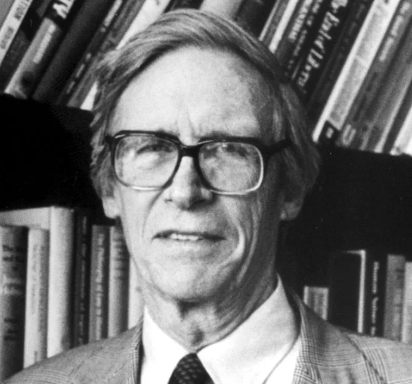
There is a divergence between private and social accounting that the market fails to register. One essential task of law and government is to institute the necessary conditions.
▼
Source
source
Chapter V, Section 42, p. 268
1 month 2 weeks ago
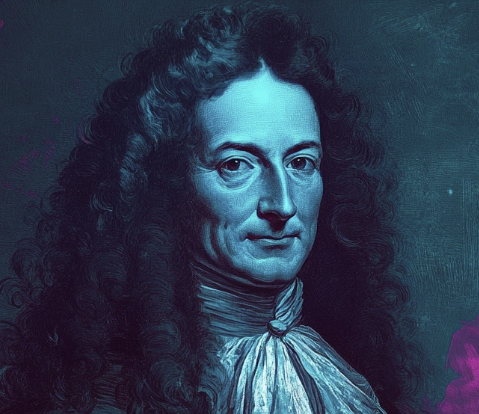
As regards the objection that possibles are independent of the decrees of God I grant it of actual decrees (although the Cartesians do not at all agree to this), but I maintain that the possible individual concepts involve certain possible free decrees; for example, if this world was only possible, the individual concept of a particular body in this world would involve certain movements as possible, it would also involve the laws of motion, which are the free decrees of God; but these, also, only as possibilities. Because, as there are an infinity of possible worlds, there are also an infinity of laws, certain ones appropriate to one; others, to another, and each possible individual of any world involves in its concept the laws of its world.
▼
Source
source
(May, 1686) as quoted in George R. Montgomery, Tr., "Correspondence between Leibniz and Arnauld," Leibniz: Discourse on metaphysics; correspondence with Arnauld, and Monadology (1916) VIII, p. 108

1 week 3 days ago
If there is anyone who owes everything to Bach, it is certainly God.
1 month 3 weeks ago
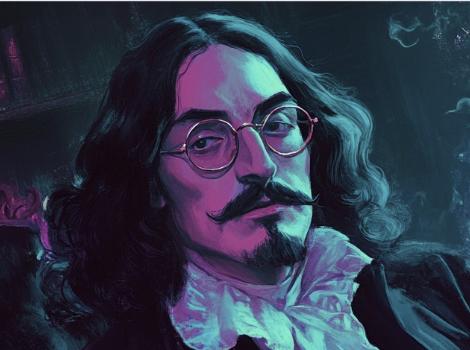
Staying as I am, one foot in one country and the other in another, I find my condition very happy, in that it is free.
▼
Source
source
Letter to Elisabeth of Bohemia, Princess Palatine, Paris, June/July 1648
6 days ago
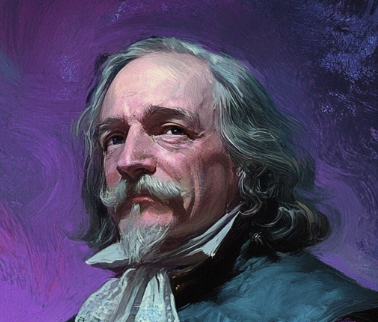
And seeing every man is presumed to do all things in order to his own benefit, no man is a fit Arbitrator in his own cause.
▼
Source
source
The First Part, Chapter 15, p. 78

2 weeks 4 days ago
All those who seek to destroy the liberties of a democratic nation ought to know that war is the surest and shortest means to accomplish it.
▼
Source
source
Book Three, Chapter XXII.

6 days ago
Verily I say unto thee, That this night, before the cock crow, thou shalt deny me thrice.
▼
Source
source
26:34 (KJV) Said to Peter.
1 month 3 weeks ago
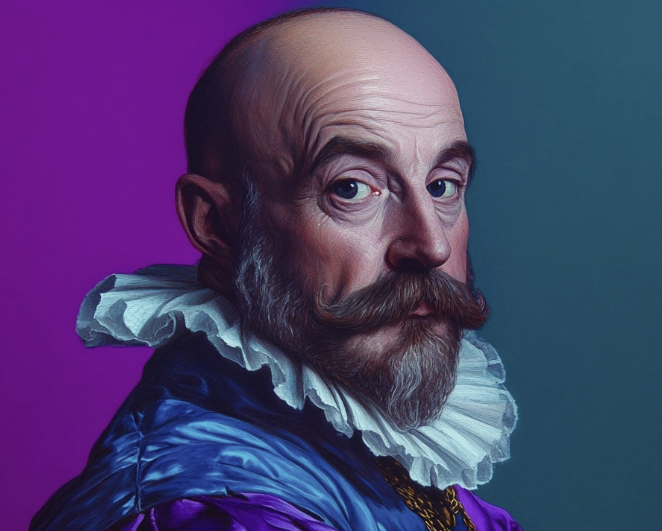
The mariner of old said to Neptune in a great tempest, "O God! thou mayest save me if thou wilt, and if thou wilt thou mayest destroy me; but whether or no, I will steer my rudder true."
▼
Source
source
Book II, Ch. 16. Of Glory
1 month 1 week ago
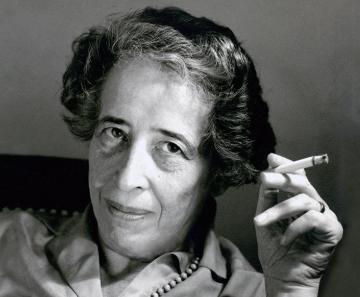
No one has the right to obey.
▼
Source
source
in a radio interview with Joachim Fest (9 November 1964)
1 month 3 weeks ago
I speak the truth, not my fill of it, but as much as I dare speak; and I dare to do so a little more as I grow old.
▼
Source
source
Ch. 2

1 month 2 weeks ago
A people that sells its own children is more condemnable than the buyer; this commerce demonstrates our superiority; he who gives himself a master was born to have one.
▼
Source
source
Essai sur les Moeurs et l'Espit des Nations (1753)

1 month 2 weeks ago
Our condition is like that of the poor wolves: if one of the flock wound himself, or so much as limp, the rest eat him up incontinently. That serene Power interposes the check upon the caprices and officiousness of our wills.
1 week 6 days ago
That by any series of changes a protozoon should ever become a mammal, seems to those who are not familiar with zoology, and who have not seen how clear becomes the relationship between the simplest and the most complex forms when intermediate forms are examined, a very grotesque notion. Habitually, looking at things rather in their statical aspect than in their dynamical aspect, they never realize the fact that, by small increments of modification, any amount of modification may in time be generated.

1 month 4 weeks ago
So far as it goes, a small thing may give an analogy of great things, and show the tracks of knowledge.
▼
Source
source
Book II, lines 123-124 (tr. Rouse)
1 month 2 weeks ago
Leave this hypocritical prating about the masses. Masses are rude, lame, unmade, pernicious in their demands and influence, and need not to be flattered, but to be schooled. I wish not to concede anything to them, but to tame, drill, divide, and break them up, and draw individuals out of them.
▼
Source
source
Considerations by the Way
1 month 2 weeks ago
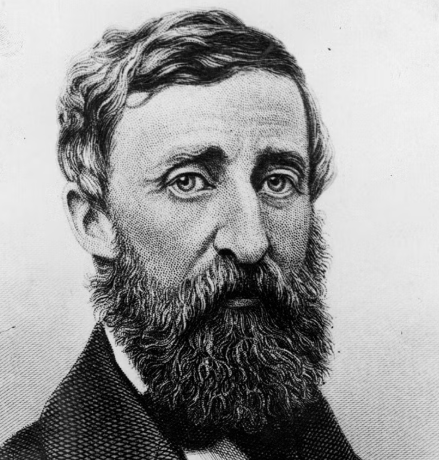
As for my own business, even that kind of surveying which I could do with most satisfaction my employers do not want. They would prefer that I should do my work coarsely and not too well, ay, not well enough. When I observe that there are different ways of surveying, my employer commonly asks which will give him the most land, not which is most correct.
▼
Source
source
p. 486

2 months 2 weeks ago
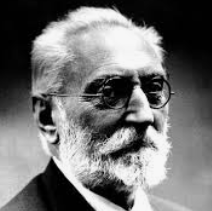
If I were to imagine a girl deeply in love and some man who wanted to use all his reasoning powers and knowledge to ridicule her passion, well, there's surely no question of the enamoured girl having to choose between keeping her wealth and being ridiculed. No, but if some extremely cool and calculating man calmly told the young girl, "I will explain to you what love is," and the girl admitted that everything he told her was quite correct, I wonder if she wouldn't choose his miserable common sense rather than her wealth?
Just now
The very same reason which one man may regard as a motive for taking care to prolong his life may be regarded by another man as a motive for shooting himself.

2 months 1 week ago
The vicious lover is the follower of earthly Love who desires the body rather than the soul; his heart is set on what is mutable and must therefore be inconstant. And as soon as the body he loves begins to pass the first flower of its beauty, he "spreads his wings and flies away," giving the lie to all his pretty speeches and dishonoring his vows, whereas the lover whose heart is touched by moral beauties is constant all his life, for he has become one with what will never fade.
2 weeks ago
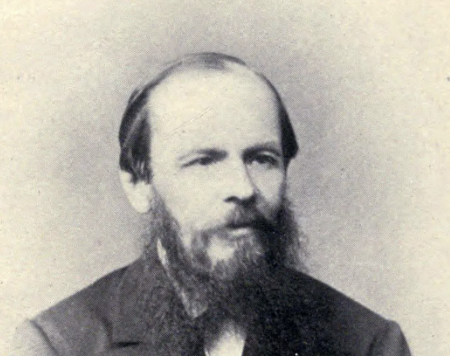
I could never stand more than three months of dreaming at a time without feeling an irresistible desire to plunge into society. To plunge into society meant to visit my superior, Anton Antonich Syetochkin. He was the only permanent acquaintance I have had in my life, and I even wonder at the fact myself now. But I even went to see him only when that phase came over me, and when my dreams had reached such a point of bliss that it became essential to embrace my fellows and all mankind immediately. And for that purpose I needed at least one human being at hand who actually existed. I had to call on Anton Antonich, however, on Tuesday - his at-home day; so I always had to adjust my passionate desire to embrace humanity so that it might fall on a Tuesday.
▼
Source
source
Part 2, Chapter 2

2 weeks ago
In all persuasions the bigots are persecutors; the men of a cool and reasonable piety are favourers of toleration; because the former sort of men not taking the pains to be acquainted with the grounds of their adversaries tenets, conceive them to be so absurd and monstrous, that no man of sense can give into them in good earnest. For which reason they are convinced that some oblique bad motive induces them to pretend to the belief of such doctrines, and to the maintaining of them with obstinacy. This is a very general principle in all religious differences, and it is the corner stone of all persecution.
▼
Source
source
Volume II, p. 148
1 month 2 weeks ago
It is not enough to be industrious; so are the ants. What are you industrious about?
▼
Source
source
Letter to Harrison Blake, November 16, 1857
1 month 2 weeks ago
The progress from an absolute to a limited monarchy, from a limited monarchy to a democracy, is a progress toward a true respect for the individual.
1 week 3 days ago
When I happen to be satisfied with everything, even God and myself, I immediately react like the man who, on a brilliant day, torments himself because the sun is bound to explode in a few billion years.
1 month 4 days ago
Speciesism-the word is not an attractive one, but I can think of no better term-is a prejudice or attitude of bias in favor of the interests of members of one's own species and against those of members of other species.
▼
Source
source
Ch. 1: All Animals Are Equal
1 month 1 week ago
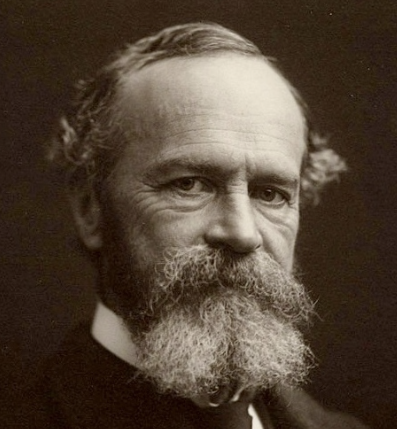
Pragmatism, on the other hand, asks its usual question. "Grant an idea or belief to be true," it says, "what concrete difference will its being true make in anyone's actual life? How will the truth be realized? What experiences will be different from those which would obtain if the belief were false? What, in short, is the truth's cash-value in experiential terms?"
▼
Source
source
Lecture VI, Pragmatism's Conception of Truth

5 days ago
Almost anything that consoles us is a fake.
▼
Source
source
The Sovereignty of Good (1970) p. 59.
1 month 2 weeks ago
Such then is the human condition, that to wish greatness for one's country is to wish harm to one's neighbors.
▼
Source
source
"Fatherland", 1764

2 weeks 6 days ago
Of the eternal corporeal substance (which is not producible ex nihilo, nor reducible ad nihilum, but rarefiable, condensable, formable, arrangeable, and "fashionable") the composition is dissolved, the complexion is changed, the figure is modified, the being is altered, the fortune is varied, only the elements remaining what they are in substance, that same principle persevering which was always the one material principle, which is the true substance of things, eternal, ingenerable and incorruptible.
▼
Source
source
As translated by Arthur Imerti
2 weeks ago
The power of perpetuating our property in our families is one of the most valuable and interesting circumstances belonging to it, and that which tends most to the perpetuation of society itself. It makes our weakness subservient to our virtue; it grafts benevolence even upon avarice. The possession of family wealth and of the distinction which attends hereditary possessions (as most concerned in it,) are the natural securities for this transmission.

1 month 1 week ago
But a punishment like forced labour or even imprisonment - mere loss of liberty - has never functioned without a certain additional element of punishment that certainly concerns the body itself: rationing of food, sexual deprivation, corporal punishment, solitary confinement ... There remains, therefore, a trace of 'torture' in the modern mechanisms of criminal justice - a trace that has not been entirely overcome, but which is enveloped, increasingly, by the non-corporal nature of the penal system

1 month 1 week ago
If we cannot "practice the presence of God," it is something to practice the absence of God, to become increasingly aware of our unawareness till we feel like man who should stand beside a great cataract and hear no noise, or like a man in a story who looks in a mirror and finds no face there, or a man in a dream who stretches his hand to visible objects and gets no sensation of touch. To know that one is dreaming is to no longer be perfectly asleep. Bur for news of the fully waking world you must go to my betters.
▼
Source
source
"Charity"
1 month 1 week ago
In justice as fairness society is interpreted as a cooperative venture for mutual advantage.
▼
Source
source
Chapter II, Section 14, pg. 84
1 month 2 weeks ago
This body which called itself and which still calls itself the Holy Roman Empire was in no way holy, nor Roman, nor an empire.
▼
Source
source
Essai sur l'histoire générale et sur les mœurs et l'esprit des nations, Chapter 70, 1756

1 month 1 week ago
Well, as you know, I was blessed to do over a hundred events for my dear brother [Bernie Sanders]. And this is the first time I've had a chance to publicly endorse him again, but yes, indeed. I'll be in his corner that we're going to win this time. And it has to do with the Martin Luther King like criteria of assessing a candidate namely the issues of militarism, poverty, materialism, and racism, xenophobia in all of its forms that includes any kind of racism as you know against black people, brown people, yellow people, anybody, Arabs, Muslims, Jews, Palestinians, Kashmirians, Tibetans and so forth. So that there's no doubt that the my dear brother Bernie stands shoulders above any of the other candidates running in the Democratic primary when it comes to that Martin Luther King-like standards or criteria.
▼
Source
source
Quoted in: Cornel West on Bernie, Trump, and Racism, The Intercept, Mehdi Hasan,
1 month 1 week ago
The hazards of the generalized prisoner's dilemma are removed by the match between the right and the good.
▼
Source
source
Chapter IX, Section 86, p. 577
1 month 1 week ago
Democracy is still upon its trial. The civic genius of our people is its only bulwark.
▼
Source
source
Robert Gould Shaw: Oration upon the Unveiling of the Shaw Monument
1 month 2 weeks ago
The real and effectual discipline which is exercised over a workman is that of his customers. It is the fear of losing their employment which restrains his frauds and corrects his negligence.
▼
Source
source
Chapter X, Part II.
1 month 1 week ago
The public execution is to be understood not only as a judicial, but also as a political ritual. It belongs, even in minor cases, to the ceremonies by which power is manifested.
▼
Source
source
Chapter One, The body of the condemned

1 month 1 week ago
The relation of feeling toward art and its bringing-forth can be one of production or one of reception and enjoyment.
▼
Source
source
p. 78
2 months 2 weeks ago
There is only one way to avoid criticism: do nothing, say nothing and be nothing.
1 month 1 week ago
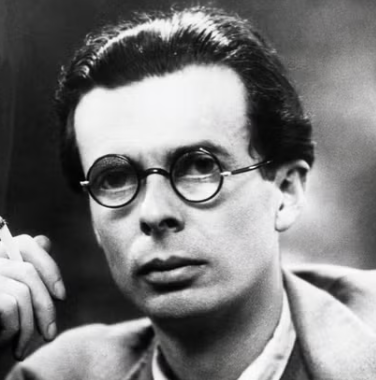
You can do everything with bayonets except sit on them. If you want to preserve your power indefinitely you have to get the consent of the ruled. And this they will do partly by drugs as I foresaw in "Brave new World", and partly by these new techniques of propaganda. They will do it by bypassing the sort of rational side of man and appealing to his subconscious, and his deeper emotions, and his physiology, even, and so making him actually love his slavery. I mean I think this is the danger that actually people may be, in some ways, happy under the new regime. But they will be happy in situations when they oughtn't be happy.

1 month 1 week ago
One of the most difficult of the philosopher's tasks is to find out where the shoe pinches.
▼
Source
source
p. 61
CivilSimian.com created by AxiomaticPanic, CivilSimian, Kalokagathia