

5 days ago
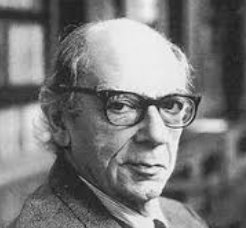
Injustice, poverty, slavery, ignorance - these may be cured by reform or revolution. But men do not live only by fighting evils. They live by positive goals, individual and collective, a vast variety of them, seldom predictable, at times incompatible.

2 weeks 4 days ago
The First thing that strikes a traveler in the United States is the innumerable multitude of those who seek to emerge from their original condition; and the second is the rarity of lofty ambition to be observed in the midst of the universally ambitious stir of society. No Americans are devoid of a yearning desire to rise, but hardly any appear to entertain hopes of great magnitude or to pursue very lofty aims. All are constantly seeking to acquire property, power, and reputation.
▼
Source
source
Book Three, Chapter XIX.

2 months 1 week ago
Indeed, it may well be argued that one reason for the decline in science, art, and literature was the increasing absorption of the better minds into a new sort of intellectual pursuit, theology.
1 month 2 weeks ago
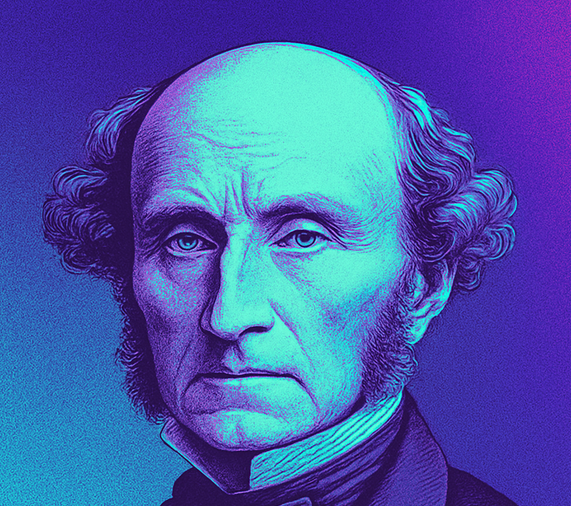
The notion that truths external to the mind may be known by intuition or consciousness, independently of observation and experience, is, I am persuaded, in these times, the great intellectual support of false doctrines and bad institutions. By the aid of this theory, every inveterate belief and every intense feeling, of which the origin is not remembered, is enabled to dispense with the obligation of justifying itself by reason, and is erected into its own all-sufficient voucher and justification. There never was such an instrument devised for consecrating all deep-seated prejudices.
▼
Source
source
(pp. 225-226)

1 month 4 weeks ago
Men are eager to tread underfoot what they have once too much feared.
▼
Source
source
Book V, line 1140 (tr. Rouse)
1 month 2 weeks ago
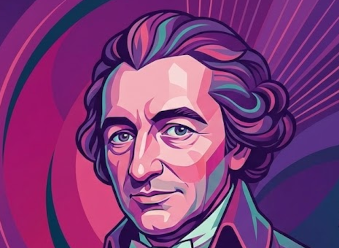
If the slavery of the parents be unjust, much more is their children's; if the parents were justly slaves, yet the children are born free; this is the natural, perfect right of all mankind; they are nothing but a just recompense to those who bring them up: And as much less is commonly spent on them than others, they have a right, in justice, to be proportionably sooner free.
1 month 2 weeks ago
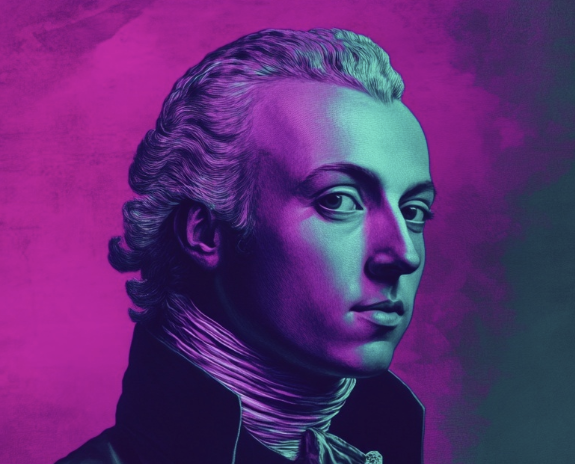
All our knowledge falls with the bounds of experience.
▼
Source
source
A 146, B 185

2 months 1 day ago
The order of authority derives from God, as the Apostle says [in Romans 13:1-7]. For this reason, the duty of obedience is, for the Christian, a consequence of this derivation of authority from God, and ceases when that ceases. But, as we have already said, authority may fail to derive from God for two reasons: either because of the way in which authority has been obtained, or in consequence of the use which is made of it. There are two ways in which the first may occur. Either because of a defect in the person, if he is unworthy; or because of some defect in the way itself by which power was acquired, if, for example, through violence, or simony or some other illegal method.
▼
Source
source
in Aquinas: Selected Political Writings (Basil Blackwell: 1974), p. 183
2 weeks ago
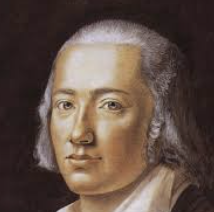
What is the wisdom of a book compared with the wisdom of an angel?
2 weeks ago
One has only as much morality as one has philosophy and poetry.
▼
Source
source
"Selected Ideas (1799-1800)", Dialogue on Poetry and Literary Aphorisms, Ernst Behler and Roman Struc, trans. (Pennsylvania University Press:1968) #62
1 month 1 week ago
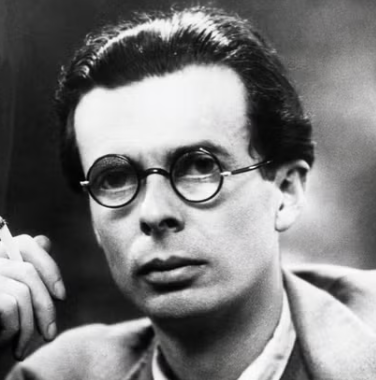
In the old dramas it was love that had to be sacrificed to painful duty. In the modern instance the sacrifice is at the shrine of what William James called "the Bitch Goddess, Success." Love is to be abandoned for the stern pursuit of newspaper notoriety and dollars.
▼
Source
source
"Silence is Golden," p. 61
1 month 1 week ago
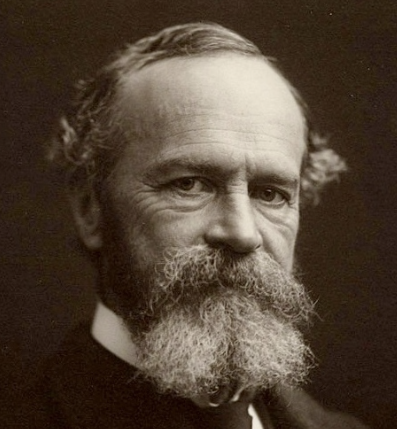
We must frankly confess, then, using our empirical common sense and ordinary practical prejudices, that in the world that actually is, the virtues of sympathy, charity, and non-resistance may be, and often have been, manifested in excess. ... You will agree to this in general, for in spite of the Gospel, in spite of Quakerism, in spite of Tolstoi, you believe in fighting fire with fire, in shooting down usurpers, locking up thieves, and freezing out vagabonds and swindlers.
▼
Source
source
Lectures XIV and XV, "The Value of Saintliness"
2 weeks 4 days ago
Nothing tends to materialize man and to deprive his work of the faintest trace of mind more than the extreme division of labor.
▼
Source
source
Chapter XVIII.

6 days ago
Man is a thinking being. His reason enables him to recognize his own potentialities and those of his world. He is thus not at the mercy of the facts that surround him, but is capable of subjecting them to a higher standard, that of reason.
▼
Source
source
P. 6
1 month 2 weeks ago
The question here is not, "How conscience ought to be guided? For Conscience is its own General and Leader; it is therefore enough that each man have one. What we want to know is, how conscience can be her own Ariadne, and disentangle herself from the mazes even of the most raveled and complicated casuistical theology. Here is an ethical proposition that stands in need of no proof: No Action May At Any Time Be Hazarded On The Uncertainty That Perchance It May Not Be Wrong (Quod dubitas, ne feceris! Pliny - which you doubt, then neither do) Hence the Consciousness, that Any Action I am about to perform is Right, is in itself a most immediate and imperative duty. What actions are right, - what wrong - is a matter for the understanding, not for conscience.
▼
Source
source
p. 251 Book IV, Part 2, Section 4

1 month 1 week ago
In the Greek conception of parrhesia... truth-having is guaranteed by the possession of... moral qualities... required... to know... and... convey such truth...
1 month 2 weeks ago
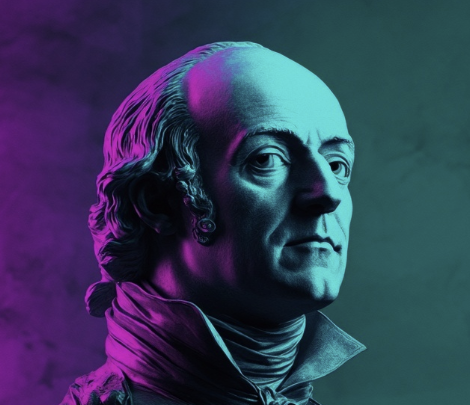
To desire you to read my book over and mark all the corrections you would wish me to make...would oblige me greatly: I know how much I shall be benefitted and I shall at the same time preserve the pretious right of private judgement for the sake of which our forefathers kicked out the Pope and the Pretender. I believe you to be much more infalliable than the Pope, but as I am a Protestant my conscience makes me scruple to submit to any unscriptural authority.
▼
Source
source
Letter to William Strahan (4 April 1760), quoted in Adam Smith, The Correspondence of Adam Smith, eds. E. C. Mossner and I. S. Ross (1987), pp. 67-68
1 week 6 days ago
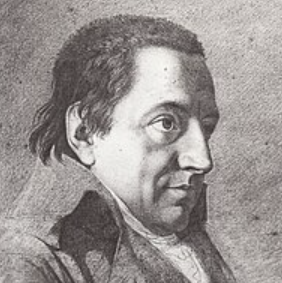
The true Christian knows no Covenant or Mediation with God, but only the Old, Eternal, and Unchangeable Relation, that in Him we live, and move, and have our being; and he asks not who has said this, but only what has been said;-even the book wherein this may be written is nothing to him as a proof, but only as a means of culture; he bears the proof in his own breast. This is my view of the matter...
▼
Source
source
p. 105

1 week 2 days ago
There is no means of proving it is preferable to be than not to be.
2 weeks 4 days ago
All those who seek to destroy the liberties of a democratic nation ought to know that war is the surest and shortest means to accomplish it.
▼
Source
source
Book Three, Chapter XXII.
1 month 2 weeks ago
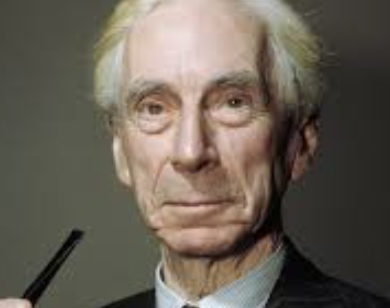
How much good it would do if one could exterminate the human race.
▼
Source
source
A characteristic saying of Russell, reported by Aldous Huxley in a letter to Lady Ottoline Morrell dated 8 October 1917, as quoted in Bibliography of Bertrand Russell, Routledge, 2013
2 weeks 4 days ago
There is hardly a pioneer's hut which does not contain a few odd volumes of Shakespeare. I remember reading the feudal drama of Henry V for the first time in a log cabin.
▼
Source
source
Book One, Chapter XIII.
1 week 2 days ago
Every act of courage is the work of an unbalanced man. Animals, normal by definition, are always cowardly except when they know themselves to be stronger, which is cowardice itself.
6 days ago
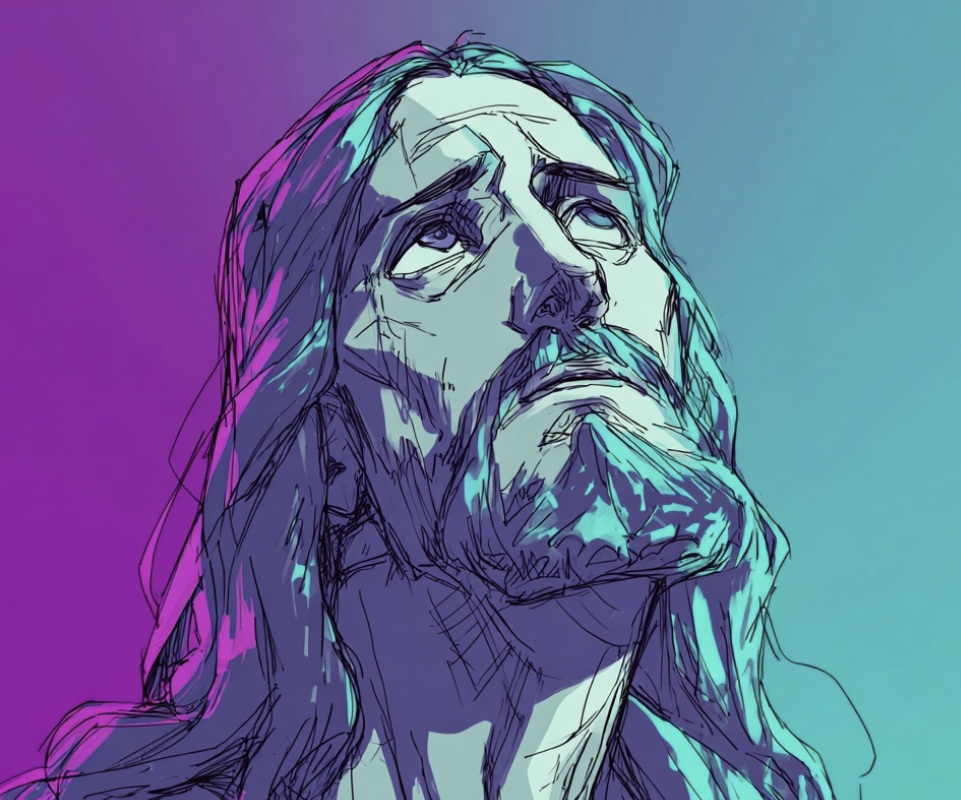
Every plant, which my heavenly Father hath not planted, shall be rooted up. Let them alone: they be blind leaders of the blind. And if the blind lead the blind, both shall fall into the ditch.
▼
Source
source
15:13-14 (KJV)
1 month 2 weeks ago
Compared with the greatest poets, he may be said to be the poet of unpoetical natures, possessed of quiet and contemplative tastes. But unpoetical natures are precisely those which require poetic cultivation. This cultivation Wordsworth is much more fitted to give, than poets who are intrinsically far more poets than he.
▼
Source
source
(p. 149)
2 months 1 day ago
It is on account neither of God's weakness nor ignorance that evil comes into the world, but rather it is due to the order of his wisdom and the greatness of his goodness that diverse grades of goodness occur in things, many of which would be lacking if no evil were permitted. Indeed, the good of patience would not exist without the evil of persecution; nor the good of preservation of life in a lion if not for the evil of the destruction of the animals on which it lives.
▼
Source
source
q. 3, art. 6, ad 4
1 month 2 weeks ago
I found one day in school a boy of medium size ill-treating a smaller boy. I expostulated, but he replied: "The bigs hit me, so I hit the babies; that's fair." In these words he epitomized the history of the human race.
▼
Source
source
p. 31

2 months 1 week ago
There is no fate that can not be surmounted by scorn. If the descent is thus sometimes performed in sorrow, it can also take place in joy. This word is not too much. Again I fancy Sisyphus returning toward his rock, and the sorrow was in the beginning.
1 month 1 week ago
What is a weed? A plant whose virtues have yet to be discovered.
▼
Source
source
Fortune of the Republic, 1878
1 month 2 weeks ago
He that knows anything, knows this, in the first place, that he need not seek long for instances of his ignorance.
▼
Source
source
Book IV, Ch. 3, sec. 22

1 month 1 week ago
Make sure that your religion is a matter between you and God only.
▼
Source
source
Comment to Maurice O'Connor Drury, as quoted in Wittgenstein Reads Freud : The Myth of the Unconscious (1996) by Jacques Bouveresse, as translated by Carol Cosman, p. 14
1 month 1 week ago
It is not the same thing. You are perhaps not lying, but you are not telling the truth.
▼
Source
source
Act 1
1 month 1 week ago
Speed, it seems to me, provides the one genuinely modern pleasure.
▼
Source
source
Wanted, A New Pleasure
1 month 2 weeks ago
What is prudence in the conduct of every private family, can scarce be folly in that of a great kingdom.
▼
Source
source
Chapter II, p. 490.
1 month 2 weeks ago
All wars are accordingly so many attempts (not in the intention of man, but in the intention of Nature) to establish new relations among states, and through the destruction or at least the dismemberment of all of them to create new political bodies, which, again, either internally or externally, cannot maintain themselves and which must thus suffer like revolutions; until finally, through the best possible civic constitution and common agreement and legislation in external affairs, a state is created which, like a civic commonwealth, can maintain itself automatically.
▼
Source
source
Seventh Thesis
2 months 2 weeks ago
[I]t's gravity is the cause; and that which is heavy abides in the middle, and the earth is in the middle: in like manner also, the infinite will abide in itself, through some other cause... and will itself support itself. ...[T]he places of the whole and the part are of the same species; as of the whole earth and a clod, the place is downward; and of the whole of fire, and a spark, the place is upward. So that if the place of the infinite is in itself, there will be the same place also of a part of the infinite.

2 weeks 6 days ago
Coulson Turnbull in Life and Teachings of Giordano Bruno : Philosopher, Martyr, Mystic 1548 - 1600 (1913), p. 41
1 month 4 weeks ago
It is difficulties that show what men are.
▼
Source
source
Book I, ch. 24, 1.
2 months 3 days ago
If you reject absolutely any single sensation without stopping to discriminate with respect to that which awaits confirmation between matter of opinion and that which is already present, whether in sensation or in feelings or in any immediate perception of the mind, you will throw into confusion even the rest of your sensations by your groundless belief and so you will be rejecting the standard of truth altogether. If in your ideas based upon opinion you hastily affirm as true all that awaits confirmation as well as that which does not, you will not escape error, as you will be maintaining complete ambiguity whenever it is a case of judging between right and wrong opinion.
Just now
Once the needs of hunger are satisfied - and they are soon satisfied - the vanity, the necessity - for it is a necessity - arises of imposing ourselves upon and surviving in others. Man habitually sacrifices his life to his purse, but he sacrifices his purse to his vanity. He boasts even of his weakness and his misfortunes, for want of anything better to boast of, and is like a child who, in order to attract attention, struts about with a bandaged finger.
1 month 2 weeks ago
Hatred and anger are the greatest poison to the happiness of a good mind.
▼
Source
source
Section II, Chap. III.
1 month 4 weeks ago
Therefore let every Christian, yea, let the whole body of Christ everywhere cry out, despite the tribulations it endures, despite temptations and countless scandals, saying: "Preserve my soul, for I am holy; save Thy servant, O my God, that trusteth in thee" (Ps. 85:2) No, this holy one is not proud, for he trusts in God.
▼
Source
source
p.429

3 weeks 4 days ago
Despise all those things which when liberated from the body you will not want; invoke the Gods to become your helpers.
▼
Source
source
Pythagorean Ethical Sentences From Stobæus
1 month 2 weeks ago
Children should not be suffer'd to lose the consideration of human nature in the shufflings of outward conditions. The more they have, the better humor'd they should be taught to be, and the more compassionate and gentle to those of their brethren who are placed lower, and have scantier portions. If they are suffer'd from their cradles to treat men ill and rudely, because, by their father's title, they think they have a little power over them, at best it is ill-bred; and if care be not taken, will by degrees nurse up their natural pride into an habitual contempt of those beneath them. And where will that probably end but in oppression and cruelty?
▼
Source
source
Sec. 117
1 week 2 days ago
I ask myself; Why is it that only some people suffer? Why are only some selected from the ranks of normal people and put on the torture rack? Some religions maintain that God is trying us through suffering, or that we expiate evil and unbelief through it. If such an explanation can satisfy the religious man, it is not sufficient for anyone who notices that suffering is arbitrary and unjust, because the innocent often suffer most. There is no valid justification for suffering. Suffering has no hierarchy of values.
▼
Source
source
in essay: the monopoly of suffering
1 month 3 weeks ago
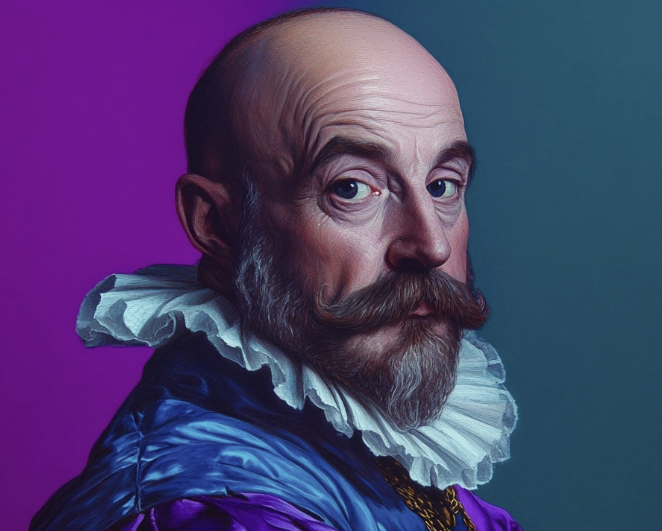
It is not death, it is dying that alarms me.
▼
Source
source
Book II, Ch. 13
2 weeks ago
Jacobinism is the revolt of the enterprising talents of a country against its property.
▼
Source
source
No. 1
1 month 1 week ago
A thing is important if anyone think it important.
▼
Source
source
Ch. 28, Note 35


2 months 1 week ago
Nothing can discourage the appetite for divinity in the heart of man.
CivilSimian.com created by AxiomaticPanic, CivilSimian, Kalokagathia