


1 week 2 days ago
The more intense a spiritual leader's appetite for power, the more he is concerned to limit it to others.
1 month 3 weeks ago
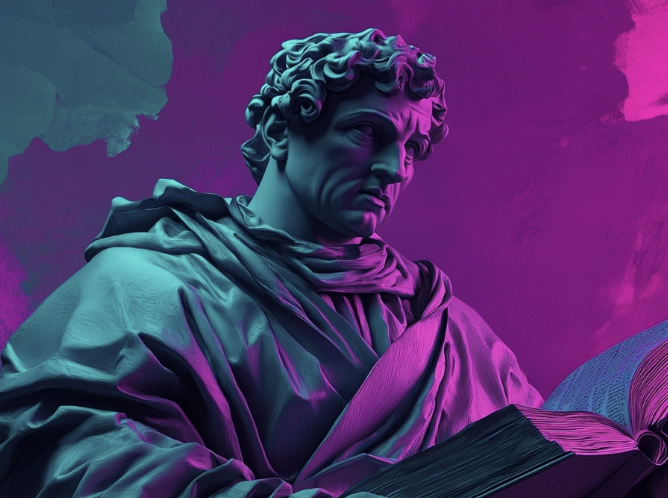
All the passages in the Holy Scriptures that mention assistance are they that do away with "free-will", and these are countless...For grace is needed, and the help of grace is given, because "free-will" can do nothing.
▼
Source
source
p. 270
1 month 3 weeks ago
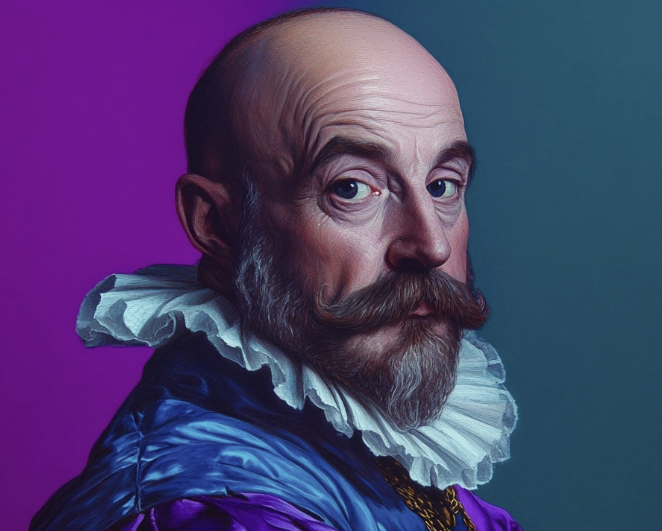
The world is all a carcass and vanity, The shadow of a shadow, a play And in one word, just nothing.
1 month 3 weeks ago
There is as much difference between us and ourselves as between us and others.
▼
Source
source
Ch. 1. Of the Inconstancy of Our Actions, tr. Cotton, rev. W. Carew Hazlitt, 1877
2 weeks 4 days ago
Only a very bad theologian would confuse the certainty that follows revelation with the truths that are revealed. They are entirely different things.
▼
Source
source
Apology for the Abbé de Prades

2 weeks 6 days ago
It is proof of a base and low mind for one to wish to think with the masses or majority, merely because the majority is the majority. Truth does not change because it is, or is not, believed by a majority of the people.
▼
Source
source
Included as a quotation in The Great Quotations (1977) by George Seldes, p. 35

1 month 3 weeks ago
But by far the greatest hindrance and aberration of the human understanding proceeds from the dullness, incompetency, and deceptions of the senses; in that things which strike the sense outweigh things which do not immediately strike it, though they be more important. Hence it is that speculation commonly ceases where sight ceases; insomuch that of things invisible there is little or no observation.
▼
Source
source
Aphorism 50
1 week 4 days ago
Mankind will never be, in an eminent degree, virtuous and happy till each man shall possess that portion of distinction and no more, to which he is entitled by his personal merits. The dissolution of aristocracy is equally the interest of the oppressor and the oppressed. The one will be delivered from the listlessness of tyranny, and the other from the brutalizing operation of servitude.
▼
Source
source
Book V, Chapter 11, "Moral Effects of Aristocracy"

2 months 1 week ago
The welfare of the people in particular has always been the alibi of tyrants, and it provides the further advantage of giving the servants of tyranny a good conscience. It would be easy, however, to destroy that good conscience by shouting to them: if you want the happiness of the people, let them speak out and tell what kind of happiness they want and what kind they don't want! But, in truth, the very ones who make use of such alibis know they are lies; they leave to their intellectuals on duty the chore of believing in them and of proving that religion, patriotism, and justice need for their survival the sacrifice of freedom.
2 weeks ago
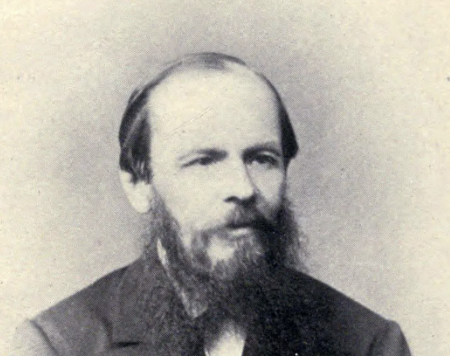
All is in a man's hands and he lets it all slip from cowardice, that's an axiom. It would be interesting to know what it is men are most afraid of. Taking a new step, uttering a new word is what they fear most. Variant translation: "Taking a new step, uttering a new word, is what people fear most."
6 days ago
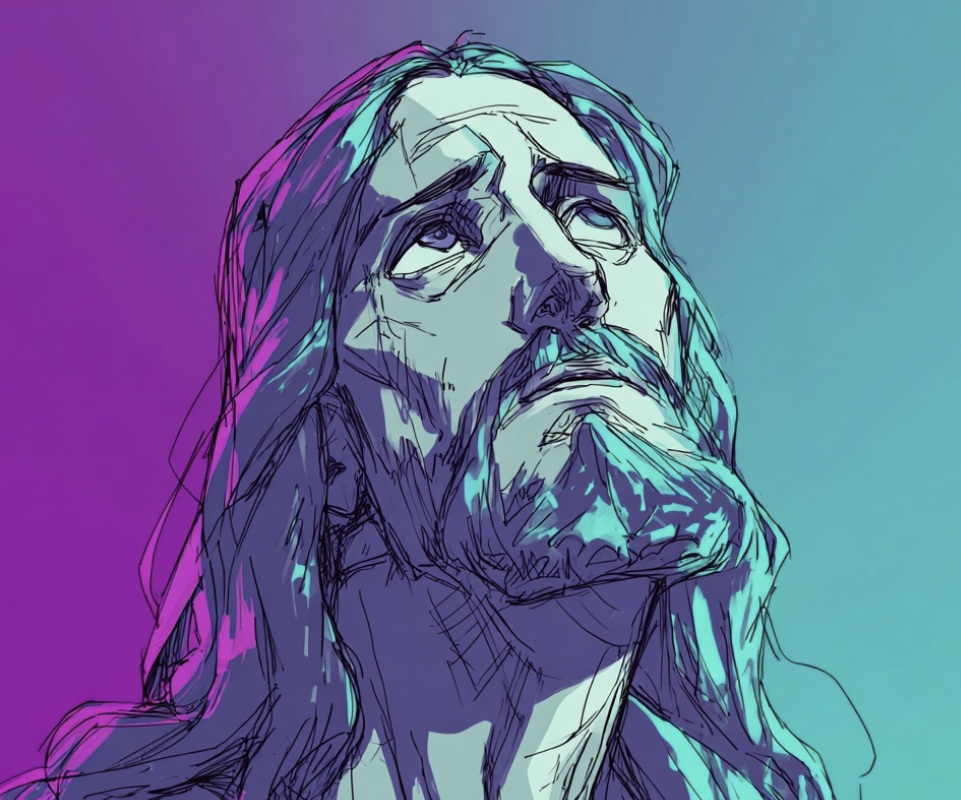
I came to set fire to the earth, and I wish it were already on fire!
▼
Source
source
12:49 (CEV)
1 month 2 weeks ago
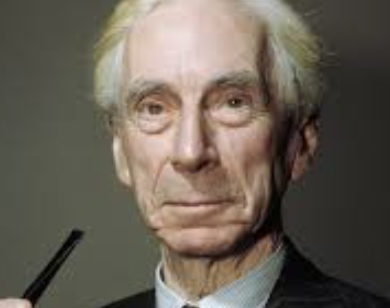
I feel like that intellectual but plain-looking lady who was warmly complimented on her beauty. In accepting his Nobel Prize, in December 1950; Russell denied that he had contributed anything in particular to literature.
▼
Source
source
Quoted in LIFE, Editorials: "A great mind is still annoying and adorning our age", 26 May 1952

1 month 3 days ago
I would rather discover one cause than gain the kingdom of Persia.
▼
Source
source
Freeman (1948), p. 155
2 months 1 week ago
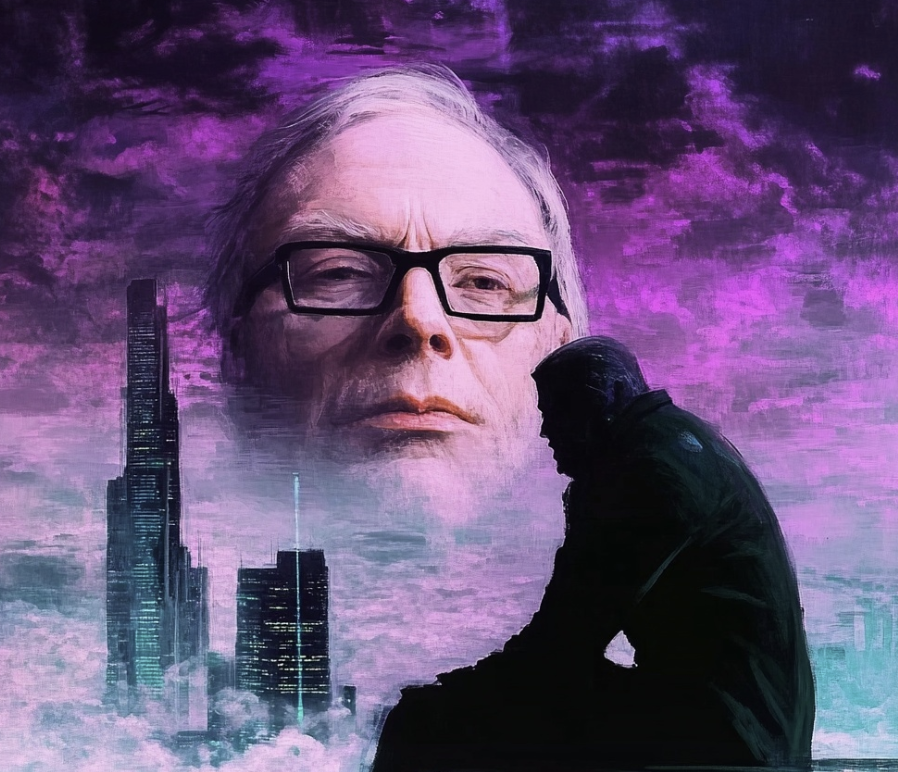
I joke sometimes to the effect that when I approach a part of a book where I must explain something I don't understand, I just type faster and faster and faster. Then, when I get to the part I don't understand, sheer inertia pushes me through. That's not literally true, of course, but there's something to it psychologically.
4 days ago
All names of God remain hallowed because they have been used not only to speak of God but also to speak to him.

1 month 1 week ago
It is one of the chief skills of the philosopher not to occupy himself with questions which do not concern him.
▼
Source
source
Journal entry

1 month 3 weeks ago
I consider as lovers of books not those who keep their books hidden in their store-chests and never handle them, but those who, by nightly as well as daily use thumb them, batter them, wear them out, who fill out all the margins with annotations of many kinds, and who prefer the marks of a fault they have erased to a neat copy full of faults.
▼
Source
source
Letter to an unidentified friend (1489), as translated in Collected Works of Erasmus (1974), p. 58
2 months 1 week ago
The whole business of the kingly weaving is comprised in this and this alone: in never allowing the self-restrained characters to be separated from the courageous, but in weaving them together by common beliefs and honors and dishonors and opinions and interchanges of pledges, thus making of them a smooth and, as we say, well-woven fabric, and then entrusting to them in common forever the offices of the state.

1 month 1 week ago
Every time you make a choice you are turning the central part of you, the part of you that chooses, into something a little different from what it was before. And taking your life as a whole, with all your innumerable choices, all your life long you are slowly turning this central thing either into a heavenly creature or into a hellish creature: either into a creature that is in harmony with God, and with other creatures, and with itself, or else into one that is in a state of war and hatred with God, and with its fellow-creatures, and with itself. To be the one kind of creature is heaven: that is, it is joy and peace and knowledge and power. To be the other means madness, horror, idiocy, rage, impotence, and eternal loneliness. Each of us at each moment is progressing to the one state or the other.
▼
Source
source
Book III, Chapter 4, "Morality and Psychoanalysis"
1 week 2 days ago
Every change in the social order, every revolution in property relations, is the necessary consequence of the creation of new forces of production which no longer fit into the old property relations. Private property has not always existed. When, towards the end of the Middle Ages, there arose a new mode of production which could not be carried on under the then existing feudal and guild forms of property, this manufacture, which had outgrown the old property relations, created a new property form, private property. And for manufacture and the earliest stage of development of big industry, private property was the only possible property form; the social order based on it was the only possible social order.
1 week 2 days ago
I think that I have succeeded in making it clear that this doctrine gives room for explanations of many facts which without it are absolutely and hopelessly inexplicable; and further that it carries along with it the following doctrines: first, a logical realism of the most pronounced type; second, objective idealism; third, tychism, with its consequent thoroughgoing evolutionism. We also notice that the doctrine presents no hindrences to spiritual influences, such as some philosophies are felt to do.

1 month 2 weeks ago
Men will always be mad, and those who think they can cure them are the maddest of all.
▼
Source
source
Letter to Louise Dorothea of Meiningen, duchess of Saxe-Gotha Madame, 30 January 1762

1 month 1 week ago
For nature beats in perfect tune, And rounds with rhyme her every rune, Whether she work in land or sea, Or hide underground her alchemy. Thou canst not wave thy staff in air, Or dip thy paddle in the lake, But it carves the bow of beauty there, And the ripples in rhymes the oar forsake.
▼
Source
source
Wood-notes, no. II, st. 7

2 weeks ago
The acts of France were acts of hostility to this country; her whole system, every speech, every decree, every act, bespoke an intention preclusive of accommodation. No man, he would venture to say, had a more lively sense of the importance of the question before the House, or of the evils of war, than himself. A war with France, under such circumstances as now governed her conduct, must be terrible, but peace much more so. A nation that had abandoned all its valuable distinctions, arts, sciences, religion, law order, every thing but the sword, was most formidable and dreadful to all nations composed of citizens who only used soldiers as a defence; as such, France should be resisted with spirit and temper, without fear or scruple.
▼
Source
source
Speech in the House of Commons upon the outbreak of war with France (12 February 1793)
2 weeks ago
Nor is prescription of government formed upon blind unmeaning prejudices-for man is a most unwise, and a most wise, being. The individual is foolish. The multitude, for the moment, is foolish, when they act without deliberation; but the species is wise, and when time is given to it, as a species it almost always acts right.
▼
Source
source
Speech in the House of Commons against William Pitt's motion for parliamentary reform (7 May 1782)

2 weeks 1 day ago
When the economy crashes, bailouts flow to banks while austerity falls on citizens. Public services cut, social programs slashed, safety nets shredded - all while the wealthy accumulate more. Austerity isn't fiscal responsibility; it's class warfare disguised as necessary medicine. You pay for their crisis with your deprivation.
1 month 2 weeks ago
Of all forms of caution, caution in love is perhaps the most fatal to true happiness.
1 month 2 weeks ago
What's sauce for the gander is sauce for the goose.
▼
Source
source
Introduction, p. 37.

1 month 2 weeks ago
I love liberty, and I loathe constraint, dependence, and all their kindred annoyances. As long as my purse contains money it secures my independence, and exempts me from the trouble of seeking other money, a trouble of which I have always had a perfect horror; and the dread of seeing the end of my independence, makes me proportionately unwilling to part with my money. The money that we possess is the instrument of liberty, that which we lack and strive to obtain is the instrument of slavery.
1 week 2 days ago
There are no solutions, only cowardice masquerading as such.
1 month 2 weeks ago
To these spurious principles must be added some others of great affinity with them... First, that by which we assume that everything in the universe is done according to the order of nature, which principle by Epicurus was proclaimed without any restriction, and by all other philosophers unanimously with extremely rare exceptions, not to be admitted but from supreme necessity.
3 weeks 6 days ago
Every good thing is gentle and consistent, progressing in good order and not going beyond what is right.
▼
Source
source
2, 39, 4
1 month 4 weeks ago
But tell me this: did you never love any person... were you never commanded by the person beloved to do something which you did not wish to do? Have you never flattered your little slave? Have you never kissed her feet? And yet if any man compelled you to kiss Caesar's feet, you would think it an insult and excessive tyranny. What else then is slavery?
▼
Source
source
Book IV, ch. 1, 17.

2 months 2 weeks ago
Man is a synthesis of psyche and body, but he is also a synthesis of the temporal and the eternal. In the former, the two factors are psyche and body, and spirit is the third, yet in such a way that one can speak of a synthesis only when the spirit is posited. The latter synthesis has only two factors, the temporal and the eternal. Where is the third factor? And if there is no third factor, there really is no synthesis, for a synthesis that is a contradiction cannot be completed as a synthesis without a third factor, because the fact that the synthesis is a contradiction asserts that it is not. What, then, is the temporal?
6 days ago
He that dippeth his hand with me in the dish, the same shall betray me. The Son of man goeth as it is written of him: but woe unto that man by whom the Son of man is betrayed! it had been good for that man if he had not been born.
▼
Source
source
26:23-24 (KJV)
1 month 1 week ago
...wickedness, when you examine it, turns out to be the pursuit of some good in the wrong way. You can be good for the mere sake of goodness: you cannot be bad for the mere sake of badness. You can do a kind action when you are not feeling kind and when it gives you no pleasure, simply because kindness is right; but no one ever did a cruel action simply because cruelty is wrong - only because cruelty was pleasant or useful to him. in other words badness cannot succeed even in being bad in the same way in which goodness is good. Goodness is, so to speak, itself: badness is only spoiled goodness.
▼
Source
source
Book II, Chapter 2, "The Invasion"

2 weeks 5 days ago
Not to be content with Life is the unsatisfactory state of those which destroy themselves; who being afraid to live, run blindly upon their own Death, which no Man fears by Experience.
1 week 2 days ago
The consciousness of a general idea has a certain "unity of the ego" in it, which is identical when it passes from one mind to another. It is, therefore, quite analogous to a person, and indeed, a person is only a particular kind of general idea.
▼
Source
source
Man's Glassy Essence in The Monist, Vol. III, No. 1
1 month 1 week ago
I am not virtuous. Our sons will be if we shed enough blood to give them the right to be.
▼
Source
source
Act 3, sc. 5
1 month 1 week ago
That which is best about conservatism, that which, though it cannot be expressed in detail, inspires reverence in all, is the Inevitable.
1 week 2 days ago
Without God, everything is nothingness; and with God? Supreme nothingness.
1 month 3 weeks ago
Rules necessary for axioms. Not to demand in axioms any but things perfectly evident.
1 month 1 week ago
I do not believe in what is often called... 'exact terminology'... [or] in definitions... [they] do not... add to exactness... I especially dislike pretentious terminology and... pseudo-exactness concerned with it.

1 month 2 weeks ago
The past treatment of Africans must naturally fill them with abhorrence of Christians; lead them to think our religion would make them more inhuman savages, if they embraced it; thus the gain of that trade has been pursued in opposition to the Redeemer's cause, and the happiness of men: Are we not, therefore, bound in duty to him and to them to repair these injuries, as far as possible, by taking some proper measures to instruct, not only the slaves here, but the Africans in their own countries? Primitive Christians laboured always to spread their Divine Religion; and this is equally our duty while there is an Heathen nation: But what singular obligations are we under to these injured people!
1 month 2 weeks ago
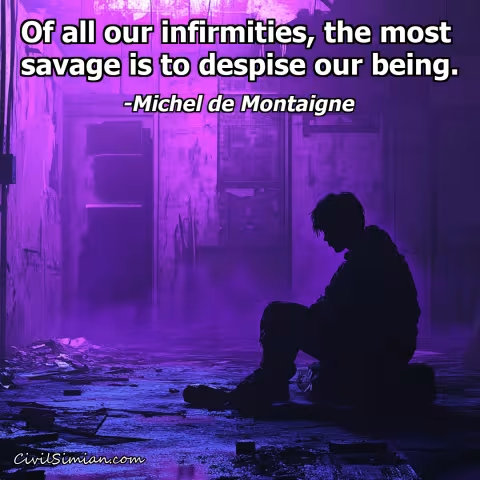
One can forget everything, everything, only not oneself, one's own being.

1 month 1 week ago
Thought is the property of him who can entertain it, and of him who can adequately place it.
▼
Source
source
Shakespeare; or, The Poet
1 week 2 days ago
As incompetent in life as in death, I loathe myself and in this loathing I dream of another life, another death. And for having sought to be a sage such as never was, I am only a madman among the mad.

2 months 1 day ago
One who liberates his country by killing a tyrant is to be praised and rewarded.
▼
Source
source
Trans. J.G. Dawson (Oxford, 1959), 44, 2 in O’Donovan, pp. 329-30
1 month 2 weeks ago
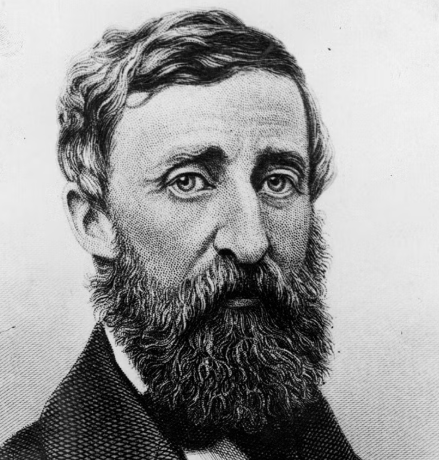
I came into this world, not chiefly to make this a good place to live in, but to live in it, be it good or bad.
CivilSimian.com created by AxiomaticPanic, CivilSimian, Kalokagathia