

The Prince: https://www.gutenberg.org/ebooks/10827


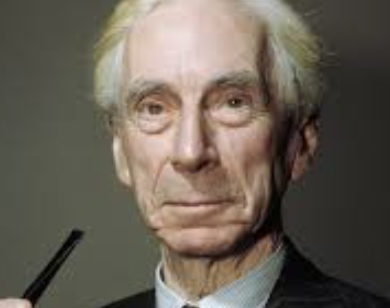
Love is better than hate, because it brings harmony instead of conflict into the desires of the persons concerned. Two people between whom there is love succeed or fail together, but when two people hate each other the success of either is the failure of the other.
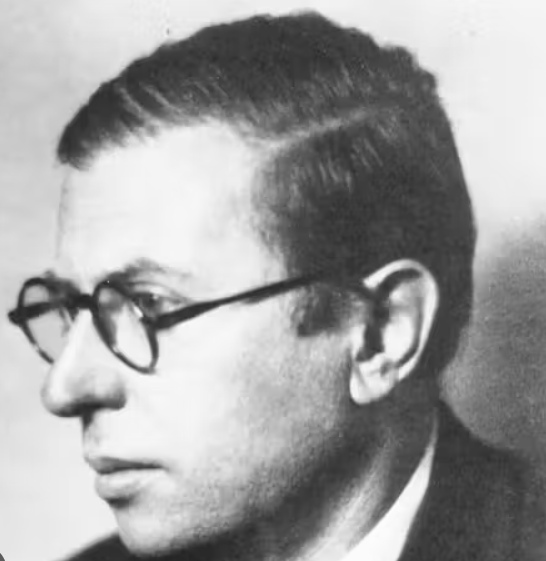
I do not understand! I understand nothing! I cannot understand nor do I want to understand! I want to believe! To Believe!
I do myself a greater injury in lying than I do him of whom I tell a lie.
But it is better perhaps to examine next the universal good, and to enquire in what sense the expression is used. Though such an investigation is likely to be difficult, because the persons who have introduced these ideas are our friends. Yet it will perhaps appear the best, and indeed the right course, at least for the preservation of truth, to do away with private feelings, especially as we are philosophers; for since both are dear to us, we are bound to prefer the truth.
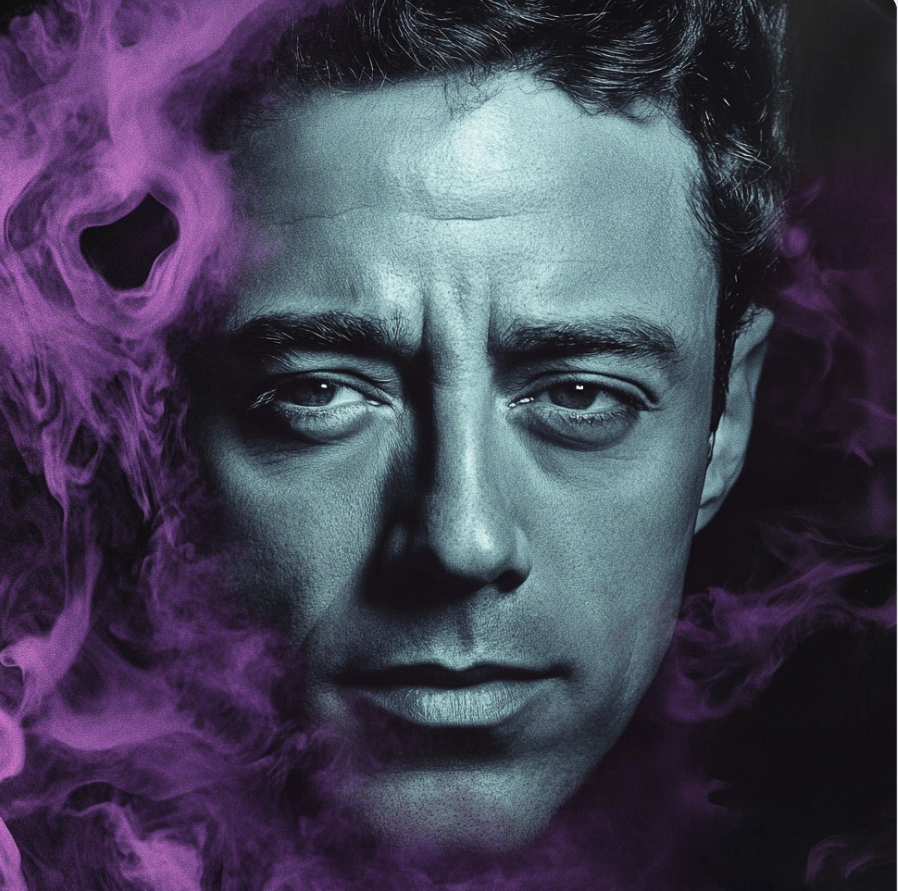
There is not love of life without despair about life.

Christ speaks of two debtors, one of whom owed much and the other little, and who both found forgiveness. He asks: Which of these two ought to love more? The answer: The one who has forgiven much. When you love much, you are forgiven much-and when you are forgiven much, you love much. See here the blessed recurrence of salvation in love!
The great majority of men and women, in ordinary times, pass through life without ever contemplating or criticising, as a whole, either their own conditions or those of the world at large. They find themselves born into a certain place in society, and they accept what each day brings forth, without any effort of thought beyond what the immediate present requires. Almost as instinctively as the beasts of the field, they seek the satisfaction of the needs of the moment, without much forethought, and without considering that by sufficient effort the whole conditions of their lives could be changed.
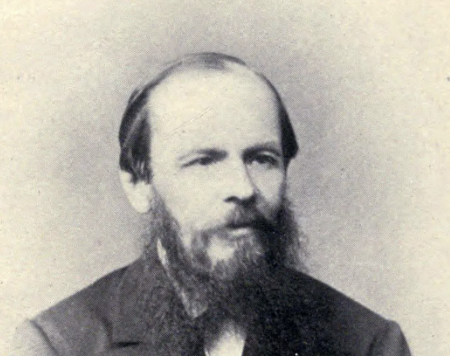
Yes, I dreamed a dream, my dream of the third of November. They tease me now, telling me it was only a dream. But does it matter whether it was a dream or reality, if the dream made known to me the truth? If once one has recognized the truth and seen it, you know that it is the truth and that there is no other and there cannot be, whether you are asleep or awake. Let it be a dream, so be it, but that real life of which you make so much I had meant to extinguish by suicide, and my dream, my dream - oh, it revealed to me a different life, renewed, grand and full of power!
Government was intended to suppress injustice, but its effect has been to embody and perpetuate it.
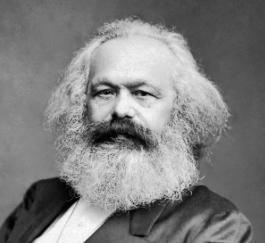
The theory of Communism may be summed up in the single sentence: Abolition of private property.

The atheist who affects to reason, and the fanatic who rejects reason, plunge themselves alike into inextricable difficulties. The one perverts the sublime and enlightening study of natural philosophy into a deformity of absurdities by not reasoning to the end. The other loses himself in the obscurity of metaphysical theories, and dishonours the Creator, by treating the study of his works with contempt. The one is a half-rational of whom there is some hope, the other a visionary to whom we must be charitable.
To be or not to be is not the question where transcendence is concerned. The statement of being's other, of the otherwise than being, claims to state a difference over and beyond that which separates being from nothingness - the very difference of the beyond, the difference of transcendence.
The whole business is the crudest sort of stratagem, since we have no way of foreseeing it to the end. It is a mere paying out of rope on the chance that somewhere along the length of it will be a noose.

The Being of the universe, at first hidden and concealed, has no power which can offer resistance to the search for knowledge ; it has to lay itself open before the seeker - to set before his eyes and give for his enjoyment, its riches and its depths.
The distance between oneself and other persons and other species can fall anywhere on a continuum. Even for other persons the understanding of what it is like to be them is only partial, and when one moves to species very different from oneself, a lesser degree of partial understanding may still be available. The imagination is remarkably flexible. My point, however, is not that we cannot know what it is like to be a bat. I am not raising that epistemological problem. My point is rather that even to form a conception of what it is like to be a bat and a fortiori to know what it is like to be a bat, one must take up the bat's point of view.
They made me take cod liver oil: that is the height of luxury: a medicine to make you hungry while the others, in the street, would have sold themselves for a beefsteak. I saw them passing my window with their signs: "Give me bread".

Write in the sand the flaws of your friend.
Does a man of sense run after every silly tale of hobgoblins or fairies, and canvass particularly the evidence? I never knew anyone, that examined and deliberated about nonsense who did not believe it before the end of his enquiries.
They sang the praises of nature, of the sea, of the woods. They liked making songs about one another, and praised each other like children; they were the simplest songs, but they sprang from their hearts and went to one's heart. And not only in their songs but in all their lives they seemed to do nothing but admire one another. It was like being in love with each other, but an all-embracing, universal feeling.
The native and untaught suggestions of inquisitive children do often offer things, that may set a considering man's thoughts on work. And I think there is frequently more to be learn'd from the unexpected questions of a child than the discourses of men, who talk in a road, according to the notions they have borrowed, and the prejudices of their education.

We live in the false as long as we have not suffered. But when we begin to suffer, we enter the truth only to regret the false.
To repeat to yourself a thousand times a day: 'Nothing on Earth has any worth,' to keep finding yourself at the same point, to circle stupidly as a top, eternally...
Reason is the greatest enemy that faith has: it never comes to the aid of spiritual things, but--more frequently than not--struggles against the divine Word, treating with contempt all that emanates from God.
The fact is that I've never called myself a genius, and I think the term has been cheapened by overuse into meaninglessness. If other people want to call me that, that's their problem.
If the awareness of our limitations begins to limit or to dim our value consciousness as well-as happens, for instance, in old age with regard to the values of youth-then we have already started the movement of devaluation which will end with the defamation of the world and all its values. Only a timely act of resignation can deliver us from this tendency toward self-delusion.
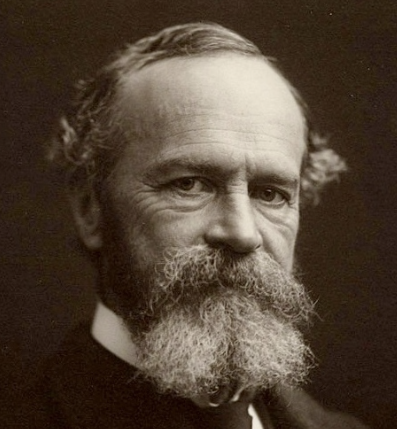
To plead the organic causation of a religious state of mind, then, in refutation of its claim to possess superior spiritual value, is quite illogical and arbitrary, unless one have already worked out in advance some psycho-physical theory connecting spiritual values in general with determinate sorts of physiological change. Otherwise none of our thoughts and feelings, not even our scientific doctrines, not even our dis-beliefs, could retain any value as revelations of the truth, for every one of them without exception flows from the state of their possessor's body at the time.

Divorce is probably of nearly the same age as marriage. I believe, however, that marriage is some weeks the more ancient.
The advance of liberalism, so-called, in Christianity, during the past fifty years, may fairly be called a victory of healthy-mindedness within the church over the morbidness with which the old hell-fire theology was more harmoniously related. We have now whole congregations whose preachers, far from magnifying our consciousness of sin, seem devoted rather to making little of it. They ignore, or even deny, eternal punishment, and insist on the dignity rather than on the depravity of man. They look at the continual preoccupation of the old-fashioned Christian with the salvation of his soul as something sickly and reprehensible rather than admirable; and a sanguine and 'muscular' attitude, which to our forefathers would have seemed purely heathen, has become in their eyes an ideal element of Christian character. I am not asking whether or not they are right, I am only pointing out the change.
A testimony is sufficient when it rests on: 1st. A great number of very sensible witnesses who agree in having seen well. 2d. Who are sane, bodily and mentally. 3d. Who are impartial and disinterested. 4th. Who unanimously agree. 5th. Who solemnly certify to the fact.
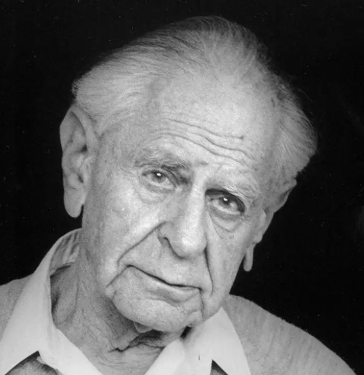
Why do I think that we, the intellectuals, are able to help? Simply because we, the intellectuals, have done the most terrible harm for thousands of years. Mass murder in the name of an idea, a doctrine, a theory, a religion - that is all our doing, our invention: the invention of the intellectuals. If only we would stop setting man against man - often with the best intentions - much would be gained. Nobody can say that it is impossible for us to stop doing this.
I am an atheist, out and out. It took me a long time to say it. I've been an atheist for years and years, but somehow I felt it was intellectually unrespectable to say one was an atheist, because it assumed knowledge that one didn't have. Somehow, it was better to say one was a humanist or an agnostic. I finally decided that I'm a creature of emotion as well as of reason. Emotionally, I am an atheist. I don't have the evidence to prove that God doesn't exist, but I so strongly suspect he doesn't that I don't want to waste my time.
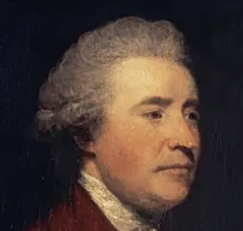
People crushed by law, have no hopes but from power. If laws are their enemies, they will be enemies to laws; and those who have much to hope and nothing to lose, will always be dangerous.
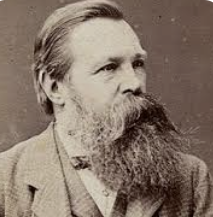
There have always been poor and working classes; and the working class have mostly been poor. But there have not always been workers and poor people living under conditions as they are today.

Philosophers often behave like little children who scribble some marks on a piece of paper at random and then ask the grown-up "What's that?" - It happened like this: the grown-up had drawn pictures for the child several times and said "this is a man," "this is a house," etc. And then the child makes some marks too and asks: what's this then?
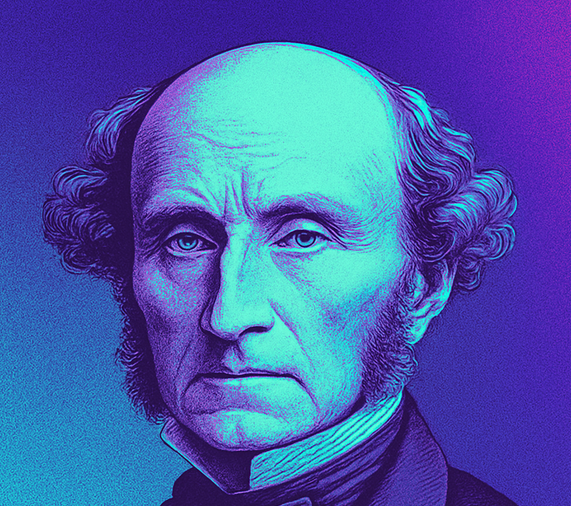
All those to whom I looked up, were of opinion that the pleasure of sympathy with human beings, and the feelings which made the good of others, and especially of mankind on a large scale, the object of existence, were the greatest and surest sources of happiness. Of the truth of this I was convinced, but to know that a feeling would make me happy if I had it, did not give me the feeling.
Of the evils most liable to attend on any sort of early proficiency, and which often fatally blights its promise, my father most anxiously guarded against. This was self-conceit. He kept me, with extreme vigilance, out of the way of hearing myself praised, or of being led to make self-flattering comparisons between myself and others. From his own intercourse with me I could derive none but a very humble opinion of myself; and the standard of comparison he always held up to me, was not what other people did, but what a man could and ought to do. He completely succeeded in preserving me from the sort of influences he so much dreaded. I was not at all aware that my attainments were anything unusual at my age.
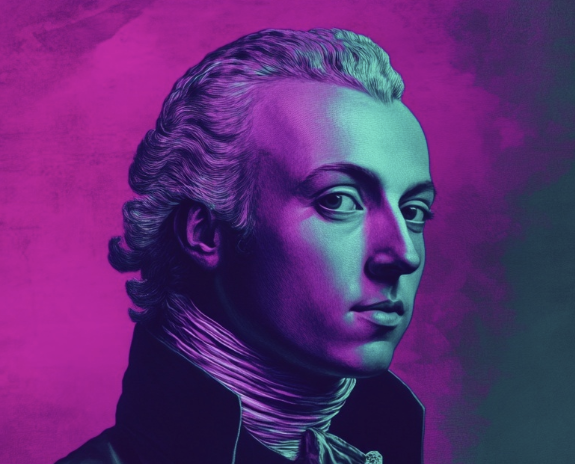
The first characteristic of the human species is man's ability, as a rational being, to establish character for himself, as well as for the society into which nature has placed him. This ability, however, presupposes an already favorable natural predisposition and an inclination to the good in man, because the evil is really without character (since it is at odds with itself, and since it does not tolerate any lasting principle within itself)
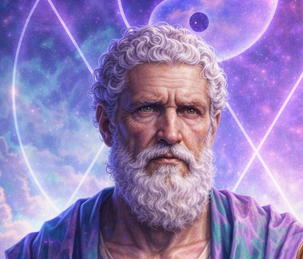
Love is a God, who cooperates in securing the safety of the city.
What renders man an imaginative and moral being is that in society he gives new aims to his life which could not have existed in solitude: the aims of friendship, religion, science, and art.
Once it's been proved to you that you're descended from an ape, it's no use pulling a face; just accept it. Once they've proved to you that a single droplet of your own fat must be dearer to you than a hundred thousand of your fellow human beings and consequently that all so-called virtues and duties are nothing but ravings and prejudices, then accept that too, because there's nothing to be done.
Dostoevsky once wrote: "If God did not exist, everything would be permitted"; and that, for existentialism, is the starting point. Everything is indeed permitted if God does not exist, and man is in consequence forlorn, for he cannot find anything to depend upon either within or outside himself. He discovers forthwith, that he is without excuse.

Everything intercepts us from ourselves.
What, then, of human activities? Is humankind itself hastening its own end? Man has, for instance, been burning carbon-containing fuel — wood, coal, oil, gas — at a steadily accelerating rate. All these fuels form carbon dioxide. Some is absorbed by plants and the oceans but not as fast as it is produced. This means the carbon dioxide content of the air is going up — slightly but nevertheless up. Carbon dioxide retains heat, and even a small rise means a warming of the Earth's atmosphere. This may result in the melting of the polar ice caps with unusual speed, flooding the world before we have learned climate control. In reverse, our industrial civilization is making our atmosphere dustier so that it reflects more sunlight away and cools the Earth slightly — thus making possible a glacial advance in a few centuries, also before we have learned climate control.
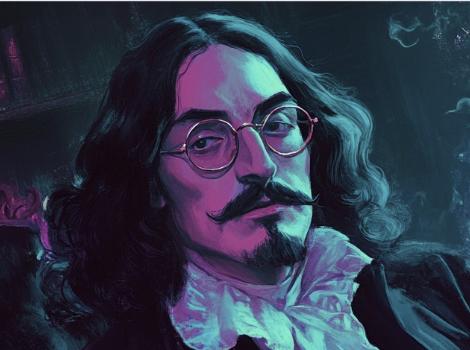
In my opinion, all things in nature occur mathematically.
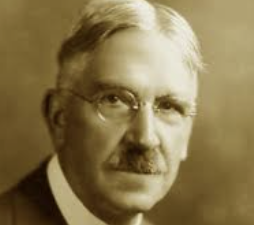
Every great advance in science has issued from a new audacity of imagination.
Trantor could win even such a war, but perhaps not without paying a price that would make victory only a pleasanter name for defeat.
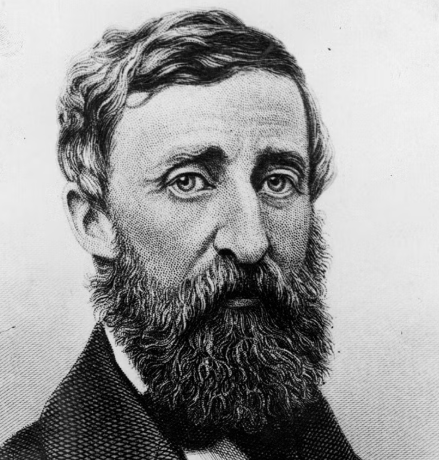
We do not live for idle amusement. I would not run round a corner to see the world blow up.
Tis evident, that sympathy, or the communication of passions, takes place among animals, no less than among men. Fear, anger, courage and other affections are frequently communicated from one animal to another [...] And 'tis remarkable, that tho' almost all animals use in play the same member, and nearly the same action as in fighting; a lion, a tyger, a cat their paws; an ox his homs; a dog his teeth; a horse his heels: Yet they most carefully avoid harming their companion, even tho' they have nothing to fear from his resentment; which is an evident proof of the sense brutes have of each other's pain and pleasure.
CivilSimian.com created by AxiomaticPanic, CivilSimian, Kalokagathia