


2 months 3 weeks ago
They reckon ill who leave me out; When me they fly, I am the wings; I am the doubter and the doubt; And I the hymn the Brahmin sings.
▼
Source
source
Brahma, st. 3
2 months 3 weeks ago
I wished, by treating Psychology like a natural science, to help her to become one.
▼
Source
source
A Plea for Psychology as a Natural Science, 1892
3 months 3 weeks ago
Some say that the body is the "tomb" of the soul, their notion being that the soul is buried in the present life; and again, because by its means the soul gives any signs which it gives, it is for this reason also properly called "sign". But I think it most likely that the Orphic poets gave this name, with the idea that the soul is undergoing punishment for something; they think it has the body as an enclosure to keep it safe, like a prison, and this is, as the name itself denotes, the "safe" for the soul, until the penalty is paid, and not even a letter needs to be changed.

2 months 3 weeks ago
I remembered the way out suggested by a great princess when told that the peasants had no bread: "Well, let them eat cake".
▼
Source
source
This passage contains a statement Qu'ils mangent de la brioche that has usually come to be attributed to Marie Antoinette; this was written in 1766, when Marie Antoinette was 10
1 month 2 weeks ago
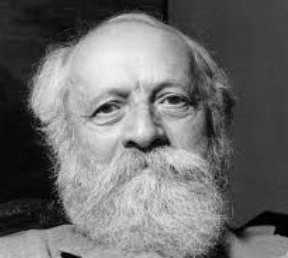
The world is not divine sport, it is divine destiny. There is divine meaning in the life of the world, of man, of human persons, of you and of me. Creation happens to us, burns itself into us, recasts us in burning - we tremble and are faint, we submit. We take part in creation, meet the Creator, reach out to Him, helpers and companions.
2 months 3 weeks ago
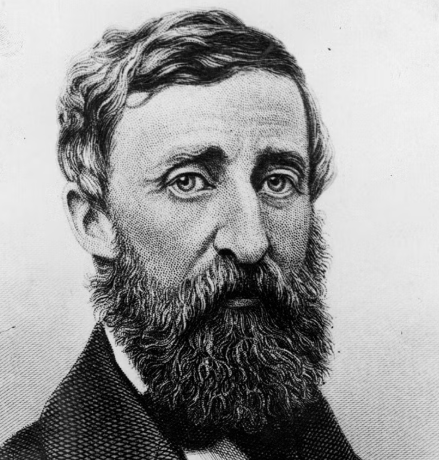
Under a government which imprisons any unjustly, the true place for a just man is also a prison... the only house in a slave State in which a free man can abide with honor.
1 month 2 weeks ago
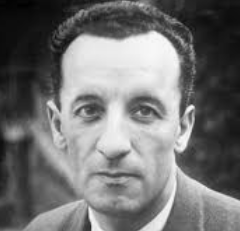
Thought without language, says Lavelle, would not be a purer thought; it would be no more than the intention to think. And his last book offers a theory of expressiveness which makes of expression not "a faithful image of an already realized interior being, but the very means by which it is realized."
▼
Source
source
p. 8

3 weeks 5 days ago
There is no practice of nonviolence that does not negotiate fundamental ethical and political ambiguities, which means that "nonviolence" is not an absolute principle, but the name of an ongoing struggle.
▼
Source
source
p. 23
1 month 2 weeks ago
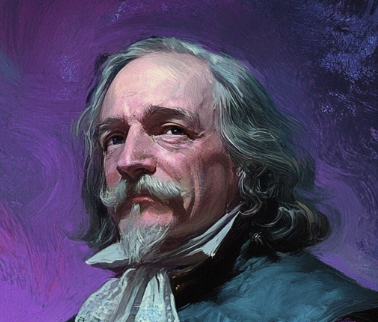
And though this may seem to subtile a deduction of the Lawes of Nature, to be taken notice of by all men;whereof the most part are too busie in getting food, and the rest too negligent to understand; yet to leave all men unexcusable, they have been contracted into one easie sum, intelligble, even to the meanest capacity; and that is, Do not that to another, which thou wouldest not have done to thyselfe; which sheweth him, that he has no more to do in learning the Lawes of Nature, but, when weighing the actions of other men with his own, they seem too heavy, to put them into the other part of the balance, and his own into their place, that his own passions, and selfe love, may adde nothing to the weight; and then there is none of these Laws of Nature that will not appear unto him very reasonable.
▼
Source
source
The First Part, Chapter 15, p. 79
2 months 3 weeks ago
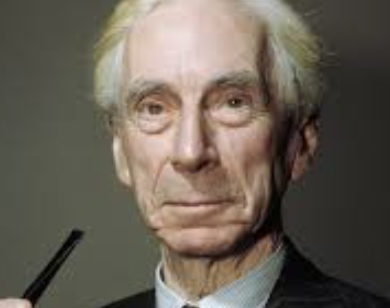
Two men who differ as to the ends of life cannot hope to agree about education.
▼
Source
source
Ch. 12: Education and Discipline
1 month 3 weeks ago
The reason a man lives under any particular government is partly a necessity; he cannot easily avoid living under some government, and it is often scarcely in his power to abandon the country in which he was born: it is also partly, a choice of evil; no man can be said, in this case, to enjoy that freedom which is essential to the forming a contract unless it could be shown that he had a power of instituting, somewhere, a government adapted to his own conceptions.
▼
Source
source
Book III, "Of Obedience"
1 week 5 days ago
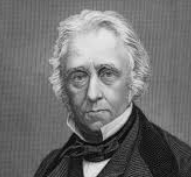
It may be that the public mind of India may expand under our system till it has outgrown that system; that by good government we may educate our subjects into a capacity for better government, that, having become instructed in European knowledge, they may, in some future age, demand European institutions. Whether such a day will ever come I know not. But never will I attempt to avert or to retard it. Whenever it comes, it will be the proudest day in English history.
▼
Source
source
Speech in the House of Commons
3 months 1 week ago
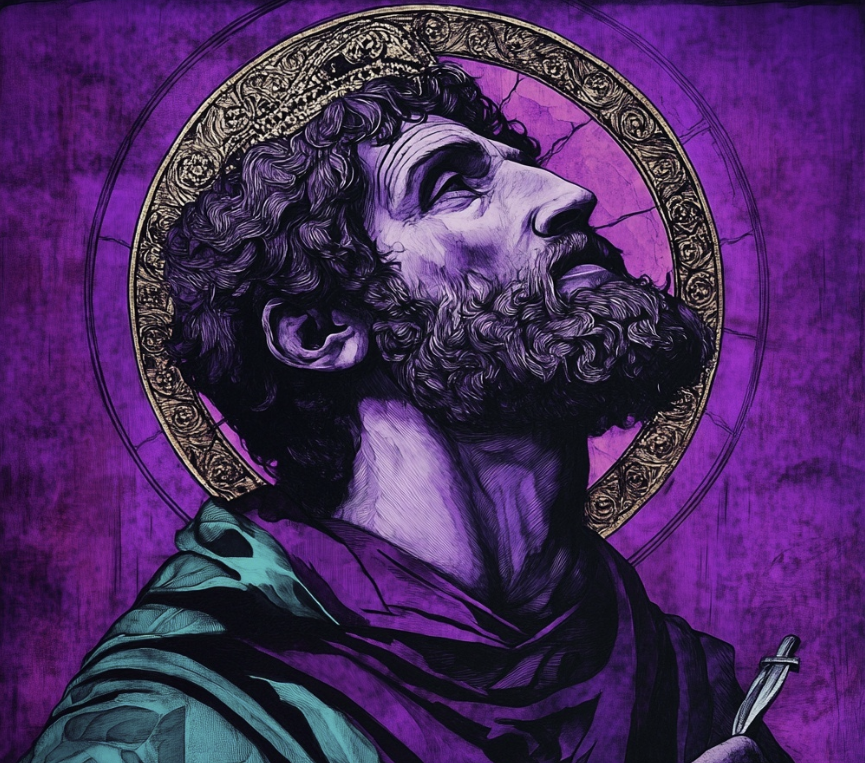
I too have sworn heedlessly and all the time, I have had this most repulsive and death-dealing habit. I'm telling your graces; from the moment I began to serve God, and saw what evil there is in forswearing oneself, I grew very afraid indeed, and out of fear I applied the brakes to this old, old, habit.
▼
Source
source
180:10:1

3 months 3 weeks ago
Where there have been powerful governments, societies, religions, public opinions, in short wherever there has been tyranny, there the solitary philosopher has been hated; for philosophy offers an asylum to a man into which no tyranny can force it way, the inward cave, the labyrinth of the heart.
3 months 1 day ago
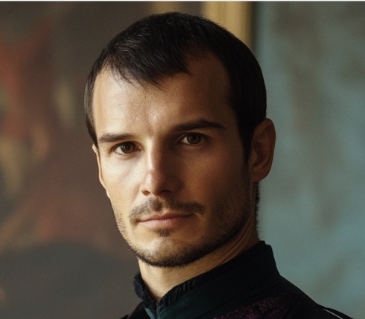
It is enough to ask somebody for his weapons without saying 'I want to kill you with them', because when you have his weapons in hand, you can satisfy your desire.
▼
Source
source
Book 1, Ch 44 (as translated by Julia Conaway Bondanella and Peter Bondanella)
1 month 3 weeks ago
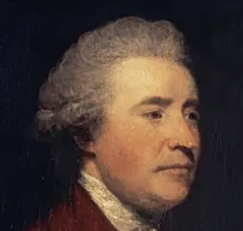
Through a wise and salutary neglect [of the colonies], a generous nature has been suffered to take her own way to perfection; when I reflect upon these effects, when I see how profitable they have been to us, I feel all the pride of power sink and all presumption in the wisdom of human contrivances melt and die away within me. My vigour relents. I pardon something to the spirit of liberty.
2 months 3 weeks ago
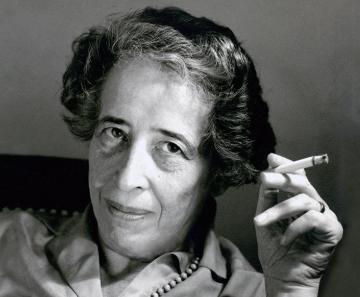
The emotions I feel are no more meant to be shown in their unadulterated state than the inner organs by which we live.
▼
Source
source
pp. 31-32

2 months 3 weeks ago
We have two bits of evidence about the Somebody. One is the universe He has made. If we used that as our only clue, I think we should have to conclude that He was a great artist (for the universe is a very beautiful place), but also that He is quite merciless and no friend to man (for the universe is a very dangerous and terrifying place.) ...The other bit of evidence is that Moral Law which He has put in our minds. And this is a better bit of evidence than the other, because it is inside information. You find out more about God from the Moral Law than from the universe in general just as you find out more about a man by listening to his conversation than by looking at a house he has built.
▼
Source
source
Book I, Chapter 5, "We Have Cause to Be Uneasy"
1 month 1 week ago
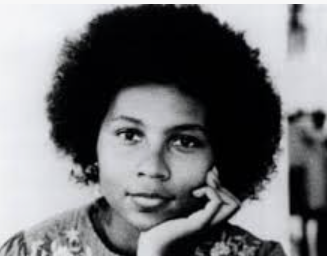
It is obvious that many women have appropriated feminism to serve their own ends, especially those white women who have been at the forefront of the movement; but rather than resigning myself to this appropriation I choose to re-appropriate the term "feminism," to focus on the fact that to be "feminist" in any authentic sense of the term is to want for all people, female and male, liberation from sexist role patterns, domination, and oppression.
1 week 5 days ago
What a singular destiny has been that of this remarkable man! To be regarded in his own age as a classic, and in ours as a companion! To receive from his contemporaries that full homage which men of genius have in general received only from posterity! To be more intimately known to posterity than other men are known to their contemporaries!
▼
Source
source
'Samuel Johnson', The Edinburgh Review (September 1831), quoted in T. B. Macaulay, Critical and Historical Essays Contributed to The Edinburgh Review, Vol. I (1843), p. 407

3 months 1 week ago
Charity, by which God and neighbor are loved, is the most perfect friendship.
▼
Source
source
Disputed Questions: On Charity, c. 1270
3 months 1 day ago
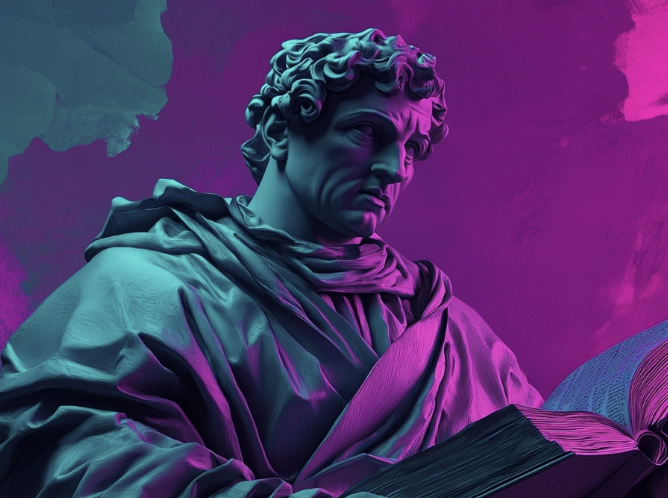
And I myself, in Rome, heard it said openly in the streets, "If there is a hell, then Rome is built on it." That is, "After the devil himself, there is no worse folk than the pope and his followers."
▼
Source
source
Against the Roman Papacy, An Institution of the Devil

3 months 2 weeks ago
Man is the only creature who refuses to be what he is.
1 month 1 week ago
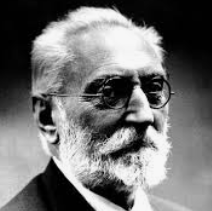
The march, as ever, is toward the future, and he who marches is getting there, even though he march walking backwards. And who knows if that is not the better way!...
3 weeks ago
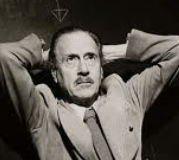
World War III is a guerrilla information war with no division between military and civilian participation.
▼
Source
source
(p.66)

3 months 3 days ago
They are ill discoverers that think there is no land, when they can see nothing but sea.
▼
Source
source
Book II, vii, 5
2 months 3 weeks ago
A new moral outlook is called for in which submission to the powers of nature is replaced by respect for what is best in man. It is where this respect is lacking that scientific technique is dangerous.
▼
Source
source
Attributed to Russell at the end of Isaac Asimov's short story Franchise with no specific source given.
2 weeks 5 days ago
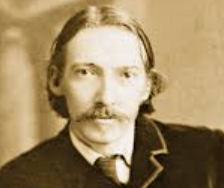
We do not go to cowards for tender dealing; there is nothing so cruel as panic; the man who has least fear for his own carcase, has most time to consider others.
▼
Source
source
314
1 month 2 weeks ago
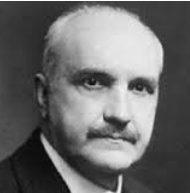
Never since the heroic days of Greece has the world had such a sweet, just, boyish master.
▼
Source
source
"The British Character"

2 months 2 weeks ago
If life becomes hard to bear we think of improvements. But the most important and effective improvement, in our own attitude, hardly occurs to us, and we can decide on this only with the utmost difficulty.
▼
Source
source
p. 60e
2 months 3 weeks ago
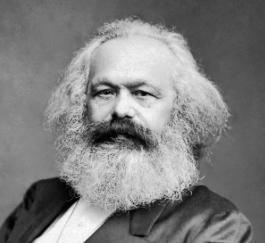
If this labourer were in possession of his own means of production, and was satisfied to live as a labourer, he need not work beyond beyond the time necessary for the reproduction of his means of subsistence, say 8 hours a day.
▼
Source
source
Vol. I, Ch. 11, pg. 336.
1 month 1 week ago
It is the vital asserting itself, and in order to assert itself it creates, with the help of its enemy, the rational, a complete dogmatic structure, and this the Church defends against rationalism, against Protestantism, and against Modernism. The Church defends life. It stood up against Galileo, and it did right; for his discovery, in its inception and until it became assimilated to the general body of human knowledge, tended to shatter the anthropomorphic belief that the universe was created for man. It opposed Darwin, and it did right, for Darwinism tends to shatter our belief that man is an exceptional animal, created expressly to be eternalized. And lastly, Pius IX, the first Pontiff to be proclaimed infallible, declared he was irreconcilable with the so-called modern civilization. And he did right.
2 months 3 weeks ago
If human nature were unchangeable, as ignorant people still suppose it to be, the situation would indeed be hopeless.
▼
Source
source
Ch. 17: Some Prospects: Cheerful and Otherwise

1 month 2 weeks ago
Life is possible only by the deficiencies of our imagination and memory.
3 weeks ago
Radio provides a speed-up of information that also causes acceleration in other media. It certainly contracts the world to village size and creates insatiable village tastes for gossip, rumour, and personal malice.
▼
Source
source
(p. 24)


Meijer for entrapping and arresting a disabled employee
Target
Meijer
Rationale
An autistic 16 year old was taking food from the deli over 3 months. They tracked how much he took, and when he had crossed a certain threshold, the had him arrested. There was another employee who was also part of the entrapment scheme.
The general vibe around the boycott is, these are poor workers, scraping by on minimum level wages. The multi billion dollar corporation follows the law absolutely when it comes to you, but we all know it's not so cut and dry at the top.
Search: Meijers, autistic 16 year old, entrapment
The general vibe around the boycott is, these are poor workers, scraping by on minimum level wages. The multi billion dollar corporation follows the law absolutely when it comes to you, but we all know it's not so cut and dry at the top.
Search: Meijers, autistic 16 year old, entrapment
Target End Date
{1059} days left

1 month 4 weeks ago
In America a woman loses her independence for ever in the bonds of matrimony. While there is less constraint on girls there than anywhere else, a wife submits to stricter obligations. For the former, her father's house is a home of freedom and pleasure; for the latter, her husband's is almost a cloister.
▼
Source
source
Book Three, Chapter X.
2 months 3 weeks ago
The world at present is obsessed by the conflict of rival ideologies, and one of the apparent causes of conflict is the desire for the victory of our own ideology and the defeat of the other. I do not think that the fundamental motive here has much to do with ideologies. I think the ideologies are merely a way of grouping people, and that the passions involved are merely those which always arise between rival groups. Ideologies, in fact, are one of the methods by which herds are created, and the psychology is much the same however the herd may have been generated.
3 months 1 week ago
But it isn't just a matter of faith, but of faith and works. Each is necessary. For the demons also believe you heard the apostle and tremble (Jas 2:19); but their believing doesn't do them any good. Faith alone is not enough, unless works too are joined to it: Faith working through love (Gal 5:6), says the apostle.
▼
Source
source
16A:11:2
6 days ago
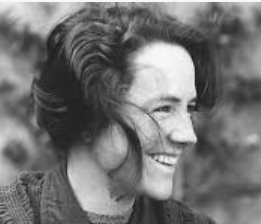
Lost time was like a run in a stocking. It always got worse.
▼
Source
source
The Steep Ascent

2 months 5 days ago
Be not hasty to speak; nor slow to hear!
3 months 2 weeks ago
"My field," said Goethe, "is time." That is indeed the absurd speech. What, in fact, is the Absurd Man? He who, without negating it, does nothing for the eternal. Not that nostalgia is foreign to him. But he prefers his courage and his reasoning. The first teaches him to live without appeal and to get along with what he has; the second informs him of his limits. Assured of his temporally limited freedom, of his revolt devoid of future, and of his mortal consciousness, he lives out his adventure within the span of his lifetime.
2 months 3 weeks ago
Friendship arises out of mere companionship when two or more of the companions discover that they have in common some insight or interest or even taste which the others do not share and which, till that moment, each believed to be his own unique treasure (or burden). The typical expression of opening Friendship would be something like, "What? You too? I thought I was the only one."
1 month 3 weeks ago
The case of mere titles is so absurd that it would deserve to be treated only with ridicule were t not for the serious mischief they impose on mankind. The feudal system was a ferocious monster, devouring, where it came, all that the friend of humanity regards with attachment and love. The system of titles appears under a different form. The monster is at length destroyed, and they who followed in his train, and fattened upon the carcasses of those he slew, have stuffed his skin, and, b exhibiting it, hope still to terrify mankind into patient and pusillanimity.
▼
Source
source
Book V, Chapter 13
2 months 3 weeks ago
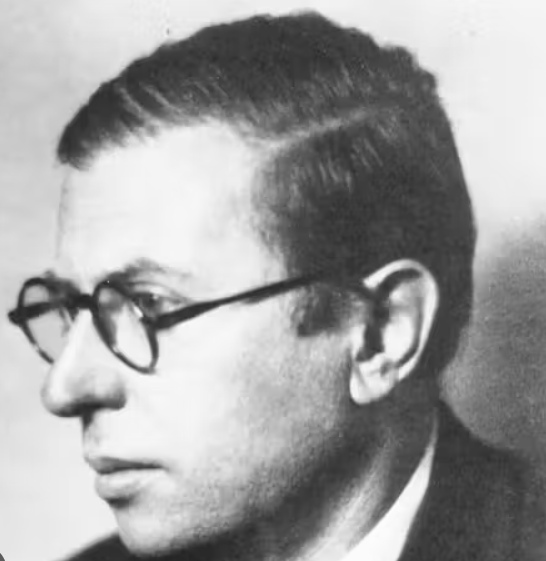
His business is here, it is here that he is despised and vilified, it is here that he must carry out his undertaking.
▼
Source
source
p. 67
3 months 3 weeks ago
Therefore only an utterly senseless person can fail to know that our characters are the result of our conduct.
2 months 3 weeks ago
I do not know but it is too much to read one newspaper a week. I have tried it recently, and for so long it seems to me that I have not dwelt in my native region. The sun, the clouds, the snow, the trees say not so much to me. You cannot serve two masters. It requires more than a day's devotion to know and to possess the wealth of a day.
▼
Source
source
p. 491
3 months 1 week ago
If you would be a good reader, read; if a writer, write.
▼
Source
source
Book II, ch. 18, 1.

3 months 3 weeks ago
What if the equality between us human being, in which we completely resemble one another, were that none of us really thinks about his being loved?
CivilSimian.com created by AxiomaticPanic, CivilSimian, Kalokagathia