


2 months 3 weeks ago
Clever tyrants are never punished.
▼
Source
source
Mérope, act V, scene V, 1743

1 month 2 weeks ago
Thought is led, by the situation of its objects, to measure their truth in terms of another logic, another universe of discourse. And this logic projects another mode of existence: the realization of the truth in the words and deeds of man. And inasmuch as this project involves man as societal animal," the polis, the movement of thought has a political content. Thus, the Socratic discourse is political discourse inasmuch as it contradicts the established political institutions. The search for the correct definition, for the "concept" of virtue, justice, piety, and knowledge becomes a subversive undertaking, for the concept intends a new polis.
▼
Source
source
pp. 133-134
2 months 3 weeks ago
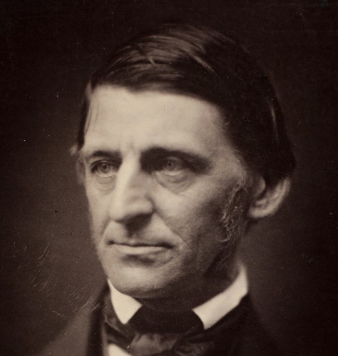
Everything in the universe goes by indirection. There are no straight lines.
▼
Source
source
Works and Days

1 month 5 days ago
You ask me why I do not write something... I think one's feelings waste themselves in words; they ought all to be distilled into actions and into actions which bring results.
▼
Source
source
Letter to a friend, quoted in The Life of Florence Nightingale (1913) by Edward Tyas Cook, p. 94
3 weeks 2 days ago
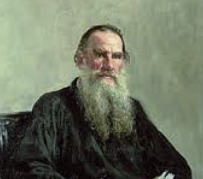
Government is violence, Christianity is meekness, non-resistance, love. And, therefore, government cannot be Christian, and a man who wishes to be a Christian must not serve government.
▼
Source
source
Letter to Dr. Eugen Heinrich Schmitt (October 12, 1896), translated by Nathan Haskell Dole
2 months 3 weeks ago
You can never do a kindness too soon, for you never know how soon it will be too late.
▼
Source
source
Culture
3 weeks ago
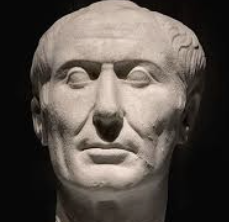
Solitude is the mother of anxieties.
▼
Source
source
Maxim 222
1 month 5 days ago
The spirit of a production-centered, commodity-greedy society is such that only the non-conformist can defend himself sufficiently against it. Those who are seriously concerned with love as the only rational answer to the problem of human existence must, then, arrive at the conclusion that important and radical changes in our social structure are necessary, if love is to become a social and not a highly individualistic, marginal phenomenon.

1 month 2 weeks ago
Detachment from the world as an attachment to the ego... Who can realize the detachment in which you are as far away from yourself as you are from the world?
1 month 3 weeks ago
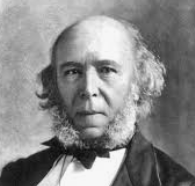
Unlike private enterprise which quickly modifies its actions to meet emergencies - unlike the shopkeeper who promptly finds the wherewith to satisfy a sudden demand - unlike the railway company which doubles its trains to carry a special influx of passengers; the law-made instrumentality lumbers on under all varieties of circumstances at its habitual rate. By its very nature it is fitted only for average requirements, and inevitably fails under unusual requirements.
▼
Source
source
Vol. 3, Ch. VII, Over-Legislation

3 months 1 week ago
What has the Church done to thee, that thou shouldst wish to decapitate her? Thou wouldst take away her Head, and believe in the Head alone, despising the body. Vain is thy service, and false thy devotion to the Head. For to sever it from the body is an injury to both Head and body.
▼
Source
source
p.420

3 months 3 weeks ago
One may certainly admire man as a mighty genius of construction, who succeeds in piling an infinitely complicated dome of concepts upon an unstable foundation, and, as it were, on running water. Of course, in order to be supported by such a foundation, his construction must be like one constructed of spiders' webs: delicate enough to be carried along by the waves, strong enough not to be blown apart by every wind.

6 days ago
The wave of the future is coming and there is no fighting it.
▼
Source
source
The Wave of the Future

Just now
Echoing the Christian faith in free will, humanists hold that human beings are - or may someday become - free to choose their lives. They forget that the self that does the choosing has not itself been chosen.
▼
Source
source
Beyond the Last Thought: Freud's cigars and the long way round to Nirvana (p. 86)
2 months 3 weeks ago
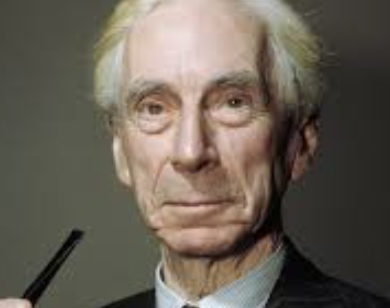
I knew a parson who frightened his congregation terribly by telling them that the second coming was very imminent indeed, but they were much consoled when they found that he was planting trees in his garden.
▼
Source
source
"Defects in Christ's Teaching"

2 months 2 weeks ago
I am sitting with a philosopher in the garden; he says again and again "I know that that's a tree", pointing to a tree that is near us. Someone else arrives and hears this, and I tell them: "This fellow isn't insane. We are only doing philosophy."
1 month 2 weeks ago
Only what we have not accomplished and what we could not accomplish matters to us, so that what remains of a whole life is only what it will not have been.

3 months 1 day ago
Justice is a temporary thing that must at last come to an end; but the conscience is eternal and will never die.
▼
Source
source
On Marriage
1 month 1 week ago
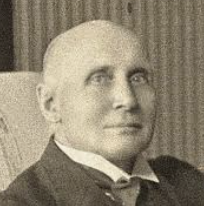
The art of progress is to preserve order amid change, and to preserve change amid order.
1 month 2 weeks ago
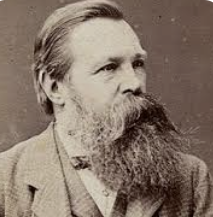
The slave is sold once and for all; the proletarian must sell himself daily and hourly. The individual slave, property of one master, is assured an existence, however miserable it may be, because of the master's interest. The individual proletarian, property as it were of the entire bourgeois class which buys his labor only when someone has need of it, has no secure existence. This existence is assured only to the class as a whole.
2 weeks 5 days ago
The imagination loves to trifle with what is not.
▼
Source
source
The Sea Fogs
2 months 3 weeks ago
Nothing makes the earth seem so spacious as to have friends at a distance; they make the latitudes and longitudes.
▼
Source
source
Pearls of Thought (1881) p. 95

1 month 4 weeks ago
The severe Schools shall never laugh me out of the Philosophy of Hermes, that this visible world is but a picture of the invisible.
▼
Source
source
Section 12

2 months 5 days ago
As soon as laws are necessary for men, they are no longer fit for freedom.
▼
Source
source
As quoted in Short Sayings of Great Men: With Historical and Explanatory Notes (1882) by Samuel Arthur Bent, p. 454
2 months 3 weeks ago
While there are manners and compliments we do not meet, we do not teach one another the lessons of honesty and sincerity that the brutes do, or of steadiness and solidity that the rocks do. The fault is commonly mutual, however; for we do not habitually demand any more of each other.
▼
Source
source
p. 490
3 weeks 2 days ago
After Plotinus, says Schassler, fifteen centuries passed without the slightest scientific interest for the world of beauty and art. ...In reality, nothing of the kind happened. The science of aesthetics ... neither did nor could vanish, because it never existed. ... the Greeks were so little developed that goodness and beauty seemed to coincide. On that obsolete Greek view of life the science of aesthetics was invented by men of the eighteenth century, and especially shaped and mounted in Baumgarten's theory. The Greeks (as anyone may read in Bénard's book on Aristotle and Walter's work on Plato) never had a science of aesthetics.

1 month 2 weeks ago
Verily I say unto you, That a rich man shall hardly enter into the kingdom of heaven. And again I say unto you, It is easier for a camel to go through the eye of a needle, than for a rich man to enter into the kingdom of God.
▼
Source
source
19:23-24 (KJV)
2 months 3 weeks ago
The second doctrine of the Perennial Philosophy - that it is possible to know the Divine Ground by a direct intuition higher than discursive reasoning - is to be found in all the great religions of the world. A philosopher who is content merely to know about the ultimate Reality - theoretically and by hearsay - is compared by Buddha to a herdsman of other men's cows. Mohammed uses an even homelier barnyard metaphor. For him the philosopher who has not realized his metaphysics is just an ass bearing a load of books. Christian, Hindu, Taoist teachers wrote no less emphatically about the absurd pretensions of mere learning and analytic reasoning.
2 months 3 weeks ago
The Religion that is afraid of science dishonours God and commits suicide. It acknowledges that it is not equal to the whole of truth, that it legislates, tyrannizes over a village of God's empires but is not the immutable universal law. Every influx of atheism, of skepticism is thus made useful as a mercury pill assaulting and removing a diseased religion and making way for truth.
▼
Source
source
March 4, 1831


3 months 2 weeks ago
Those who need myths are indeed poor. Here the gods serve as beds or resting places as the day races across the sky.

1 month 6 days ago
When we can't dream any longer we die.
▼
Source
source
Quoted by Margaret C. Anderson in "Emma Goldman in Chicago", Mother Earth magazine

3 months 3 weeks ago
By such reflections and by the continuance in them of a divine nature, the qualities which we have described grew and increased among them; but when the divine portion began to fade away, and became diluted too often and too much with the mortal admixture, and the human nature got the upper hand, they then, being unable to bear their fortune, behaved unseemly, and to him who had an eye to see grew visibly debased, for they were losing the fairest of their precious gifts; but to those who had no eye to see the true happiness, they appeared glorious and blessed at the very time when they were full of avarice and unrighteous power.
1 month 2 weeks ago
Time is heavy sometimes; imagine how heavy eternity must be.
1 month 2 weeks ago
All the living hold together, and all yield to the same tremendous push. The animal takes its stand on the plant, man bestrides animality, and the whole of humanity, in space and in time, is one immense army galloping beside and before and behind each of us in an overwhelming charge able to beat down every resistance and clear the most formidable obstacles, perhaps even death.
▼
Source
source
Creative Evolution (1907), Chapter III. New York: Henry Holt and Company, 1911, p. 271
1 month 2 weeks ago
But to manipulate men, to propel them towards goals which you - the social reformer - see, but they may not, is to deny their human essence, to treat them as objects without wills of their own, and therefore to degrade them.
3 weeks ago
Unlike previous environmental changes, the electric media constitutes a total and near-instanteous transformation of culture, values and attitudes.
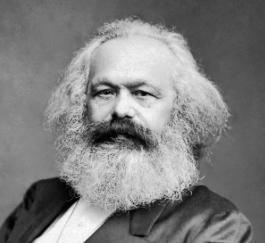
2 months 3 weeks ago
A man cannot become a child again, or he becomes childish.
▼
Source
source
Introduction, p. 31.
2 months 3 weeks ago
If you think that your belief is based upon reason, you will support it by argument, rather than by persecution, and will abandon it if the argument goes against you. But if your belief is based on faith, you will realize that argument is useless, and will therefore resort to force either in the form of persecution or by stunting and distorting the minds of the young in what is called "education". This last is particularly dastardly, since it takes advantage of the defencelessness of immature minds. Unfortunately it is practiced in greater or less degree in the schools of every civilised country.
▼
Source
source
p. 220
2 months 3 weeks ago
Gradually the village murmur subsided, and we seemed to be embarked on the placid current of our dreams, floating from past to future as silently as one awakes to fresh morning or evening thoughts.

1 month 6 days ago
Suffering is admittedly one of the central problems of human existence; but this is because we have a suspicion that it is all for nothing. If we had a certainty about meaning, the suffering would be bearable. With no certainty of meaning, even comfort begins to feel futile.
▼
Source
source
p. 89
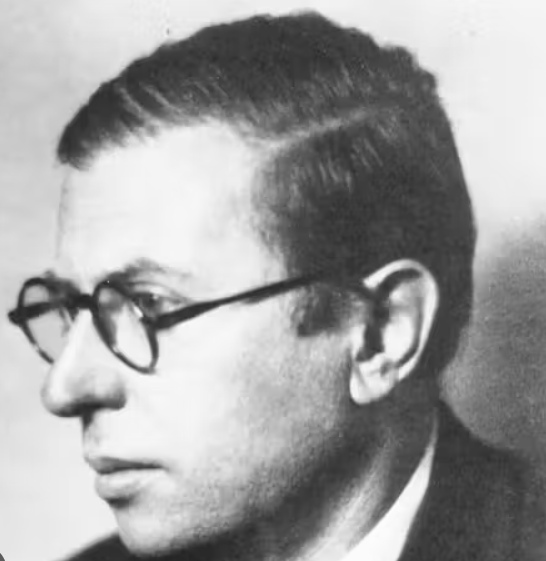
2 months 3 weeks ago
As if there could be true stories: things happen in one way, and we retell them in the opposite way.
1 month 2 weeks ago
I seem to myself, among civilised men, an intruder, a troglodyte enamored of decrepitude, plunged into subversive prayers.
1 week 5 days ago
To have been a Sovereign, yet the champion of liberty,-a revolutionary leader, yet the supporter of social order, is the peculiar glory of William. Till his accession the British Constitution was in its Chaos. It had contained, from a very remote period, the simple elements of an harmonious government. But they were in a state not of amalgamation, but of conflict,-not of equilibrium but of alternate elevation and depression. The tyranny of Charles the first produced civil war and anarchy. Tyranny had now again produced resistance and revolution. And, but for the wisdom of the new King, it seems probable that the same cycle of misery would have been again described.
▼
Source
source
'Essay on the Life and Character of King William III' (1822), written for the Greaves Historical Prize at Cambridge, quoted in The Times Literary Supplement (1 May 1969), p. 469
1 month 3 weeks ago
Whenever government assumes to deliver us from the trouble of thinking for ourselves, the only consequences it produces are those of torpor and imbecility.
▼
Source
source
Vol. 2, bk. 6, ch. 1
2 months 3 weeks ago
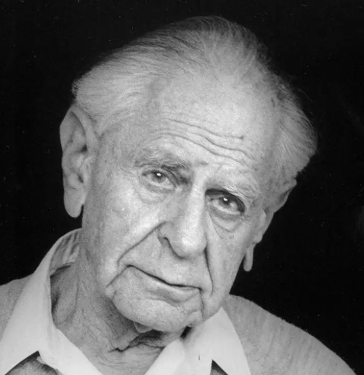
As for Adler, I was much impressed by a personal experience. Once, in 1919, I reported to him a case which to me did not seem particularly Adlerian, but which he found no difficulty in analyzing in terms of his theory of inferiority feelings, although he had not even seen the child. Slightly shocked, I asked him how he could be so sure. "Because of my thousandfold experience," he replied; whereupon I could not help saying: "And with this new case, I suppose, your experience has become thousand-and-one-fold."
1 month 2 weeks ago
Our place is somewhere between being and nonbeing - between two fictions.

2 months 3 weeks ago
The scene should be gently open'd, and his entrance made step by step, and the dangers pointed out that attend him from several degrees, tempers, designs, and clubs of men. He should be prepared to be shocked by some, and caress'd by others; warned who are like to oppose, who to mislead, who to undermine him, and who to serve him. He should be instructed how to know and distinguish them; where he should let them see, and when dissemble the knowledge of them and their aims and workings.
▼
Source
source
Sec. 94
3 weeks ago
Even when the wound is healed, the scar remains.
▼
Source
source
Maxim 236
CivilSimian.com created by AxiomaticPanic, CivilSimian, Kalokagathia