

1 month 1 week ago
In the past, there was a small leisure class and a larger working class. The leisure class enjoyed advantages for which there was no basis in social justice; this necessarily made it oppressive, limited its sympathies, and caused it to invent theories by which to justify its privileges.
▼
Source
source
Ch. 1: In Praise of Idleness, p. 13
5 days ago
Without some affinity in human ideas art would certainly be impossible; but it can never be exactly determined how far the intentions of the poet are realized.
▼
Source
source
Gottlob Frege (1892). On Sense and Reference.
1 month 1 week ago
Instinct leads, intelligence does but follow.
▼
Source
source
Statement of 1902 quoted in The William James Reader (2007), Vol I, p. 264
1 week 6 days ago
Economy is a distributive virtue, and consists not in saving but selection. Parsimony requires no providence, no sagacity, no powers of combination, no comparison, no judgment.

1 month 1 week ago
A serious and good philosophical work could be written consisting entirely of jokes.
▼
Source
source
As quoted in "A View from the Asylum" in Philosophical Investigations from the Sanctity of the Press (2004), by Henry Dribble, p. 87
1 month 1 week ago
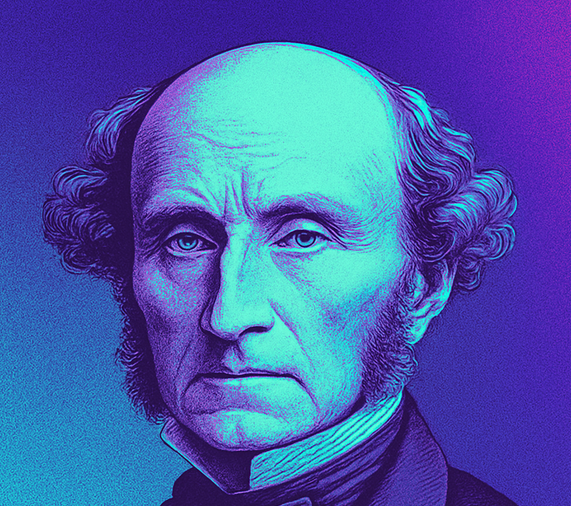
If all mankind minus one, were of one opinion, and only one person were of the contrary opinion, mankind would be no more justified in silencing that one person, than he, if he had the power, would be justified in silencing mankind.
▼
Source
source
Ch. II: Of the Liberty of Thought and Discussion
1 month 1 week ago
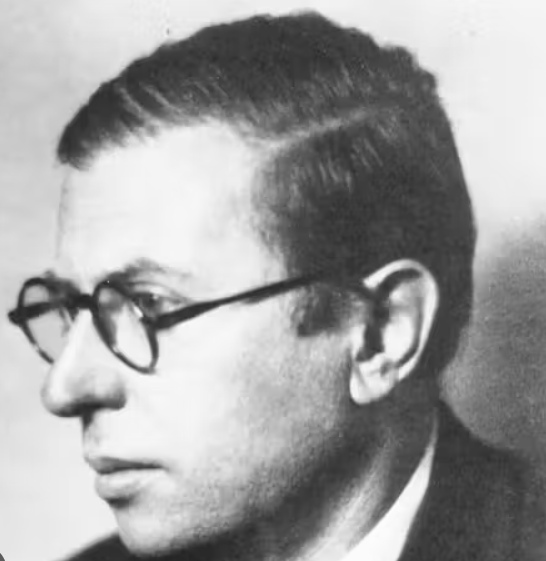
Virtue is the death of conscience because it is the habit of Good, and yet the ethic of the honest man infinitely prefers virtue to the noblest agonies of conscience. Thus, being poses nonbeing and eliminates it. There is only being.
▼
Source
source
p. 402
5 days ago
Fashion is something barbarous, for it produces innovation without reason and imitation without benefit.
▼
Source
source
Ch. VII
1 month 3 weeks ago
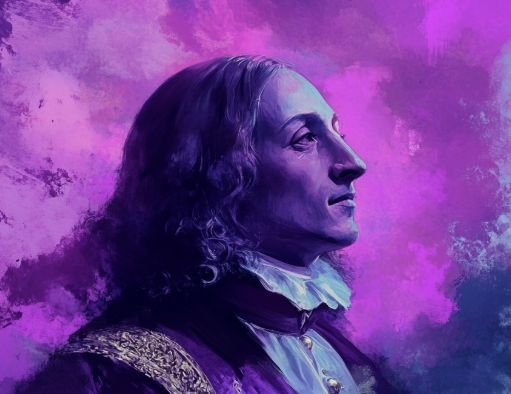
The source of the errors of these two sects, is in not having known that the state of man at the present time differs from that of his creation; so that the one, remarking some traces of his first greatness and being ignorant of his corruption, has treated nature as sound and without need of redemption, which leads him to the height of pride; whilst the other, feeling the present wretchedness and being ignorant of the original dignity, treats nature as necessarily infirm and irreparable, which precipitates it into despair of arriving at real good, and thence into extreme laxity.

2 weeks ago
Universities produce PhDs knowing no jobs await. They exploit graduate student labor, then abandon degree-holders to contingent poverty. The academic job market is pyramid scheme: many enter, few succeed, all blame themselves. Structural unemployment presented as individual failure.
1 month 1 week ago
Most men do not feel in themselves the competence required for leading their group to victory, and therefore seek out a captain who appears to possess the courage and sagacity necessary for the achievement of supremacy. Even in religion this impulse appears. Nietzsche accused Christianity of inculcating a slave-morality, but ultimate triumph was always the goal. "Blessed are the meek, for they shall inherit the earth."
▼
Source
source
Ch. 2: Leaders and Followers

2 months ago
The highest perfection of human life consists in the mind of man being detached from care, for the sake of God.
▼
Source
source
III, 130, 3
1 month 2 weeks ago
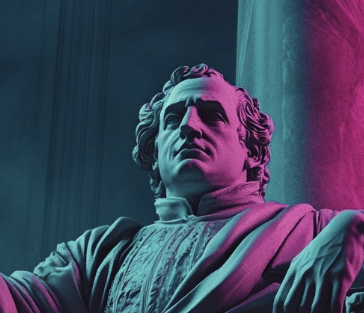
Tis only from the selfishness and confin'd generosity of men, along with the scanty provision nature has made for his wants, that justice derives its origin.
▼
Source
source
Part 2, Section 2
1 month 1 week ago
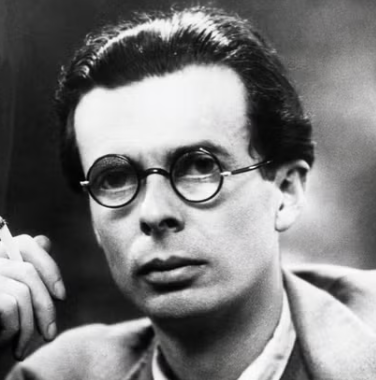
I strongly suspect that most of the great knowers of Suchness paid very little attention to art.... (To a person whose transfigured and transfiguring mind can see the All in every this, the first-rateness or tenth-rateness of even a religious painting will be a matter of the most sovereign indifference.) Art, I suppose, is only for beginners, or else for those resolute dead-enders, who have made up their minds to be content with the ersatz of Suchness, with symbols rather than with what they signify, with the elegantly composed recipe in lieu of actual dinner.

2 months 1 week ago
He marveled at the strange blindness by which men, though they are so alert to what changes in themselves, impose on their friends an image chosen for them once and for all. He was being judged by what he had been. Just as dogs don't change character, men are dogs to one another.

1 week 1 day ago
The desire to die was my one and only concern; to it I have sacrificed everything, even death.
1 week 5 days ago
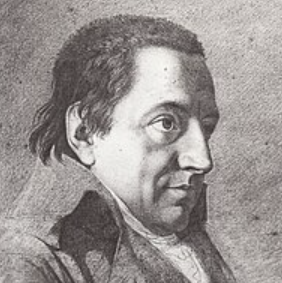
The Age of Empty Freedom ... does not know that man must first through labour, industry, and art, learn how to know; but it has a certain fixed standard for all conceptions, and an established Common Sense of Mankind always ready and at hand, innate within itself and there present without trouble on its part;-and those conceptions and this Common Sense are to it the measure of the efficient and the real. It has this great advantage over the Age of Science, that it knows all things without having learned anything; and can pass judgment upon whatever comes before it at once and without hesitation,-without needing any preliminary evidence:-'That which I do not immediately comprehend by the conceptions which dwell within me, is nothing,'-says Empty Freedom.
▼
Source
source
p. 20

1 month 1 week ago
He [God] lends us a little of His reasoning powers and that is how we think: He puts a little of His love into us and that is how we love one another. When you teach a child writing, you hold its hand while it forms the letters: that is, it forms the letters because you are forming them. We love and reason because God loves and reasons and holds our hand while we do it.
▼
Source
source
Book II, Chapter 4, "The Perfect Penitent"

1 month 1 week ago
The destiny of the spiritual World, and, - since this is the substantial World, while the physical remains subordinate to it, or, in the language of speculation, has no truth as against the spiritual, - the final cause of the World at large, we allege to be the consciousness of its own freedom on the part of Spirit, and ipso facto, the reality of that freedom.
1 month 1 week ago
Freud's fanciful pseudo-explanations (precisely because they are brilliant) perform a disservice. (Now any ass has these pictures available to use in "explaining" symptoms of an illness).
▼
Source
source
p. 55e
1 month 1 week ago
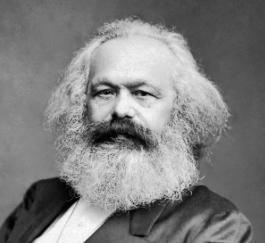
Although usury is itself a form of credit in its bourgeoisified form, the form adapted to capital, in its pre-bourgeois form it is rather the expression of the lack of credit.
▼
Source
source
Notebook V, The Chapter on Capital, p. 455.

1 month 3 weeks ago
Everything has two handles, the one by which it may be carried, the other by which it cannot. If your brother acts unjustly, don't lay hold on the action by the handle of his injustice, for by that it cannot be carried; but by the opposite, that he is your brother, that he was brought up with you; and thus you will lay hold on it, as it is to be carried.
▼
Source
source
(43).

1 month 1 week ago
The Geschick of being: a child that plays... Why does it play, the great child of the world-play Heraclitus brought into view in the aiôn? It plays, because it plays. The "because" withers away in the play. The play is without "why." It plays since it plays. It simply remains a play: the most elevated and the most profound. But this "simply" is everything, the one, the only... The question remains whether and how we, hearing the movements of this play, play along and accommodate ourselves to the play.
▼
Source
source
The Principle of Reason (1955-1956) as translated by Reginald Lilly
2 months 1 week ago
Now in this island of Atlantis there was a great and wonderful empire which had rule over the whole island and several others, and over parts of the continent and, furthermore, the men of Atlantis had subjected the parts of Libya within the columns of Heracles as far as Egypt, and of Europe as far as Tyrrhenia. This vast power, gathered into one, endeavored to subdue at a blow our country and yours and the whole of the region within the straits, and then, Solon, your country shone forth, in the excellence of her virtue and strength, among all mankind.
1 month 2 weeks ago
Not because Socrates said so,... I look upon all men as my compatriots.
▼
Source
source
Book III, Ch. 9. Of Vanity

4 days ago
Bourgeois political economy ... never gets to see man who is its real subject. It disregards the essence of man and his history and is thus in the profoundest sense not a 'science of people' but of non-people and of an inhuman world of objects and commodities.
▼
Source
source
"The Foundations of Historical Materialism," Studies in Critical Philosophy (1972), p. 9
1 month 1 week ago
The heavens are as deep as our aspirations are high.
▼
Source
source
Quoted in Maturin M. Ballou (ed.) Pearls of Thought (Boston: Houghton, Mifflin and Co., 1881) p. 21
1 month 1 week ago
I was a solitary, shy, priggish youth. I had no experience of the social pleasures of boyhood and did not miss them. But I liked mathematics, and mathematics was suspect because it has no ethical content. I came also to disagree with the theological opinions of my family, and as I grew up I became increasingly interested in philosophy, of which they profoundly disapproved. Every time the subject came up they repeated with unfailing regularity, 'What is mind? No matter. What is matter? Never mind.' After some fifty or sixty repetitions, this remark ceased to amuse me.
▼
Source
source
p. 9
1 month 4 weeks ago
What is the use of believing, if the dost blaspheme? Thou adorest Him as Head, and dost blaspheme Him in His body. He loves His body. Thou canst cut thyself off from the body, but the Head does not detach itself from its body. "Thou dost honor me in vain," He cries from heaven, "thou dost honor Me in vain!" If someone wished to kiss thy cheek, but insisted at the same time on trampling thy feet; if with his hailed boots he were to crush thy feet as he tries to hold thy head and kiss thee, wouldst thou not interrupt his expression of respect and cry out: "What are thou doing, man? Thou art trampling upon me!" It is for this reason that before He ascended into heaven our Lord Jesus Christ recommended to us His body, by which He was to remain upon earth. For He foresaw that many would pay Him homage because of His glory in heaven, but that their homage would be vain, so long as they despise His members on earth.
▼
Source
source
(pp. 436-437)

2 weeks 3 days ago
In the deep discovery of the Subterranean world, a shallow part would satisfy some enquirers.
▼
Source
source
Chapter I
3 weeks 5 days ago
But after these, Pythagoras changed that philosophy, which is conversant about geometry itself, into the form of a liberal doctrine, considering its principles in a more exalted manner; and investigating its theorems immaterially and intellectually; who likewise invented a treatise of such things as cannot be explained in geometry, and discovered the constitution of the mundane figures.
▼
Source
source
Chap. IV.
1 month 1 week ago
"Everything is both a trap and a display; the secret reality of the object is what the Other makes of it."
1 week 1 day ago
We are all of us in error, the humorists excepted. They alone have discerned, as though in jest, the inanity of all that is serious and even of all that is frivolous.
1 month 1 week ago
Three passions, simple but overwhelmingly strong, have governed my life: the longing for love, the search for knowledge, and unbearable pity for the suffering of mankind. These passions, like great winds, have blown me hither and thither, in a wayward course, over a deep ocean of anguish, reaching to the very verge of despair.
1 month 3 days ago
To abjure the notion of the "truly human" is to abjure the attempt to divinize the self as a replacement for a divinized world.
▼
Source
source
Contingency, Irony, and Solidarity (1989), p. 35

3 weeks 3 days ago
In this theater of man's life it is reserved only for God and angels to be lookers on.
▼
Source
source
Francis Bacon, in The Advancement of Learning (1605) Book II, xx, 8.
1 month 1 week ago
The first thing to realize, if you wish to become a philosopher, is that most people go through life with a whole world of beliefs that have no sort of rational justification, and that one man's world of beliefs is apt to be incompatible with another man's, so that they cannot both be right. People's opinions are mainly designed to make them feel comfortable; truth, for most people is a secondary consideration.
▼
Source
source
"How to Become a Philosopher" (1942), in The Art of Philosophizing, and Other Essays (New York: Philosophical Library, 1968), p. 2
1 month 1 week ago
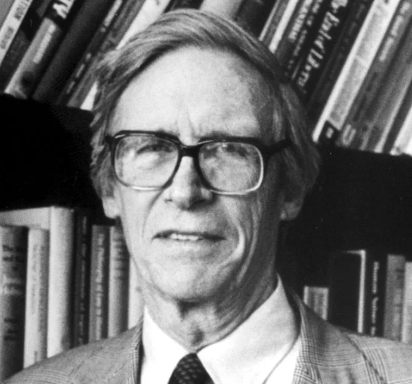
Our concern is solely with the basic structure of society and its major institutions and therefore with the standard cases of social justice.
▼
Source
source
Chapter II, Section 10, pg. 58
1 month 2 weeks ago
An evil may be real, tho' its cause has no relation to us: It may be real, without being peculiar: It may be real, without shewing itself to others: It may be real, without being constant: And it may be real, without falling under the general rules. Such evils as these will not fail to render us miserable, tho' they have little tendency to diminish pride: And perhaps the most real and the most solid evils of life will be found of this nature.
▼
Source
source
Part 1, Section 6
5 days ago
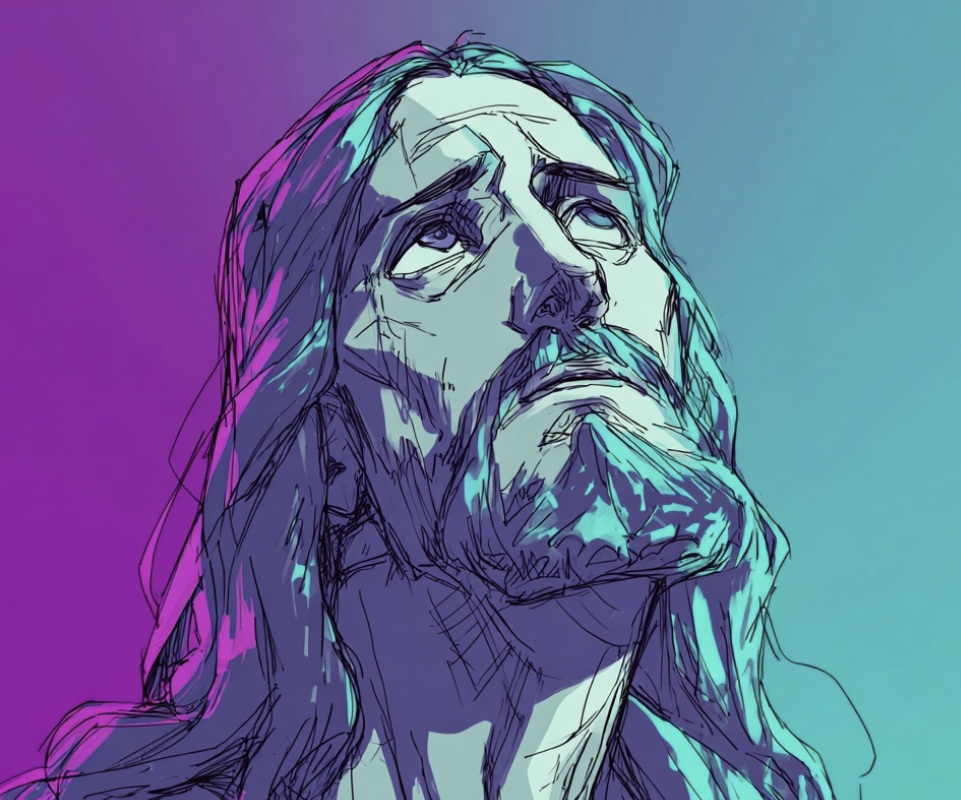
All natures, all formed things, all creatures exist in and with one another and will again be resolved into their own roots, because the nature of matter is dissolved into the roots of its nature alone. He who has ears to hear, let him hear.
1 week 6 days ago
And having looked to Government for bread, on the very first scarcity they will turn and bite the hand that fed them.
1 week 2 days ago
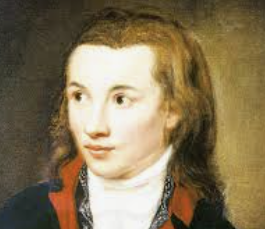
The first Man is the first Spirit-seer; all appears to him as Spirit. What are children, but first men? The fresh gaze of the Child is richer in significance than the forecasting of the most indubitable Seer.
1 month 1 week ago
There is but one good; that is God. Everything else is good when it looks to Him and bad when it turns from Him.
▼
Source
source
Ch. 11
1 month 1 week ago
There are those who blame the Press, but in this I think they are mistaken. The Press is such as the public demands, and the public demands bad newspapers because it has been badly educated.
▼
Source
source
p. 133

2 weeks 3 days ago
The power of the periodical press is second only to that of the people.
▼
Source
source
Chapter XI.
1 month 2 weeks ago
What if he has borrowed the matter and spoiled the form, as it oft falls out?
▼
Source
source
Book III, Ch. 8. Of the Art of Conversation
1 month 1 week ago
But since he has decided to have the impossibility of living, every misfortune is an opportunity which lays this importance of living before his eyes and obliges him to decide, once again, to die.
▼
Source
source
p. 158

2 months 1 week ago
From the Christian point of view it stands firm that the truly Christian venturing requires probability.
1 month 2 weeks ago
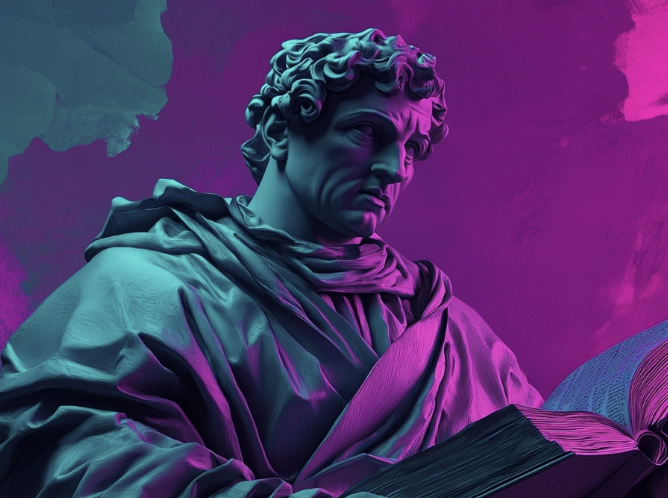
The veneration of Mary is inscribed in the very depths of the human heart.
▼
Source
source
Weimar edition of Martin Luther's Works (Translation by William J. Cole) 10, III, p. 313
CivilSimian.com created by AxiomaticPanic, CivilSimian, Kalokagathia