

1 month 3 weeks ago
There are hardly any truths upon which we always remain agreed, and still fewer objects of pleasure which we do not change every hour, I do not know whether there is a means of giving fixed rules for adapting discourse to the inconstancy of our caprices.

1 month 3 weeks ago
Like the body the soul can be healthy, youthful, and so on. It can undergo pain, thirst, and hunger. In this physical life, that is, in the visible world, we avoid whatever would defile or deform the body; how much more, then, ought we to avoid that which would tarnish the soul?
1 week 5 days ago
The free being with absolute freedom proposes to itself certain ends. It wills because it wills, and the willing of an object is itself the last ground of such willing. Thus we have previously determined a free being, and any other determination would destroy the conception of an Ego, or of a free being. Now, if it could be so arranged that the willing of an unlawful end would necessarily - in virtue of an always effective law - result in the very reverse of that end, then the unlawful will would always ANNIHILATE ITSELF. A person could not will that end for the very reason because he did will it; his unlawful will would become the ground of its own annihilation, as the will is indeed always its own last ground.
▼
Source
source
p. 193
1 week 5 days ago
Education has for its object the formation of character. To curb restive propensities, to awaken dormant sentiments, to strengthen the perceptions, and cultivate the tastes, to encourage this feeling and repress that, so as finally to develop the child into a man of well proportioned and harmonious nature - this is alike the aim of parent and teacher.
▼
Source
source
Pt. II, Ch. 17 : The Rights of Children
1 month 1 week ago
Our age is retrospective. It builds the sepulchres of the fathers. It writes biographies, histories, and criticism. The foregoing generation beheld God and nature face to face; we, through their eyes. Why should not we also enjoy an original relation to the universe. Why should not we have a poetry and philosophy of insight and not of tradition, and a religion by revelation to us, and not the history of theirs?
▼
Source
source
Introduction
1 week 5 days ago
There is nothing enduring, permanent, either in me or out of me, nothing but everlasting change. I know of no existence, not even of my own. I know nothing and am nothing. Images - pictures - only are, pictures which wander by without anything existing past which they wander, without any corresponding reality which they might represent, without significance and without aim. I myself am one of these images, or rather a confused image of these images. All reality is transformed into a strange dream, without a world of which the dream might be, or a mind that might dream it. Contemplation is a dream; thought, the source of all existence and of all that I fancied reality, of my own existence, my own capacities, is a dream of that dream.
▼
Source
source
Jane Sinnett, trans 1846 p. 60

2 months 2 weeks ago
The man who is guided by concepts and abstractions only succeeds by such means in warding off misfortune, without ever gaining any happiness for himself from these abstractions. And while he aims for the greatest possible freedom from pain, the intuitive man, standing in the midst of a culture, already reaps from his intuition a harvest of continually inflowing illumination, cheer, and redemption in addition to obtaining a defense against misfortune. To be sure, he suffers more intensely, when he suffers; he even suffers more frequently, since he does not understand how to learn from experience and keeps falling over and over again into the same ditch.
1 week 1 day ago
A harmonious being cannot believe in God. Saints, criminals, and paupers have launched him, making him available to all unhappy people.

2 months ago
There is no order between created being and non-being, but there is between created and uncreated being.
▼
Source
source
q. 7, art. 9, ad 8
5 days ago
He that is to govern a whole Nation, must read in himself, not this, or that particular man; but Mankind; which though it be hard to do, harder than to learn any Language, or Science; yet, when I shall have set down my own reading orderly, and perspicuously, the pains left another, will be only to consider, if he also find not the same in himself. For this kind of Doctrine, admitteth no other Demonstration.
▼
Source
source
The Introduction, p. 2
2 months 1 week ago
The life of money-making is one undertaken under compulsion, and wealth is evidently not the good we are seeking; for it is merely useful and for the sake of something else.
1 month 2 weeks ago
As the analysis of a substantial composite terminates only in a part which is not a whole, that is, in a simple part, so synthesis terminates only in a whole which is not a part, that is, the world.
5 days ago
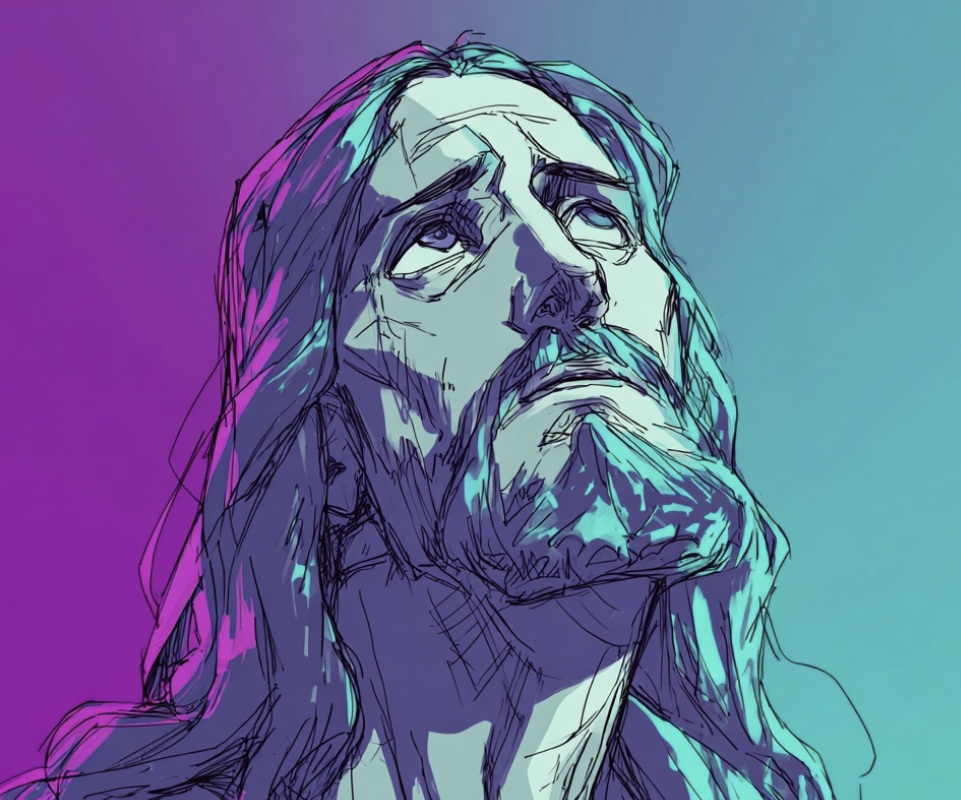
Jesus answered: "Believe me, Barnabas that I cannot weep as much as I ought. For if men had not called me God, I should have seen God here as he will be seen in paradise, and should have been safe not to fear the day of judgment. But God knows that I am innocent, because never have I harboured thought to be held more than a poor slave. No, I tell you that if I had not been called God I should have been carried into paradise when I shall depart from the world, whereas now I shall not go thither until the judgment. Now you see if I have cause to weep."
▼
Source
source
Ch. 112
1 week 3 days ago
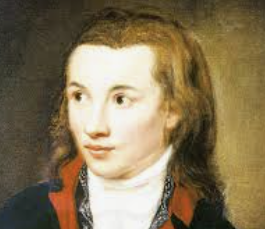
Nature is an Æolian Harp, a musical instrument; whose tones again are keys to higher strings in us.
1 week 5 days ago
The history of philosophical system is the picture gallery of reason.
▼
Source
source
Z. Hanfi, trans., in The Fiery Brook (1972), p. 68
2 months 1 week ago
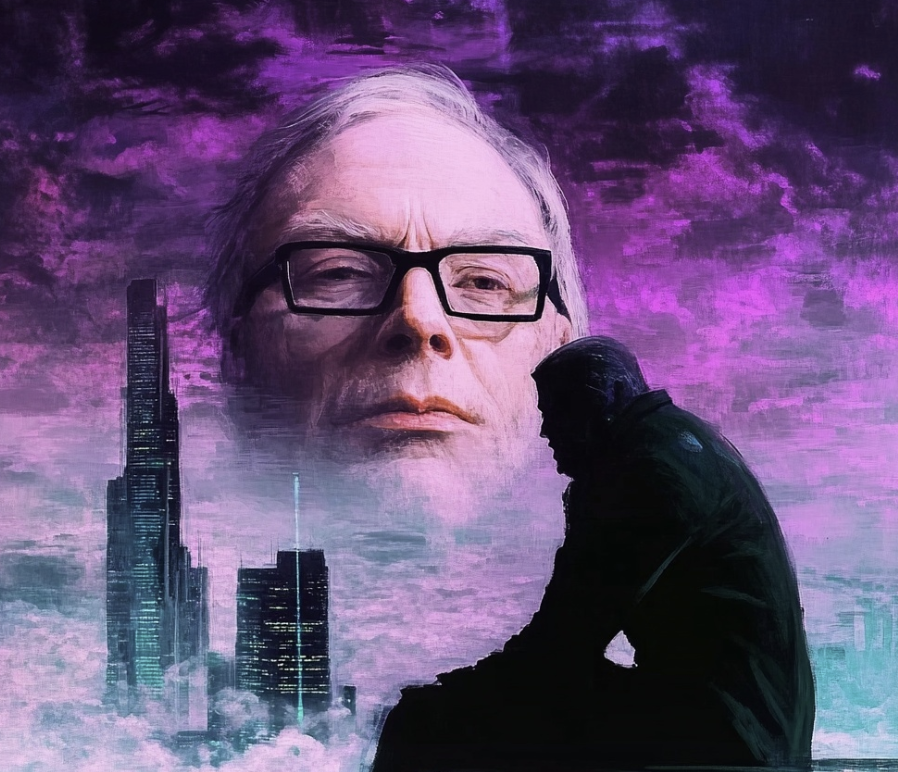
The fact that the general incidence of leukemia has doubled in the last two decades may be due, partly, to the increasing use of x-rays for numerous purposes. The incidence of leukemia in doctors, who are likely to be so exposed, is twice that of the general public. In radiologists the incidence is ten times greater.
1 week 2 days ago
The secret is that only that which can destroy itself is truly alive.
▼
Source
source
Psychology and Alchemy

1 month 1 week ago
Discord which appears at first to be a lamentable breach and dissolution of the unity of a party, is really the crowning proof of its success.
▼
Source
source
§ 575

1 month 2 weeks ago
All of the days go toward death and the last one arrives there.
▼
Source
source
Ch. 20. Of the Force of Imagination
1 month 1 week ago
The directing motive, the end and aim of capitalist production, is to extract the greatest possible amount of surplus value, and consequently to exploit labor-power to the greatest possible extent.
▼
Source
source
Vol. I, Ch. 13, pg. 363.

2 months 1 week ago
Most men pursue pleasure with such breathless haste that they hurry past it.

1 month 1 week ago
If the red slayer think he slays, Or if the slain think he is slain, They know not well the subtle ways I keep, and pass, and turn again. Brahma, st. 1 Composed in July 1856 this poem is derived from a major passage of the Bhagavad Gita, one of the most popular of Hindu scriptures, and portions of it were likely a paraphrase of an existing translation. Though titled "Brahma" its expressions are actually more indicative of the Hindu concept "Brahman"
1 month 1 week ago
Ramsgate is full of Jews and fleas.
▼
Source
source
MEKOR IV, 490, 25 August 1879

1 month 1 week ago
To love at all is to be vulnerable. Love anything, and your heart will certainly be wrung and possibly be broken. If you want to make sure of keeping it intact, you must give your heart to no one, not even to an animal. Wrap it carefully round with hobbies and little luxuries; avoid all entanglements; lock it up safe in the casket or coffin of your selfishness. But in that casket - safe, dark, motionless, airless - it will change. It will not be broken; it will become unbreakable, impenetrable, irredeemable. The alternative to tragedy, or at least to the risk of tragedy, is damnation. The only place outside of Heaven where you can be perfectly safe from all the dangers and perturbations of love is Hell.
2 months 1 week ago
A punishment that penalizes without forestalling is indeed called revenge.
1 month 1 week ago
A command can express no more than an ought or a shall, because it is a universal, but it does not express an 'is'; and this at once makes plain its deficiency. Against such commands Jesus sets virtue, i.e., a loving disposition, which makes the content of the command superfluous and destroys its form as a command, because that form implies an opposition between a commander and something resisting the command.
1 week 3 days ago
Every political good carried to the extreme must be productive of evil.
▼
Source
source
The French Revolution, Bk. V, ch. 4
1 month 2 weeks ago
Whatever concept one may hold, from a metaphysical point of view, concerning the freedom of the will, certainly its appearances, which are human actions, like every other natural event are determined by universal laws. However obscure their causes, history, which is concerned with narrating these appearances, permits us to hope that if we attend to the play of freedom of the human will in the large, we may be able to discern a regular movement in it, and that what seems complex and chaotic in the single individual may be seen from the standpoint of the human race as a whole to be a steady and progressive though slow evolution of its original endowment.
▼
Source
source
Introduction
1 month 2 weeks ago
Saturninus said, "Comrades, you have lost a good captain to make him an ill general."
▼
Source
source
Book III, Ch. 9. Of Vanity
1 month 1 week ago
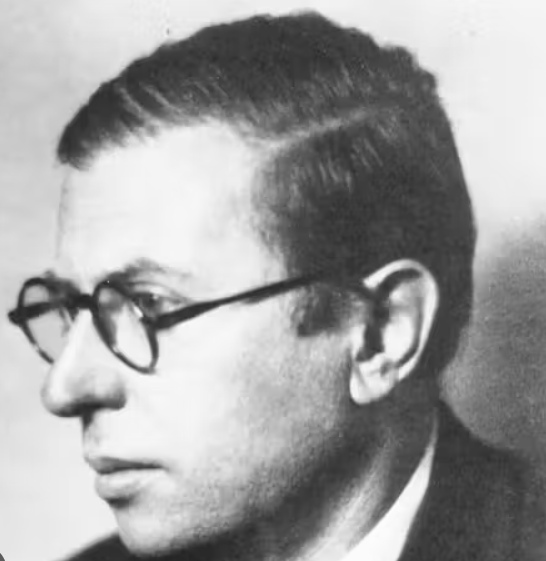
Catherine: Why commit Evil? Goetz: Because Good has already been done. Catherine: Who has done it? Goetz: God the Father. I, on the other hand, am improvising.
▼
Source
source
Act 3, sc. 4
1 month 2 days ago
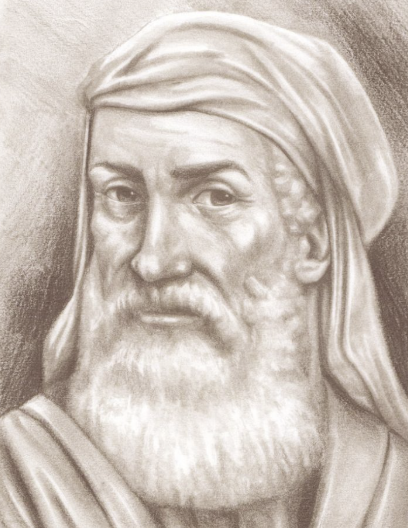
From such honor and such a height of fortune am I, thus fallen to earth, cast down amongst mortals.
▼
Source
source
fr. 119
2 months 2 days ago
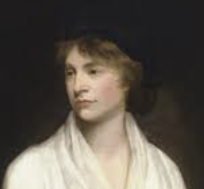
Of all people, girls and servants are the most difficult to behave to. If you are familiar with them, they lose their humility. If you maintain a reserve towards them, they are discontented.

3 weeks 3 days ago
When the wise man opens his mouth, the beauties of his soul present themselves to the view, like the statues in a temple.
▼
Source
source
Pythagorean Ethical Sentences From Stobæus
1 month 1 week ago
I believe Buddhism to be a simplification of Hinduism and Islam to be a simplification of Xianity.
▼
Source
source
Letter to Sheldon Vanauken (14 December 1950), quoted in Sleuthing C. S. Lewis (2001) by Kathryn Ann Lindskoog, p. 393
1 week 1 day ago
To be is to be cornered.
5 days ago
For I came to cause division, with a man against his father, and a daughter against her mother, and a daughter-in-law against her mother-in-law. 36 Indeed, a man's enemies will be those of his own household.
▼
Source
source
10:35,36, New World Translation
1 month 1 week ago
Is anything more certain than that in all those vast times and spaces, if I were allowed to search them, I should nowhere find her face, her voice, her touch? She died. She is dead. Is the word so difficult to learn?
1 month 1 week ago
Beauty is the mark God sets upon virtue.
▼
Source
source
Beauty
1 month 3 days ago
Those who claim to care about the wellbeing of human beings and the preservation of our environment should become vegetarians for that reason alone. They would thereby increase the amount of grain available to feed people elsewhere, reduce pollution, save water and energy, and cease contributing to the clearing of forests; moreover, since a vegetarian diet is cheaper than one based on meat dishes, they would have more money available to devote to famine relief, population control, or whatever social or political cause they thought most urgent. ... when nonvegetarians say that "human problems come first" I cannot help wondering what exactly it is that they are doing for human beings that compels them to continue to support the wasteful, ruthless exploitation of farm animals.
▼
Source
source
Ch. 6: Speciesism Today
1 week 1 day ago
On the frontiers of the self: "What I have suffered, what I am suffering, no one will ever know, not even I."
3 weeks 3 days ago
Hope is the only good that is common to all men; those who have nothing else possess hope still.
▼
Source
source
A Dictionary of Thoughts (1908) by Tryon Edwards, p. 234
1 month 1 week ago
In the "fulfillment" of both the laws and duty, ... the moral disposition ceases to be the universal, opposed to inclination, and inclination ceases to be particular, opposed to the law.
1 week 1 day ago
This is how I recognize an authentic poet: by frequenting him, living a long time in the intimacy of his work, something changes in myself, not so much my inclinations or my tastes as my very blood, as if a subtle disease had been injected to alter its course, its density and nature. To live around a true poet is to feel your blood run thin, to dream a paradise of anemia, and to hear, in your veins, the rustle of tears.
2 months 1 week ago
Knowing whether or not one can live without appeal is all that interests me.
3 days ago
Once the philosophical foundation of democracy has collapsed, the statement that dictatorship is bad is rationally valid only for those who are not its beneficiaries, and there is no theoretical obstacle to the transformation of this statement into its opposite.
▼
Source
source
p. 29.
1 month 1 week ago
The only purpose for which power can be rightfully exercised over any member of a civilized community, against his will, is to prevent harm to others. His own good, either physical or moral, is not a sufficient warrant.
▼
Source
source
Ch. 1: Introductory
2 weeks 3 days ago
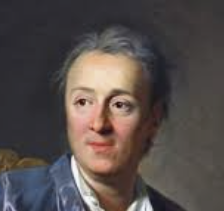
The arbitrary rule of a just and enlightened prince is always bad. His virtues are the most dangerous and the surest form of seduction: they lull a people imperceptibly into the habit of loving, respecting, and serving his successor, whoever that successor may be, no matter how wicked or stupid.
▼
Source
source
Refutation of Helvétius
1 month 3 weeks ago
Rules for Definitions. I. Not to undertake to define any of the things so well known of themselves that the clearer terms cannot be had to explain them. II. Not to leave any terms that are at all obscure or ambiguous without definition. III. Not to employ in the definition of terms any words but such as are perfectly known or already explained.
1 week 6 days ago
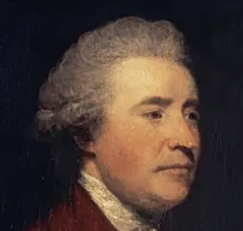
Cast your eyes on the journals of parliament. It is for fear of losing the inestimable treasure we have, that I do not venture to game it out of my hands for the vain hope of improving it. I look with filial reverence on the constitution of my country, and never will cut it in pieces, and put it into the kettle of any magician, in order to boil it, with the puddle of their compounds, into youth and vigour. On the contrary, I will drive away such pretenders; I will nurse its venerable age, and with lenient arts extend a parent's breath.
▼
Source
source
Speech in the House of Commons against William Pitt's motion for parliamentary reform (7 May 1782), quoted in The Works of the Right Honorable Edmund Burke ...: Miscellaneous speeches, letters, and fragments, Vol. VI (1890), p. 153
CivilSimian.com created by AxiomaticPanic, CivilSimian, Kalokagathia