

1 month 3 weeks ago
The dominion of bad men is hurtful chiefly to themselves who rule, for they destroy their own souls by greater license in wickedness; while those who are put under them in service are not hurt except by their own iniquity. For to the just all the evils imposed on them by unjust rulers are not the punishment of crime, but the test of virtue. Therefore the good man, although he is a slave, is free; but the bad man, even if he reigns, is a slave, and that not of one man, but, what is far more grievous, of as many masters as he has vices; of which vices when the divine Scripture treats, it says, For of whom any man is overcome, to the same he is also the bond-slave.
▼
Source
source
IV, 3 Variant translation: The good man, though a slave, is free; the wicked, though he reigns, is a slave, and not the slave of a single man, but — what is worse — the slave of as many masters as he has vices.
1 month 2 weeks ago
The ceaseless labour of your life is to build the house of death.
▼
Source
source
Book I, Ch. 20

1 month 2 weeks ago
Let us not forget what befits our present state in the pursuit of vain fancies. Mankind has its place in the sequence of things; childhood has its place in the sequence of human life; the man must be treated as a man and the child as a child. Give each his place, and keep him there. Control human passions according to man's nature; that is all we can do for his welfare. The rest depends on external forces, which are beyond our control.
1 month 1 week ago
We tend to believe the premises because we can see that their consequences are true, instead of believing the consequences because we know the premises to be true. But the inferring of premises from consequences is the essence of induction; thus the method in investigating the principles of mathematics is really an inductive method, and is substantially the same as the method of discovering general laws in any other science.
▼
Source
source
"The Regressive Method of Discovering the Premises of Mathematics" (1907), in Essays in Analysis (1973), pp. 273-274
1 month 3 weeks ago
This art, which I call the art of persuading, and which, properly speaking, is simply the process of perfect methodical proofs, consists of three essential parts: of defining the terms of which we should avail ourselves by clear definitions, of proposing principles of evident axioms to prove the thing in question; and of always mentally substituting in the demonstrations the definition in the place of the thing defined.
1 week 5 days ago
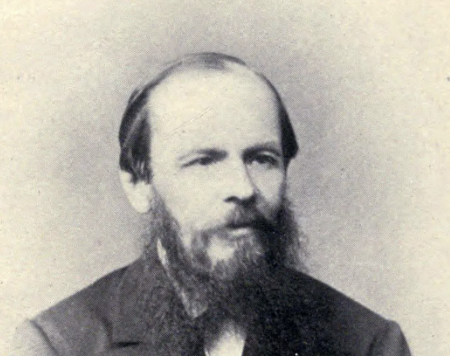
Is there in the whole world a being who would have the right to forgive and could forgive? I don't want harmony. From love for humanity I don't want it. I would rather be left with the unavenged suffering. I would rather remain with my unavenged suffering and unsatisfied indignation, even if I were wrong. Besides, too high a price is asked for harmony; it's beyond our means to pay so much to enter on it. And so I hasten to give back my entrance ticket, and if I am an honest man I am bound to give it back as soon as possible. And that I am doing. It's not God that I don't accept, Alyosha, only I most respectfully return him the ticket.
▼
Source
source
Book II, Chapter 4: Rebellion (trans. Constance Garnett)

2 weeks 5 days ago
Few men think; yet all have opinions.
▼
Source
source
Philonous to Hylas. The Second Dialogue. This appears in a passage first added in the third edition
1 month 2 weeks ago
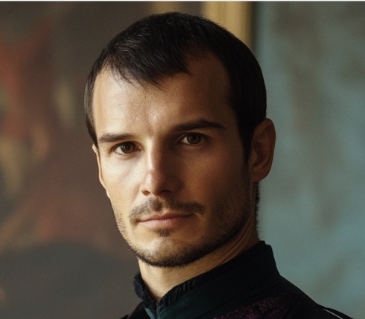
It is truly a marvelous thing to consider to what greatness Athens arrived in the space of one hundred years after she freed herself from the tyranny of Pisistratus; but, above all, it is even more marvelous to consider the greatness Rome reached when she freed herself from her kings. The reason is easy to understand, for it is the common good and not private gain that makes cities great. Yet, without a doubt, this common good is observed only in republics, for in them everything that promotes it is practised, and however much damage it does to this or that private individual, those who benefit from the said common good are so numerous that they are able to advance in spite of the inclination of the few citizens who are oppressed by it.
▼
Source
source
Book 2, Chapter 2
1 month 2 weeks ago
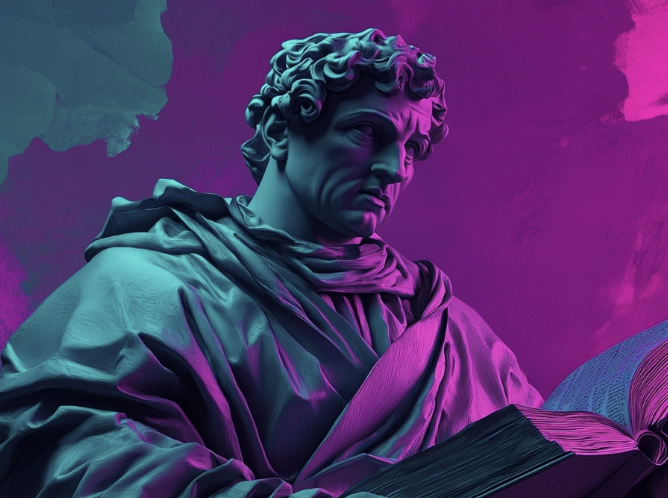
There can be no doubt that the Virgin Mary is in heaven. How it happened we do not know.
▼
Source
source
Weimar edition of Martin Luther's Works (Translation by William J. Cole) Vol. 10, p. 268
1 month 2 days ago
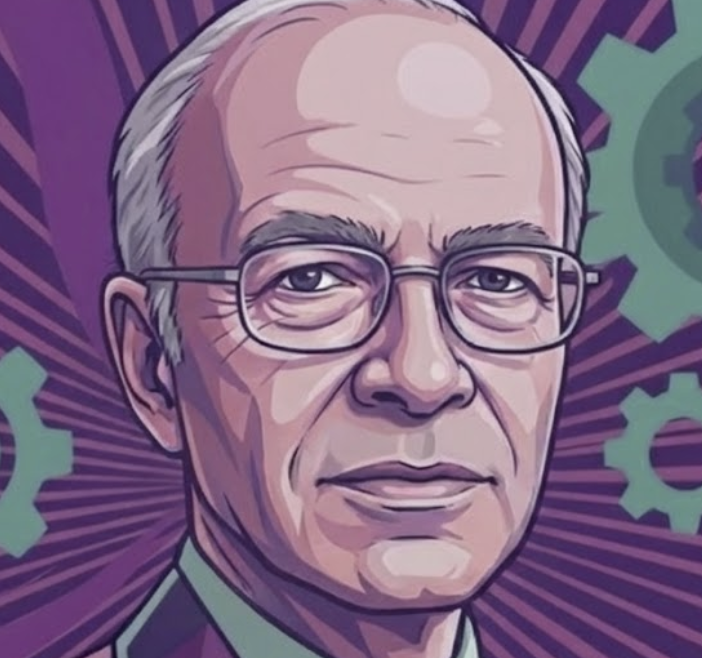
Animal Liberation is Human Liberation too.
▼
Source
source
Preface

1 month 2 days ago
Thou shouldst not become presumptuous through great connections and race; for in the end thy trust is on thine own deeds.
▼
Source
source
(p. 60)

1 week 1 day ago
There are questions which, once approached, either isolate you or kill you outright.
1 month 1 week ago
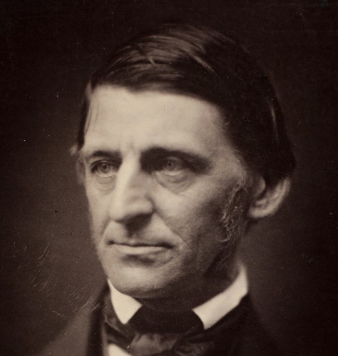
Raphael paints wisdom, Handel sings it, Phidias carves it, Shakespeare writes it, Wren builds it, Columbus sails it, Luther preaches it, Washington arms it, Watt mechanizes it.
▼
Source
source
Art
1 week 5 days ago
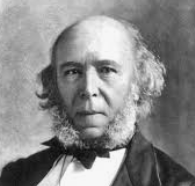
All evil results from the non-adaptation of constitution to conditions. This is true of everything that lives. Does a shrub dwindle in poor soil, or become sickly when deprived of light, or die outright if removed to a cold climate? it is because the harmony between its organization and its circumstances has been destroyed.
▼
Source
source
Part I, Ch. 2 : The Evanescence of Evil, § 1
2 weeks 2 days ago
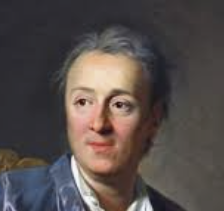
It is said that desire is a product of the will, but the converse is in fact true: will is a product of desire.
▼
Source
source
"Will, Freedom"
1 month 1 week ago
That I, a funny little gesticulating animal on two legs, should stand beneath the stars and declaim in a passion about my rights - it seems so laughable, so out of all proportion. Much better, like Archimedes, to be killed because of absorption in eternal things... There is a possibility in human minds of something mysterious as the night-wind, deep as the sea, calm as the stars, and strong as Death, a mystic contemplation, the "intellectual love of God." Those who have known it cannot believe in wars any longer, or in any kind of hot struggle. If I could give to others what has come to me in this way, I could make them too feel the futility of fighting. But I do not know how to communicate it: when I speak, they stare, applaud, or smile, but do not understand.
▼
Source
source
Letter to Miss Rinder, July 30, 1918
1 month 2 weeks ago
I would advise no one to send his child where the Holy Scriptures are not supreme. Every institution that does not unceasingly pursue the study of God's word becomes corrupt. Because of this we can see what kind of people they become in the universities and what they are like now. Nobody is to blame for this except the pope, the bishops, and the prelates, who are all charged with training young people. The universities only ought to turn out men who are experts in the Holy Scriptures, men who can become bishops and priests, and stand in the front line against heretics, the devil, and all the world. But where do you find that? I greatly fear that the universities, unless they teach the Holy Scriptures diligently and impress them on the young students, are wide gates to hell.
▼
Source
source
To the Christian Nobility of the German States (1520), translated by Charles M. Jacobs, reported in rev. James Atkinson, The Christian in Society, I (Luther's Works, ed. James Atkinson, vol. 44), p. 207
1 month 1 week ago
A life without adventure is likely to be unsatisfying, but a life in which adventure is allowed to take whatever form it will is sure to be short.
▼
Source
source
Authority and the Individual, 1949
1 month 1 week ago
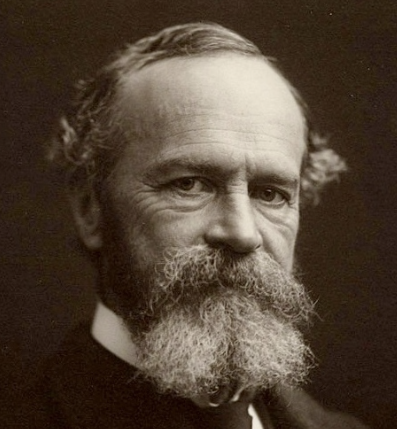
This life is worth living, we can say, since it is what we make it, from the moral point of view.
▼
Source
source
"Is Life Worth Living?"

1 month 6 days ago
Although objectively greater demands are placed on this authority, it operates less as a public opinion giving a rational foundation to the exercise of political and social authority, the more it is generated for the purpose of an abstract vote that amounts to no more than an act of acclamation within a public sphere temporarily manufactured for show or manipulation.
▼
Source
source
p. 222
1 month 2 weeks ago
Tis from the resemblance of the external actions of animals to those we ourselves perform, that we judge their internal likewise to resemble ours; and the same principle of reasoning, carry'd one step farther, will make us conclude that since our internal actions resemble each other, the causes, from which they are deriv'd, must also be resembling.
▼
Source
source
Part 3, Section 16
1 month 1 week ago
The gods we stand by are the gods we need and can use, the gods whose demands on us are reinforcements of our demands on ourselves and on one another. What I then propose to do is, briefly stated, to test saintliness by common sense, to use human standards to help us decide how far the religious life commends itself as an ideal kind of human activity . ... It is but the elimination of the humanly unfit, and the survival of the humanly fittest, applied to religious beliefs; and if we look at history candidly and without prejudice, we have to admit that no religion has ever in the long run established or proved itself in any other way. Religions have approved themselves; they have ministered to sundry vital needs which they found reigning. When they violated other needs too strongly, or when other faiths came which served the same needs better, the first religions were supplanted.
▼
Source
source
Lectures XIV and XV, "The Value of Saintliness"
1 week 1 day ago
One would have to be as unenlightened as an angel or an idiot to imagine that the human escapade could turn out well.
2 days ago
The concept of God was for a long time the place where the idea was kept alive that there are other norms besides those to which nature and society give expression in their operation.
▼
Source
source
"Thoughts on Religion," Critical Theory: Selected Essays (1995), p. 129.
1 month 1 week ago
The music that can deepest reach, And cure all ill, is cordial speech.
▼
Source
source
Merlin's Song, II

1 week 6 days ago
Poverty serves capital. It creates a desperate labor pool willing to work for less, accept worse conditions, tolerate greater indignity. The poor aren't failed by the system - they're required by it. Their desperation is someone else's negotiating advantage. Poverty is a feature, not a bug.
1 week 1 day ago
Philosophy offers an antidote to melancholy. And many still believe in the depth of philosophy!
1 month 1 week ago
The greatest challenge to any thinker is stating the problem in a way that will allow a solution.
▼
Source
source
Attributed to Russell in Crainer's The Ultimate Book of Business Quotations (1997), p. 258

1 month 1 week ago
This is precisely what is decisive in Nietzsche's conception of art, that he sees it in its essential entirety in terms of the artist; this he does consciously and in explicit opposition to that conception of art which represents it in terms of those who "enjoy" and "experience" it.That is a guiding principle of Nietzsche's teaching on art: art must be grasped in terms of creators and producers, not recipients. Nietzsche expresses it unequivocally in the following words (WM, 811): "Our aesthetics heretofore has been a woman's aesthetics, inasmuch as only the recipients of art have formulated their experiences of 'what is beautiful.' In all philosophy to date the artist is missing." Philosophy of art means "aesthetics" for Nietzsche too-but masculine aesthetics, not feminine aesthetics. The question of art is the question of the artist as the productive, creative one; his experiences of what is beautiful must provide the standard.
▼
Source
source
p. 70
1 week 2 days ago
If the world is a precipitation of human nature, so to speak, then the divine world is a sublimation of the same. Both occur in one act. No precipitation without sublimation. What goes lost there in agility, is won here.
▼
Source
source
Fragment No. 96
2 months 1 week ago
A friend is one soul abiding in two bodies. p. 188; also reported in various sources as:Friendship is a single soul dwelling in two bodies. A true friend is one soul in two bodies. Love is composed of a single soul inhabiting two bodies. What is a friend? A single soul dwelling in two bodies.
1 week 1 day ago
Let me now try to gather up all these odds and ends of commentary and restate the law of mind, in a unitary way.
4 days ago
At midday the daily food of all Spaniards was the puchero or cocido, as the dish is really called which the foreigners call pot-pourri or olla podrida. This contains principally yellow chick-peas, with a little bacon, some potatoes or other vegetables and normally also small pieces of beef or sausage, all boiled in one pot at a very slow fire; the liquid of the same makes the substantial broth that is served first.
▼
Source
source
p. 14
1 month 1 week ago
In a social order dominated by capitalist production even the non-capitalist producer is gripped by capitalist conceptions.
▼
Source
source
Vol. III, Ch. I, Cost Price and Profit, p. 39.
1 month 2 weeks ago
Few men have been admired by their own households.
▼
Source
source
Ch. 2

2 months 1 week ago
In the Church which was founded at Corinth, St. Paul had special difficulties of the kind I have mentioned. In that flourishing commercial city, which through its shipping and situation, maintained a vital connexion between East and West, numerous crowds of people flocked together from all quarters, different in speech and in culture. As they mingled with the inhabitants, they produced, by contacts and contrasts, new and ever new differences. Even in the Church this differentiation endeavoured to make itself felt in sects and parties; and a kind of pagan wisdom made a special attempt to force itself forward as a teacher of truth. In his first letter to this church, from which the text I read is taken, St. Paul strongly combats this tendency.

1 month 1 week ago
The wraith of Sigmund said. "You know what this is, I suppose. Religious melancholia. Stop while there is time. If you dive, you dive into insanity."
▼
Source
source
Pilgrim's Regress 168
1 month 2 weeks ago
By Natura naturans we must understand what is in itself and is conceived through itself, or such attributes of substance as express an eternal and infinite essence, that is ... God, insofar as he is considered as a free cause. But by Natura naturata I understand whatever follows from the necessity of God's nature, or from God's attributes, that is, all the modes of God's attributes insofar as they are considered as things which are in God, and can neither be nor be conceived without God.
▼
Source
source
Part I, Prop. XXIX, Scholium, trans: Edwin Curley, London: Penguin, 1996
1 week 6 days ago
Nonprofits let capitalism off the hook. Instead of demanding systemic change, we fund charities to address symptoms. Corporations donate money they should have paid in taxes, get public relations benefits, and maintain the status quo. Charity becomes a pressure valve that prevents revolution.
1 week 5 days ago
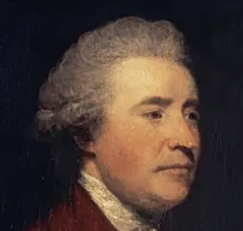
If we owe to it [civil society] any duty, it is not subject to our will. Duties are not voluntary. Duty and will are even contradictory terms. Now though civil society might be at first a voluntary act (which in many cases it undoubtedly was) its continuance is under a permanent standing covenant, coexisting with the society; and it attaches upon every individual of that society, without any formal act of his own. This is warranted by the general practice, arising out of the general sense of mankind.
▼
Source
source
p. 442
1 month 2 days ago
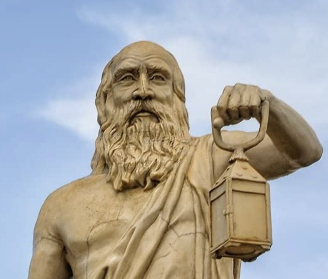
To one who asked what was the proper time for lunch, he said, "If a rich man, when you will; if a poor man, when you can." Diogenes Laërtius, vi. 40
4 days ago
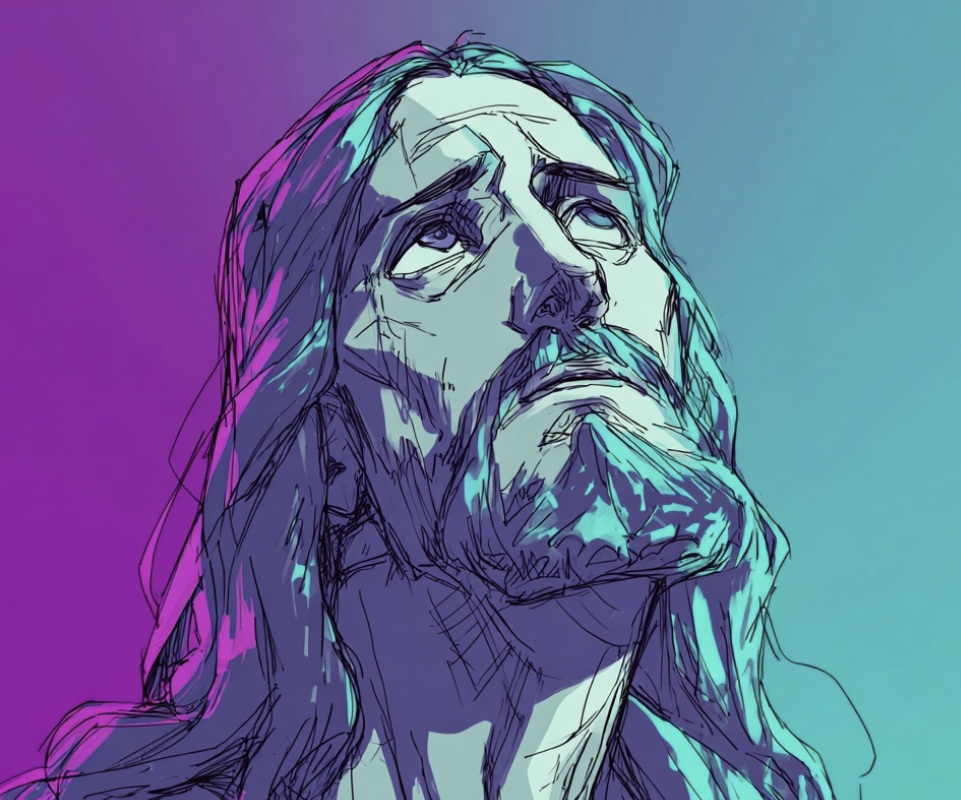
I disclose my mysteries to those who are worthy of my mysteries.
1 week 2 days ago
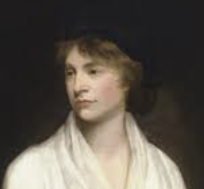
It may be confidently asserted that no man chooses evil because it is evil; he only mistakes it for happiness, the good he seeks. And the desire of rectifying these mistakes, is the noble ambition of an enlightened understanding, the impulse of feelings that Philosophy invigorates.
▼
Source
source
A Vindication of the Rights of Men
2 months 1 week ago
In the external, patience is some third element that must be added, and, humanly speaking, it would be better if it were not needed; some days it is needed more, some days less, all according to fortune, whose debtor a person becomes, even though he gained ever so little, because only when he wants to gain patience does he become one's debtor.
1 month 1 week ago
A mother gave her children Aesop's fables to read, in the hope of educating and improving their minds; but they very soon brought the book back, and the eldest, wise beyond his years, delivered himself as follows: This is no book for us; it's much too childish and stupid. You can't make us believe that foxes and wolves and ravens are able to talk; we've got beyond stories of that kind! In these young hopefuls you have the enlightened Rationalists of the future.
▼
Source
source
"Similes, Parables and Fables" Parerga and Paralipomena
1 month 1 week ago
Great geniuses have the shortest biographies.
▼
Source
source
Plato; or, The Philosopher
1 week 2 days ago
The pistol and dagger may as easily be made the auxiliaries of vice, as of virtue.
▼
Source
source
Book IV, "Of Tyrannicide"
2 days ago
Theology recognizes the contingency of human existence only to derive it from a necessary being, that is, to remove it. Theology makes use of philosophical wonder only for the purpose of motivating an affirmation which ends it. Philosophy, on the other hand, arouses us to what is problematic in our own existence and in that of the world, to such a point that we shall never be cured of searching for a solution.
▼
Source
source
p. 44

1 month 1 week ago
Animals come when their names are called. Just like human beings.
▼
Source
source
p. 67e
CivilSimian.com created by AxiomaticPanic, CivilSimian, Kalokagathia