

1 month 1 week ago
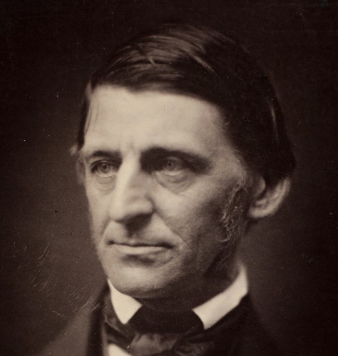
The law of the table is beauty, a respect to the common soul of the guests. Everything is unreasonable which is private to two or three, or any portion of the company. Tact never violates for a moment this law; never intrudes the orders of the house, the vices of the absent, or a tariff of expenses, or professional privacies; as we say, we never "talk shop" before company. Lovers abstain from caresses, and haters from insults, while they sit in one parlor with common friends.
▼
Source
source
Social Aims
1 month 1 week ago
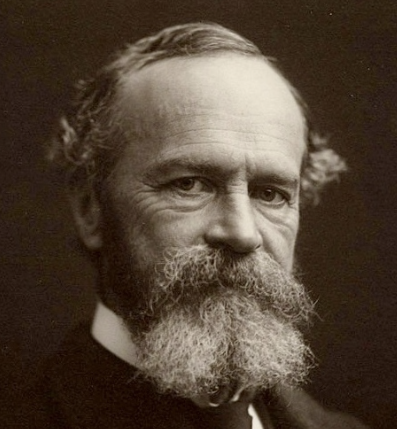
The "through-and-through" universe seems to suffocate me with its infallible impeccable all-pervasiveness. Its necessity, with no possibilities; its relations, with no subjects, make me feel as if I had entered into a contract with no reserved rights ... It seems too buttoned-up and white-chokered and clean-shaven a thing to speak for the vast slow-breathing unconscious Kosmos with its dread abysses and its unknown tides.
▼
Source
source
Essays in Radical Empiricism (1912), Ch. 12 : Absolutism and Empiricism

1 month 1 week ago
Why you fool, it's the educated reader who can be gulled. All our difficulty comes with the others. When did you meet a workman who believes the papers? He takes it for granted that they're all propaganda and skips the leading articles. He buys his paper for the football results and the little paragraphs about girls falling out of windows and corpses found in Mayfair flats. He is our problem. We have to recondition him. But the educated public, the people who read the highbrow weeklies, don't need reconditioning. They're all right already. They'll believe anything."
▼
Source
source
Ch. 5: Elasticity, section 1 Miss Hardcastle speaking to Mark Studdock
1 month 1 week ago
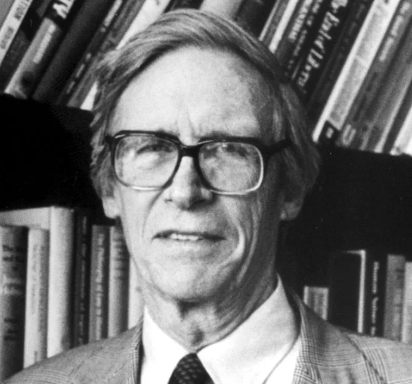
The intolerant can be viewed as free-riders, as persons who seek the advantages of just institutions while not doing their share to uphold them.
▼
Source
source
Chapter VI, Section 59, pg. 388
1 month 1 week ago
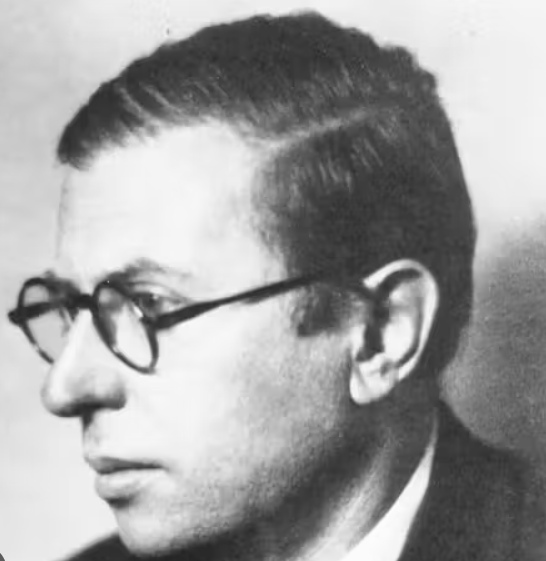
A man who belongs to some communist or revolutionary society wills certain concrete ends, which imply the will to freedom, and that freedom is willed in community. We will freedom for freedom's sake, and in and through the particular circumstances. And in thus willing freedom, we discover that it depends entirely upon the freedom of others and that the freedom of others depends upon our own.
▼
Source
source
pp. 51-52


1 week 1 day ago
Lord, give me the capacity of never praying, spare me the insanity of all worship, let this temptation of love pass from me which would deliver me forever unto You. Let the void spread between my heart and heaven! I have no desire to people my deserts by Your presence, to tyrannize my nights by Your light, to dissolve my Siberias beneath Your sun.
1 week 1 day ago
What anxiety when one is not sure of one's doubts or wonders: are these actually doubts?
1 month 3 weeks ago
God judged it better to bring good out of evil than to suffer no evil to exist.
▼
Source
source
Enchiridion (c. 420 ), Ch. 27
1 month 2 days ago
As iron is eaten away by rust, so the envious are consumed by their own passion.
▼
Source
source
§ 5

2 weeks 3 days ago
I believe the world grows near its end, yet is neither old nor decayed, nor will ever perish upon the ruins of its own principles.
▼
Source
source
Section 45
4 days ago
History is nothing but assisted and recorded memory. It might almost be said to be no science at all, if memory and faith in memory were not what science necessarily rest on. In order to sift evidence we must rely on some witness, and we must trust experience before we proceed to expand it. The line between what is known scientifically and what has to be assumed in order to support knowledge is impossible to draw. Memory itself is an internal rumour; and when to this hearsay within the mind we add the falsified echoes that reach us from others, we have but a shifting and unseizable basis to build upon. The picture we frame of the past changes continually and grows every day less similar to the original experience which it purports to describe.
▼
Source
source
Ch. 2 "History"

1 month 1 week ago
Music is an ocean, but the repertory is hardly even a lake; it is a pond.
▼
Source
source
Interview, Time magazine, December 1957

1 month 6 days ago
Truly to escape Hegel involves an exact appreciation of the price we have to pay to detach ourselves from him. It assumes that we are aware of the extent to which Hegel, insidiously perhaps, is close to us; it implies a knowledge, in that which permits us to think against Hegel, of that which remains Hegelian. We have to determine the extent to which our anti-Hegelianism is possibly one of his tricks directed against us, at the end of which he stands, motionless, waiting for us.
▼
Source
source
Discourse on Language, Inaugural Lecture at the Collège de France, 1970-1971. tr. A. M. Sheridan Smith
1 month 2 weeks ago
Tis certainly a kind of indignity to philosophy, whose sovereign authority ought every where to be acknowledg'd, to oblige her on every occasion to make apologies for her conclusions, and justify herself to every particular art and science, which may be offended at her.
▼
Source
source
Part 4, Section 5
2 days ago
The basic word I-Thou can be spoken only with one's whole being. The concentration and fusion into a whole being can never be accomplished by me, can never be accomplished without me. I require a Thou to become; becoming I, I say Thou.
1 week 1 day ago
The farther men get from God, the farther they advance into the knowledge of religions.
1 week 1 day ago
"Education to personality" has become a pedagogical ideal that turns its back upon the standardized-the collective and normal-human being. It thus fittingly recognizes the historical fact that the great, liberating deeds of world history have come from leading personalities and never from the inert mass that is secondary at all times and needs a demagogue if it is to move at all. The paean of the Italian nation is addressed to the personality of the Duce, and dirges of other nations lament the absence of great leaders.
▼
Source
source
Lecture, The Inner Voice, Kulturbund, Vienna (1932); quoted in The Integration of Personality, Farrar & Rinehart, NY

1 month 1 week ago
What I hold fast to is not one proposition but a nest of propositions.
1 month 1 week ago
I must plunge into the water of doubt again and again.
▼
Source
source
Ch. 7 : Remarks on Frazer's Golden Bough, p. 119
3 days ago
The only satisfied rationalists today are blinkered scientists or Marxists.
▼
Source
source
Ch. 7, p. 113
1 week ago
Every change in the social order, every revolution in property relations, is the necessary consequence of the creation of new forces of production which no longer fit into the old property relations. Private property has not always existed. When, towards the end of the Middle Ages, there arose a new mode of production which could not be carried on under the then existing feudal and guild forms of property, this manufacture, which had outgrown the old property relations, created a new property form, private property. And for manufacture and the earliest stage of development of big industry, private property was the only possible property form; the social order based on it was the only possible social order.
1 month 1 week ago
Humans are amphibians - half spirit and half animal.... As spirits they belong to the eternal world, but as animals they inhabit time.
▼
Source
source
Letter VIII
1 week 4 days ago
Though I myself am an atheist, I openly profess religion in the sense just mentioned, that is, a nature religion. I hate the idealism that wrenches man out of nature; I am not ashamed of my dependency on nature; I openly confess that the workings of nature affect not only my surface, my skin, my body, but also my core, my innermost being, that the air I breathe in bright weather has a salutary effect not only on my lungs but also on my mind, that the light of the sun illumines not only my eyes but also my spirit and my heart. And I do not, like a Christian, believe that such dependency is contrary to my true being or hope to be delivered from it. I know further that I am a finite moral being, that I shall one day cease to be. But I find this very natural and am therefore perfectly reconciled to the thought.
▼
Source
source
Lecture V, R. Manheim, trans. (1967), pp. 35-36
1 month 1 week ago
I have been writing & speaking what were once called novelties, for twenty five or thirty years, & have not now one disciple. Why? Not that what I said was not true; not that it has not found intelligent receivers but because it did not go from any wish in me to bring men to me, but to themselves. I delight in driving them from me. What could I do, if they came to me? - they would interrupt and encumber me. This is my boast that I have no school & no follower. I should account it a measure of the impurity of insight, if it did not create independence.
▼
Source
source
April 1859

1 month 1 week ago
The second matter in which Mill's principles condemn existing legislation is homosexuality. If two adults voluntarily enter into such a relation, this is a matter which concerns them only, and in which, therefore, the community ought not to intervene. If it were still believed, as it once was, that the toleration of such behavior would expose the community to the fate of Sodom and Gomorrah, the community would have every right to intervene. But it does not acquire a right to intervene merely on the ground that such conduct is thought wicked. The criminal law may rightly be invoked to prevent violence or fraud inflicted upon unwilling victims, but it ought not to be invoked when whatever damage there may be is suffered only by the agents-always assuming that the agents are adults.
▼
Source
source
p. 139

1 week 6 days ago
Only in America do people choose between health and financial ruin. Medical bankruptcy is policy choice, not inevitable outcome. We could have universal healthcare but choose a system that destroys families financially while claiming to provide care. The cruelty is the point.
1 month 6 days ago
I believe that political power also exercises itself through the mediation of a certain number of institutions that seem to have nothing in common with political power, that have the appearance of being independent, but are not.
▼
Source
source
Debate with Noam Chomsky, École Supérieure de Technologie à Eindhoven, November 1971
1 week 5 days ago
It cannot be denied that the early Indians possessed knowledge of God. All their writings are replete with sentiments and expressions, noble, clear, severely grand, as deeply conceived in any human language in which men have spoken of their God.
▼
Source
source
quoted in Knapp, Stephen Proof of Vedic Culture s Global Existence. Published byThe World Relief Network Detroit 2000. p. vii as quoted in Londhe, S. (2008)
1 month 1 week ago
I believe in Christianity as I believe that the sun has risen. Not only because I see it, but because by it I see everything else.
▼
Source
source
"Is Theology Poetry?", 1945
1 week 1 day ago
Metaphysical assertions, however, are statements of the psyche, and are therefore psychological. ... Whenever the Westerner hears the word "psychological," it always sounds to him like "only psychological."
▼
Source
source
Psyche and Symbol (1958), p. 285
4 days ago
They [the wise spirits of antiquity in the first circle of Dante's Inferno] are condemned, Dante tells us, to no other penalty than to live in desire without hope, a fate appropriate to noble souls with a clear vision of life.
▼
Source
source
Obiter Scripta
4 days ago
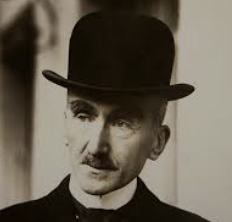
The remembrance of forbidden fruit is the earliest thing in the memory of each of us, as it is in that of mankind.
▼
Source
source
Chapter I: Moral Obligation

1 month 2 weeks ago
There is a plague on Man, the opinion that he knows something.

1 month 2 weeks ago
The superfluous, a very necessary thing. Variant translation: The superfluous is very necessary.
▼
Source
source
Poem Le Mondain, 1736
1 week 2 days ago
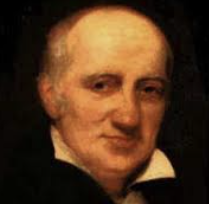
The man that does not know himself not to be at the mercy of other men, that does not feel that he is invulnerable to all the vicissitudes of fortune, is incapable of a constant and inflexible virtue.
▼
Source
source
Book V, "Of Education"

2 months 2 weeks ago
The objective of all human arrangements is through distracting one's thoughts to cease to be aware of life.
1 week 2 days ago
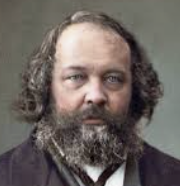
All exercise of authority perverts, and submission to authority humiliates.
▼
Source
source
As quoted in Michael Bakunin (1937), E.H. Carr, p. 453
4 days ago
For I came to cause division, with a man against his father, and a daughter against her mother, and a daughter-in-law against her mother-in-law. 36 Indeed, a man's enemies will be those of his own household.
▼
Source
source
10:35,36, New World Translation
1 month 2 weeks ago
Malice sucks up the greatest part of its own venom, and poisons itself.
▼
Source
source
Of Repentance, Book III, Ch. 2
4 days ago
A philosopher worthy of the name has never said more than a single thing: and even then it is something he has tried to say, rather than actually said. And he has said only one thing because he has seen only one point: and at that it was not so much a vision as a contact...
▼
Source
source
"L'intuition philosophique (Philosophical Intuition)" (10 April 1911); translated by Mabelle L. Andison in: Henri Bergson, The Creative Mind: An Introduction to Metaphysics, Courier Dover Publications, 2012, p. 91
1 week 1 day ago
In a republic, that paradise of debility, the politician is a petty tyrant who obeys the laws.
1 month 1 week ago
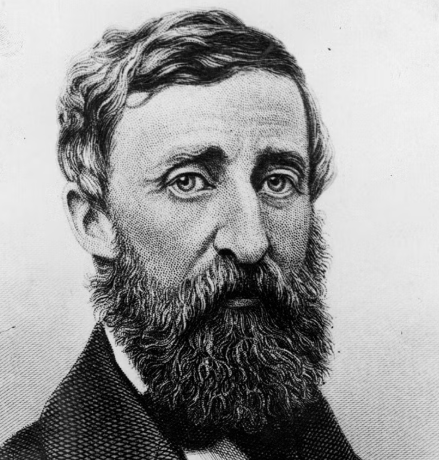
We do not live for idle amusement. I would not run round a corner to see the world blow up.
▼
Source
source
p. 491
4 days ago
Another doctrine repugnant to Civill Society, is that whatsoever a man does against his Conscience, is Sinne; and it dependeth on the presumption of making himself judge of Good and Evill. For a man's Conscience and his Judgement are the same thing, and as the Judgement, so also the Conscience may be erroneous.
▼
Source
source
The Second Part, Chapter 29, p. 168

2 weeks 2 days ago
He was as great as a man can be without morality.
▼
Source
source
Said of Napoleon (1842)
2 days ago
In the subjectivist view, when 'reason' is used to connote a thing or idea rather than an act, it refers exclusively to the relation of such an object or concept to a purpose, not to the object or concept itself. It means that the thing or the idea is good for something else. There is no reasonable aim as such, and to discuss the superiority of one aim over another in terms of reason becomes meaningless. From the subjective approach, such a discussion is possible only if both aims serve a third and higher one, that is, if they are means, not ends.
▼
Source
source
p. 6.
1 week 2 days ago
Blood will stream over Europe until the nations become aware of the frightful madness which drives them in circles. And then, struck by celestial music and made gentle, they approach their former altars all together, hear about the works of peace, and hold a great celebration of peace with fervent tears before the smoking altars.
▼
Source
source
As quoted in the Fourth Leaflet of the White Rose
1 week 4 days ago
The history of philosophical system is the picture gallery of reason.
▼
Source
source
Z. Hanfi, trans., in The Fiery Brook (1972), p. 68
1 month 2 days ago
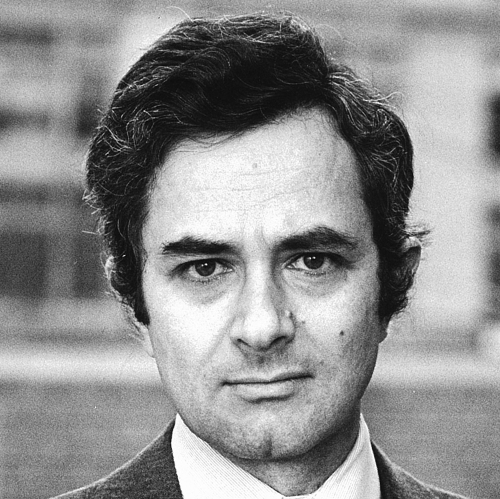
[A]bsurdity is one of the most human things about us: a manifestation of our most advanced and interesting characteristics. ... [I]t is possible only because we possess a certain kind of insight - the capacity to transcend ourselves in thought.If a sense of the absurd is a way of perceiving our true situation (even though the situation is not absurd until the perception arises), then what reason can we have to resent or escape it? ... [I]t results from the ability to understand our human limitations. It need not be a matter of agony unless we make it so. Nor need it evoke a defiant contempt of fate that allows us to feel brave or proud. Such dramatics even if carried on in private, betray a failure to appreciate the cosmic unimportance of the situation. If sub specie aeternitatis there is no reason to believe that anything matters, then that does not matter either, and we can approach our absurd lives with irony instead of heroism or despair.
▼
Source
source
"The Absurd" (1971), p. 23.
CivilSimian.com created by AxiomaticPanic, CivilSimian, Kalokagathia