


4 days ago
The ontological concept of truth is in the centre of a logic which may serve as a model of pre- technological rationality. It is the rationality of a two-dimensional universe of discourse which, contrasts with the of thought and behavior that develop in the execution of the technological project.
▼
Source
source
p. 130
1 month 1 week ago
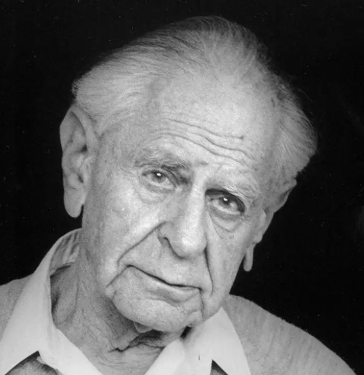
Always remember that it is impossible to speak in such a way that you cannot be misunderstood: there will always be some who misunderstand you.
1 month 3 weeks ago
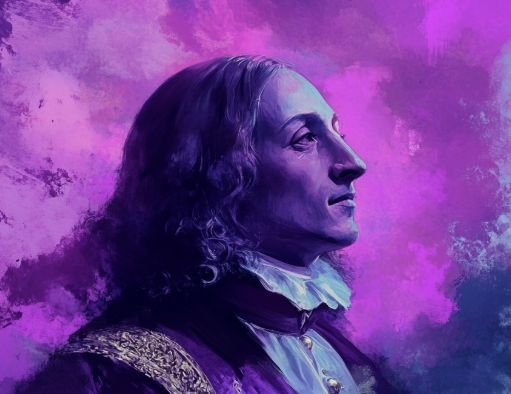
A few rules include all that is necessary for the perfection of the definitions, the axioms, and the demonstrations, and consequently of the entire method of the geometrical proofs of the art of persuading.

1 month 1 week ago
I do not think the resemblance between the Christian and the merely imaginative experience is accidental. I think that all things, in their own way, reflect heavenly truth, the imagination not least. "Reflect" is the important word. This lower life of the imagination is not a beginning of, nor a step toward, the higher life of the spirit, merely an image.
1 month 1 week ago
But the man is a humbug - a vulgar, shallow, self-satisfied mind, absolutely inaccessible to the complexities and delicacies of the real world. He has the journalist's air of being a specialist in everything, of taking in all points of view and being always on the side of the angels: he merely annoys a reader who has the least experience of knowing things, of what knowing is like. There is not two pence worth of real thought or real nobility in him. But he isn't dull.
▼
Source
source
Part of a diary entry dated "Wednesday-Wednesday 9-16 July", 1924, regarding Thomas Babington Macaulay
1 week 2 days ago
Nothing, in fact, is as universal or as ancient as the iniquitous and absurd; truth and justice, on the contrary, are the least universal, the youngest features in the development of human society.

1 week 6 days ago
Eviction is poverty's engine. You lose housing, then jobs, then children, then hope. Evictions concentrate in poor Black neighborhoods, devastate communities, enrich landlords. The eviction machine churns through lives, destroying stability while extracting maximum rent. Homelessness is profitable for property owners.
1 week ago
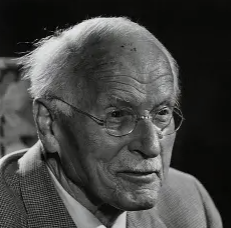
Whereas logic and objectivity are usually the predominant features of a man's outer attitude, or are at least regarded as ideals, in the case of a woman it is feeling. But in the soul it is the other way round: inwardly it is the man who feels, and the woman who reflects. Hence a man's greater liability to total despair, while a woman can always find comfort and hope; accordingly a man is more likely to put an end to himself than a woman. However much a victim of social circumstances a woman may be, as a prostitute for instance, a man is no less a victim of impulses from the unconscious, taking the form of alcoholism and other vices.
▼
Source
source
Psychological Types (1921). CW 6. P.805
1 month 1 week ago
A process which led from the amœba to man appeared to the philosophers to be obviously a progress - though whether the amœba would agree with this opinion is not known.
▼
Source
source
Ch. 1: Mysticism and Logic
1 month 2 weeks ago
We rarely hear, it has been said, of the combinations of masters, though frequently of those of the workman. But whoever imagines, upon this account, that masters rarely combine, is as ignorant of the world as of the subject.
▼
Source
source
Chapter VIII, p. 80.
1 month 1 week ago
What can you ever really know of other people's souls - of their temptations, their opportunities, their struggles? One soul in the whole creation you do know: and it is the only one whose fate is placed in your hands. If there is a God, you are, in a sense, alone with Him. You cannot put Him off with speculations about your next door neighbours or memories of what you have read in books.
▼
Source
source
Book IV, Chapter 10, "Nice People or New Men"

1 month 1 week ago
The goal to be reached is the mind's insight into what knowing is. Impatience asks for the impossible, wants to reach the goal without the means of getting there. The length of the journey has to be borne with, for every moment is necessary, ... because by nothing less could that all-pervading mind ever manage to become conscious of what itself is - for that reason, the individual mind, in the nature of the case, cannot expect by less toil to grasp what its own substance contains.
▼
Source
source
Preface (J. B. Baillie translation), § 29

1 month 1 week ago
He who dares not offend cannot be honest.
▼
Source
source
24 April 1776, The Forester's Letters", Letter III: To Cato, Pennsylvania Journal

2 weeks 4 days ago
All things are in all.
▼
Source
source
V 9; as translated by Dorothea Waley Singer

1 month 2 weeks ago
We may search long to find where God is, but we shall find Him in those who keep the words of Christ. For the Lord Christ saith, " If any man love me, he will keep my words; and we will make our abode with him."
▼
Source
source
p. 278

4 days ago
Sleep on now, and take your rest: behold, the hour is at hand, and the Son of man is betrayed into the hands of sinners. Rise, let us be going: behold, he is at hand that doth betray me.
▼
Source
source
26:45-46 (KJV)
4 days ago
The revolution, Stahl declared, is the 'world-historic mark of our age.' It would found 'the entire State on the will of man instead of on the commandment and ordinance of God.'
▼
Source
source
p. 364

1 month 1 day ago
The years as they pass plunder us of one thing after another.
▼
Source
source
Book II, epistle ii, line 55


2 weeks 1 day ago
If your little savage were left to himself and be allowed to retain all his ignorance, he would in time join the infant's reasoning to the grown man's passion, he would strangle his father and sleep with his mother.
1 month 1 week ago
A house sold by A to B does not wander from one place to another, although it circulates as a commodity.
▼
Source
source
Vol. II, Ch. VI, p. 152.

1 month 2 weeks ago
The public weal requires that men should betray and lie and massacre.
▼
Source
source
Book III, Ch. 1. Of Profit and Honesty
1 month 1 week ago
Money is therefore not only the object but also the fountainhead of greed.
▼
Source
source
Notebook II, The Chapter on Money, p. 142.
1 month 1 week ago
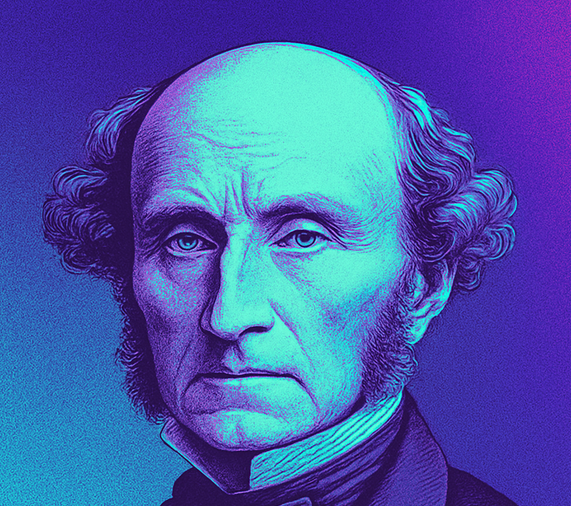
Whatever crushes individuality is despotism, by whatever name it may be called, and whether it professes to be enforcing the will of God or the injunctions of men.
▼
Source
source
Ch. III: Of Individuality, As One of the Elements of Well-Being
2 weeks 4 days ago
The wise soul feareth not death; rather she sometimes striveth for death, she goeth beyond to meet her. Yet eternity maintaineth her substance throughout time, immensity throughout space, universal form throughout motion.
▼
Source
source
I 1

2 weeks 2 days ago
There is no man alone, because every man is a Microcosm, and carries the whole world about him.
▼
Source
source
Section 10

3 weeks 4 days ago
Incorporeal hypostases, in descending, are distributed into parts, and multiplied about individuals with a diminution of power; but when they ascend by their energies beyond bodies, they become united, and proceed into a simultaneous subsistence, through exuberance of power.
1 month 2 weeks ago
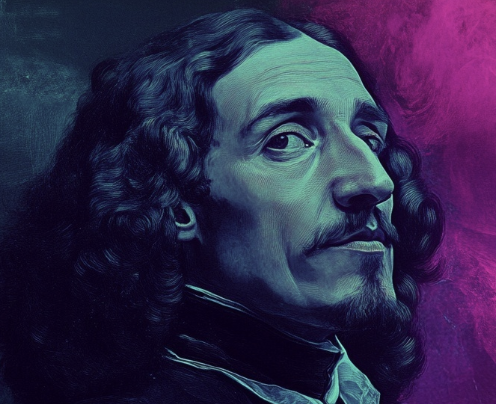
A free man thinks of death least of all things; and his wisdom is a meditation not of death but of life.
▼
Source
source
Part IV, Prop. LXVII
1 week 5 days ago
He was not merely a chip of the old Block, but the old Block itself.
▼
Source
source
On Pitt's First Speech (26 February 1781), from Wraxall's Memoirs, First Series, vol. i. p. 342

1 month 2 weeks ago
To God, truly, the Giver and Architect of Forms, and it may be to the angels and higher intelligences, it belongs to have an affirmative knowledge of forms immediately, and from the first contemplation. But this assuredly is more than man can do, to whom it is granted only to proceed at first by negatives, and at last to end in affirmatives, after exclusion has been exhausted.
▼
Source
source
Aphorism XV
1 week 2 days ago
Tools arm the man. One can well say that man is capable of bringing forth a world; he lacks only the necessary apparatus, the corresponding armature of his sensory tools. The beginning is there. Thus the principle of a warship lies in the idea of the shipbuilder, who is able to incorporate this thought by making himself into a gigantic machine, as it were, through a mass of men and appropriate tools and materials. Thus the idea of a moment often required monstrous organs, monstrous masses of materials, and man is therefore a potential, if not an actual creator.
▼
Source
source
Fragment No. 88
1 month 1 day ago
In adversity, remember to keep an even mind.
▼
Source
source
Book II, ode iii, line 1
1 month 2 days ago
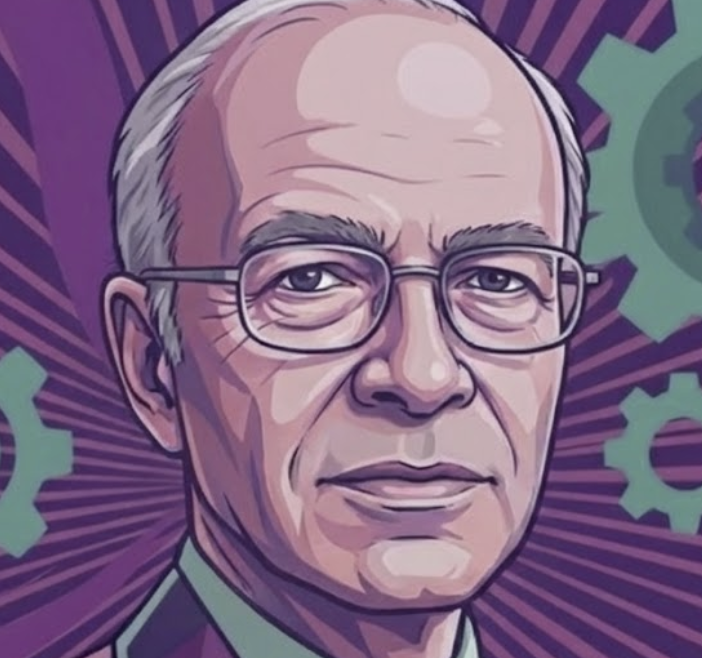
Herbert Spencer is little read now. Philosophers do not regard him as a major thinker.
▼
Source
source
Social Darwinism has long been in disrepute. Chapter 3, From Evolution To Ethics?, p. 61
1 month 2 weeks ago
In England, success in the profession of the law leads to some very great objects of ambition; and yet how few men, born to easy fortunes, have ever in this country been eminent in that profession?
▼
Source
source
Chapter I, Part III, p. 824.

2 weeks 2 days ago
When an opinion has taken root in a democracy and established itself in the minds of the majority, it afterward persists by itself, needing no effort to maintain it since no one attacks it. Those who at first rejected it as false come in the end to adopt it as accepted, and even those who still at the bottom of their hearts oppose it keep their views to themselves, taking great care to avoid a dangerous and futile contest.
▼
Source
source
Book Three, Chapter XXI.
1 month 3 weeks ago
In a word, neither death, nor exile, nor pain, nor anything of this kind is the real cause of our doing or not doing any action, but our inward opinions and principles.
▼
Source
source
Book I, ch. 11,33.
1 week 6 days ago
Despite laws and diversity initiatives, discrimination pervades workplaces. It's just more subtle, harder to prove, embedded in systems. Unconscious bias, cultural fit, networking advantages - discrimination continues through mechanisms that evade accountability while producing same outcomes.
2 weeks 4 days ago
I pray you, magnificent Sir, do not trouble yourself to return to us, but await our coming to you.
▼
Source
source
Third Dialogue
4 days ago
If I compare arithmetic with a tree that unfolds upward into a multitude of techniques and theorems while its root drives into the depths, then it seems to me that the impetus of the root.
▼
Source
source
Gottlob Frege, Montgomery Furth (1964). The Basic Laws of Arithmetic: Exposition of the System. p. 10
1 week 5 days ago
Dreams, as we all know, are very queer things: some parts are presented with appalling vividness, with details worked up with the elaborate finish of jewellery, while others one gallops through, as it were, without noticing them at all, as, for instance, through space and time. Dreams seem to be spurred on not by reason but by desire, not by the head but by the heart, and yet what complicated tricks my reason has played sometimes in dreams, what utterly incomprehensible things happen to it!
1 week ago
The Protestant churches generally hold that the elements of the sacrament are flesh and blood only in a tropical sense; they nourish our souls as meat and the juice of it would our bodies. But the Catholics maintain that they are literally just that; although they possess all the sensible qualities of wafer-cakes and diluted wine. But we can have no conception of wine except what may enter into a belief, either -
1 month 2 weeks ago
Faith is a living, bold trust in God's grace, so certain of God's favor that it would risk death a thousand times trusting in it. Such confidence and knowledge of God's grace makes you happy, joyful and bold in your relationship to God and all creatures. The Holy Spirit makes this happen through faith. Because of it, you freely, willingly and joyfully do good to everyone, serve everyone, suffer all kinds of things, love and praise the God who has shown you such grace.
▼
Source
source
An Introduction to St. Paul's Letter to the Romans fromDr. Martin Luthers Vermischte Deutsche Schriften. Johann K. Irmischer, ed. Vol. 63(Erlangen: Heyder and Zimmer, 1854), pp. 124-125. (EA 63:124-125)
1 month 2 weeks ago
I have ever loved to repose myself, whether sitting or lying, with my heels as high or higher than my head.
▼
Source
source
Book III, Ch. 13. Of Experience
4 days ago
Verily I say unto you, All sins shall be forgiven unto the sons of men, and blasphemies wherewith soever they shall blaspheme: But he that shall blaspheme against the Holy Ghost hath never forgiveness, but is in danger of eternal damnation.
▼
Source
source
(Mark 3:28-29) (KJV)
1 month 2 weeks ago
Is Christ only to be adored? Or is the holy Mother of God rather not to be honoured? This is the woman who crushed the Serpent's head. Hear us. For your Son denies you nothing.
▼
Source
source
Weimar edition of Martin Luther's Works, English translation edited by J. Pelikan [Concordia: St. Louis], Vol. 51, 128-129

1 month 1 day ago
Now his principal doctrines were these. That atoms and the vacuum were the beginning of the universe; and that everything else existed only in opinion. (trans. Yonge 1853) The first principles of the universe are atoms and empty space; everything else is merely thought to exist.
▼
Source
source
(trans. by Robert Drew Hicks 1925) Often paraphrased as "Nothing exists except atoms and empty space; everything else is opinion."
1 month 1 week ago
Politics is, as it were, the gizzard of society, full of grit and gravel, and the two political parties are its two opposite halves, - sometimes split into quarters, it may be, which grind on each other. Not only individuals, but States, have thus a confirmed dyspepsia, which expresses itself, you can imagine by what sort of eloquence. Thus our life is not altogether a forgetting, but also, alas! to a great extent, a remembering of that which we should never have been conscious of, certainly not in our waking hours. Why should we not meet, not always as dyspeptics, to tell our bad dreams, but sometimes as eupeptics, to congratulate each other on the ever glorious morning? I do not make an exorbitant demand, surely.
▼
Source
source
p. 495
1 month 1 week ago
Art, I suppose, is only for beginners, or else for those resolute dead-enders, who have made up their minds to be content with the ersatz of Suchness, with symbols rather than with what they signify, with the elegantly composed recipe in lieu of actual dinner.
1 month 1 week ago
To see ourselves as others see us is a most salutary gift. Hardly less important is the capacity to see others as they see themselves.
3 days ago
When there is genuine artistry in scientific inquiry and philosophic speculation, a thinker proceeds neither by rule nor yet blindly, but by means of meaning that exist immediately as feelings having qualitative color.
CivilSimian.com created by AxiomaticPanic, CivilSimian, Kalokagathia