


1 month 1 week ago
In contrast to "Blessed are they who do not see and still believe," he speaks of "seeing and still not believing."
▼
Source
source
p. 30
1 month 1 week ago
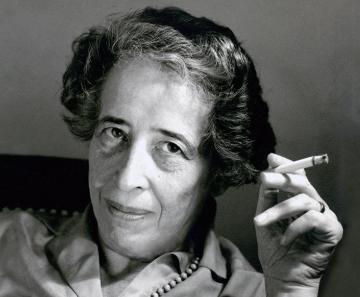
The ideal subject of totalitarian rule is not the convinced Nazi or the convinced Communist, but people for whom the distinction between fact and fiction (i.e., the reality of experience) and the distinction between true and false (i.e., the standards of thought) no longer exist.
▼
Source
source
Part 3, Ch. 13, § 3
1 month 1 week ago
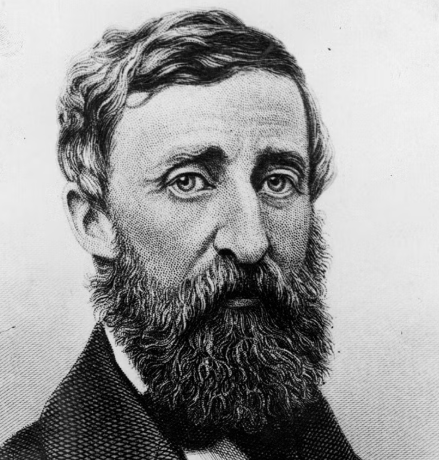
That virtue we appreciate is as much ours as another's. We see so much only as we possess.
▼
Source
source
June 22, 1839
4 days ago
Liberalism has merely cleared a field in which every soul and every corporate interest may fight with every other for domination. Whoever is victorious in this struggle will make an end of liberalism; and the new order, which will deem itself saved, will have to defend itself in the following age against a new crop of rebels.
▼
Source
source
"The Irony of Liberalism"
1 month 2 weeks ago
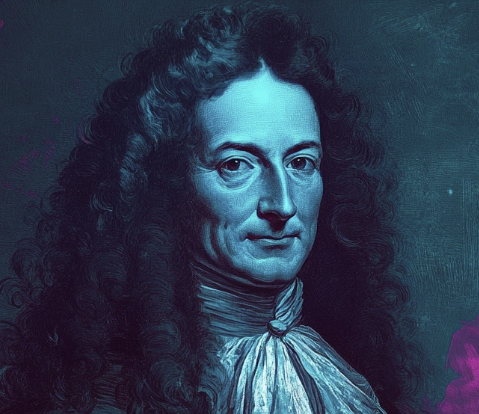
The love of God consists in an ardent desire to procure the general welfare, and reason teaches me that there is nothing which contributes more to the general welfare of mankind than the perfection of reason.
▼
Source
source
Closing sentence of the Preface to the general science (1677) (in P. Wiener (ed.), Leibniz Selections, Macmilland Press Ltd, 1951).
1 month 1 week ago
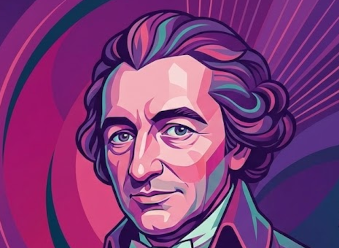
Our Traders in Men (an unnatural commodity!) must know the wickedness of that Slave-Trade, if they attend to reasoning, or the dictates of their own hearts; and such as shun and stiffle all these, wilfully sacrifice Conscience, and the character of integrity to that golden Idol.
1 month 1 week ago
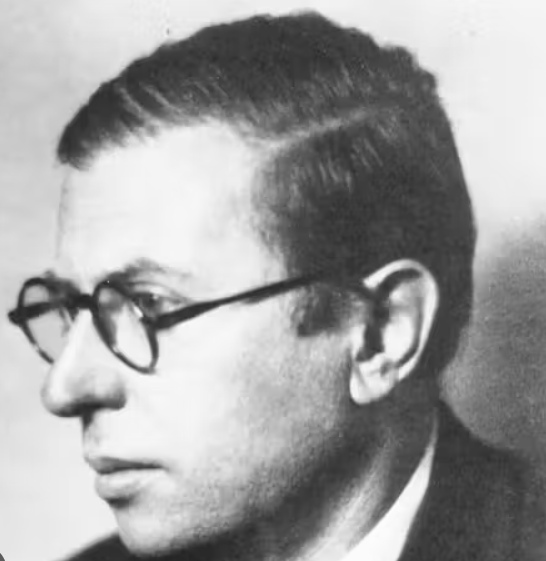
I think of death only with tranquility, as an end. I refuse to let death hamper life. Death must enter life only to define it.
1 month 1 week ago
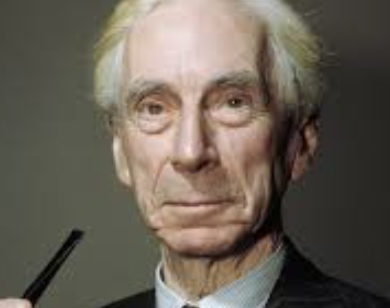
The hopes which inspire communism are, in the main, as admirable as those instilled by the Sermon on the Mount, but they are held as fanatically and are as likely to do as much harm.
▼
Source
source
Part I, The Present Condition of Russia, Ch. 1: What Is Hoped From Bolshevism
1 month 1 week ago
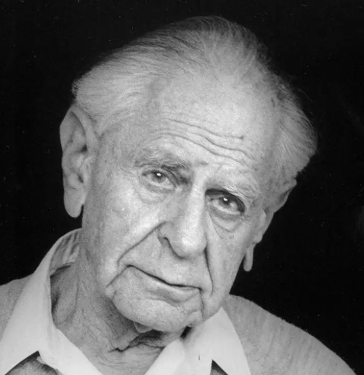
It is wrong to think that belief in freedom always leads to victory; we must always be prepared for it to lead to defeat. If we choose freedom, then we must be prepared to perish along with it. Poland fought for freedom as no other country did. The Czech nation was prepared to fight for its freedom in 1938; it was not lack of courage that sealed its fate. The Hungarian Revolution of 1956 - the work of young people with nothing to lose but their chains - triumphed and then ended in failure. ... Democracy and freedom do not guarantee the millennium. No, we do not choose political freedom because it promises us this or that. We choose it because it makes possible the only dignified form of human coexistence, the only form in which we can be fully responsible for ourselves. Whether we realize its possibilities depends on all kinds of things - and above all on ourselves.
1 week 4 days ago
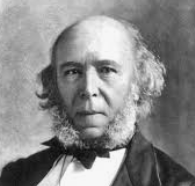
As there must be moderation in other things, so there must be moderation in self-criticism. Perpetual contemplation of our own actions produces a morbid consciousness, quite unlike that normal consciousness accompanying right actions spontaneously done; and from a state of unstable equilibrium long maintained by effort, there is apt to be a fall towards stable equilibrium, in which the primitive nature reasserts itself. Retrogression rather than progression may hence result.
▼
Source
source
Ch. 10, General Conclusions

1 month 3 weeks ago
Superstition is now in her turn cast down and trampled underfoot, whilst we by the victory are exalted high as heaven.
▼
Source
source
Book I, lines 78-79 (tr. W. H. D. Rouse)
1 month 1 day ago
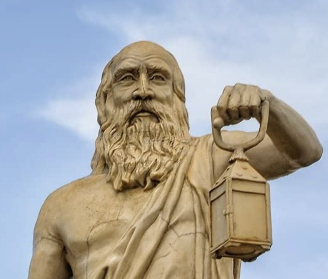
He used to reason as follows: 'Everything belongs to the gods; the wise are friends of the gods; friends hold all things in common; ergo, everything belongs to the wise.'
▼
Source
source
Diogenes Laërtius, vi. 37, as reported in Diogenes the Cynic: Sayings and Anecdotes as translated by Robin Hard (Oxford: 2012), p. 13
1 month 1 week ago
You have stolen my face from me: you know it and I no longer do.
▼
Source
source
Act 1, sc. 5
1 month 1 week ago
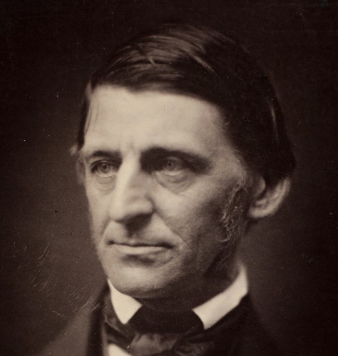
The person who screams, or uses the superlative degree, or converses with heat, puts whole drawing-rooms to flight. If you wish to be loved, love measure. You must have genius or a prodigious usefulness if you will hide the want of measure.
▼
Source
source
p. 167
1 month 1 week ago
Power may be defined as the production of intended effects.
▼
Source
source
Ch. 3: The Forms of Power
1 month 2 weeks ago
Nature is satisfied with little; and if she is, I am also.
▼
Source
source
As quoted in The Story of Philosophy (1933) by Will Durant, p. 176

2 weeks 2 days ago
If there ever are great revolutions there, they will be caused by the presence of the blacks upon American soil. That is to say, it will not be the equality of social conditions but rather their inequality which may give rise thereto.
▼
Source
source
Book Three, Chapter XXI.
1 week 2 days ago
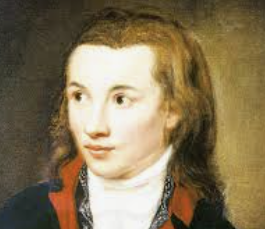
Nature is an Æolian Harp, a musical instrument; whose tones again are keys to higher strings in us.
1 month 2 weeks ago
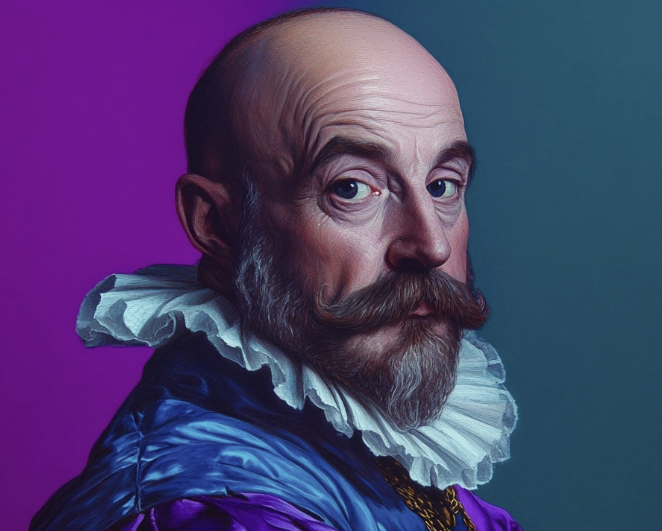
It was truly very good reason that we should be beholden to God only, and to the favour of his grace, for the truth of so noble a belief, since from his sole bounty we receive the fruit of immortality, which consists in the enjoyment of eternal beatitude.... The more we give and confess to owe and render to God, we do it with the greater Christianity.
▼
Source
source
Ch. 12
1 month 1 week ago
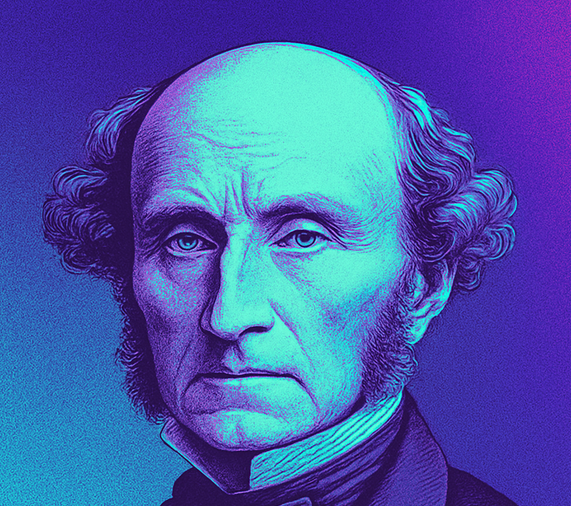
Conformity to nature has no connection whatever with right and wrong. The idea can never be fitly introduced into ethical discussions at all, except, occasionally and partially, into the question of degrees of culpability. To illustrate this point, let us consider the phrase by which the greatest intensity of condemnatory feeling is conveyed in connection with the idea of nature - the word "unnatural." That a thing is unnatural, in any precise meaning which can be attached to the word, is no argument for its being blamable; since the most criminal actions are to a being like man not more unnatural than most of the virtues.
▼
Source
source
page 62; Broadview Press, page 102

1 week 5 days ago
I should not be surprized at seeing a French Army conveyed by a British Navy to an attack upon this Kingdom.
▼
Source
source
Letter to French Laurence (12 May 1797) after hearing of the mutinies in the Royal Navy, quoted in R. B. McDowell (ed.)

1 month 4 weeks ago
The greatness of the human being consists in this: that it is capable of the universe.
▼
Source
source
q. 1, art. 2, ad 4

1 month 3 weeks ago
If we are not stupid or insincere when we say that the good or ill of man lies within his own will, and that all beside is nothing to us, why are we still troubled?
▼
Source
source
Book I, ch. 25, § 1.

4 days ago
Take, eat; this is my body. And he took the cup, and gave thanks, and gave it to them, saying, Drink ye all of it; For this is my blood of the new testament, which is shed for many for the remission of sins. But I say unto you, I will not drink henceforth of this fruit of the vine, until that day when I drink it new with you in my Father's kingdom.
▼
Source
source
26:26-29 (KJV)
1 month 1 week ago
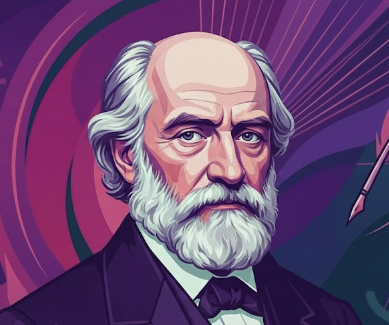
In a field of ripening corn I came to a place which had been trampled down by some ruthless foot; and as I glanced amongst the countless stalks, every one of them alike, standing there so erect and bearing the full weight of the ear, I saw a multitude of different flowers, red and blue and violet. How pretty they looked as they grew there so naturally with their little foliage! But, thought I, they are quite useless; they bear no fruit; they are mere weeds, suffered to remain only because there is no getting rid of them. And yet, but for these flowers, there would be nothing to charm the eye in that wilderness of stalks. They are emblematic of poetry and art, which, in civic life-so severe, but still useful and not without its fruit-play the same part as flowers in the corn.
▼
Source
source
"Similes, Parables and Fables" Parerga and Paralipomena, vol. 2, § 380A
1 month 1 week ago
Nothing is so much to be feared as fear. Atheism may comparatively be popular with God himself.
▼
Source
source
September 7, 1851
1 month 1 day ago
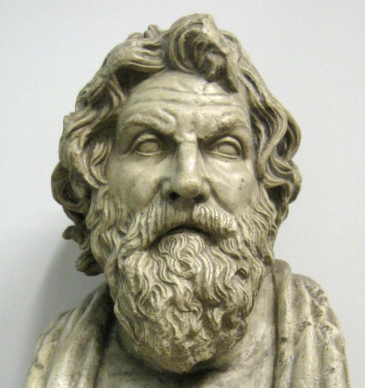
Once, when he was applauded by rascals, he remarked, "I am horribly afraid I have done something wrong."
▼
Source
source
§ 5
1 month 1 week ago
The relation of feeling toward art and its bringing-forth can be one of production or one of reception and enjoyment.
▼
Source
source
p. 78
2 weeks 2 days ago
In order to shake a hypothesis, it is sometimes not necessary to do anything more than push it as far as it will go.
▼
Source
source
No. 50

1 week ago
One of the biggest paradoxes of our world: memories vanish when we want to remember, but fix themselves permanently in the mind when we want to forget.

1 month 1 week ago
If He who in Himself can lack nothing chooses to need us, it is because we need to be needed.
1 week 5 days ago
...what was done in France was a wild attempt to methodize anarchy; to perpetuate and fix disorder. That it was a foul, impious, monstrous thing, wholly out of the course of moral nature. He undertook to prove, that it was generated in treachery, fraud, falsehood, hypocrisy, and unprovoked murder. ... That by the terror of assassination they had driven away a very great number of the members, so as to produce a false appearance of a majority.-That this fictitious majority had fabricated a constitution, which as now it stands, is a tyranny far beyond any example that can be found in the civilized European world of our age.
▼
Source
source
p. 376

2 months 1 week ago
A Roman emperor sitting at the table surrounded by his bodyguard is a magnificent sight, but when the reason is fear, the magnificence pales. So also when the individual does not dare stand taciturnly by his word, does not stand freely and confidently on the pedestal of a conscious act, but is surrounded by a host of deliberations before and after that render him incapable of getting his eye on the action.
1 month 1 day ago
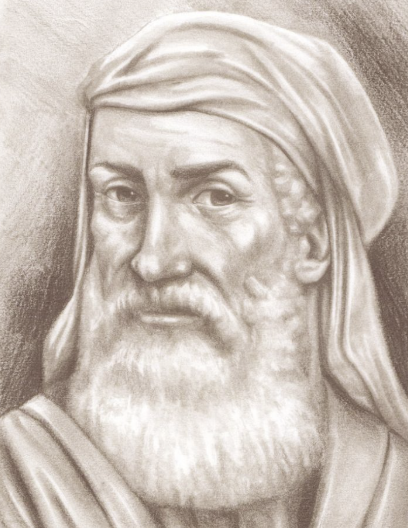
Fortunate is he who has acquired a wealth of divine understanding, but wretched the one whose interest lies in shadowy conjectures about divinities.
▼
Source
source
fr. 132
3 days ago
All metaphysical theories are inconclusively vulnerable to positivist attack.
▼
Source
source
Ch. 9, p. 127

1 month 1 week ago
May we not return to those scoundrels of old, the illustrious founders of superstition and fanaticism, who first took the knife from the altar to make victims of those who refused to be their disciples?
▼
Source
source
Letter to Frederick II of Prussia (December 1740), published in Oeuvres complètes de Voltaire, Vol. 7 (1869), edited by Georges Avenel, p. 105; as translated by Richard Aldington

1 month 2 weeks ago
I approached the task of destroying images by first tearing them out of the heart through God's Word and making them worthless and despised. This indeed took place before Dr. Karlstadt ever dreamed of destroying images. For when they are no longer in the heart, they can do no harm when seen with the eyes. But Dr. Karlstadt, who pays no attention to matters of the heart, has reversed the order by removing them from sight and leaving them in the heart. For he does not preach faith, nor can he preach it; unfortunately, only now do I see that. Which of these two forms of destroying images is best, I will let each man judge for himself.
▼
Source
source
pp. 84-85
1 month 1 week ago
So long as men worship the Caesars and Napoleons, Caesars and Napoleons will duly rise and make them miserable.
▼
Source
source
Ch. 8, p. 99 [2012 reprint]
1 month 1 week ago
Now, what is 'unrighteousness' in practice? It is in practice behavior of a kind disliked by the herd. By calling it unrighteousness, and by arranging an elaborate system of ethics around this conception, the herd justifies itself in wreaking punishment upon the objects of its own dislike, while at the same time, since the herd is righteous by definition, it enhances its own self-esteem at the very moment when it lets loose its impulse to cruelty. This is the psychology of lynching, and of the other ways in which criminals are punished. The essence of the conception of righteousness, therefore, is to afford an outlet for sadism by cloaking cruelty as justice.
▼
Source
source
"The Idea of Righteousness"
1 month 1 week ago
Hitler never intended to defend 'the West' against Bolshevism but always remained ready to join 'the Reds' for the destruction of the West, even in the middle of the struggle against Soviet Russia.
▼
Source
source
Part 3, Ch. 10

3 weeks 2 days ago
This was long thought by many to be simply a dietary proscription, and often ridiculed, but many consider it to have originally been intended as advice against getting involved in politics, for voting on issues in his time was often done by using differently colored beans. Others have stated that it might signify a more general admonition against relying on the votes of people to determine truths of reality.
▼
Source
source
Symbol 37
1 month 2 weeks ago
I am entirely of the opinion that the papacy is the Antichrist. But if anyone wants to add the Turk, then the Pope is the spirit of the Antichrist, and the Turk is the flesh of the Antichrist. They help each other in their murderous work. The latter slaughters bodily and by the sword, the former spiritually and by doctrine.
▼
Source
source
330
3 days ago
Well both original seizure and subsequent critical discrimination have equal claims, each to its own complete development and must not be forgotten that direct and unreasoned impression comes first. There is such occasions something of the quality of the wind that bloweth where it listeth. Sometimes it comes and sometimes it does not, even in the presence of the same object. It cannot be forced and when it does not arrive it is not wise to seek to recover by direct action the first fine rapture.
▼
Source
source
p. 151
4 days ago
Friendship is almost always the union of a part of one mind with the part of another; people are friends in spots.
▼
Source
source
"Friendships"

1 month 1 week ago
Frazer is much more savage than most of his savages, for they are not as far removed from the understanding of spiritual matter as a twentieth-century Englishman. His explanations of primitive practices are much cruder than the meaning of these practices themselves.
▼
Source
source
Ch. 7 : Remarks on Frazer's Golden Bough, p. 131
1 month 1 week ago
I have assumed throughout that the persons in the original position are rational.
▼
Source
source
Chapter III, Section 25, pg. 142
2 weeks 2 days ago
Gratitude is a burden, and every burden is made to be shaken off.
1 month 2 weeks ago
There is no more lovely, friendly and charming relationship, communion or company than a good marriage.
▼
Source
source
292
1 month 1 week ago
It seems that sin is geographical. From this conclusion, it is only a small step to the further conclusion that the notion of "sin" is illusory, and that the cruelty habitually practised in punishing it is unnecessary.
▼
Source
source
A Fresh Look at Empiricism: 1927-42 (1996), p. 283
1 month 1 week ago
Christian philosophers have found no difficulty in justifying imperialism, war, the capitalist system, the use of torture, the censorship of the press and ecclesiastical tyrannies of every sort, from the tyranny of Rome to the tyrannies of Geneva and New England.
▼
Source
source
Ch. 14, p. 315 [2012 reprint]
CivilSimian.com created by AxiomaticPanic, CivilSimian, Kalokagathia