

2 months 2 weeks ago
Those animals which are incapable of making binding agreements with one another not to inflict nor suffer harm are without either justice or injustice; and likewise for those peoples who either could not or would not form binding agreements not to inflict nor suffer harm.

2 weeks 6 days ago
I was walking late one night along a tree-lined path; a chestnut fell at my feet. The noise it made as it burst, the resonance it provoked in me, and an upheaval out of all proportion to this insignificant event thrust me into miracle, into the rapture of the definitive, as if there were no more questions - only answers. I was drunk on a thousand unexpected discoveries, none of which I could make use of. This is how I nearly reached the Supreme. But instead I went on with my walk.
1 week 3 days ago
If philosophy is still necessary, it is so only in the way it has been from time immemorial: as critique, as resistance to the expanding heteronomy, even if only as thought's powerless attempt to remain its own master and to convict of untruth, by their own criteria, both a fabricated mythology and a conniving, resigned acquiescence. ... It is incumbent upon philosophy ... to provide a refuge for freedom. Not that there is any hope that it could break the political tendencies that are throttling freedom throughout the world both from within and without and whose violence permeates the very fabric of philosophical argumentation.
▼
Source
source
p. 10
2 weeks 6 days ago
From the moment when labour can no longer be converted into capital, money, or rent, into a social power capable of being monopolized, i.e., from the moment when individual property can no longer be transformed into bourgeois property, into capital, from that moment, you say individuality vanishes.
1 week 4 days ago
Yes, yes, I see it all! - an enormous social activity, a mighty civilization, a profuseness of science, of art, of industry, of morality, and afterwords, when we have filled the world with industrial marvels, with great factories, with roads, museums and libraries, we shall fall exhausted at the foot of it all, and it will subsist - for whom? Was man made for science or was science made for man?
2 months 3 weeks ago
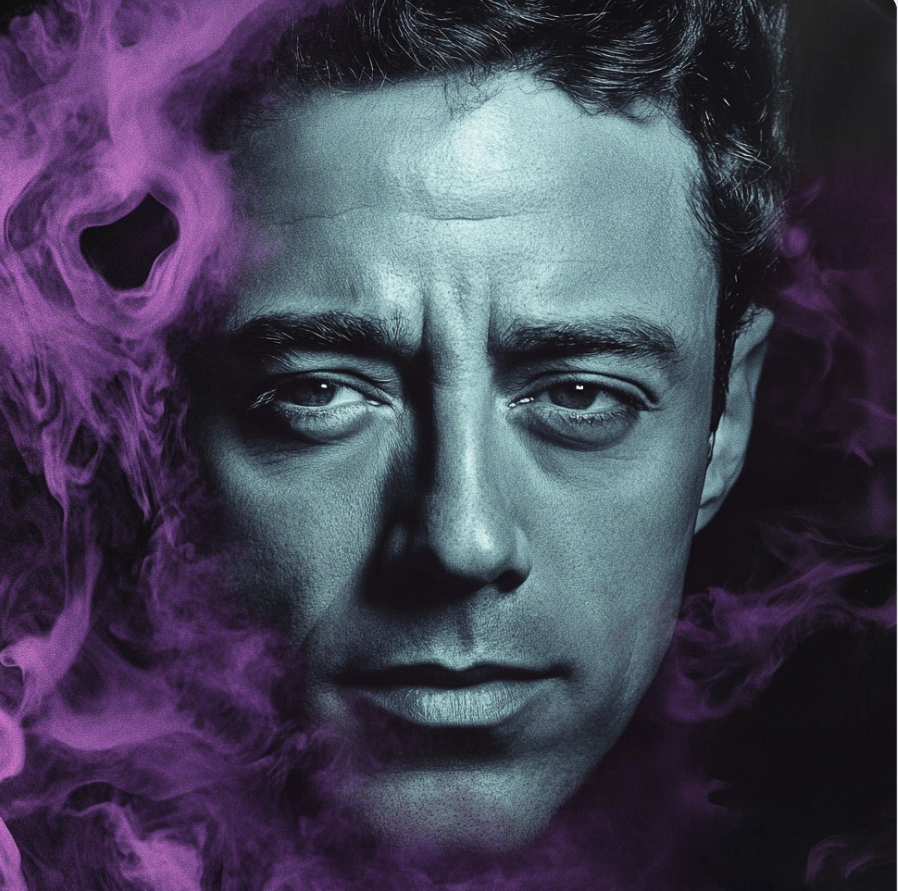
Real fulfillment, for the man who allows absolutely free rein to his desires, and who must dominate everything, lies in hatred.
1 month 3 weeks ago
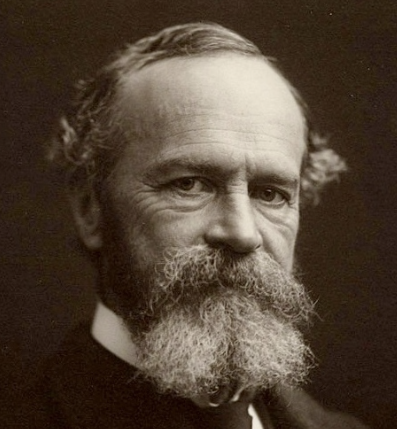
Old-fashioned determinism was what we may call hard determinism. It did not shrink from such words as fatality, bondage of the will, necessitation, and the like. Nowadays, we have a soft determinism which abhors harsh words, and, repudiating fatality, necessity, and even predetermination, says that its real name is freedom; for freedom is only necessity understood, and bondage to the highest is identical with true freedom.
▼
Source
source
The Dilemma of Determinism (1884) republished in The Will to Believe, Dover, 1956, p. 149
3 weeks 4 days ago
All the time that this horrid scene was acting or avenging, as well as for some time before, and ever since, the wicked instigators of this unhappy multitude, guilty, with every aggravation, of all their crimes, and screened in a cowardly darkness from their punishment, continued without interruption, pity, or remorse, to blow up the blind rage of the populace, with a continued blast of pestilential libels, which infected and poisoned the very air we breathed in.
▼
Source
source
Speech at Bristol Previous to the Election, referring to the Gordon Riots (6 September 1780), quoted in The Works of the Right Honourable Edmund Burke, Vol. II (1855), pp. 158-159
1 month 3 weeks ago
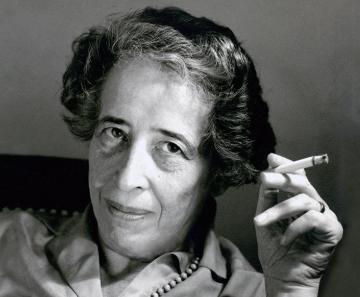
In politics, love is a stranger, and when it intrudes upon it nothing is being achieved except hypocrisy. All the characteristics you stress in the Negro people: their beauty, their capacity for joy, their warmth, and their humanity, are well-known characteristics of all oppressed people. They grow out of suffering and they are the proudest possession of all pariahs. Unfortunately, they have never survived the hour of liberation by even five minutes. Hatred and love belong together, and they are both destructive; you can afford them only in private and, as a people, only so long as you are not free.
▼
Source
source
Letter to James Baldwin

1 month 2 weeks ago
A confession has to be part of your new life.
▼
Source
source
p. 18e

2 weeks 3 days ago
When the whole is at stake, there is no crime except that of rejecting the whole, or not defending it. ... Those who identify themselves with the whole, who are installed as the leaders and defenders of the whole can make mistakes, but they cannot do wrong-they are not guilty. They may become guilty again when this identification no longer holds, when they are gone.
▼
Source
source
pp. 82-83
2 weeks 3 days ago
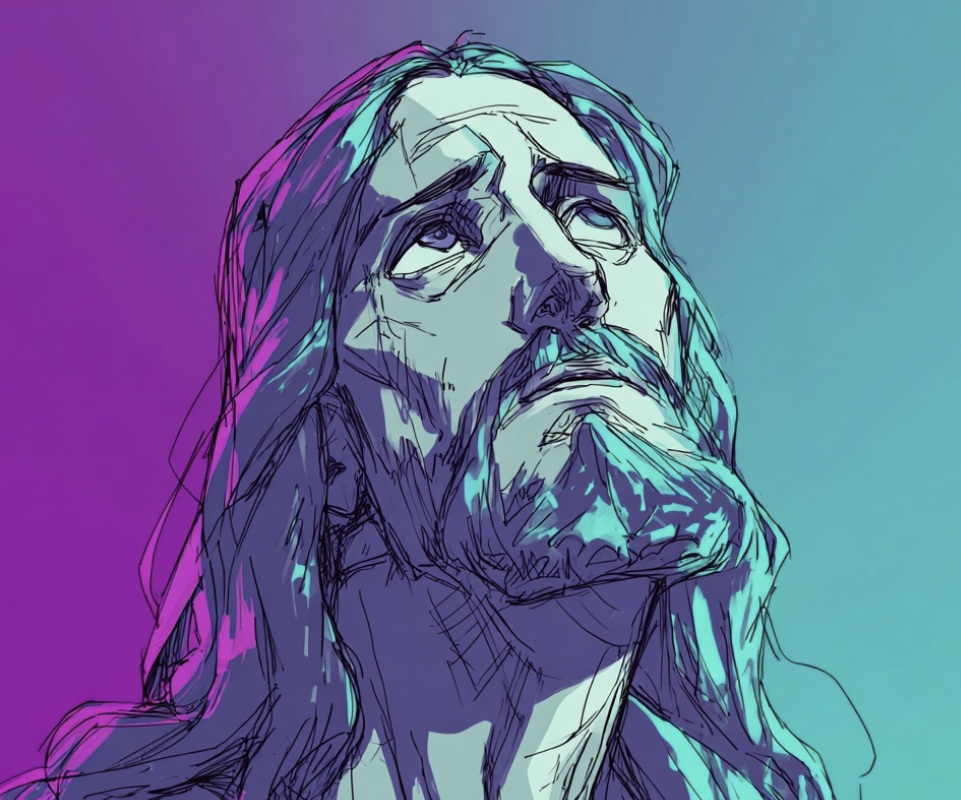
One of the scribes came to Jesus and asked him, "Which is the first of all commandments?" Jesus replied,"The first is this: Hear, O Israel! The Lord our God is Lord alone! You shall love the Lord your God with all your heart, with all your soul, with all your mind, and with all your strength. The second is like: You shall love your neighbor as yourself. There is no other commandment greater than these."
▼
Source
source
Mark 12:28-34
2 weeks 3 days ago
The people are led to find in the productive apparatus the effective agent of thought and action to which their personal thought and action can and must be surrendered. And in this transfer, the apparatus also assumes the role of a moral agent.
▼
Source
source
Conscience is absolved by reification. p. 79
6 months ago
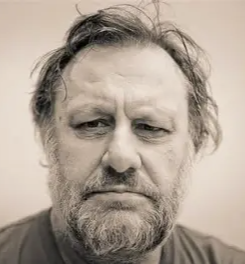
The analysis achieves its end when the patient is able to recognize, in the Real of his symptom, the only support of his being. That is how we must read Freud's 'wo we war, soll ich werden:' you, the subject, must identify yourself with the place where your symptom already was; in its pathological particularity you must recognize the element which gives consistency to your being.

1 week ago
Like a plague, the mad spirit is sweeping the country, infesting the clearest heads and staunchest hearts with the deathly germ of militarism.
1 month 3 weeks ago
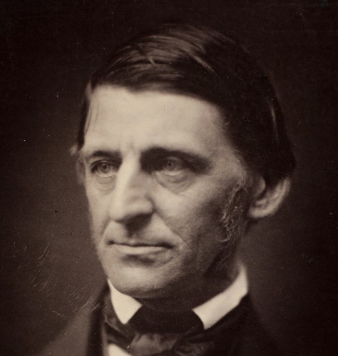
None believeth in the soul of man, but only in some man or person old and departed.
▼
Source
source
p. 25
2 months 3 weeks ago
At that moment he knew what his mother was thinking, and that she loved him. But he knew, too, that to love someone means relatively little; or, rather, that love is never wrong enough to find the word befitting it.
1 month 3 weeks ago
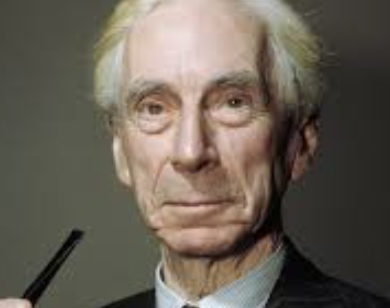
Why? Surely they can find other men. Russell's reply when asked "if it wasn't unkind of him to love and leave so many women";
▼
Source
source
as quoted in My Father - Bertrand Russell (1975) by Katharine Tait, p. 106
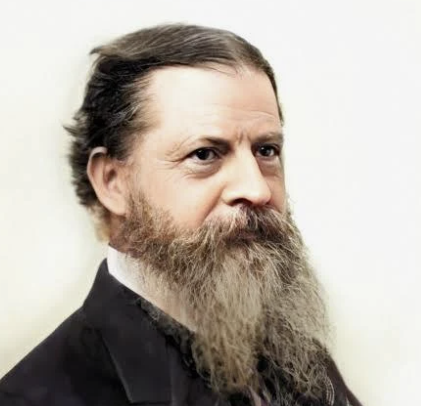
2 weeks 6 days ago
Second, in the presence of this continuity of feeling, nominalistic maxims appear futile. There is no doubt about one idea affecting another, when we can directly perceive the one generally modified and shaping itself into the other. Nor can there any longer be any difficulty about one idea resembling another, when we can pass along the continuous field of quality from one to the other and back again to the point which we had marked.
6 days ago
What most people in our culture mean by being lovable is essentially a mixture between being popular and having sex appeal.
▼
Source
source
Ch. 1

2 months 2 days ago
Peace is more important than all justice; and peace was not made for the sake of justice, but justice for the sake of peace.
▼
Source
source
On Marriage
4 days ago
A book is a small cog in a much more complex, external machinery. Writing is a flow among others; it enjoys no special privilege and enters into relationships of current and counter-current, of back-wash with other flows - the flows of shit, sperm, speech, action, eroticism, money, politics, etc. Like Bloom, writing on the sand with one hand and masturbating with the other - two flows in what relationship?
▼
Source
source
from I have Nothing to Admit
2 weeks 3 days ago
Religions are not true or false, but better or worse.
▼
Source
source
This statement is presented in quotes in The Philosophy of Religion and Advaita Vedanta (2008) by Arvind Sharma, p. 216
6 days ago
Care and responsibility are constituent elements of love, but without respect for and knowledge of the beloved person, love deteriorates into domination and possessiveness. Respect is not fear and awe; it denotes, in accordance with the root of the word (respicere = to look at), the ability to see a person as he is, to be aware of his individuality and uniqueness. To respect a person is not possible without knowing him; care and responsibility would be blind if they were not guided by the knowledge of the person's individuality.
▼
Source
source
Ch. 3; in Ch. 2 of his later work The Art of Loving (1956) a similar statement is made :

2 months 2 weeks ago
To be fond of learning is to be near to knowledge. To practice with vigor is to be near to magnanimity. To possess the feeling of shame is to be near to energy.
2 weeks 3 days ago
No man is bound by the words themselves, either to kill himselfe, or any other man.
▼
Source
source
The Second Part, Chapter 21, p. 112

2 months 3 weeks ago
Take a book, the poorest one written, but read it with the passion that it is the only book you will read-ultimately you will read everything out of it, that is, as much as there was in yourself, and you could never get more out of reading, even if you read the best of books.

2 months 3 days ago
"You err, not knowing the Scriptures nor the power of God" This canon is the mother of all canons against heresy; the causes of error are two; the ignorance of the will of God, and the ignorance or not sufficient consideration of his power.
▼
Source
source
Of Heresies

1 month 3 weeks ago
To require that a so-called layman should not use his own reason in religious matters, particularly since religion is to be appreciated as moral, but instead follow the appointed clergyman and thus someone else's reason, is an unjust demand because as to morals every man must account for all his doings. The clergyman will not and even cannot assume such a responsibility.
▼
Source
source
Kant, Immanuel (1996), pages 94-95
1 week 2 days ago
The fact of the religious vision, and its history of persistent expansion, is our one ground for optimism. Apart from it, human life is a flash of occasional enjoyments lighting up a mass of pain and misery, a bagatelle of transient experience.
▼
Source
source
Ch. 12: "Religion and Science", p. 268
3 weeks 4 days ago
When we speak of the commerce with our [American] colonies, fiction lags after truth, invention is unfruitful, and imagination cold and barren.

1 week ago
The chief impression left by a study of Crowley's life and works is that he wasted an immense amount of time and energy trying to shock everyone he came into contact with, and his dislike of orthodoxy turned him into an unconsciously comic figure, like Don Quixote.
▼
Source
source
pp. 153-154
3 weeks 4 days ago
Men are qualified for civil liberty in exact proportion to their disposition to put moral chains upon their own appetites, - in proportion as their love to justice is above their rapacity, - in proportion as their soundness and sobriety of understanding is above their vanity and presumption, - in proportion as they are more disposed to listen to the counsels of the wise and good, in preference to the flattery of knaves. Society cannot exist, unless a controlling power upon will and appetite be placed somewhere; and the less of it there is within, the more there must be without. It is ordained in the eternal constitution of things, that men of intemperate minds cannot be free. Their passions forge their fetters.
2 weeks 6 days ago
But where is the antidote for lucid despair, perfectly articulated, proud, and sure? All of us are miserable, but how many know it? The consciousness of misery is too serious a disease to figure in an arithmetic of agonies or in the catalogues of the Incurable. It belittles the prestige of hell, and converts the slaughterhouses of time into idyls. What sin have you committed to be born, what crime to exist? Your suffering like your fate is without motive. To suffer, truly to suffer, is to accept the invasion of ills without the excuse of causality, as a favor of demented nature, as a negative miracle. . .

1 month 6 days ago
When a reasonable Soul forsaketh his divine nature, and becometh beast-like, it dieth. For though the substance of the Soul be incorruptible: yet, lacking the use of Reason, it is reputed dead; for it loseth the Intellective Life.
2 weeks 6 days ago
Only what we have not accomplished and what we could not accomplish matters to us, so that what remains of a whole life is only what it will not have been.
3 weeks 4 days ago
Politics and the pulpit are terms that have little agreement.
1 week ago
Cézanne's painting is strictly painting, and its value is immense; but Van Gogh's painting has the Outsider's characteristic: it is a laboratory refuse of a man who treated his own life as an experiment in living; it faithfully records moods and developments of vision on the manner of a Bildungsroman.
▼
Source
source
p. 103
1 month 4 weeks ago
China is a much richer country than any part of Europe.
▼
Source
source
Chapter XI, Part III, (First Period) p. 221.

1 month 2 weeks ago
The public execution, then, has a juridico-political function. It is a ceremonial by which a momentarily injured sovereignty is reconstituted. It restores that sovereignty by manifesting it at its most spectacular. The public execution, however hasty and everyday, belongs to a whole series of great rituals in which power is eclipsed and restored (coronation, entry of the king into a conquered city, the submission of rebellious subjects); over and above the crime that has placed the sovereign in contempt, it deploys before all eyes an invincible force. Its aim is not so much to re-establish a balance as to bring into play, as its extreme point, the dissymmetry between the subject who has dared to violate the law and the all-powerful sovereign who displays his strength.
▼
Source
source
Chapter One, The Spectacle of the Scaffold

1 month 2 weeks ago
The usage of the words "public" and "public sphere" betrays a multiplicity of concurrent meanings. Their origins go back to various historical phases and, when applied synchronically to the conditions of a bourgeois society that is industrially advanced and constituted as a social-welfare state, they fuse into a clouded amalgam. Yet the very conditions that make the inherited language seem inappropriate appear to require these words, however confused their employment.
▼
Source
source
p. 1 as cited in: Gandy, M (1997) "Ecology, modernity and the intellectual legacy of the Frankfurt School". In: Light, A and Smith, JM, (eds.) Space, Place and Environmental Ethics. p. 240

4 weeks 1 day ago
The blood of Jesus Christ can cover a multitude of sins, it seems to me.

1 month 2 weeks ago
It is your concern when your neighbor's wall is on fire.
▼
Source
source
Book I, epistle xviii, line 84
1 month 3 weeks ago
The criminal law has, from the point of view of thwarted virtue, the merit of allowing an outlet for those impulses of aggression which cowardice, disguised as morality, restrains in their more spontaneous forms. War has the same merit. You must not kill you neighbor, whom perhaps you genuinely hate, but by a little propaganda this hate can be transferred to some foreign nation, against whom all your murderous impulses become patriotic heroism.
▼
Source
source
Part III: Man and Himself, Ch. 17: Fear, p. 175
1 month 3 weeks ago
The normal process of life contains moments as bad as any of those which insane melancholy is filled with, moments in which radical evil gets its innings and takes its solid turn. The lunatic's visions of horror are all drawn from the material of daily fact. Our civilization is founded on the shambles, and every individual existence goes out in a lonely spasm of helpless agony. If you protest, my friend, wait till you arrive there yourself! ... Here on our very hearths and in our gardens the infernal cat plays with the panting mouse, or holds the hot bird fluttering in her jaws. Crocodiles and rattlesnakes and pythons are at this moment vessels of life as real as we are; their loathsome existence fills every minute of every day that drags its length along; and whenever they or other wild beasts clutch their living prey, the deadly horror which an agitated melancholiac feels is the literally right reaction on the situation.
▼
Source
source
Lectures VI and VII, "The Sick Soul"
1 month 3 weeks ago
We used to think that Hitler was wicked when he wanted to kill all the Jews, but what Kennedy and Macmillan and others both in the East and in the West pursue policies which will probably lead to killing not only all the Jews but all the rest of us too. They are much more wicked than Hitler and this idea of weapons of mass extermination is utterly and absolutely horrible and it is a thing which no man with one spark of humanity can tolerate and I will not pretend to obey a government which is organising the massacre of the whole of mankind. I will do anything I can to oppose such Governments in any non-violent way that seems likely to be fruitful, and I should exhort all of you to feel the same way. We cannot obey these murderers. They are wicked and abominable. They are the wickedest people that ever lived in the history of man and it is our duty to do what we can.
▼
Source
source
On Civil Disobedience, April 15th, 1961

1 month 3 weeks ago
Of course a war is entertaining. The immediate fear and suffering of the humans is a legitimate and pleasing refreshment for our myriads of toiling workers. But what permanent good does it do us unless we make use of it for bringing souls to Our Father Below? When I see the temporal suffering of humans who finally escape us, I feel as if I had been allowed to taste the first course of a rich banquet and then denied all the rest. It is worse than not to have tasted it at all. The Enemy, true to His barbarous methods of warfare, allows us to see the short misery of His favourites only to tantalize and torment us - to mock the incessant hunger, which, during this present phase of great conflict, His blockade is admittedly imposing.
▼
Source
source
Letter V
2 weeks 3 days ago
It is written again, Thou shalt not tempt the Lord thy God.
▼
Source
source
4:7 (KJV) Said to Satan. The reference is to Deuteronomy 6:16, "Ye shall not tempt the Lord your God, as ye tempted him in Massah." (KJV)

CivilSimian.com created by AxiomaticPanic, CivilSimian, Kalokagathia