

1 month 1 week ago
Being summoned by the Athenians out of Sicily to plead for his life, Alcibiades absconded, saying that that criminal was a fool who studied a defence when he might fly for it.
▼
Source
source
51 Alcibiades

2 months 3 weeks ago
I see again what I thought I saw the first time, when I sent forth the little book that was compared to and in fact could best be compared to a humble little flower under the cover of the great forest.
1 month 3 weeks ago
Tis the good reader that makes the good book; in every book he finds passages which seem confidences or asides hidden from all else and unmistakenly meant for his ear.
▼
Source
source
Success
1 month 3 weeks ago
Pure Mathematics is the class of all propositions of the form "p implies q," where p and q are propositions containing one or more variables, the same in the two propositions, and neither p nor q contains any constants except logical constants. And logical constants are all notions definable in terms of the following: Implication, the relation of a term to a class of which it is a member, the notion of such that, the notion of relation, and such further notions as may be involved in the general notion of propositions of the above form. In addition to these, mathematics uses a notion which is not a constituent of the propositions which it considers, namely the notion of truth.
▼
Source
source
Principles of Mathematics (1903), Ch. I: Definition of Pure Mathematics, p. 3
1 week 4 days ago
And yet there is nothing so badly imagined: nature seems to have provided, that the follies of men should be transient, but they by writing books render them permanent. A fool ought to content himself with having wearied those who lived with him: but he is for tormenting future generations; he is desirous that his folly should triumph over oblivion, which he ought to have enjoyed as well as his grave; he is desirous that posterity should be informed that he lived, and that it should be known for ever that he was a fool. Commonly paraphrased as "An author is a fool who, not content with having bored those who have lived with him, insists on boring future generations".
▼
Source
source
No. 66. (Rica writing to * * *)
1 month 3 weeks ago
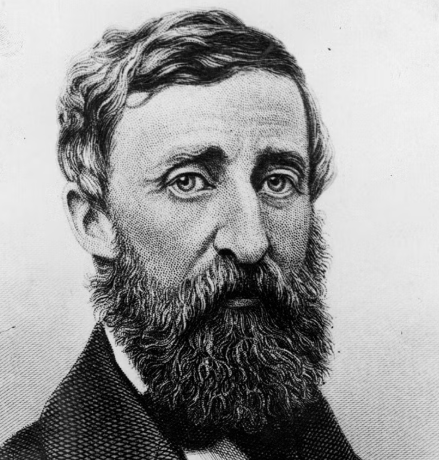
Our inventions are wont to be pretty toys, which distract our attention from serious things. They are but improved means to an unimproved end, an end which it was already but too easy to arrive at.
▼
Source
source
pp. 60-61
2 months 2 weeks ago
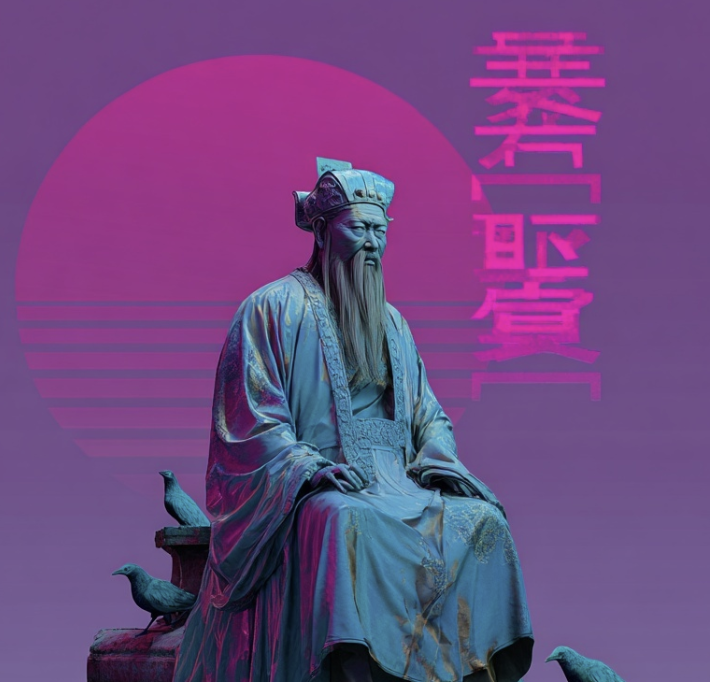
Sincerity is the end and beginning of things; without sincerity there would be nothing. On this account, the superior man regards the attainment of sincerity as the most excellent thing.
2 weeks 6 days ago
Death makes no sense except to people who have passionately loved life. How can one die without having something to part from? Detachment is a negation of both life and death. Whoever has overcome his fear of death has also triumphed over life. For life is nothing but another word for this fear.
2 weeks 6 days ago
His power to adore is responsible for all his crimes: a man who loves a god unduly forces other men to love his god, eager to exterminate them if they refuse.
1 month 3 weeks ago
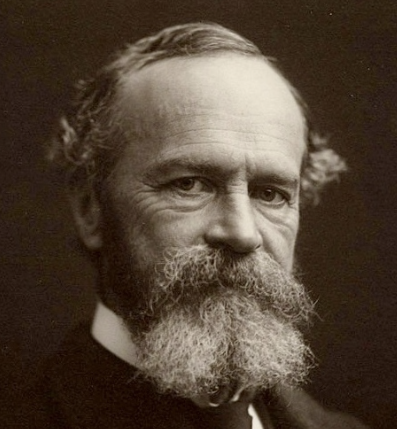
Most people live, whether physically, intellectually or morally, in a very restricted circle of their potential being. They make use of a very small portion of their possible consciousness, and of their soul's resources in general, much like a man who, out of his whole bodily organism, should get into a habit of using and moving only his little finger. Great emergencies and crises show us how much greater our vital resources are than we had supposed.
▼
Source
source
To W. Lutoslawski, 5/6/1906

1 month ago
I can cure the gout or stone in some, sooner than Divinity, Pride, or Avarice in others.
▼
Source
source
Section 9
1 month 3 weeks ago
This practically amounts to saying that much that it is legitimate to admire in this field need nevertheless not be imitated, and that religious phenomena, like all other human phenomena, are subject to the law of the golden mean. Political reformers accomplish their successive tasks in the history of nations by being blind for the time to other causes. Great schools of art work out the effects which it is their mission to reveal, at the cost of a one-sidedness for which other schools must make amends. We accept a John Howard, a Mazzini, a Botticelli, a Michael Angelo, with a kind of indulgence. We are glad they existed to show us that way, but we are glad there are also other ways of seeing and taking life. So of many of the saints we have looked at. We are proud of a human nature that could be so passionately extreme, but we shrink from advising others to follow the example.
▼
Source
source
Lectures XIV and XV, "The Value of Saintliness"
1 month 3 weeks ago
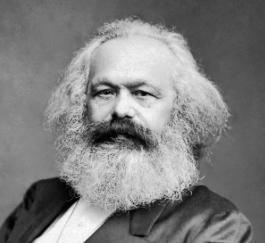
Money is therefore not only the object but also the fountainhead of greed.
▼
Source
source
Notebook II, The Chapter on Money, p. 142.
3 weeks 4 days ago
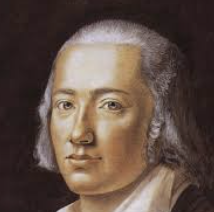
The earth with yellow pears And overgrown with roses wild Upon the pond is bent, And swans divine, With kisses drunk You drop your heads In the sublimely sobering water. But where, with winter come, am I To find, alas, the floweres, and where The sunshine And the shadow of the world? Cold the walls stand And the wordless, in the wind The weathercocks are rattling.
▼
Source
source
"Halves of Life"
2 weeks 1 day ago
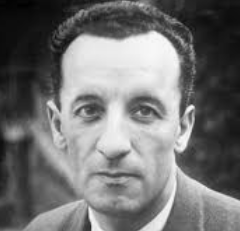
Philosophy is in history, and is never independent of historical discourse. But for the tacit symbolism of life it substitutes, in principle, a conscious symbolism; for a latent meaning, one that is manifest. It is never content to accept its historical situation. It changes this situation by revealing it to itself.
▼
Source
source
p. 57
1 month 3 weeks ago
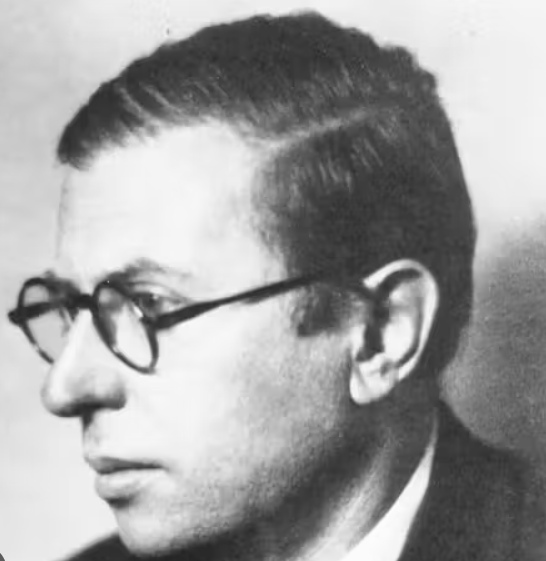
Farewell to the monsters, farewell to the saints. Farewell to pride. All that is left is men.
▼
Source
source
Act 10, sc. 4
3 weeks ago
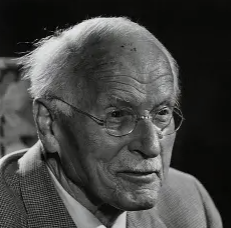
The discussion of the sexual problem is only a somewhat crude prelude to a far deeper question, and that is the question of the psychological relationship between the sexes. In comparison with this the other pales into insignificance, and with it we enter the real domain of woman. Woman's psychology is founded on the principle of Eros, the great binder and loosener, whereas from ancient times the ruling principle ascribed to man is Logos.
▼
Source
source
P.254
2 months 3 weeks ago
Universal is known according to reason, but that which is particular, according to sense...
2 weeks 6 days ago
"Meeting, after several years, someone we used to know as a child, the first glance almost always suggests that some great disaster must have befallen him" Leopardi, quoted by cioran.
3 weeks 3 days ago
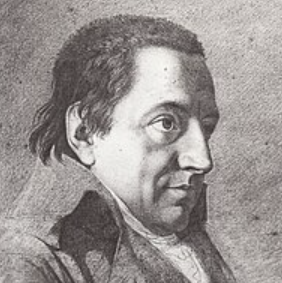
Idea or Vision, in its sensuous meaning, would be something that could be perceived only by the bodily eye and not by any other sense such as taste, hearing, etc.; it would be such a thing as a rainbow, or the forms which pass before us in dreams. Idea or Vision, in its supersensuous meaning, would denote, first of all, in conformity with the sphere in which the word is to be valid, something that cannot be perceived by the body at all, but only by the mind; and then, something that cannot, as many other things can, be perceived by the dim feeling of the mind, but only by the eye of the mind, by clear perception.
▼
Source
source
The Chief Difference Between The Germans And The Other Peoples Of Teutonic Descent p. 59
1 month 3 weeks ago
The harm that is done by a religion is of two sorts, the one depending on the kind of belief which it is thought ought to be given to it, and the other upon the particular tenets believed. As regards the kind of belief: it is thought virtuous to have faith-that is to say, to have a conviction which cannot be shaken by contrary evidence. Or, if contrary evidence might induce doubt, it is held that contrary evidence must be suppressed.
▼
Source
source
preface xxiii
1 month 3 weeks ago
Surplus value is exactly equal to surplus labour; the increase of the one [is] exactly measured by the diminution of necessary labour.
▼
Source
source
Notebook III, The Chapter on Capital, p. 259.
1 week 3 days ago
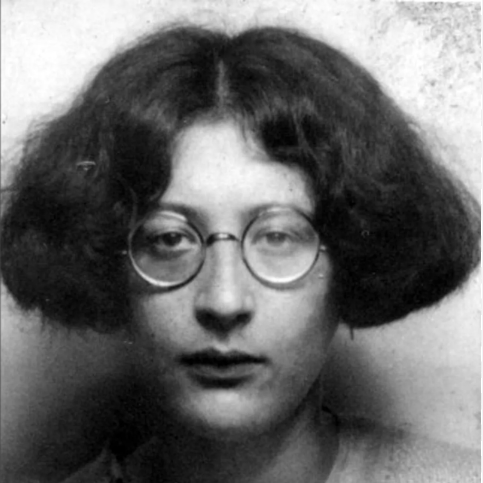
Humility consists of knowing that in this world the whole soul, not only what we term the ego in its totality, but also the supernatural part of the soul, which is God present in it, is subject to time and to the vicissitudes of change. There must be absolutely acceptance of the possibility that everything material in us should be destroyed. But we must simultaneously accept and repudiate the possibility that the supernatural part of the soul should disappear.
▼
Source
source
"Concerning the Our Father" in Waiting on God (1972), Routledge & Kegan Paul edition, p. 153
2 months 2 weeks ago
Justice respects man as living in society, and is the common bond without which no society can subsist.
4 days ago
Every man has his moral backside which he refrains from showing unless he has to and keeps covered as long as possible with the trousers of decorum.
▼
Source
source
B 12 Variant translation: Everyone has a moral backside, which he does not show except in case of need and which he covers as long as possible with the breeches of respectability.
1 month 2 weeks ago
Citizens of a Jeffersonian democracy can be as religious or irreligious as they please as long as they are not "fanatical." That is, they must abandon or modify opinion on matters of ultimate importance, the opinions that may hitherto have given sense and point to their lives, if these opinions entail public actions that cannot be justified to most of their fellow citizens.
1 month 3 weeks ago
In how many churches, by how many prophets, tell me, is man made sensible that he is an infinite Soul; that the earth and heavens are passing into his mind; that he is drinking forever the soul of God?
▼
Source
source
p. 18
1 week 4 days ago
Whenever a man talks he lies, and so far as he talks to himself - that is to say, so far as he thinks, knowing that he thinks - he lies to himself. The only truth in human life is that which is physiological. Speech - this thing that they call a social product - was made for lying.
▼
Source
source
Niebla [Mist]
3 weeks 3 days ago
Ethical ideas and sentiments have to be considered as parts of the phenomena of life at large. We have to deal with man as a product of evolution, with society as a product of evolution, and with moral phenomena as products of evolution.
▼
Source
source
Ch. 1, Introductory

1 month 3 weeks ago
If you want good laws, burn those you have and make new ones.
▼
Source
source
"Laws", 1765
2 weeks 6 days ago
Impossible to accede to truth by opinions, for each opinion is only a mad perspective of reality.
1 month 3 weeks ago
The concrete man has but one interest - to be right. That to him is the art of all arts, and all means are fair which help him to it.

1 month 6 days ago
Anger begins in folly, and ends in repentance.
▼
Source
source
As quoted in Treasury of Thought: Forming an Encyclopædia of Quotations from Ancient and Modern Authors (1894) by Maturin Murray Ballou
2 weeks 1 day ago
At the parting of ways in the life-order, where the question is between the new creation or decay, that man will be decisive for new creation who is able on his own initiative to seize the helm and steer a course of his own choosing - even if that course be opposed to the will of the masses. Should the emergence of such persons become impossible a lamentable shipwreck will be inevitable.
1 month 3 weeks ago
Suso has even left a diagrammatic picture of the relations subsisting between Godhead, triune God and creatures. In this very curious and interesting drawing a chain of manifestation connects the mysterious symbol of the Divine Ground with the three Persons of the Trinity, and the Trinity in turn is connected in a descending scale with angels and human beings. These last, as the drawing vividly shows, may make one of two choices. They can either live the life of the outer man, the life of the separative selfhood; in which case they are lost (for, in the words of the Theologia Germanica, "nothing burns in hell but the self"). Or else they can identify themselves with the inner man, in which case it becomes possible for them, as Suso shows, to ascend again, through unitive knowledge, to the Trinity and even, beyond the Trinity, to the ultimate Unity of the Divine Ground.
1 month 3 weeks ago
Speed, it seems to me, provides the one genuinely modern pleasure.
▼
Source
source
Wanted, A New Pleasure
1 month 3 weeks ago
Every really able man, in whatever direction he work,-a man of large affairs, an inventor, a statesman, an orator, a poet, a painter,-if you talk sincerely with him, considers his work, however much admired, as far short of what it should be.
▼
Source
source
Immortality
2 weeks 6 days ago
What place do we occupy in the "universe"? A point, if that! Why reproach ourselves when we are evidently so insignificant? Once we make this observation, we grow calm at once: henceforth, no more bother, no more frenzy, metaphysical or otherwise. And then that point dilates, swells, substitutes itself for space. And everything begins all over again.
2 weeks 2 days ago
Art expresses, it does not state; it is concerned with existences in their perceived qualities, not with conceptions symbolized in terms.
▼
Source
source
p. 139
2 weeks 6 days ago
How is it possible that the poorer classes can remain healthy and have a reasonable expectation of life under such conditions? What can one expect but that they should suffer from continual outbreaks of epidemics and an excessively low expectation of life? The physical condition of the workers shows a progressive deterioration.
1 month 3 weeks ago
His heart was as great as the world, but there was no room in it to hold the memory of a wrong.
▼
Source
source
Greatness
1 month 4 weeks ago
Hypothetical liberty is allowed to everyone who is not a prisoner and in chains
▼
Source
source
§ 8.23
2 weeks 1 day ago
Bourgeois society is ruled by equivalence. It makes the dissimilar comparable by reducing it to abstract quantities. To the Enlightenment, that which does not reduce to numbers, and ultimately to the one, becomes illusion.
▼
Source
source
John Cumming trans., p. 7.
1 month 3 weeks ago
Manufacture was all the time sheltered by protective duties in the hoe market, by monopolies in the colonial market, and broad as much as possible by differential duties.
▼
Source
source
ibid, pp. 183
1 week 3 days ago
Music for entertainment ... seems to complement the reduction of people to silence, the dying out of speech as expression, the inability to communicate at all. It inhabits the pockets of silence that develop between people molded by anxiety, work and undemanding docility.
▼
Source
source
p. 271
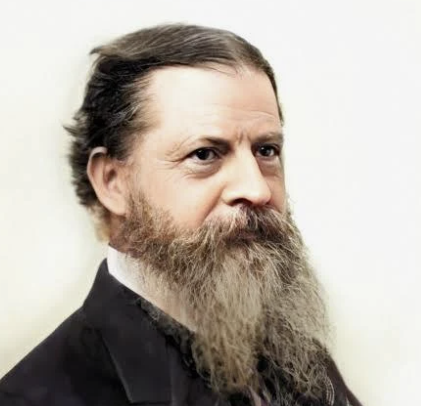
2 weeks 6 days ago
What distinct meaning can attach to saying that an idea in the past in any way affects an idea in the future, from which it is completely detached?
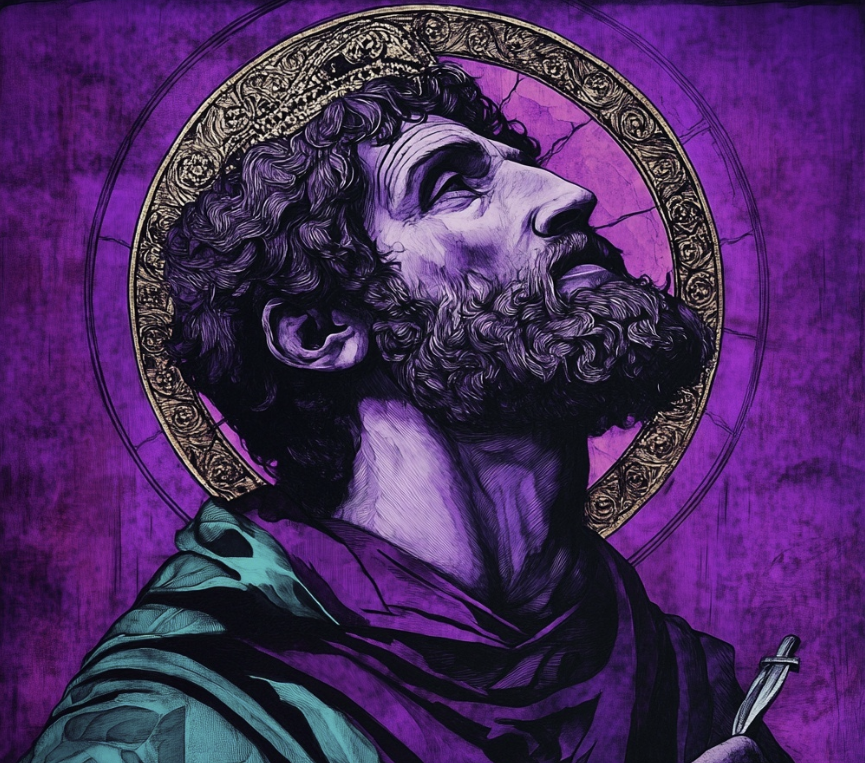
2 months 1 week ago
But the inner part is the better part; for to it, as both ruler and judge, all these messengers of the senses report the answers of heaven and earth and all the things therein, who said, "We are not God, but he made us." My inner man knew these things through the ministry of the outer man, and I, the inner man, knew all this, I, the soul, through the senses of my body. I asked the whole frame of earth about my God, and it answered, "I am not he, but he made me."
▼
Source
source
X, 6
2 weeks 3 days ago
A special kind of beauty exists which is born in language, of language, and for language.
▼
Source
source
A Retrospective Glance at the Lifework of a Master of Books

2 months 3 days ago
It would be an unsound fancy and self-contradictory to expect that things which have never yet been done can be done except by means which have never yet been tried.
▼
Source
source
Aphorism 6
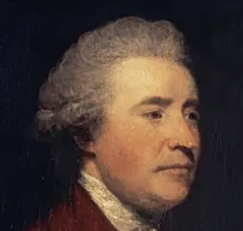
3 weeks 4 days ago
Boldness formerly was not the character of Atheists as such. ... But of late they are grown active, designing, turbulent, and seditious.
▼
Source
source
"Thoughts on French Affairs" (December 1791), in Three Memorials on French Affairs (1797), p. 53
CivilSimian.com created by AxiomaticPanic, CivilSimian, Kalokagathia