


1 month 3 weeks ago
Clever tyrants are never punished.
▼
Source
source
Mérope, act V, scene V, 1743
2 months 2 weeks ago
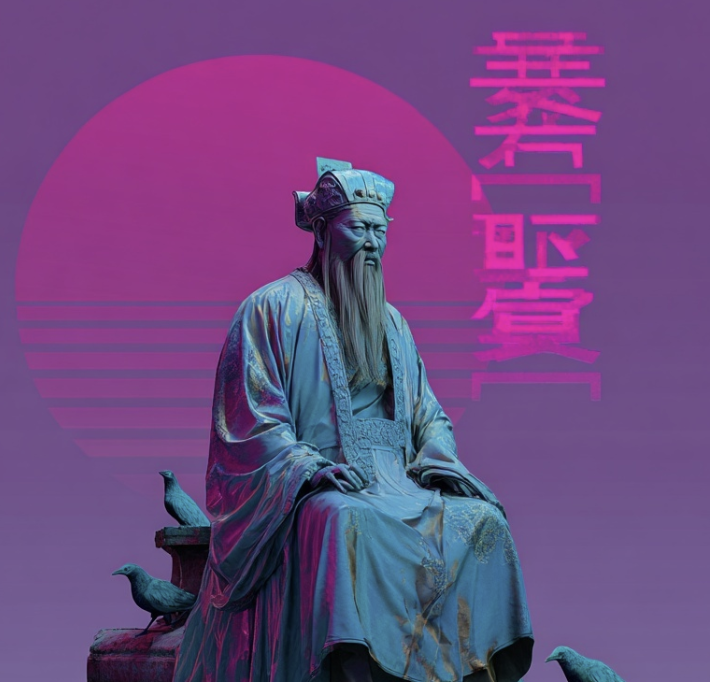
To no one but the Son of Heaven does it belong to order ceremonies, to fix the measures, and to determine the written characters.
1 month 4 weeks ago
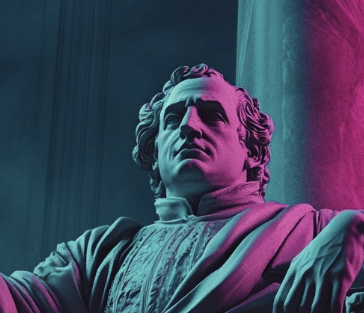
Tis certainly a kind of indignity to philosophy, whose sovereign authority ought every where to be acknowledg'd, to oblige her on every occasion to make apologies for her conclusions, and justify herself to every particular art and science, which may be offended at her.
▼
Source
source
Part 4, Section 5
1 month 3 weeks ago
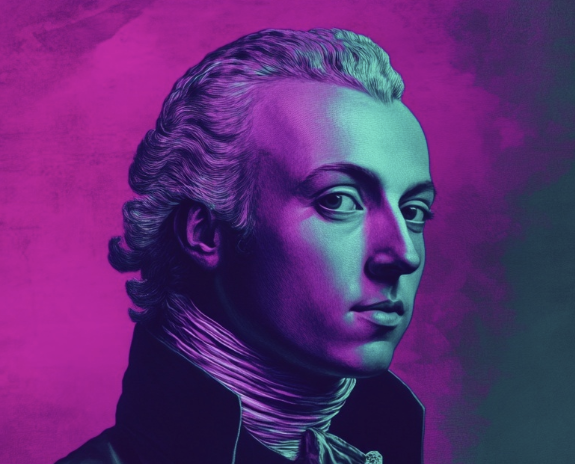
The woman wants to dominate, the man wants to be dominated.
▼
Source
source
Kant, Immanuel (1996), page 220

2 months 3 days ago
Whatever you see in the more material part of yourself, learn to refer to God and to the invisible part of yourself. In that way, whatever offers itself to the senses will become for you an occasion for the practice of piety.
▼
Source
source
The Erasmus Reader (1990), p. 141.

1 month 3 weeks ago
In actions of enthusiasm, this drawback appears: but in those lower activities, which have no higher aim than to make us more comfortable and more cowardly, in actions of cunning, actions that steal and lie, actions that divorce the speculative from the practical faculty, and put a ban on reason and sentiment, there is nothing else but drawback and negation.
▼
Source
source
Goethe; or, The Writer

1 week 1 day ago
Hooks is a contentious writer, and I don't always agree with her contentions, but Ain't I a Woman has an intellectual vitality and daring that should set new standards for the discussion of race and sex.
▼
Source
source
Ellen Willis in No More Nice Girls: Countercultural Essays
1 month 3 weeks ago
...they cudgel their brains with absurd questions, such as, for instance, why God did not make the world many centuries earlier. They persuade themselves that it is easy to conceive, to be sure, how God may discern what is present, that is, what is actual in the time in which he is, but how He may foresee what is future, that is, what is actual in the time in which He is not yet, they deem an intellectual difficulty; as if the existence of the Necessary Being descended through all the moments of an imaginary time, and, having already exhausted a part of His duration, saw before Him the eternity He was yet to live simultaneously with the present events of the world. All these difficulties upon proper insight into the notion of time vanish like smoke.
2 weeks 6 days ago
Since the communists cannot enter upon the decisive struggle between themselves and the bourgeoisie until the bourgeoisie is in power, it follows that it is in the interest of the communists to help the bourgeoisie to power as soon as possible in order the sooner to be able to overthrow it.
1 month 4 weeks ago
My purpose is to explain, not the meaning of words, but the nature of things.
▼
Source
source
Part III, Def. XX
1 month 3 weeks ago
It is clear that thought is not free if the profession of certain opinions makes it impossible to earn a living. It is clear also that thought is not free if all the arguments on one side of a controversy are perpetually presented as attractively as possible, while the arguments on the other side can only be discovered by diligent search.
▼
Source
source
Ch. 12: Free Thought and Official Propaganda, books.google.com, archive.org

2 weeks 6 days ago
Boredom is connected naturally with time, with the horror of time, with the experience and the consciousness of time. Those who are not aware of time do not become bored. Basically life is only possible if one is not aware of time. If one should happen to want to experience consciously one of those moments that pass, one would be lost; life would become unbearable.
2 months 2 days ago
For a desperate disease a desperate cure.
▼
Source
source
Book II, Ch. 3. The Custom of the Isle of Cea
1 week 4 days ago
Of all kind of authors there are none I despise more than compilers, who search every where for shreds of other men's works, which they join to their own, like so many pieces of green turf in a garden: they are not at all superior to compositors in a printing house, who range the types, which, collected together, make a book, towards which they contribute nothing but the labours of the hand. I would have original writers respected, and it seems to me a kind of profanation to take those pieces from the sanctuary in which they reside, and to expose them to a contempt they do not deserve. When a man hath nothing new to say, why does not he hold his tongue? What business have we with this double employment?"
▼
Source
source
No. 66.
1 month 3 weeks ago
Facts are ventriloquists' dummies. Sitting on a wise man's knee they may be made to utter words of wisdom; elsewhere, they say nothing, or talk nonsense, or indulge in sheer diabolism.
▼
Source
source
"Bruno Rontini"
2 months 2 weeks ago
It is impossible for someone to dispel his fears about the most important matters if he doesn't know the nature of the universe but still gives some credence to myths. So without the study of nature there is no enjoyment of pure pleasure.

1 month 2 weeks ago
A proposition is completely logically analyzed if its grammar is made completely clear: no matter what idiom it may be written or expressed in...
▼
Source
source
Philosophical Remarks (1930), Part I (1)
1 month 3 weeks ago
Though they may think the proof incomplete that the universe is a work of design, and though they assuredly disbelieve that it can have an Author and Governor who is absolute in power as well as perfect in goodness, they have that which constitutes the principal worth of all religions whatever, an ideal conception of a Perfect Being, to which they habitually refer as the guide of their conscience; and this ideal of Good is usually far nearer to perfection than the objective Deity of those, who think themselves obliged to find absolute goodness in the author of a world so crowded with suffering and so deformed by injustice as ours.
▼
Source
source
(p. 46)
1 week ago
It may seem to be a long way from Blake's innocent talk of love and copulation to De Sade's need to inflict pain. And yet both are the outcome of a sexual mysticism that strives to transcend the everyday world. Simone de Beauvoir said penetratingly of De Sade's work that 'he is trying to communicate an experience whose distinguishing characteristic is, nevertheless its will to remain incommunicable'. De Sade's perversion may have sprung from his dislike of his mother or of other women, but its basis is a kind of distorted religious emotion.
▼
Source
source
p. 90
6 days ago
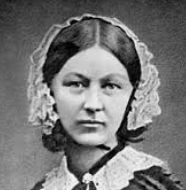
Men and women meet now to be idle. Is it extraordinary that they do not know each other, and that, in their mutual ignorance, they form no surer friendships? Did they meet to do something together, then indeed they might form some real tie. But, as it is, they are not there, it is only a mask which is there - a mouth-piece of ready-made sentences about the "topics of the day"; and then people rail against men for choosing a woman "for her face" - why, what else do they see?
1 month 3 weeks ago
The best authorities are unanimous in saying that a war with H-bombs might possibly put an end to the human race. It is feared that if many H-bombs are used there will be universal death, sudden only for a minority, but for the majority a slow torture of disease and disintegration. Many warnings have been uttered by eminent men of science and by authorities in military strategy. None of them will say that the worst results are certain. What they do say is that these results are possible, and no one can be sure that they will not be realized. We have not yet found that the views of experts on this question depend in any degree upon their politics or prejudices. They depend only, so far as our researches have revealed, upon the extent of the particular expert's knowledge. We have found that the men who know most are the most gloomy.
3 weeks ago
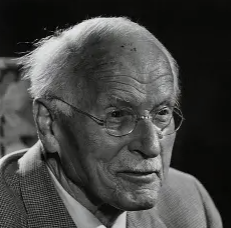
We must now turn to the question of how the existence of archetypes can be proved. Since archetypes are supposed to produce certain psychic forms, we must discuss how and where one can get hold of the material demonstrating these forms. The main source, then, is dreams, which have the advantage of being involuntary, spontaneous products of nature not falsified by any conscious purpose. By questioning the individual one can ascertain which of the motifs appearing in the dream are known to him... Consequently, we must look for motifs which could not possibly be known to the dreamer and yet behave functionally of the archetype known from historical sources.
▼
Source
source
p. 48
4 days ago
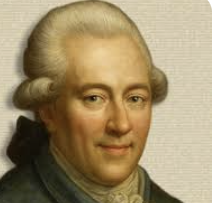
The most successful tempters and thus the most dangerous are the deluded deluders.
▼
Source
source
F 120
1 month 3 weeks ago
An irrational fear should never be simply let alone, but should be gradually overcome by familiarity with its fainter forms.
▼
Source
source
On Education, Especially in Early Childhood (1926), Ch. 4: Fear
3 days ago
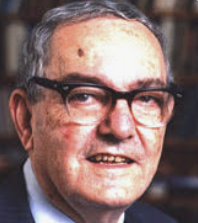
It is not my aim to surprise or shock you - but the simplest way I can summarize is to say that there are now in the world machines that think, that learn and that create. Moreover, their ability to do these things is going to increase rapidly until - in a visible future - the range of problems they can handle will be coextensive with the range to which the human mind has been applied.
▼
Source
source
Newell & Simon (1958), quoted in AI, by Daniel Crevier

2 months 1 week ago
The reason, however, why the philosopher may be likened to the poet is this: both are concerned with the marvellous.
▼
Source
source
Commentary on the Metaphysics (c. 1270-1272), 1, 3; quoted in Josef Pieper, Leisure, the Basis of Culture (New York, 1952), p. 88

1 month 2 weeks ago
Nihilism is not overcome by arguments or analyses; it is tamed by love and care. Any disease of the soul must be conquered by a turning of one's soul.
▼
Source
source
(p19)
1 month 2 weeks ago
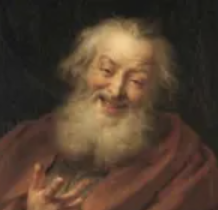
My enemy is not the man who wrongs me, but the man who means to wrong me.

6 months 2 weeks ago
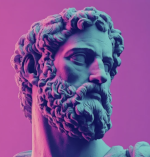
No subgroup, race, nationalism, religious group, gender based groups or other identity essence based groups will ever be more important than, and should never ethically take precedence over the existence based universal group, the human group. Universal identity takes precedence over subgroup identity, and when we are forced to subgroup in reaction to injustice, that is the only ethical subgroup.
2 months 3 weeks ago
[T]he infinite is in capacity. That, however, which is infinite in capacity is not to be assumed as that which is infinite in energy. ...[I]t has its being in capacity, and in division and diminution. ...[I]t is always possible to assume something beyond it. It does not, however, on this account surpass every definite magnitude; as in division it surpasses every definite magnitude, and will be less.

1 month ago
I can look a whole day with delight upon a handsome picture, though it be but of a horse. It is my temper, & I like it the better, to affect all harmony, and sure there is music even in the beauty, and the silent note which Cupid strikes, far sweeter than the sound of an instrument. For there is a music wherever there is a harmony, order or proportion; and thus far we may maintain the music of the spheres.
▼
Source
source
Section 9
1 month 3 weeks ago
I met, not long ago, a young man who aspired to become a novelist. Knowing that I was in the profession, he asked me to tell him how he should set to work to realize his ambition. I did my best to explain. 'The first thing,' I said, 'is to buy quite a lot of paper, a bottle of ink, and a pen. After that you merely have to write.'
▼
Source
source
"Sermons in Cats"
3 weeks 4 days ago
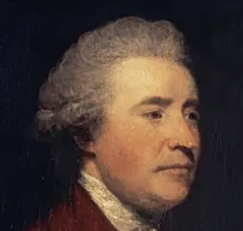
By the disposition of a stupendous wisdom, moulding together the great mysterious incorporation of the human race, the whole, at one time, is never old, or middle-aged, or young; but, in a condition of unchangeable constancy, moves on through the varied tenor of perpetual decay, fall, renovation, and progression.
2 months 3 weeks ago
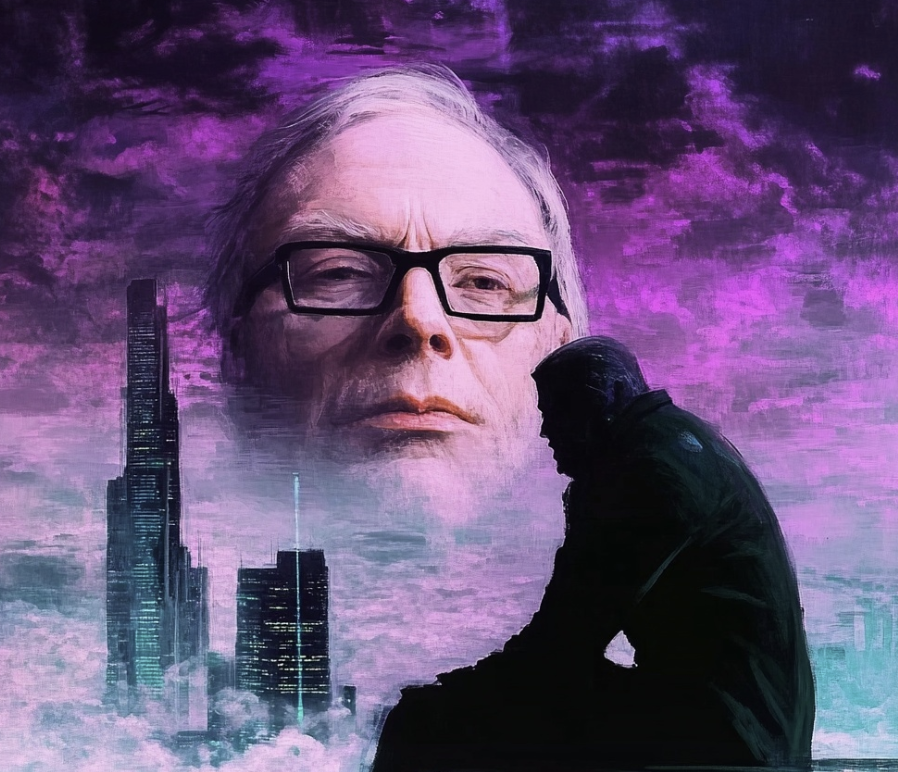
It is surely better to be wronged than to do wrong.
1 month 3 weeks ago
We live together, we act on, and react to, one another; but always and in all circumstances we are by ourselves. The martyrs go hand in hand into the arena; they are crucified alone. Embraced, the lovers desperately try to fuse their insulated ecstasies into a single self-transcendence; in vain. By its very nature every embodied spirit is doomed to suffer and enjoy in solitude. Sensations, feelings, insights, fancies - all these are private and, except through symbols and at second hand, incommunicable. We can pool information about experiences, but never the experiences themselves. From family to nation, every human group is a society of island universes.
3 weeks 4 days ago
Romantic poetry ... recognizes as its first commandment that the will of the poet can tolerate no law above itself.
▼
Source
source
Philosophical Fragments, P. Firchow, trans. (1991) § 116
2 weeks 3 days ago
They that be whole need not a physician, but they that are sick. But go ye and learn what that meaneth, I will have mercy, and not sacrifice: for I am not come to call the righteous, but sinners to repentance.
▼
Source
source
9:12-13 (KJV)
4 weeks 1 day ago
It is not human nature we should accuse but the despicable conventions that pervert it.
1 week ago
The free expression of the hopes and aspirations of a people is the greatest and only safety in a sane society.
2 months 2 weeks ago
Sobriety, as opposed to inebriety and gluttony, is of admirable use in teaching men that nature is satisfied with a little, and enabling them to content themselves with simple and frugal fare.
1 month 3 weeks ago
Only in thought is man a God; in action and desire we are the slaves of circumstance.
▼
Source
source
Letter to Lucy Donnely, November 25, 1902
3 weeks 3 days ago
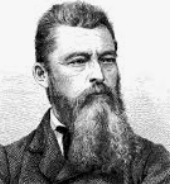
I have always taken as the standard of the mode of teaching and writing, not the abstract, particular, professional philosopher, but universal man, that I have regarded man as the criterion of truth, and not this or that founder of a system, and have from the first placed the highest excellence of the philosopher in this, that he abstains, both as a man and as an author, from the ostentation of philosophy, i.e., that he is a philosopher only in reality, not formally, that he is a quiet philosopher, not a loud and still less a brawling one.
▼
Source
source
Preface to Second Edition
1 month 3 weeks ago
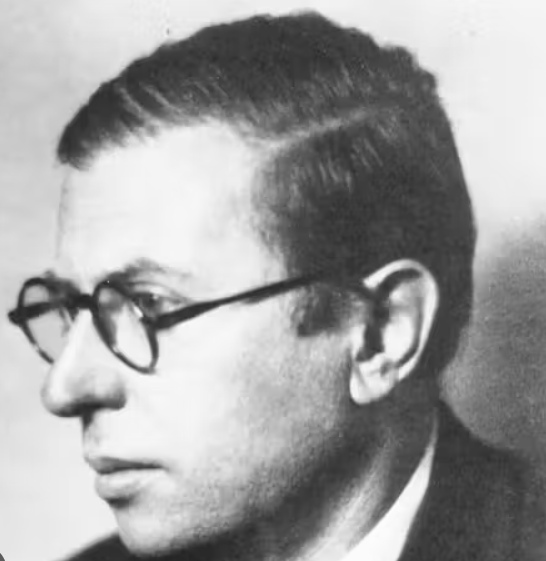
Our responsibility is much greater than we might have supposed, because it involves all mankind.
▼
Source
source
Existentialism and Human Emotions
1 month 3 weeks ago
When the intensity of emotional conviction subsides, a man who is in the habit of reasoning will search for logical grounds in favour of the belief which he finds in himself.
▼
Source
source
Ch. 1: Mysticism and Logic
3 weeks 4 days ago
Under the pressure of the cares and sorrows of our mortal condition, men have at all times, and in all countries, called in some physical aid to their moral consolations - wine, beer, opium, brandy, or tobacco.
2 weeks 2 days ago
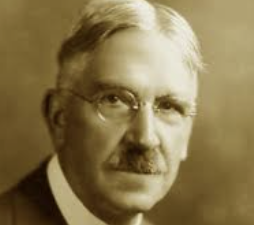
There can be no movement toward a consummating close unless there is a progressive massing of values, a cumulative effect. This result cannot exist without conservation of the import of what has gone before. Moreover, to secure the needed continuity, the accumulated experience must be such as to create suspense and anticipation of resolution. Accumulation is at the same time preparation, as with each phase of the growth of a living embryo. Only that is carried on which is led to; otherwise there is arrest and a break. For this reason consummation is relative; instead of occurring once for all at a given point, it is recurrent. The final end is anticipated by rhythmic pauses, while that end is final only in an external way. For as we turn from reading a poem or novel or seeing a picture the effect presses forward in further experiences, even if only subconsciously.
▼
Source
source
p. 143
6 days ago
We set the treatment of bodies so high above the treatment of souls, that the physician occupies a higher place in society than the school-master. The governess is to have every one of God's gifts; she is to do that which the mother herself is incapable of doing; but our son must not degrade himself by marrying the governess, nor our daughter the tutor, though she might marry the medical man.
1 month 3 weeks ago
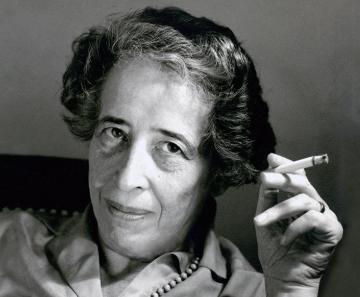
The moment we no longer have a free press, anything can happen. What makes it possible for a totalitarian or any other dictatorship to rule is that people are not informed; how can you have an opinion if you are not informed? If everybody always lies to you, the consequence is not that you believe the lies, but rather that nobody believes anything any longer. This is because lies, by their very nature, have to be changed, and a lying government has constantly to rewrite its own history. On the receiving end you get not only one lie - a lie which you could go on for the rest of your days - but you get a great number of lies, depending on how the political wind blows. And a people that no longer can believe anything cannot make up its mind. It is deprived not only of its capacity to act but also of its capacity to think and to judge. And with such a people you can then do what you please.
▼
Source
source
p. 70
2 weeks 1 day ago
To imagine that Caesar aspired to do something in the way Alexander did it - and this is what almost all historians have believed - is definitely to give up trying to understand him. Caesar is very nearly the opposite of Alexander. ...[I]t is not merely a universal kingdom that Caesar has in view. His purpose is a deeper one. He wants a Roman empire which does not live on Rome, but on the periphery, on the provinces, and this implies the complete supersession of the City-State. It implies a State in which the most diverse peoples collaborate, in regard to which all feel solidarity.
▼
Source
source
Chapter XIV: Who Rules The World?
CivilSimian.com created by AxiomaticPanic, CivilSimian, Kalokagathia