

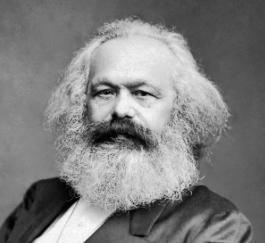
2 months 3 weeks ago
The religious world is but the reflex of the real world.
▼
Source
source
Vol. I, Ch. 1, Section 4, pg. 91.


3 months 3 weeks ago
We often contradict an opinion for no other reason than that we do not like the tone in which it is expressed.
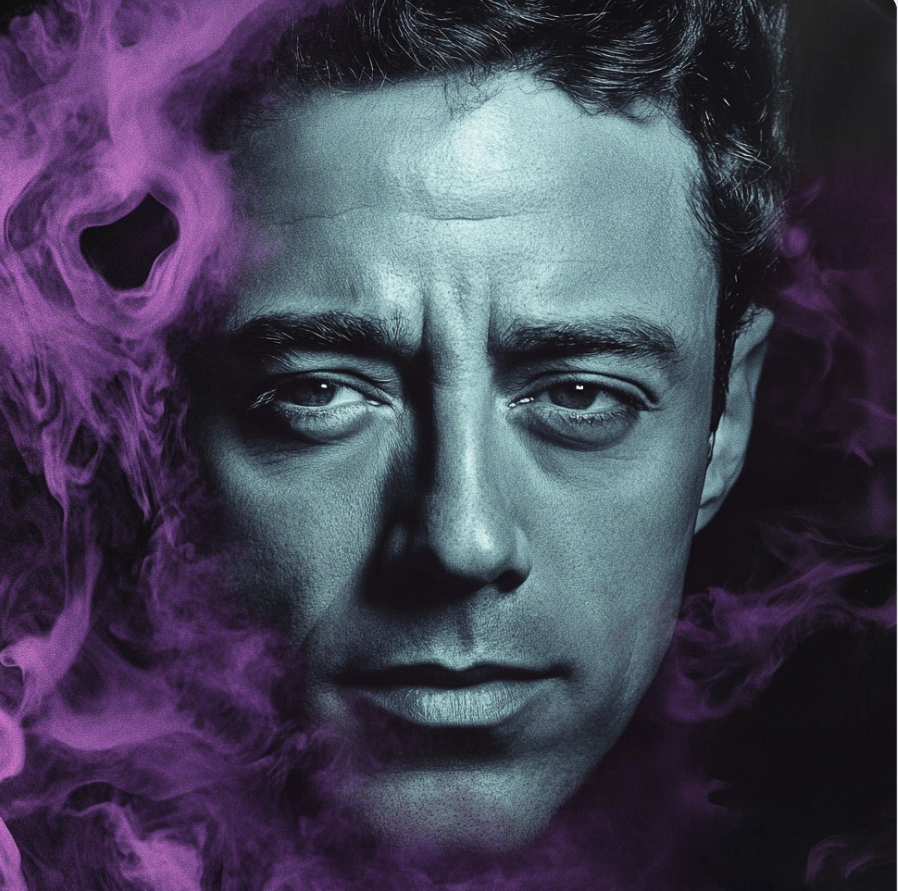
3 months 3 weeks ago
One does not discover the absurd without being tempted to write a manual of happiness. "What! — by such narrow ways — ?" There is but one world, however. Happiness and the absurd are two sons of the same earth. They are inseparable. It would be a mistake to say that happiness necessarily springs from the absurd discovery. It happens as well that the feeling of the absurd springs from happiness.

1 month 3 weeks ago
How I wish I didn't know anything about myself and this world!
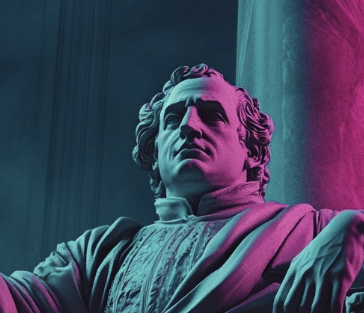
2 months 4 weeks ago
The most perfect philosophy of the natural kind only staves off our ignorance a little longer: as perhaps the most perfect philosophy of the moral or metaphysical kind serves only to discover larger portions of it. Thus the observation of human blindness and weakness is the result of all philosophy, and meets us at every turn, in spite of our endeavours to elude or avoid it.
▼
Source
source
Section 4 : Sceptical Doubts Concerning The Operations of The Understanding
3 months 3 weeks ago
He who thinks a great deal is not suited to be a party man: he thinks his way through the party and out the other side too soon.
2 months 3 weeks ago
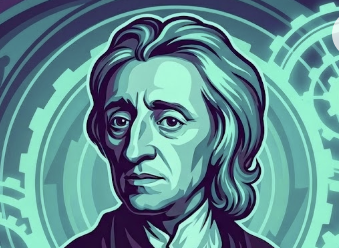
The scene should be gently open'd, and his entrance made step by step, and the dangers pointed out that attend him from several degrees, tempers, designs, and clubs of men. He should be prepared to be shocked by some, and caress'd by others; warned who are like to oppose, who to mislead, who to undermine him, and who to serve him. He should be instructed how to know and distinguish them; where he should let them see, and when dissemble the knowledge of them and their aims and workings.
▼
Source
source
Sec. 94

2 months 2 weeks ago
Satisfaction linked with dishonor or with harm to others is a prison for the seeker.
▼
Source
source
Vahishto-Ishti Gatha; Yasna 53, 6.

3 months 3 weeks ago
It is love that leniently and mercifully says: I forgive you everything-if you are forgiven only little, then it is because you love only little. Justice severely sets the boundary and says: No further! This is the limit. For you there is no forgiveness, and there is nothing more to be said.

2 months 3 weeks ago
Natural religion supplies still all the facts which are disguised under the dogma of popular creeds. The progress of religion is steadily to its identity with morals.
▼
Source
source
p. 223

2 months 3 weeks ago
I always made one prayer to God, a very short one. Here it is: "O Lord, make our enemies quite ridiculous!" God granted it.
▼
Source
source
16 May 1767, Letter to Étienne Noël Damilaville

1 day ago
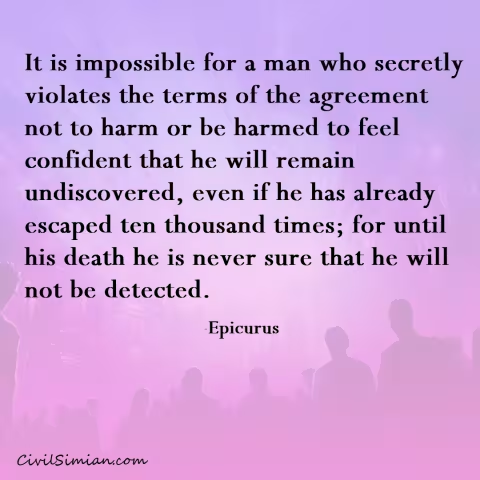
The idea of a law of progress, or of an all but irresistible tendency to general improvement, is then merely a superstition, one of the tents of the modernist pseudo-religion of humanism. Even if such a law or tendency existed and were demonstrable, the liberal faith in progress would for Santayana be pernicious. For it leads to a corrupt habit of mind in which things are valued, not for their present excellence or perfection, but instrumentally, as leading to something better; and it insinuates into thought and feeling a sort of historical theodicy, in which past evil is justified as a means to present or future good. The idea of progress embodies a kind of time-worship (to adopt an expression used by Wyndham Lewis) in which the particularities of our world are seen and valued, not in themselves, but for what they might perhaps become, thereby leaving us destitute of the sense of the present and, at the same time, of the perspective of eternity.
▼
Source
source
'Santayana's Alternative' (p.67-8)

2 months ago
Persecution is a bad and indirect way to plant Religion.
▼
Source
source
Section 25
2 months ago
All things are artificial, for nature is the Art of God.
▼
Source
source
Section 16
1 month 3 weeks ago
I see not the shadow of a reason to conclude that their [the sexes'] virtues should differ in respect to their nature. In fact, how can they, if virtue has only one eternal standard? I must therefore, if I reason consequentially, as strenuously maintain that they must have the same simple direction as that there is a God.
▼
Source
source
-26
2 months 3 weeks ago
Fools have a habit of believing that everything written by a famous author is admirable. For my part I read only to please myself and like only what suits my taste.
3 months 1 week ago
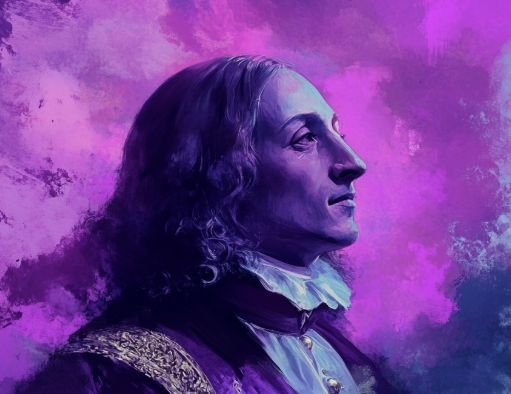
What is it, in your opinion, to be a great nobleman? It is to be master of several objects that men covet, and thus to be able to satisfy the wants and the desires of many. It is these wants and these desires that attract them towards you, and that make them submit to you: were it not for these, they would not even look at you; but they hope, by these services... to obtain from you some part of the good which they desire, and of which they see that you have the disposal.
2 months 3 weeks ago
I must before I die, find some way to say the essential thing that is in me, that I have never said yet - a thing that is not love or hate or pity or scorn, but the very breath of life, fierce and coming from far away, bringing into human life the vastness and fearful passionless force of non-human things...
▼
Source
source
p. 261
1 month 1 week ago
Every time that a man has, with a pure heart, called upon Osiris, Dionysus, Buddha, the Tao, etc., the Son of God has answered him by sending the Holy Spirit. And the Holy Spirit has acted upon his soul, not by inciting him to abandon his religious tradition, but by bestowing upon him light - and in the best of cases the fullness of light - in the heart of that same religious tradition. ... It is, therefore, useless to send out missions to prevail upon the peoples of Asia, Africa or Oceania to enter the Church.
▼
Source
source
Section 8

1 month 1 week ago
I have tried to show how religion, the backbone of civilisation, hardens into a Church that is unacceptable to Outsiders, and the Outsiders - the men who strive to become visionaries - become the Rebels. In our case, the scientific progress that has brought us closer than ever before to conquering the problems of civilisation, has also robbed us of spiritual drive; and the Outsider is doubly a rebel: a rebel against the Established Church , a rebel against the unestablished church of materialism. Yet for all this, he is the real spiritual heir of the prophets, of Jesus and St. Peter, of St. Augustine and Peter Waldo. The purest religion of any age lies in the hands of its spiritual rebels. The twentieth century is no exception.
▼
Source
source
p. 320
1 month 2 weeks ago
The slave is outside competition; the proletarian is in it and experiences all its vagaries.
1 month 1 week ago
I was aggressively nonpolitical. I believed that people who make a fuss about politics do so because their heads are too empty to think about more important things. So I felt nothing but impatient contempt for Osborne's Jimmy Porter and the rest of the heroes of social protest.
▼
Source
source
p. 2
1 week ago
I do not believe that sheer suffering teaches. If suffering alone taught, all the world would be wise, since everyone suffers. To suffering must be added mourning, understanding, patience, love, openness and the willingness to remain vulnerable. All these and other factors combined, if the circumstances are right, can teach and can lead to rebirth.
▼
Source
source
Hour of Gold, Hour of Lead: Diaries and Letters of Anne Morrow Lindbergh, 1929-1932 (1973), p. 3
7 months ago
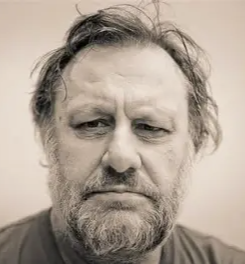
I hate writing. I so intensely hate writing — I cannot tell you how much. The moment I am at the end of one project I have the idea that I didn’t really succeed in telling what I wanted to tell, that I need a new project — it’s an absolute nightmare. But my whole economy of writing is in fact based on an obsessional ritual to avoid the actual act of writing.
2 months 3 weeks ago
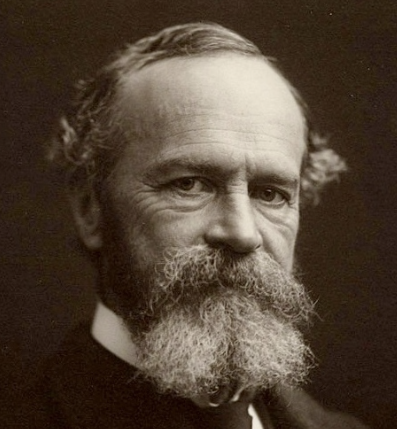
Keep the faculty of effort alive in you by a little gratuitous exercise every day. That is, be systematically ascetic or heroic in little unnecessary points, do every day or two something for no other reason than that you would rather not do it, so that when the hour of dire need draws nigh, it may find you not unnerved and untrained to stand the test. So with the man who has daily inured himself to habits of concentrated attention, energetic volition, and self-denial in unnecessary things. He will stand like a tower when everything rocks around him, and when his softer fellow-mortals are winnowed like chaff in the blast.
▼
Source
source
Ch. 4
1 month 4 weeks ago
Jacques said that his master said that everything good or evil we encounter here below was written on high.
▼
Source
source
Prologue
1 month 1 week ago
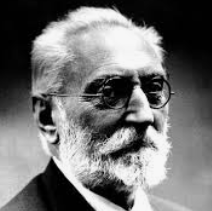
The wretched consciousness shrinks from it own annihilation, and just as an animal spirit newly severed from the womb of the world, finds itself confronted with the world and knows itself distinct from it, so consciousness must needs desire to possess another life than that of the world itself.
1 month 1 week ago
Consciousness (conscientia) is participated knowledge, is co-feeling, and co-feeling is com-passion. Love personalizes all that it loves. Only by personalizing it can we fall in love with an idea. And when love is so great and so vital, so strong and so overflowing, that it loves everything, then it personalizes everything and discovers that the total All, that the Universe, is also a person possessing a Consciousness, a Consciousness which in its turn suffers, pities, and loves, and therefore is consciousness. And this Consciousness of the Universe, which a love, personalizing all that it loves, discovers, is what we call God.
2 weeks 3 days ago
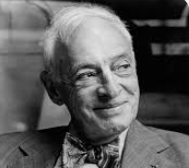
It seems hard for the American people to believe that anything could be more exciting than the times themselves. What we read daily and view on the TV has thrust imagined forms into the shadow. We are staggeringly rich in facts, in things, and perhaps, like the nouveau riche of other ages, we want our wealth faithfully reproduced by the artist.
▼
Source
source
Facts That Put Fancy to Flight (1962), p. 67
1 month 2 weeks ago
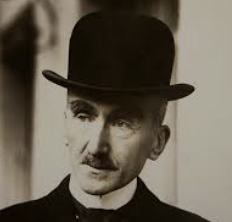
Sex-appeal is the keynote of our whole civilization.
▼
Source
source
Chapter IV
2 weeks 4 days ago
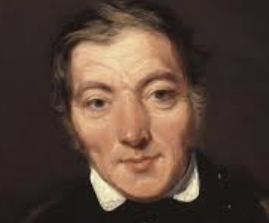
To preserve permanent good health, the state of mind must be taken into consideration.
▼
Source
source
3rd Part
2 months 3 weeks ago
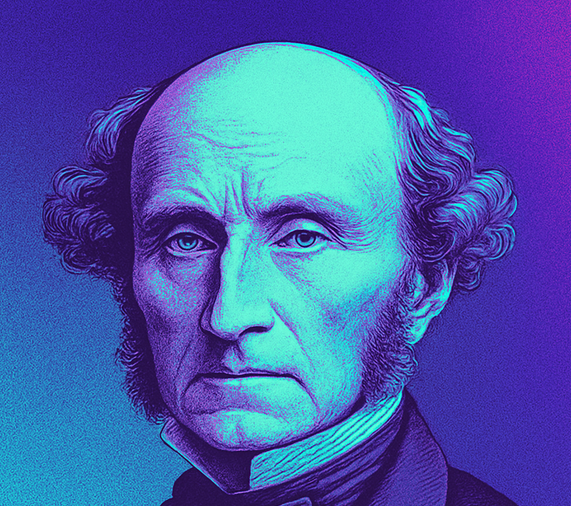
I conceive that the description so often given of a Benthamite, as a mere reasoning machine, though extremely inapplicable to most of those who have been designated by that title, was during two or three years of my life not altogether untrue of me. ...There is nothing very extraordinary in this fact: no youth of the age I then was, can be expected to be more than one thing, and this was the thing I happened to be. Ambition and desire of distinction, I had in abundance; and zeal for what I thought the good of mankind was my strongest sentiment, mixing with and colouring all others. But my zeal was as yet little else, at that period of my life, than zeal for speculative opinions. It had not its root in genuine benevolence, or sympathy with mankind; though these qualities held their due place in my ethical standard. Nor was it connected with any high enthusiasm for ideal nobleness.
▼
Source
source
(pp. 109-110)

2 months 2 weeks ago
Confession frees, but power reduces one to silence; truth does not belong to the order of power, but shares an original affinity with freedom: traditional themes in philosophy, which a political history of truth would have to overturn by showing that truth is not by nature free--nor error servile--but that its production is thoroughly imbued with relations of power. The confession is an example of this.
▼
Source
source
Vol. I, p. 60
2 months 4 weeks ago
No society can surely be flourishing and happy, of which the greater part of the members are poor and miserable. It is but equity, besides, that they who feed, cloath and lodge the whole body of the people, should have such a share of the produce of their own labour as to be themselves tolerably well fed, clothed, and lodged.
▼
Source
source
Chapter VIII, p. 94.

3 months 2 days ago
When our Lord and Master Jesus Christ said, "Repent," he willed the entire life of believers to be one of repentance.
▼
Source
source
Thesis 1
2 months 3 weeks ago
The best state for human nature is that in which, while no one is poor, no one desires to be richer, nor has any reason to fear being thrust back by the efforts of others to push themselves forward.
▼
Source
source
Book IV, Chapter VI, §2
3 weeks ago
It is a very helpful insight to say we are vehicles for our DNA, we are hosts for DNA parasites which are our genes. Those are insights which help us to understand an aspect of life. But it's emotive to say, that's all there is to it, we might as well give up going to Shakespeare plays and give up listening to music and things, because that's got nothing to do with it. That's an entirely different subject.
3 months 2 days ago
Fame and tranquility can never be bedfellows.
▼
Source
source
Book I, Ch. 39
2 months 3 weeks ago
The gods we stand by are the gods we need and can use, the gods whose demands on us are reinforcements of our demands on ourselves and on one another. What I then propose to do is, briefly stated, to test saintliness by common sense, to use human standards to help us decide how far the religious life commends itself as an ideal kind of human activity . ... It is but the elimination of the humanly unfit, and the survival of the humanly fittest, applied to religious beliefs; and if we look at history candidly and without prejudice, we have to admit that no religion has ever in the long run established or proved itself in any other way. Religions have approved themselves; they have ministered to sundry vital needs which they found reigning. When they violated other needs too strongly, or when other faiths came which served the same needs better, the first religions were supplanted.
▼
Source
source
Lectures XIV and XV, "The Value of Saintliness"
1 day ago
In the world as we find it, even the barest requirements of a life worth living cannot all be always met in full. Toppling a tyranny may trigger civil war. Protecting a broad range of liberal freedoms may result in the regime that guarantees them being short lived. At the same time, supporting a strong state as a bulwark against anarchy may worsen the abuse of power. Wise policy can temper these conflicts. It cannot hope to overcome them.
▼
Source
source
'Modus Vivendi' (p.28)
1 month 2 weeks ago
The doctrine of Right and Wrong, is perpetually disputed, both by Pen and the Sword: Whereas the doctrine of Lines, and Figures, is not so; because men care not, in that subject what be truth, as a thing that crosses no mans ambition, profit, or lust. For I doubt not, but if it had been a thing contrary to any mans right of dominion, or to the interest of men that have dominion, That the three Angles of a Triangle, should be equall to two Angles of a Square; that doctrine should have been, if not disputed, yet by the burning of all books of Geometry, suppressed, as far as he whom it concerned was able.
▼
Source
source
The First Part, Chapter 11, p. 80-81

3 months 2 weeks ago
The institutions of the Ruler are rooted in his own character and conduct, and sufficient attestation of them is given by the masses of the people. He examines them by comparison with those of the three kings, and finds them without mistake. He sets them up before Heaven and Earth, and finds nothing in them contrary to their mode of operation. He presents himself with them before spiritual beings, and no doubts about them arise. He is prepared to wait for the rise of a sage a hundred ages after, and has no misgivings. His presenting himself with his institutions before spiritual beings, without any doubts arising about them, shows that he knows Heaven. His being prepared, without any misgivings, to wait for the rise of a sage a hundred ages after, shows that he knows men.

1 month 1 week ago
During the last quarter of a century all the authority associated with the function of spiritual guidance ... has seeped down into the lowest publications. ... Between a poem by Valéry and an advertisement for a beauty cream promising a rich marriage to anyone who used it there was at no point a breach of continuity. So as a result of literature's spiritual usurpation a beauty cream advertisement possessed, in the eyes of little village girls, the authority that was formerly attached to the words of priests.
▼
Source
source
"Morality and literature," p. 164
3 weeks 3 days ago
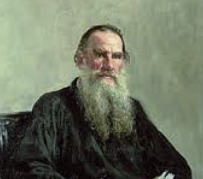
The Quakers sent me books, from which I learnt how they had, years ago, established beyond doubt the duty for a Christian of fulfilling the command of non-resistance to evil by force, and had exposed the error of the Church's teaching in allowing war and capital punishment.
▼
Source
source
Chapter I, The Doctrine of Non-resistance to Evil by Force has been Professed by a Minority of Men from the Very Foundation of Christianity

2 months 1 day ago
This whole which is visible in different ways in bodies, as far as formation, constitution, appearance, colors and other properties and common qualities, is none other than the diverse face of the same substance - a changeable, mobile face, subject to decay, of an immobile, permanent and eternal being.
▼
Source
source
As translated by Paul Harrison
1 month 2 weeks ago
I disclose my mysteries to those who are worthy of my mysteries.
1 week ago
I have come to believe that you can get along without anyone - that is, without the close contact of any one person. That is a terrible shock to me, but I think it is true. You do need companionship, but wherever you go, in whatever new environment, you will find people who, to a large degree, take the place of those you left...The intimate companionship goes, I think, when you leave a friend, but friendship stays. It is an inherent possibility of relationship that, once admitted - well, there it is.
CivilSimian.com created by AxiomaticPanic, CivilSimian, Kalokagathia