

1 week 2 days ago
And what has Don Quixote left, do you ask? I answer, he has left himself, and a man, a living and eternal man, is worth all the theories and all the philosophies. Other peoples have left chiefly institutions, books; we have left souls; St. Teresa is worth any institution, any Critique of Pure Reason.

1 month 4 days ago
Those alone are dear to Divinity who are hostile to injustice.
▼
Source
source
Pythagorean Ethical Sentences From Stobæus

2 weeks 4 days ago
An anxious man constructs his terrors, then installs himself within them: a stay-at-home in a yawning chasm.
1 month 3 weeks ago
The best university that can be recommended to a man of ideas is the gauntlet of the mobs.
▼
Source
source
Eloquence

2 months ago
I would advise no one to send his child where the Holy Scriptures are not supreme. Every institution that does not unceasingly pursue the study of God's word becomes corrupt. Because of this we can see what kind of people they become in the universities and what they are like now. Nobody is to blame for this except the pope, the bishops, and the prelates, who are all charged with training young people. The universities only ought to turn out men who are experts in the Holy Scriptures, men who can become bishops and priests, and stand in the front line against heretics, the devil, and all the world. But where do you find that? I greatly fear that the universities, unless they teach the Holy Scriptures diligently and impress them on the young students, are wide gates to hell.
▼
Source
source
To the Christian Nobility of the German States (1520), translated by Charles M. Jacobs, reported in rev. James Atkinson, The Christian in Society, I (Luther's Works, ed. James Atkinson, vol. 44), p. 207
1 week ago
Rightness of limitation is essential for growth of reality.Unlimited possibility and abstract creativity can procure nothing. The limitation, and the basis arising from what is already actual, are both of them necessary and interconnected.
▼
Source
source
Religion in the Making (February 1926), Lecture IV: "Truth and Criticism".
1 month 3 weeks ago
If you are not already dead, forgive. Rancor is heavy, it is worldly; leave it on earth: die light.
▼
Source
source
Act 1
1 month 3 weeks ago
The heights of popularity and patriotism are still the beaten road to power and tyranny ; flattery to treachery ; standing armies to arbitrary government ; and the glory of God to the temporal interest of the clergy.
▼
Source
source
Part I, Essay 8: Of Public Credit (This appears as a footnote in editions H to P. Other editions include it in the body of the text, and some number it Essay 9.)


2 weeks 1 day ago
England is the paradise of individuality, eccentricity, heresy, anomalies, hobbies, and humors.
▼
Source
source
"The British Character"
1 month 3 weeks ago
It is not because men's desires are strong that they act ill; it is because their consciences are weak.
▼
Source
source
On Liberty, 1859
1 month 3 weeks ago
For the prevision is allied Unto the thing so signified; Or say, the foresight that awaits Is the same Genius that creates.
▼
Source
source
Fate
1 month 3 weeks ago
None shall rule but the humble, And none but Toil shall have.
▼
Source
source
Boston Hymn
1 month 3 weeks ago
If a given science accidentally reached its goal, this would by no means stop the workers in the field, who would be driven past their goal by the sheer momentum of the illusion of unlimited progress.
▼
Source
source
p. 55
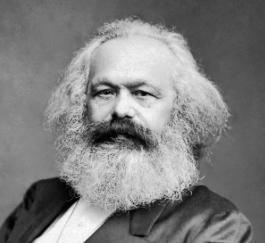
1 month 3 weeks ago
The need of a constantly expanding market for its products chases the bourgeoisie over the whole surface of the globe. It must nestle everywhere, settle everywhere, establish connections everywhere.
▼
Source
source
Section 1, paragraph 19
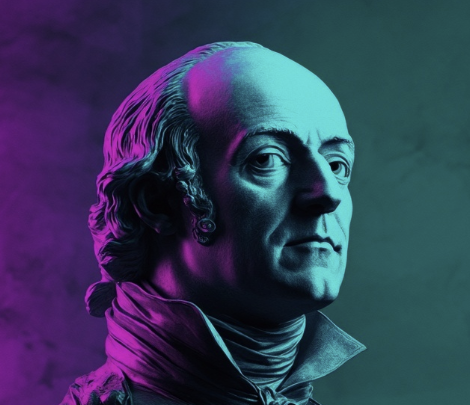
1 month 3 weeks ago
It would be too ridiculous to go about seriously to prove that wealth does not consist in money, or in gold and silver; but in what money purchases, and is valuable only for purchasing. Money no doubt, makes always a part of the national capital; but it has already been shown that it generally makes but a small part, and always the most unprofitable part of it.
▼
Source
source
Chapter I, p. 470.

1 month 2 weeks ago
A great prison structure was planned, whose different levels would correspond exactly to the levels of the centralized administration. The scaffold, where the body of the tortured criminal had been exposed to the ritually manifested force of the sovereign, the punitive theatre in which the representation of punishment was permanently available to the social body, was replaced by a great enclosed, complex and hierarchized structure that was integrated into the very body of the state apparatus.
▼
Source
source
Chapter Three, The Gentle Way in Punishment

2 months 3 weeks ago
How absurd men are! They never use the liberties they have, they demand those they do not have. They have freedom of thought, they demand freedom of speech. Either/Or Part I, Swenson Translation p. 19 Variations include: People demand freedom of speech to make up for the freedom of thought, which they avoid. People demand freedom of speech as a compensation for the freedom of thought which they seldom use.
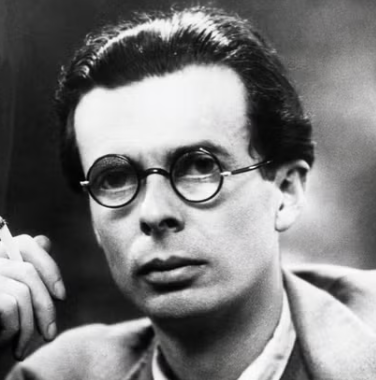
1 month 3 weeks ago
The trouble with fiction... is that it makes too much sense. Reality never makes sense.
▼
Source
source
"John Rivers" in The Genius and the Goddess, 1955

3 weeks 6 days ago
I know of no country, indeed, where the love of money has taken stronger hold on the affections of men, and where the profounder contempt is expressed for the theory of the permanent equality of property.
▼
Source
source
Chapter III, Part I.
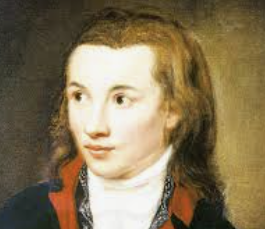
2 weeks 6 days ago
Most observers of the French Revolution, especially the clever and noble ones, have explained it as a life-threatening and contagious illness. They have remained standing with the symptoms and have interpreted these in manifold and contrary ways. Some have regarded it as a merely local ill. The most ingenious opponents have pressed for castration. They well noticed that this alleged illness is nothing other than the crisis of beginning puberty.
▼
Source
source
Fragment No. 105
2 weeks 4 days ago
What we want is not freedom but its appearances. It is for these simulacra that man has always striven. And since freedom, as has been said, is no more than a sensation, what difference is there between being free and believing ourselves free?
1 month 3 weeks ago
We, on the contrary, now send to the Brahmans English clergymen and evangelical linen-weavers, in order out of sympathy to put them right, and to point out to them that they are created out of nothing, and that they ought to be grateful and pleased about it. But it is Just the same as if we fired a bullet at a cliff. " In India, our religions wIll never at any time take root; the ancient wisdom of the human race will not be supplanted by the events in Galilee. On the contrary, Indian Wisdom flows back to Europe, and will produce a fundamental change in our knowledge and thought.
▼
Source
source
Schopenhauer, Arthur The world as will and representation. Translated from the German by E. F. J. Payne. New York, Dover Publications [c1969 - Volume I, & 63 p. 356-357. quoted in Londhe, S. (2008).
1 week 2 days ago
To believe in God is to yearn for His existence and, furthermore, it is to act as if He did exist.
1 month 3 weeks ago
Have you learned the alphabet of heaven and can count three? Do you know the number of God's family? Can you put mysteries into words? Do you presume to fable of the ineffable? Pray, what geographer are you, that speak of heaven's topography? Whose friend are you that speak of God's personality? ... Tell me of the height of the mountains of the moon, or of the diameter of space, and I may believe you, but of the secret history of the Almighty, and I shall pronounce thee mad.

1 month 2 weeks ago
For a truly religious man nothing is tragic.
▼
Source
source
Conversation of 1930
3 weeks 1 day ago
The tyranny of Mrs. Grundy is worse than any other tyranny we suffer under.
▼
Source
source
On Manners and Fashion
2 weeks 4 days ago
I am for the most part so convinced that everything is lacking in basis, consequence, justification, that if someone dared to contradict me, even the man I most admire, he would seem to me a charlatan or a fool.

1 month 2 weeks ago
I would in fact tend to have more confidence in the outcome of a democratic decision if there was a minority that voted against it, than if it was unanimous... Social psychology has amply shown the strength of this bandwagon effect.
▼
Source
source
Habermas (1993) "Further reflections on the public sphere", in: Craig Calhoun Eds. Habermas and the Public Sphere. MIT Press. p. 441
2 weeks 4 days ago
The unfortunate thing about public misfortunes is that everyone regards himself as qualified to talk about them.
3 weeks 2 days ago
If you want to be respected by others the great thing is to respect yourself. Only by that, only by self-respect will you compel others to respect you.
▼
Source
source
Part III, Chapter 2

2 weeks 1 day ago
He that dippeth his hand with me in the dish, the same shall betray me. The Son of man goeth as it is written of him: but woe unto that man by whom the Son of man is betrayed! it had been good for that man if he had not been born.
▼
Source
source
26:23-24 (KJV)

2 months 1 week ago
To none is life given in freehold; to all on lease.
▼
Source
source
Book III, line 971 (tr. R. E. Latham)

1 month 3 weeks ago
The more we devote ourselves to observing animals and their behaviour, the more we love them, on seeing how gready they care for their young; in such a context, we cannot even contemplate cruelty to a wolf. Leibnitz put the grub he had been observing back on the tree with its leaf, lest he should be guilty of doing any harm to it. It upsets a man to destroy such a creature for no reason, and this tenderness is subsequently transferred to man.
▼
Source
source
Part II, pp. 212-213
1 month 3 weeks ago
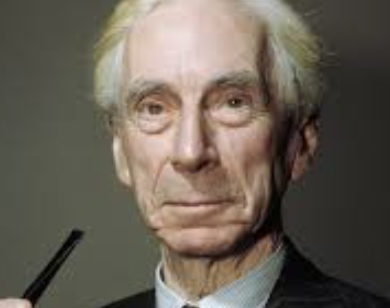
How much good it would do if one could exterminate the human race.
▼
Source
source
A characteristic saying of Russell, reported by Aldous Huxley in a letter to Lady Ottoline Morrell dated 8 October 1917, as quoted in Bibliography of Bertrand Russell, Routledge, 2013
5 days ago
Needless to say, I am not opposed to woman suffrage on the conventional ground that she is not equal to it. I see neither physical, psychological, nor mental reasons why woman should not have the equal right to vote with man. But that can not possibly blind me to the absurd notion that woman will accomplish that wherein man has failed. If she would not make things worse, she certainly could not make them better. To assume, therefore, that she would succeed in purifying something which is not susceptible of purification, is to credit her with supernatural powers. Since woman's greatest misfortune has been that she was looked upon as either angel or devil, her true salvation lies in being placed on earth; namely, in being considered human, and therefore subject to all human follies and mistakes. Are we, then, to believe that two errors will make a right? Are we to assume that the poison already inherent in politics will be decreased, if women were to enter the political arena?
1 week 6 days ago
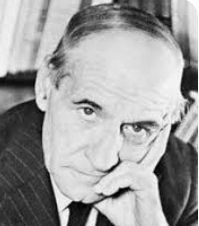
Whether he be an original or a plagiarist, man is the novelist of himself.
▼
Source
source
"Man has no nature"
2 weeks 4 days ago
"Where do you get those superior airs of yours?" "I've managed to survive, you see, all those nights when I wondered: am I going to kill myself at dawn?"
1 week 2 days ago
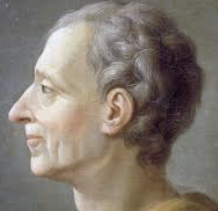
Oh, how empty is praise when it reflects back to its origin!
▼
Source
source
No. 50. (Rica writing to * * *)
1 month 3 weeks ago
Words are good servants but bad masters.
▼
Source
source
As quoted by Laura Huxley, in conversation with Alan Watts about her memoir This Timeless Moment (1968), in Pacifica Archives #BB2037
2 days ago
Reason now gazes above the realm of the dark but warm feelings as the Alpine peaks do above the clouds. They behold the sun more clearly and distinctly, but they are cold and unfruitful.
▼
Source
source
L 50

2 months 1 week ago
To throw oneself into strange teachings is quite dangerous.
1 month 3 weeks ago
Man cannot will unless he has first understood that he must count on no one but himself; that he is alone, abandoned on earth in the midst of his infinite responsibilities, without help, with no other aim than the one he sets himself, with no other destiny than the one he forges for himself on this earth.
1 month 3 weeks ago
The retinue of a grandee in China or Indostan accordingly is, by all accounts, much more numerous and splendid than that of the richest subjects of Europe.
▼
Source
source
Chapter XI, Part III, Third Period, p. 240.
1 week 2 days ago
An eternal purgatory, then, rather than a heaven of glory; an eternal ascent. If there is an end to all suffering, however pure and spiritualized we may suppose it to be, if there is an end to all desire, what is it that makes the blessed in paradise go on living? If in paradise they do not suffer for want of God, how shall they love Him? And if there, in the heaven of glory, while they behold God little by little and closer and closer, yet without ever wholly attaining Him, there does not always remain something more for them to know and desire, if there does not always remain a substratum of doubt, how shall they not fall asleep?
1 month 3 weeks ago
Our sadness is not sad, but our cheap joys.
▼
Source
source
Pearls of Thought (1881) p. 231
1 month 3 weeks ago
Among civilized and thriving nations, on the contrary, though a great number of people do no labor at all, many of whom consume the produce of ten times, frequently of a hundred times more labour than the greater part of those who work; yet the produce of the whole labour of the society is so great, that all are often abundantly supplied, and a workman, even of the lowest and poorest order, if he is frugal and industrious, may enjoy a greater share of the necessaries and conveniencies of life than it is possible for any savage to acquire.
▼
Source
source
Introduction and Plan of the Work, p. 2.
1 month 3 weeks ago
Revolutions are the locomotives of history.
▼
Source
source
Chapter 3, The Class Struggles in France, 1848 to 1850, 1850

1 month 3 weeks ago
A witty saying proves nothing.
▼
Source
source
Le dîner du comte de Boulainvilliers (1767): Deuxième Entretien
1 month 3 weeks ago
Ideas do not exist separately from language.
▼
Source
source
Notebook I, The Chapter on Money, p. 83.
CivilSimian.com created by AxiomaticPanic, CivilSimian, Kalokagathia