


1 month 2 weeks ago
I sit astride life like a bad rider on a horse. I only owe it to the horse's good nature that I am not thrown off at this very moment.
▼
Source
source
p. 36e
1 week 2 days ago
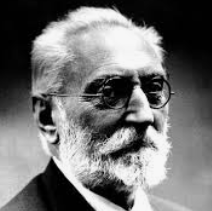
And He is the God of the humble, for in the words of the Apostle, God chose the foolish things of the world to confound the wise and the weak things of the world to confound the things which are mighty (I Cor. i. 27) And God is in each of us in the measure in which one feels Him and loves Him. "If of two men," says Kierkegaard, "one prays to the true God without sincerity of heart, and the other prays to the an idol with all the passion of an infinite yearning, it is the first who really prays to the idol, while the second really prays to God." It would be better to say that the true God is He to whom man truly prays and whom man truly desires. And there may even be a truer revelation in superstition itself than in theology.
1 week 1 day ago
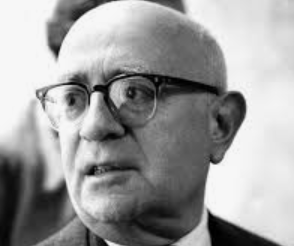
If philosophy is still necessary, it is so only in the way it has been from time immemorial: as critique, as resistance to the expanding heteronomy, even if only as thought's powerless attempt to remain its own master and to convict of untruth, by their own criteria, both a fabricated mythology and a conniving, resigned acquiescence. ... It is incumbent upon philosophy ... to provide a refuge for freedom. Not that there is any hope that it could break the political tendencies that are throttling freedom throughout the world both from within and without and whose violence permeates the very fabric of philosophical argumentation.
▼
Source
source
p. 10
3 weeks 2 days ago
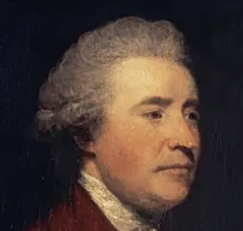
We are at war with a system, which, by it's essence, is inimical to all other Governments, and which makes peace or war, as peace and war may best contribute to their subversion. It is with an armed doctrine that we are at war. It has, by it's essence, a faction of opinion, and of interest, and of enthusiasm, in every country. To us it is a Colossus which bestrides our channel. It has one foot on a foreign shore, the other upon the British soil. Thus advantaged, if it can at all exist, it must finally prevail.
▼
Source
source
p. 19
2 months ago
By the law is the knowledge of sin [Rom 3:20], so the word of grace comes only to those who are distressed by a sense of sin and tempted to despair.
▼
Source
source
p. 168
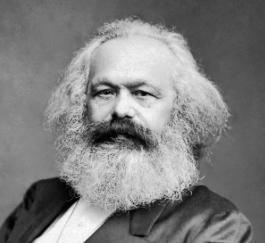
1 month 3 weeks ago
This much is certain, the ERA OF REVOLUTION has now FAIRLY OPENED IN EUROPE once more. And the general state of affairs is good.
▼
Source
source
Letter to Friedrich Engels (13 February 1863), quoted in The Collected Works of Karl Marx and Friedrich Engels: Volume 41. Letters 1860-64 (2010), p. 453
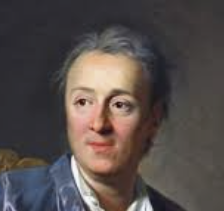
3 weeks 5 days ago
There's a bit of testicle at the bottom of our most sublime feelings and our purest tenderness.
▼
Source
source
Letter to Étienne Noël Damilaville
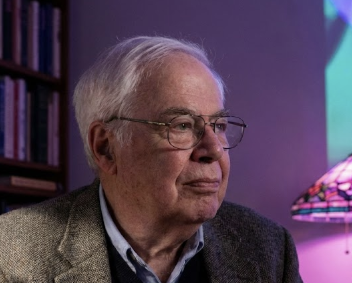
1 month 1 week ago
Nowadays, to say that we are clever animals is not to say something philosophical and pessimistic but something political and hopeful - namely, if we can work together, we can make ourselves into whatever we are clever and courageous enough to imagine ourselves becoming. This is to set aside Kant's question "What is man?" and to substitute the question "What sort of world can we prepare for our great grandchildren?"
▼
Source
source
"Human Rights, Rationality, and Sentimentality." Truth and Progress: Philosophical Papers, Volume 3 (1998).
3 weeks 5 days ago
The world is the house of the strong. I shall not know until the end what I have lost or won in this place, in this vast gambling den where I have spent more than sixty years, dicebox in hand, shaking the dice.
▼
Source
source
Conclusion
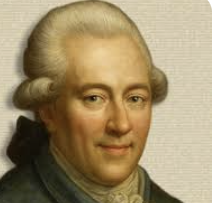
2 days ago
He was always smoothing and polishing himself, and in the end he became blunt before he was sharp.
▼
Source
source
L 70
3 weeks 1 day ago
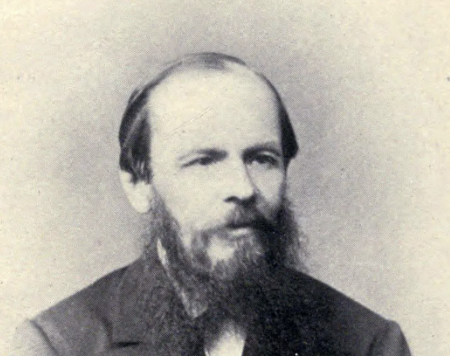
Money is coined liberty, and so it is ten times dearer to the man who is deprived of freedom. If money is jingling in his pocket, he is half consoled, even though he cannot spend it. But money can always and everywhere be spent, and, moreover, forbidden fruit is sweetest of all.
▼
Source
source
The House of the Dead (1862) ch. 1; as translated by Constance Garnett (1915), p. 16

2 weeks 4 days ago
Each time I fail to think about death, I have the impression of cheating, of deceiving someone in me.

2 weeks ago
To those who hold abstractly to Hegel's political philosophy, Hobhouse replies that the very fact of class society, the patent influence of class interests on the state, renders it impossible to designate the state as expressive of the real will of individuals as a whole. 'Wherever a community is governed by one class or one race, the remaining class or race is permanently in the position of having to take what it can get.'
▼
Source
source
P. 396

3 weeks 6 days ago
Furthermore, when citizens are all almost equal, it becomes difficult for them to defend their independence against the aggressions of power.
▼
Source
source
Chapter III.
2 months 1 week ago
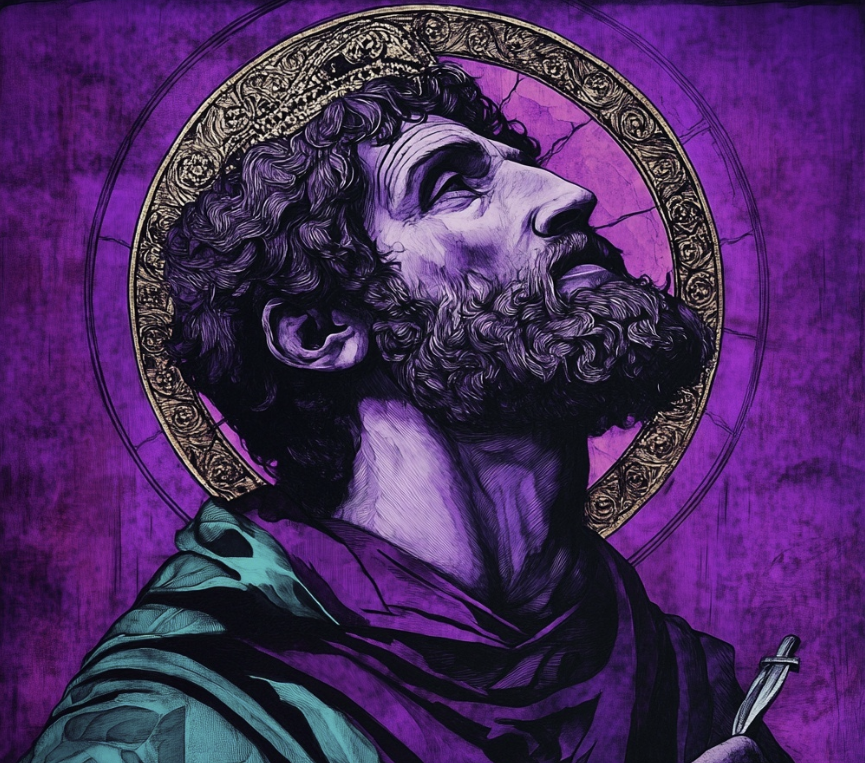
You called and cried out loud and shattered my deafness. You were radiant and resplendent, you put to flight my blindness. You were fragrant, and I drew in my breath and now pant after you. I tasted you, and I feel but hunger and thirst for you. You touched me, and I am set on fire to attain the peace which is yours.
1 month 3 weeks ago
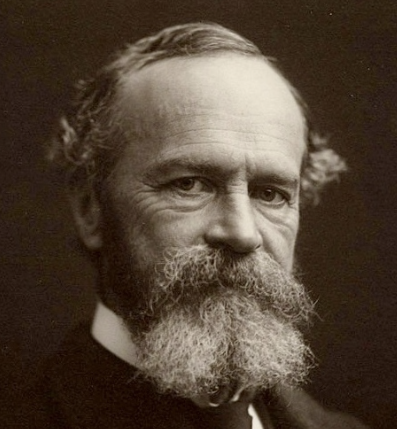
Pretend what we may, the whole man within us is at work when we form our philosophical opinions. Intellect, will, taste, and passion co-operate just as they do in practical affairs; and lucky it is if the passion be not something as petty as a love of personal conquest over the philosopher across the way.
1 week 1 day ago
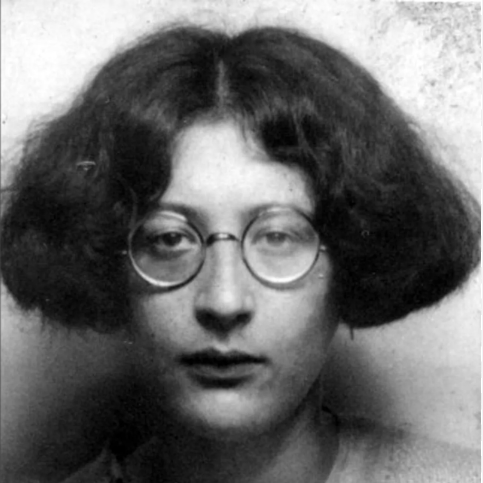
Dadaism and surrealism ... represented the intoxication of total license, the intoxication in which the mind wallows when it has made a clean sweep of value and surrendered to the immediate. The good is the pole towards which the human spirit is necessarily oriented, not only in action but in every effort, including the effort of pure intelligence. The surrealists have set up non-oriented thought as a model; they have chosen the total absence of value as their supreme value. Men have always been intoxicated by license, which is why, throughout history, towns have been sacked. But there has not always been a literary equivalent for the sacking of towns. Surrealism is such an equivalent.
▼
Source
source
"The responsibility of writers," p. 167
3 weeks 2 days ago
For my part for one, though I make no doubt of preferring the antient Course, or almost any other to this vile chimera, and sick mans dream of Government yet I could not actively, or with a good heart, and clear conscience, go to the establishment of a monarchical despotism in the place of this system of Anarchy.
▼
Source
source
Letter to Richard Burke (26 September 1791), quoted in Alfred Cobban and Robert A. Smith (eds.), The Correspondence of Edmund Burke, Volume VI: July 1789-December 1791 (1967), p. 414
1 month 3 weeks ago
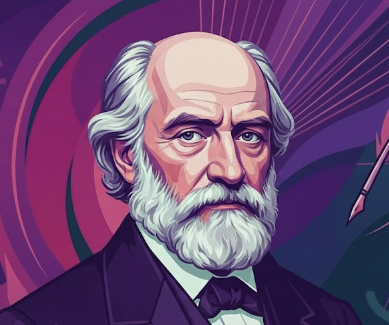
Monotheistic religions alone furnish the spectacle of religious wars, religious persecutions, heretical tribunals, that breaking of idols and destruction of images of the gods, that razing of Indian temples and Egyptian colossi, which had looked on the sun 3,000 years: just because a jealous god had said, 'Thou shalt make no graven image.'
1 month 3 weeks ago
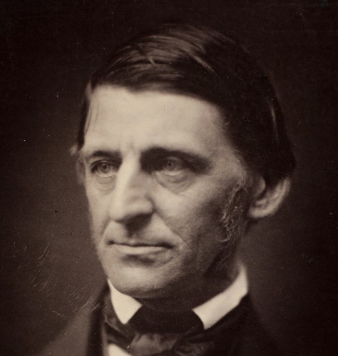
Though thou loved her as thyself, As a self of purer clay, Tho' her parting dims the day, Stealing grace from all alive, Heartily know, When half-gods go, The gods arrive.
▼
Source
source
Give All to Love, st. 4

1 month 4 days ago
It is difficult to walk at one and the same time many paths of life.
▼
Source
source
Pythagorean Ethical Sentences From Stobæus

5 days ago
Some will ask, what about weak natures, must they not be protected? Yes, but to be able to do that, it will be necessary to realize that education of children is not synonymous with herdlike drilling and training. If education should really mean anything at all, it must insist upon the free growth and development of the innate forces and tendencies of the child. In this way alone can we hope for the free individual and eventually also for a free community, which shall make interference and coercion of human growth impossible.

1 month 3 weeks ago
All mortals are equal; it is not their birth,But virtue itself that makes the difference.
▼
Source
source
Ériphyle Act II, scene I (1732); these lines were also later used in Voltaire's Mahomet, Act I, scene IV (1741)
1 week 1 day ago
Maurras, with perfect logic, is an atheist. The Cardinal [Richelieu], in postulating something whose whole reality is confined to this world as an absolute value, committed the sin of idolatry. ... The real sin of idolatry is always committed on behalf of something similar to the State.
▼
Source
source
p. 199
1 month 1 week ago
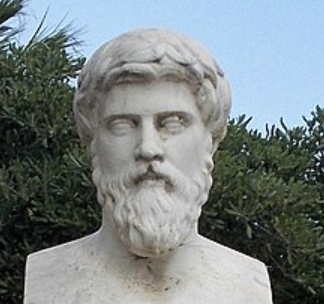
When he was wounded with an arrow in the ankle, and many ran to him that were wont to call him a god, he said smiling, "That is blood, as you see, and not, as Homer saith, 'such humour as distils from blessed gods.'"
▼
Source
source
43 Alexander
2 weeks 4 days ago
There is no false sensation.

2 months 3 weeks ago
The truth is a trap: you can not get it without it getting you; you cannot get the truth by capturing it, only by its capturing you.
1 month 3 weeks ago
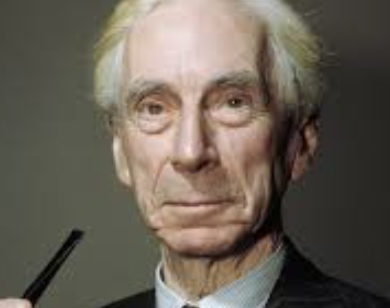
When one admits that nothing is certain one must, I think, also admit that some things are much more nearly certain than others. It is much more nearly certain that we are assembled here tonight than it is that this or that political party is in the right. Certainly there are degrees of certainty, and one should be very careful to emphasize that fact, because otherwise one is landed in an utter skepticism, and complete skepticism would, of course, be totally barren and completely useless.
▼
Source
source
"Skepticism"
2 months 1 week ago
The Word takes to Himself one man, for He takes unity. He does not take schisms to Himself, nor does He take heresies. So it is one man who is taken, and his Head is Christ. This is that "blessed man who hath not walked in the council of the ungodly" (Ps. 1:1); this is he that is assumed. He is not outside of us. Let us be in Him, and we shall be assumed; let us be in Him, and we shall be chosen. Therefore this one man that is taken to become the temple of God, is at once many and one.
▼
Source
source
p.430
4 weeks 1 day ago
I entirely agree with you, as to the ill tendency of the affected doubts of some philosophers, and fantastical conceit of others. I am even so far gone of late in this way of think, that I have quitted several of the sublime notions I had got in their schools for vulgar opinions. And I give it you on my word, since this revolt from metaphysical notions to the plain dictates of nature and common sense, I find my understanding strangely enlightened, so that I can now easily comprehend a great many thing which before were all mystery and riddle.
▼
Source
source
Said by Philonous (Berkeley) to Hylas in the opening of dialog 1 with reference to the recent surge philosophic endeavors (Locke, Newton, et al) that seemed to lead to skepticism about the existence of the world.
1 month 3 weeks ago
Europeans are awakening more and more to a sense that beasts have rights, in proportion as the strange notion is being gradually overcome and outgrown, that the animal kingdom came into existence solely for the benefit and pleasure of man. This view, with the corollary that non-human living creatures are to be regarded merely as things, is at the root of the rough and altogether reckless treatment of them, which obtains in the West.
▼
Source
source
Part III, Ch. VIII, 7, p. 225
1 month 3 weeks ago
In the same year in which I began Latin, I made my first commencement in the Greek poet with the Iliad. After I had made some progress in this, my father put Pope's translation into my hands. It was the first English verse I had cared to read, and it became one of the books in which for many years I most delighted: I think I must have read it from twenty to thirty times through. I should not have thought it worth while to mention a taste apparently so natural to boyhood, if I had not, as I think, observed that the keen enjoyment of this brilliant specimen of narrative and versification is not so universal with boys, as I should have expected both à priori and from my individual experience.
▼
Source
source
(p. 10)
1 month 3 weeks ago
Mysticism is, in essence, little more than a certain intensity and depth of feeling in regard to what is believed about the universe.
▼
Source
source
Ch. 1: Mysticism and Logic
1 month 2 weeks ago
In philosophy the race is to the one who can run slowest-the one who crosses the finish line last.
▼
Source
source
p. 40e
1 month 3 weeks ago
The great majority of men and women, in ordinary times, pass through life without ever contemplating or criticising, as a whole, either their own conditions or those of the world at large. They find themselves born into a certain place in society, and they accept what each day brings forth, without any effort of thought beyond what the immediate present requires. Almost as instinctively as the beasts of the field, they seek the satisfaction of the needs of the moment, without much forethought, and without considering that by sufficient effort the whole conditions of their lives could be changed.
▼
Source
source
Introduction, p. 4
2 weeks 4 days ago
Existence would be a quite impracticable enterprise if we stopped granting importance to what has none.
2 months ago
Certainly it is true that Christians, so far as they themselves are concerned, are subject neither to law nor sword, and have need of neither. But take heed and first fill the world with real Christians before you attempt to rule it in a Christian and evangelical manner. This you will never accomplish; for the world and the masses are and always will be un-Christian, even if they are all baptized and Christian in name.
▼
Source
source
p. 91
1 month 3 weeks ago
The more one presupposes that his own power will suffice him to realize what he desires the more practical is that desire. When I treat a man contemptuously, I can inspire him with no practical desire to appreciate my grounds of truth. When I treat any one as worthless, I can inspire him with no desire to do right.
▼
Source
source
Part III : Selection on Education from Kant's other Writings, Ch. I Pedagogical Fragments, # 15
1 month 3 weeks ago
The Austrians are a highly civilised race, half-surrounded by Slavs in a relatively backward state of culture. ... Servia, a country so barbaric that a man can secure the throne by instigating the assassination of his predecessor, is engaged constantly in fermenting the racial discontent of men of the same race who are Austrian subjects.
▼
Source
source
War: The Offspring of Fear (1914), quoted in Ray Monk, Bertrand Russell: The Spirit of Solitude, 1872-1921 (1996), p. 373
3 weeks 1 day ago
The revolutionary government is the despotism of liberty against tyranny.
▼
Source
source
Act I.
1 month 3 weeks ago
Religions, which condemn the pleasures of sense, drive men to seek the pleasures of power. Throughout history power has been the vice of the ascetic.
▼
Source
source
The New York Herald-Tribune Magazine, 3/6/1938

1 month 2 weeks ago
It is a sign of wisdom to be able to use parrhesia without falling into the garrulousness of athuroglossos... One of the problems... how to distinguish that which must be said from that which should be kept silent.

2 months 1 week ago
I have always been of the opinion that infamy earned by doing what is right is not infamy at all, but glory.
▼
Source
source
Speech I
1 month 3 weeks ago
Two things fill the mind with ever-increasing wonder and awe, the more often and the more intensely the mind of thought is drawn to them: the starry heavens above me and the moral law within me.
▼
Source
source
Translated by Lewis White Beck Two things fill the heart with renewed and increasing awe and reverence the more often and the more steadily that they are meditated on: the starry skies above me and the moral law inside me.

2 weeks ago
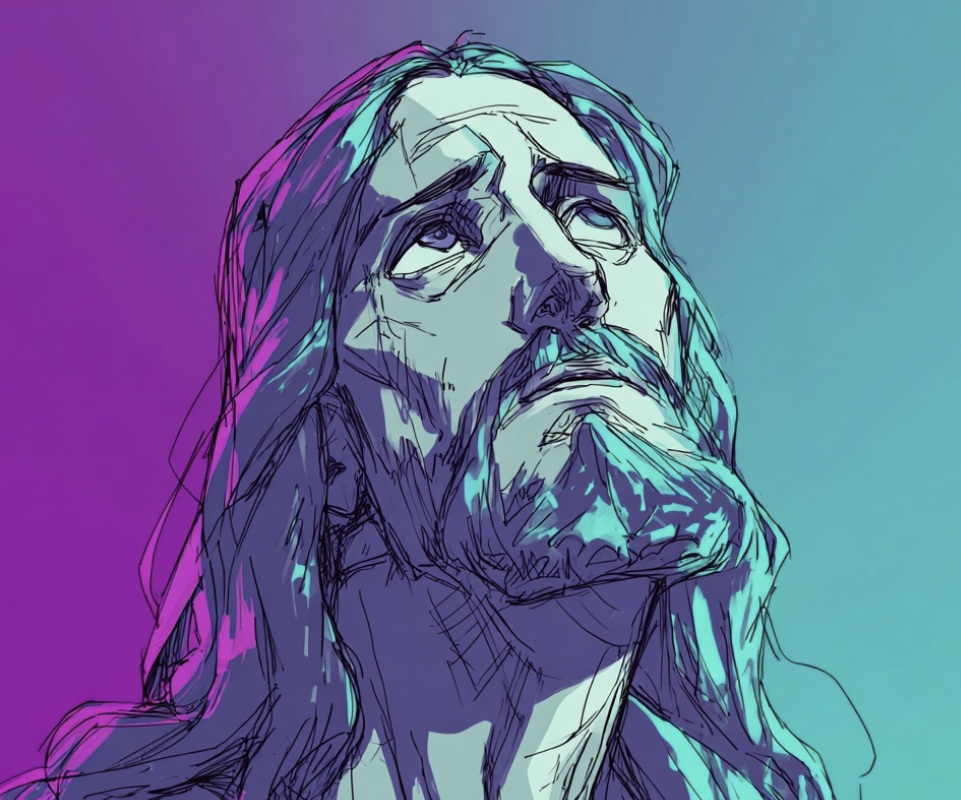
If those who lead you say, 'See, the Kingdom is in the sky,' then the birds of the sky will precede you. If they say to you, 'It is in the sea,' then the fish will precede you. Rather, the Kingdom is inside of you, and it is outside of you. When you come to know yourselves, then you will become known, and you will realize that it is you who are the sons of the living Father. But if you will not know yourselves, you dwell in poverty and it is you who are that poverty. (3) And when he was demanded of the Pharisees, when the kingdom of God should come, he answered them and said, The kingdom of God cometh not with observation: Neither shall they say, Lo here! or, lo there! for, behold, the kingdom of God is within you.
▼
Source
source
(Luke 17:21)
1 month 3 weeks ago
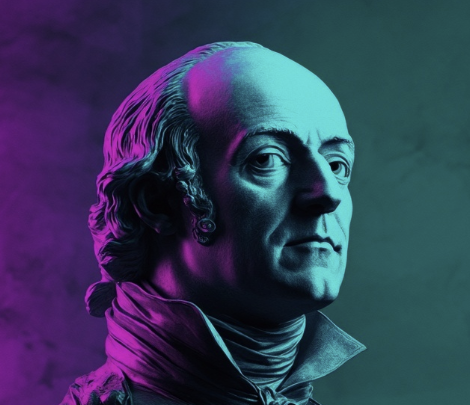
When profit diminishes, merchants are very apt to complain that trade decays; though the diminution of profit is the natural effect of its prosperity, or of a greater stock being employed in it than before.
▼
Source
source
Chapter IX

2 months 1 day ago
The logic now in use serves rather to fix and give stability to the errors which have their foundation in commonly received notions than to help the search for truth. So it does more harm than good.
▼
Source
source
Aphorism 7
1 week 6 days ago
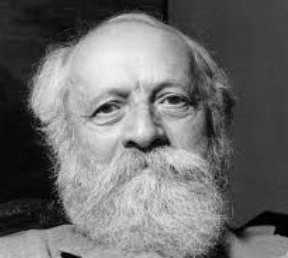
Every morning I shall concern myself anew about the boundary Between the love-deed-Yes and the power-deed-No And pressing forward honor reality. We cannot avoid Using power, Cannot escape the compulsion To afflict the world, So let us, cautious in diction And mighty in contradiction, Love powerfully.
▼
Source
source
"Power and Love"
1 month 4 days ago
Evil destroyeth itself.
CivilSimian.com created by AxiomaticPanic, CivilSimian, Kalokagathia