

2 weeks ago
Almost anything that consoles us is a fake.
▼
Source
source
The Sovereignty of Good (1970) p. 59.
1 month 4 weeks ago
All the opinions of the world agree in this, that pleasure is our end.
▼
Source
source
Ch. 20. Of the Force of Imagination, tr. Cotton, rev. W. Carew Hazlitt, 1877
1 month 3 weeks ago
I regard utility as the ultimate appeal on all ethical questions; but it must be utility in the largest sense, grounded on the permanent interests of man as a progressive being.
▼
Source
source
Ch. 1: Introductory
2 weeks ago
The mind celebrates a little triumph whenever it can formulate a truth, however unwelcome to the flesh, or discover an actual force, however unfavourable to given interests.
▼
Source
source
Ch. IV.: Music
1 month 2 weeks ago
In writing a history of madness, Foucault has attempted-and this is the greatest merit, but also the very infeasibility of his book-to write a history of madness itself. Itself.
▼
Source
source
Of madness itself. That is by letting madness speak for itself. Cogito and The History of Madness, p.37 (Routledge classics edition)

4 weeks 1 day ago
In the pursuit of truth we must beware of being misled by terms which we do not rightly understand. That is the chief point. Almost all philosophers utter the caution; few observe it.
▼
Source
source
Paragraph 1
1 month 2 weeks ago
A real subjection is born mechanically from a fictitious relation. So it is not necessary to use force to constrain the convict to good behavior, the madman to calm, the worker to work, the schoolboy to application, the patient to the observation of the regulations.
▼
Source
source
Part Four, Complete and austere institutions
2 weeks 4 days ago
The quality of feeling is the true psychical representative of the first category of the immediate as it is in its immediacy, of the present in its direct positive presentness. Qualities of feeling show myriad-fold variety, far beyond what the psychologists admit. This variety however is in them only insofar as they are compared and gathered into collections. But as they are in their presentness, each is sole and unique; and all the others are absolute nothingness to it - or rather much less than nothingness, for not even a recognition as absent things or as fictions is accorded to them. The first category, then, is Quality of Feeling, or whatever is such as it is positively and regardless of aught else.
▼
Source
source
Lecture II : The Universal Categories, § 1 : Presentness, CP 5.44

1 month 3 weeks ago
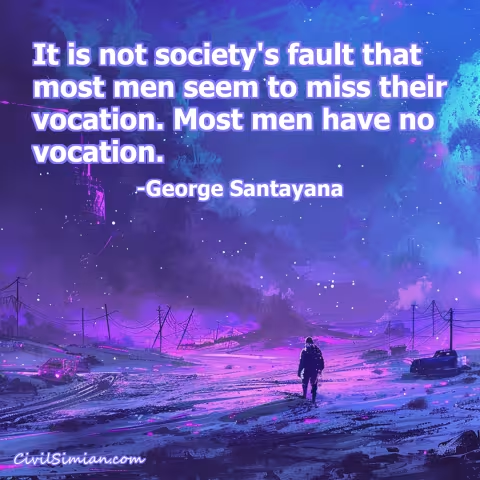
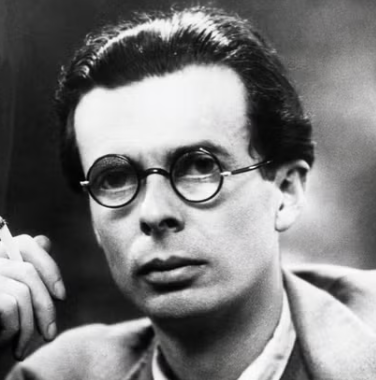
The trouble with fiction... is that it makes too much sense. Reality never makes sense.
▼
Source
source
"John Rivers" in The Genius and the Goddess, 1955
2 months 3 weeks ago
Man is a goal-seeking animal. His life only has meaning if he is reaching out and striving for goals.
1 month 4 weeks ago
The plague of man is boasting of his knowledge.
▼
Source
source
Ch. 12 (tr. ?)
Just now
The behaviour of individuals is the tool with which the organisation achieves its targets.
▼
Source
source
p. 108.

2 months 2 weeks ago
In the world of today can there be peace anywhere until there is peace everywhere?
1 month 1 week ago
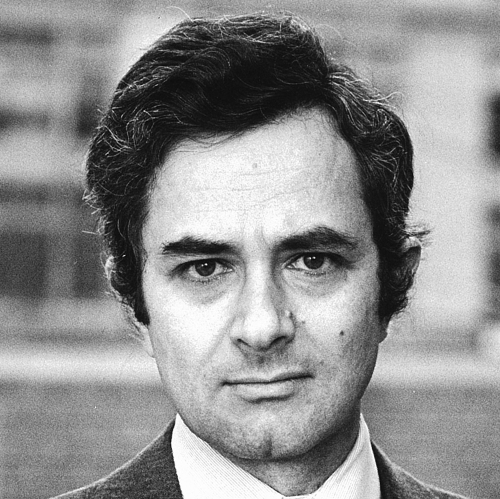
What is more subjective is not necessarily more private. In general it is intersubjectively available. I assume that the intersubjective ideas of experience, of action, and of the self are in some sense public or common property. That is why the problems of mind and body, free will, and personal identity are not just problems about one's own case.
▼
Source
source
"Subjective and Objective" (1979), p. 207.
5 days ago
When one learns something one first performs an act of will, because only by willing to learn can one learn.
▼
Source
source
"Vico: Autodidact and Humanist," The Centennial Review, Vol. 11, No. 3 (Summer 1967), p. 340
1 month 3 weeks ago
A spider conducts operations that resemble those of a weaver, and a bee puts to shame many an architect in the construction of her cells. But what distinguishes the worst of architects from the best of bees is this, that the architect raises his structure in imagination before he erects it in reality.
▼
Source
source
Vol. I, Ch. 7, pg. 198.
3 weeks 5 days ago
Genius is present in every age, but the men carrying it within them remain benumbed unless extraordinary events occur to heat up and melt the mass so that it flows forth.
2 weeks ago
All metaphysical theories are inconclusively vulnerable to positivist attack.
▼
Source
source
Ch. 9, p. 127
2 months 3 weeks ago
What is the essence of life? To serve others and to do good. Often given as a saying of Aristotle with no reference.
1 week 2 days ago
The laws of Rome had wisely divided public power among a large number of magistracies, which supported, checked and tempered each other. Since they all had only limited power, every citizen was qualified for them, and the people - seeing many persons pass before them one after the other - did not grow accustomed to any in particular. But in these times the system of the republic changed. Through the people the most powerful men gave themselves extraordinary commissions - which destroyed the authority of the people and magistrates, and placed all great matters in the hands of one man, or a few.
▼
Source
source
Chapter XI.
3 weeks 1 day ago
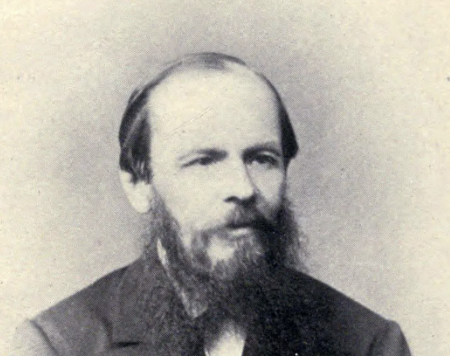
I am sorry I can say nothing more consoling to you, for love in action is a harsh and dreadful thing compared with love in dreams. Love in dreams is greedy for immediate action, rapidly performed and in the sight of all. Men will even give their lives if only the ordeal does not last long but is soon over, with all looking on and applauding as though on the stage. But active love is labour and fortitude, and for some people too, perhaps, a complete science. But I predict that just when you see with horror that in spite of all your efforts you are getting farther from your goal instead ofnearer to it - at that very moment I predict that you will reach it and behold clearly the miraculous power of the Lord who has been all the time loving and mysteriously guiding you.

1 month 1 week ago
People are enticed by a desire which continually cheats them.'Nothing is enough,' they say, 'for you're only worth what you have.'
▼
Source
source
Book I, satire i, lines 61-62, as translated by N. Rudd

2 weeks 4 days ago
Incredible that the prospect of having a biographer has made no one renounce having a life.
1 month 3 weeks ago
"And your education! Is not that also social, and determined by the social conditions under which you educate, by the intervention, direct or indirect, of society, by means of schools, etc.? The Communists have not invented the intervention of society in education; they do but seek to alter the character of that intervention, and to rescue education from the influence of the ruling class."
▼
Source
source
As quoted in The Communist Manifesto (21 February 1848), p19-20.
1 month 4 weeks ago
I live from day to day, and content myself with having enough to meet my present and ordinary needs; for the extraordinary, all the provision in the world could not suffice.
▼
Source
source
Ch. 14

3 weeks 1 day ago
The end of the philosophical dialogue lies in itself; it can never serve a purpose outside of itself. Just as a sculptor does not cease to be a work of art even if it lies at the bottom of the sea, so indeed every work of philosophy endures, even if uncomprehended in its own time. One would be grateful if it were merely a matter of incomprehension. Instead, the work is usually refitted and appropriated by various entities-some playing the part of the opponent; others, that of the proponent.
▼
Source
source
P.3-4

2 months 3 weeks ago
Between God and man there is and remains an eternal, essential, qualitative difference. The paradoxical relationship (which, quite rightly, cannot be thought, but only believed) appears when God appoints a particular man to divine authority, in relation, be it carefully noted, to that which has entrusted to him.

5 months 3 weeks ago
The symptom is not only a cyphered message, it is at the same time a way for the subject to organize his enjoyment - that is why, even after the completed interpretation, the subject is not prepared to renounce his symptom.
2 weeks 4 days ago
To claim you are more detached, more alien to everything than anyone, and to be merely a fanatic of indifference!

2 months ago
The Mass is the greatest blasphemy of God, and the highest idolatry upon earth, an abomination the like of which has never been in Christendom since the time of the Apostles.
▼
Source
source
171
1 month 3 weeks ago
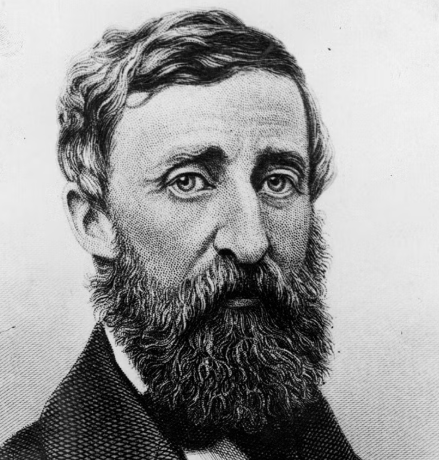
The Indian...stands free and unconstrained in Nature, is her inhabitant and not her guest, and wears her easily and gracefully. But the civilized man has the habits of the house. His house is a prison.
▼
Source
source
April 26, 1841

1 month 3 weeks ago
Where is the prince sufficiently educated to know that for seventeen hundred years the Christian sect has done nothing but harm?
▼
Source
source
Letters of Voltaire and Frederick the Great (New York: Brentano's, 1927), transl. Richard Aldington, letter 160 from Voltaire to Frederick II of Prussia, 6 April 1767
1 month 3 weeks ago
All students of man and society who possess that first requisite for so difficult a study, a due sense of its difficulties, are aware that the besetting danger is not so much of embracing falsehood for true, as of mistaking part of the truth for the whole.
▼
Source
source
"Coleridge". London and Westminster Review., March 1840
1 month 1 week ago
The core of ethics runs deep in our species and is common to human beings everywhere. It survives the most appalling hardships and the most ruthless attempts to deprive human beings of their humanity. Nevertheless, some people resist the idea that his core has a biological basis which we have inherited from our pre-human ancestors.
▼
Source
source
Chapter 2, The Biological Basis Of Ethics, p. 27
3 weeks 1 day ago
While all these are disturbed and divided by the multifarious objects to which their thoughts must be applied, the Philosopher pursues, in solitary silence and in unbroken concentration of mind, his single and undeviating course towards the Good, the Beautiful, and the True; and that is his daily labour, to which others can only resort at times for rest and refreshment after toil.
▼
Source
source
P. 17
4 days ago
What is it that distinguishes man from animals? It is not his upright posture. That was present in the apes long before the brain began to develop. Nor is it the use of tools. It is something altogether new, a previously unknown quality: self-awareness. Animals, too, have awareness. They are aware of objects; they know this is one thing and that another. But when the human being as such was born he had a new and different consciousness, a consciousness of himself; he knew that he existed and that he was something different, something apart from nature, apart from other people, too. He experienced himself. He was aware that he thought and felt. As far as we know, there is nothing analogous to this anywhere in the animal kingdom. That is the specific quality that makes human beings human.
▼
Source
source
Affluence and Ennui in Our Society in For the Love of Life (1986) translated by Robert and Rita Kimber
1 month 3 weeks ago
The open society is one in which men have learned to be to some extent critical of taboos, and to base decisions on the authority of their own intelligence.
▼
Source
source
Vol. 1, Endnotes to the Chapters : Notes to the Introduction.
Just now
A major task in organizing is to determine, first, where the knowledge is located that can provide the various kinds of factual premises that decisions require.
▼
Source
source
p. 24.

1 week 1 day ago
The first thing that we know about ourselves is our imperfection.
2 months 6 days ago
For what is lacking now is not quibbles; nay, the books of the Stoics are full of quibbles.
▼
Source
source
Book I, ch. 29, § 56
3 weeks 5 days ago
Are we not madder than those first inhabitants of the plain of Sennar? We know that the distance separating the earth from the sky is infinite, and yet we do not stop building our tower.
▼
Source
source
No. 4
1 month 3 weeks ago
Formerly, it was held by philosophers and mathematicians alike that the proofs in Geometry depended on the figure; nowadays, this is known to be false. In the best books there are no figures at all. The reasoning proceeds by the strict rules of formal logic from a set of axioms laid down to begin with.
▼
Source
source
Ch. 5: Mathematics and the Metaphysicians
1 month 3 weeks ago
[My father] impressed upon me from the first, that the manner in which the world came into existence was a subject on which nothing was known: that the question, "Who made me?" cannot be answered, because we have no experience or authentic information from which to answer it; and that any answer only throws the difficulty a step further back, since the question immediately presents itself, "Who made God?"
▼
Source
source
(pp. 42-43)
1 month 3 weeks ago
The advance of liberalism, so-called, in Christianity, during the past fifty years, may fairly be called a victory of healthy-mindedness within the church over the morbidness with which the old hell-fire theology was more harmoniously related. We have now whole congregations whose preachers, far from magnifying our consciousness of sin, seem devoted rather to making little of it. They ignore, or even deny, eternal punishment, and insist on the dignity rather than on the depravity of man. They look at the continual preoccupation of the old-fashioned Christian with the salvation of his soul as something sickly and reprehensible rather than admirable; and a sanguine and 'muscular' attitude, which to our forefathers would have seemed purely heathen, has become in their eyes an ideal element of Christian character. I am not asking whether or not they are right, I am only pointing out the change.
▼
Source
source
Lectures IV and V, "The Religion of Healthy-Mindedness"
2 weeks 3 days ago
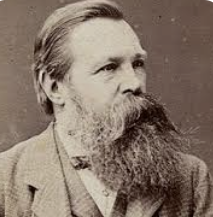
By creating the world market, big industry has already brought all the peoples of the Earth, and especially the civilized peoples, into such close relation with one another that none is independent of what happens to the others. Further, it has co-ordinated the social development of the civilized countries to such an extent that, in all of them, bourgeoisie and proletariat have become the decisive classes, and the struggle between them the great struggle of the day. It follows that the communist revolution will not merely be a national phenomenon but must take place simultaneously in all civilized countries.

5 days ago
What excited me was the recognition that this was simply another version of the problem that had obsessed me all of my life -- the problem of those moments when life seems entirely delightful, when we experience a sensation of what G.K. Chesterton called "absurd good news." Life normally strikes most of us as hard, dull and unsatisfying; but in these moments, consciousness seems to glow and expand, and all the contradictions seem to be resolved. Which of the two visions is true? My own reflections had led me to conclude that the vision of "absurd good news" is somehow broader and more comprehensive than the feeling that life is dull, boring and meaningless. Boredom is basically a feeling of narrowness, and surely a narrow vision is bound to be less true than a broad one?
▼
Source
source
p. 16
CivilSimian.com created by AxiomaticPanic, CivilSimian, Kalokagathia