


1 month 2 weeks ago
Kant was also quite aware that "the urgent need" of reason is both different from and "more than mere quest and desire for knowledge." Hence, the distinguishing of the two faculties, reason and intellect, coincides with a distinction between two altogether different mental activities, thinking and knowing.
▼
Source
source
p. 14
2 weeks 4 days ago
The dream is the small hidden door in the deepest and most intimate sanctum of the soul, which opens to that primeval cosmic night that was soul long before there was conscious ego and will be soul far beyond what a conscious ego could ever reach.
▼
Source
source
The Meaning of Psychology for Modern Man

2 months 2 weeks ago
At that moment he knew what his mother was thinking, and that she loved him. But he knew, too, that to love someone means relatively little; or, rather, that love is never wrong enough to find the word befitting it.
1 month 3 weeks ago
Be not afraid of life. Believe that life is worth living, and your belief will help create the fact.
▼
Source
source
"Is Life Worth Living?"
1 month 3 weeks ago
'Our kingdom go' is the necessary and unavoidable corollary of 'Thy kingdom come.' For the more there is of self, the less there is of God.
▼
Source
source
Chapter VI - Mortification, Non-Attachment, Right Livelihood

1 month 4 weeks ago
If women get tired and die of bearing, there is no harm in that; let them die as long as they bear; they are made for that.
▼
Source
source
-- Essays, quoted in Luther On "Woman"

2 weeks 3 days ago
To act is to anchor in the imminent future.
1 month 3 weeks ago
It is a waste of energy to be angry with a man who behaves badly, just as it is to be angry with a car that won't go. The difference is that you can compel your car to go to a garage, but you cannot compel Hitler to go to a psychiatrist.
▼
Source
source
A Fresh Look at Empiricism: 1927-42 (1996), p. 544

1 month 2 weeks ago
The word "art" does not designate the concept of a mere eventuality; it is a concept of rank.
▼
Source
source
p. 125
2 weeks ago
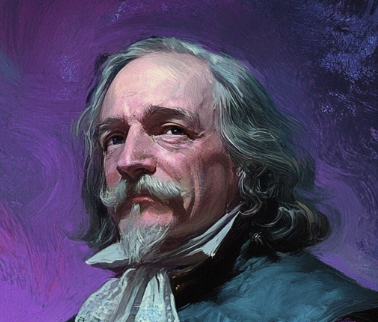
But if one Subject giveth Counsell to another, to do anything contrary to the Lawes, whether that Counsell proceed from evil intention, or from ignorance onely, it is punishable by the Common-wealth; because ignorance of the Law, is no good excuse, where every man is bound to take notice of the Lawes to which he is subject.
▼
Source
source
The Second Part, Chapter 25, p. 132
1 week 1 day ago
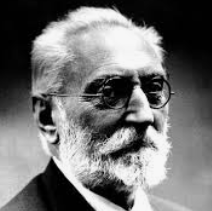
More than a century ago, in 1804, in Letter XC of that series that constitutes the immense monody of his Obermann, Sénancour wrote the words which I have put at the head of this chapter - and of all the spiritual descendants of the patriarchal Rousseau, Sénancour was the most profound and intense; of all the men of heart and feeling that France has produced, not excluding Pascal, he was the most tragic. "Man is perishable. That may be; but let us perish resisting, and if it is nothingness that awaits us, do not let us so act that it shall be a just fate." Change this sentence from it negative to the positive form - "And if it is nothingness that awaits us, let us so act that it shall be an unjust fate" - and you get the firmest basis of action for the man who cannot or will not be a dogmatist.
1 month 3 weeks ago
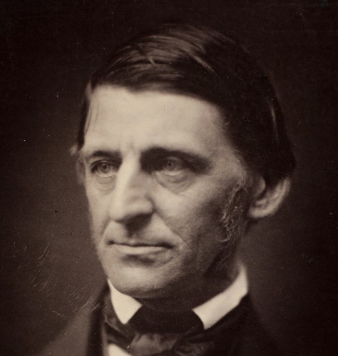
Make yourself necessary to somebody. Do not make life hard to any.
▼
Source
source
Considerations by the Way

2 weeks ago
One of the scribes came to Jesus and asked him, "Which is the first of all commandments?" Jesus replied,"The first is this: Hear, O Israel! The Lord our God is Lord alone! You shall love the Lord your God with all your heart, with all your soul, with all your mind, and with all your strength. The second is like: You shall love your neighbor as yourself. There is no other commandment greater than these."
▼
Source
source
Mark 12:28-34

1 month 1 week ago
With a drunken man do not walk on the road.
2 weeks ago
Did ye never read in the scriptures, The stone which the builders rejected, the same is become the head of the corner: this is the Lord's doing, and it is marvellous in our eyes? Therefore say I unto you, The kingdom of God shall be taken from you, and given to a nation bringing forth the fruits thereof. And whosoever shall fall on this stone shall be broken: but on whomsoever it shall fall, it will grind him to powder.
▼
Source
source
21:27-42 and 44 (KJV)
2 months 2 weeks ago
To two men living the same number of years, the world always provides the same sum of experiences. It is up to us to be conscious of them.
1 month 3 weeks ago
In the old dramas it was love that had to be sacrificed to painful duty. In the modern instance the sacrifice is at the shrine of what William James called "the Bitch Goddess, Success." Love is to be abandoned for the stern pursuit of newspaper notoriety and dollars.
▼
Source
source
"Silence is Golden," p. 61
1 week 5 days ago
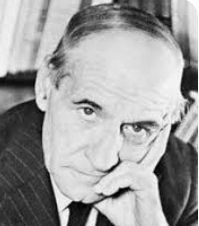
Torn in this way from its normal connection with contemplation, with being within one's self, pure action permits and produces only a chain of stupidities which we might better call "stupidity unchained." So we see today that an absurd attitude justifies the appearance of an opposing attitude no more reasonable; at least, reasonable enough, and so on indefinitely. Such is the extreme to which political affairs in the West have come!
▼
Source
source
p. 34
1 month 3 weeks ago
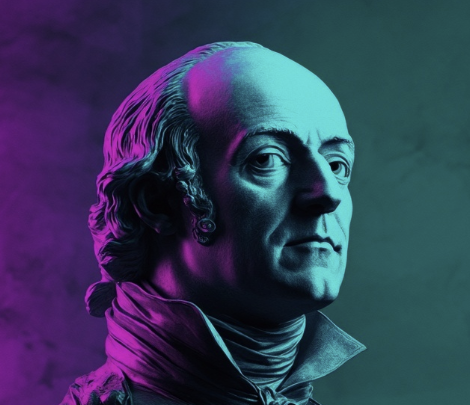
It seldom happens, however, that a great proprietor is a great improver.
▼
Source
source
Chapter IV, p. 420.

2 months 2 weeks ago
It is because you yourself fear the propaganda created, after all, only by the stupidity of your own bigots.

2 months 3 weeks ago
It is of this sort of divine service I used the expression that, in comparison with the Christianity of the New Testament, it is playing Christianity. The expression is essentially true and characterizes the thing perfectly. For what does it mean to play, when one reflects how the word must be understood in this connection? It means to imitate, to counterfeit, a danger when there is no danger, and to do it in such a way that the more art is applied to it, the more delusive the pretense is that the danger is present.
1 month 3 weeks ago
Americans need rest, but do not know it. I believe this to be a large part of the explanation of the crime wave in the United States.
▼
Source
source
Ch. 13: Freedom in Society.

1 month 3 weeks ago
The sentiments of men often differ with regard to beauty and deformity of all kinds, even while their general discourse is the same ... In all matters of opinion and science, the case is opposite: The difference among men is there oftener found to lie in generals than in particulars; and to be less in reality than in appearance.

1 month 2 weeks ago
We are told that Christ was killed for us, that His death has washed out our sins, and that by dying He has disabled death itself. That is the formula. That is Christianity. That is what has to be believed. Any theories we build up as to how Christ's death did all this are, in my view, quite secondary: mere plans or diagrams to be left alone if they do not help us, and, if they do help us, not to be confused with the thing itself.
▼
Source
source
Book II, Chapter 4, "The Perfect Penitent"
1 month 2 weeks ago
"I wish I had never been born," she said. "What are we born for?" "For infinite happiness," said the Spirit. "You can step out into it at any moment..."
▼
Source
source
Ch. 8
1 month 3 weeks ago
None but a coward dares to boast that he has never known fear.
▼
Source
source
Attributed to Russell in M. Kumar Dictionary of Quotations, p. 76, but actually said by Marshal Lannes, according to The London Literary Gazette and Journal of Belles Lettres, Arts, Sciences (1824), p. 664
1 month 2 weeks ago
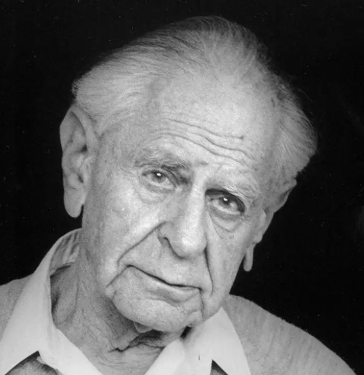
Scientific Method... [is] even less existent than some other non-existent subjects.


1 month 3 weeks ago
The individual, so far as he suffers from his wrongness and criticizes it, is to that extent consciously beyond it, and in at least possible touch with something higher, if anything higher exist. Along with the wrong part there is thus a better part of him, even though it may be but a most helpless germ. With which part he should identify his real being is by no means obvious at this stage; but when stage 2 (the stage of solution or salvation) arrives, the man identifies his real being with the germinal higher part of himself; and does so in the following way. He becomes conscious that this higher part is coterminous and continuous with a more of the same quality, which is operative in the universe outside of him, and which he can keep in working touch with, and in a fashion get on board of and save himself when all his lower being has gone to pieces in the wreck.
▼
Source
source
Lecture XX, "Conclusions"

1 month 4 weeks ago
Not being able to govern events, I govern myself.
▼
Source
source
Book II, Ch. 17

4 days ago
No art can be judged by purely aesthetic standards, although a painting or a piece of music may appear to give a purely aesthetic pleasure. Aesthetic enjoyment is an intensification of the vital response, and this response forms the basis of all value judgements. The existentialist contends that all values are connected with the problems of human existence, the stature of man, the purpose of life. These values are inherent in all works of art, in addition to their aesthetic values, and are closely connected with them.
▼
Source
source
The Chicago Review, Volume 13, no. 2, 1959, p. 152-181
1 month 3 weeks ago
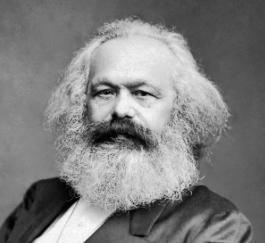
We suffer not only from the development of capitalist production, but also from the incompleteness of that development. Alongside the modern evils, we are oppressed by a whole series of inherited evils, arising from the passive survival of archaic and outmoded modes of production, with their accompanying train of anachronistic social and political relations. We suffer not only from the living, but from the dead.
▼
Source
source
Preface to the First Edition, Capital Volume 1, Peinguin Classics edition 1976.
1 month 3 weeks ago
I greatly doubt whether the men who become pirate chiefs are those who are filled with retrospective terror of their fathers, or whether Napoleon, at Austerlitz, really felt that he was getting even with Madame Mère. I know nothing of the mother of Attila, but I rather suspect that she spoilt the little darling, who subsequently found the world irritating because it sometimes resisted his whims.
▼
Source
source
Ch. 2: Leaders and Followers
2 months 2 weeks ago
Every ideology is contrary to human psychology.
4 days ago
I began to practice 'meditation', sitting cross-legged for hours, staring straight in front of me. The result was a sudden and total transformation of my inner-being. There was a sense of freedom from my personality -- from the being called Colin Wilson who was born in Leicester in 1931. I felt that 'he' was a series of responses and reactions, of ambitions and frustrations. But after half an hour of staring straight in front of me, of concentrating my attention 'at the root of my eyebrows', I felt in control of his responses and frustrations. This control brought such a sense of exhilaration and satisfaction that I often sneaked away from other people to spend just five minutes sitting cross-legged; when I was working as a labourer on a building site, I would find a quiet spot and, while the others were having a smoke, would sit in a position that could quickly be changed to an ordinary sitting posture if someone came by . . .
▼
Source
source
p. 87
2 weeks 3 days ago
Erosion of our being by our infirmities: the resulting void is filled by the presence of consciousness, what am I saying? - that void is consciousness itself.
2 weeks 3 days ago
When we are young, we take a certain pleasure in our infirmities. They seem so new, so rich! With age, they no longer surprise us, we know them too well. Now, without anything unexpected in them, they do not deserve to be endured.
1 month 3 weeks ago
I have no doubt that the present Prime Minister, for instance, is a most sincere Christian, but I should not advise any of you to go and smite him on one cheek. I think you might find that he thought this text was intended in a figurative sense.
▼
Source
source
"The Character of Christ"
2 months 2 weeks ago
The direction of the world overwhelms me at this time. In the long run, all the continents (yellow, black and brown) will spill over onto Old Europe. They are hundreds and hundreds of millions. They are hungry and they are not afraid to die. We no longer know how to die or how to kill. We could preach, but Europe believes in nothing. So, we must wait for the year 1000 or a miracle. For my part, I find it harder and harder to live before a wall.
1 week ago
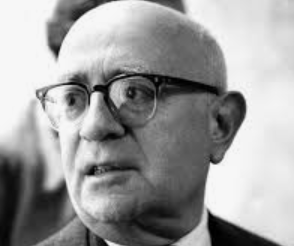
The phrase, the world wants to be deceived, has become truer than had ever been intended. People are not only, as the saying goes, falling for the swindle; if it guarantees them even the most fleeting gratification they desire a deception which is nonetheless transparent to them. They force their eyes shut and voice approval, in a kind of self-loathing, for what is meted out to them, knowing fully the purpose for which it is manufactured. Without admitting it they sense that their lives would be completely intolerable as soon as they no longer clung to satisfactions which are none at all.
▼
Source
source
Section 10
1 month 3 weeks ago
We love those who hate our enemies, and if we had no enemies there would be very few people whom we should love. All this, however, is only true so long as we are concerned solely with attitudes towards other human beings. You might regard the soil as your enemy because it yields reluctantly a niggardly subsistence. You might regard Mother Nature in general as your enemy, and envisage human life as a struggle to get the better of Mother Nature. If men viewed life in this way, cooperation of the whole human race would become easy. And men could easily be brought to view life in this way if schools, newspapers, and politicians devoted themselves to this end. But schools are out to teach patriotism; newspapers are out to stir up excitement; and politicians are out to get re-elected. None of the three, therefore, can do anything towards saving the human race from reciprocal suicide.
1 week 1 day ago
This mortal Don Quixote died and descended into hell, which he entered lance on rest, and freed all the condemned, as he freed the galley slaves, and he shut the gates of hell, and tore down the scroll that Dante saw there and replaced it by one on which was written "Long live hope!" and escorted by those whom he had freed, and they laughing at him, he went to heaven. And God laughed paternally at him, and this divine laughter filled his soul with eternal happiness.
3 weeks 1 day ago
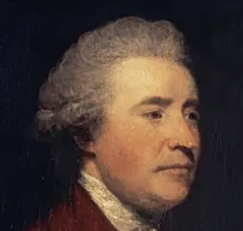
Learning will be cast into the mire and trodden down under the hoofs of a swinish multitude.
▼
Source
source
Volume iii, p. 335
2 months 2 weeks ago
At my age one's got to be sincere. Lying's too much effort.

1 month 3 weeks ago
It is sometimes said, common sense is very rare.
▼
Source
source
Philosophical Dictionary ('Sens Commun') (1767). Compare Juvenal, Satires, viii:73: Original Latin: rarus enim ferme sensus communis in illa fortuna.

2 months 1 week ago
Greater fates gain greater rewards.
1 month 4 weeks ago
I would advise no one to send his child where the Holy Scriptures are not supreme. Every institution that does not unceasingly pursue the study of God's word becomes corrupt. Because of this we can see what kind of people they become in the universities and what they are like now. Nobody is to blame for this except the pope, the bishops, and the prelates, who are all charged with training young people. The universities only ought to turn out men who are experts in the Holy Scriptures, men who can become bishops and priests, and stand in the front line against heretics, the devil, and all the world. But where do you find that? I greatly fear that the universities, unless they teach the Holy Scriptures diligently and impress them on the young students, are wide gates to hell.
▼
Source
source
To the Christian Nobility of the German States (1520), translated by Charles M. Jacobs, reported in rev. James Atkinson, The Christian in Society, I (Luther's Works, ed. James Atkinson, vol. 44), p. 207
1 month 4 weeks ago
A man must be a little mad if he does not want to be even more stupid.
▼
Source
source
Ch. 9

3 weeks 5 days ago
The French want no-one to be their superior. The English want inferiors. The Frenchman constantly raises his eyes above him with anxiety. The Englishman lowers his beneath him with satisfaction.
▼
Source
source
Journeys to England and Ireland (1835).
CivilSimian.com created by AxiomaticPanic, CivilSimian, Kalokagathia