

2 months 5 days ago
Why, then, do we wonder any longer that, although in material things we are thoroughly experienced, nevertheless in our actions we are dejected, unseemly, worthless, cowardly, unwilling to stand the strain, utter failures one and all? .
▼
Source
source
Book II, ch. 16, 18

1 month 2 weeks ago
If a false thought is so much as expressed boldly and clearly, a great deal has already been gained.
▼
Source
source
p. 86e
1 month 3 weeks ago
To-day unbind the captive, So only are ye unbound; Lift up a people from the dust, Trump of their rescue, sound!
▼
Source
source
Boston Hymn, st. 17
1 month 3 weeks ago
The more we devote ourselves to observing animals and their behaviour, the more we love them, on seeing how gready they care for their young; in such a context, we cannot even contemplate cruelty to a wolf. Leibnitz put the grub he had been observing back on the tree with its leaf, lest he should be guilty of doing any harm to it. It upsets a man to destroy such a creature for no reason, and this tenderness is subsequently transferred to man.
▼
Source
source
Part II, pp. 212-213
2 weeks 4 days ago
Man is a sun and his senses are the planets.
1 month 1 week ago
Being summoned by the Athenians out of Sicily to plead for his life, Alcibiades absconded, saying that that criminal was a fool who studied a defence when he might fly for it.
▼
Source
source
51 Alcibiades

1 week 6 days ago
We return to our analysis of qualities. Something preserves itself throughout this flux, something that passes into other things, but also stands against them as a being for itself. This something can exist only as the product of a process through which it integrates its otherness with its own proper being. Hegel says that its existence comes about through 'the negation of the negation.' The first negation is the otherness in which it turns, and the second is the incorporation of this other into its own self. Such a process presupposes that things possess a certain power over their movement, that they exist in a certain self-relation that enables them to 'mediate' their existential conditions.
▼
Source
source
P. 132-133
1 month 3 weeks ago
All's well that ends well; which is the epitaph I should put on my tombstone if I were the last man left alive.
▼
Source
source
Letter to Lucy Donnely, April 22, 1906
5 days ago
Today's mic-hogging, fast-talking, contentious young (and old) lefties continue to hawk little books and pamphlets on revolution, always with choice words or documents from Marx, Mao, even Malcolm. But I've never seen a broadside with "A Black Feminist Statement or even the writings of Angela Davis or June Jordan or Barbara Omolade or Flo Kennedy or Audre Lorde or bell hooks or Michelle Wallace, at least not from the groups who call themselves leftist. These women's collective wisdom has provided the richest insights into American radicalism's most fundamental questions: How can we build a multiracial movement? Who are the working class and what do they desire? How do we resolve the Negro Question and the Woman Question? What is freedom?
▼
Source
source
Robin Kelley Freedom Dreams
2 weeks 2 days ago
Democratic socialists are either proletarians who are not yet sufficiently clear about the conditions of the liberation of their class, or they are representatives of the petty bourgeoisie, a class which, prior to the achievement of democracy and the socialist measures to which it gives rise, has many interests in common with the proletariat. It follows that, in moments of action, the communists will have to come to an understanding with these democratic socialists, and in general to follow as far as possible a common policy with them - provided that these socialists do not enter into the service of the ruling bourgeoisie and attack the communists. It is clear that this form of co-operation in action does not exclude the discussion of differences.

3 weeks 5 days ago
There is in fact a manly and legitimate passion for equality that spurs all men to wish to be strong and esteemed. This passion tends to elevate the lesser to the rank of the greater. But one also finds in the human heart a depraved taste for equality, which impels the weak to want to bring the strong down to their level, and which reduces men to preferring equality in servitude to inequality in freedom.
▼
Source
source
Chapter III, Part I
1 week 6 days ago
No man's error becomes his own Law; nor obliges him to persist in it.
▼
Source
source
The Second Part, Chapter 26, p. 144
1 month 3 weeks ago
I am against a League war in present circumstances, because the anti-League powers are strong. The analogy is not King v. Barons, but the War of the Roses. If the League were strong enough I should favour sanctions, because the effect would suffice, or the war would be short and small. The whole question is quantitative.
▼
Source
source
Letter to Kingsley Martin shortly before the Italo-Abyssinian War (7 August 1935), quoted in Kingsley Martin, Editor: A Second Volume of Autobiography, 1931-45 (1968), p. 207
1 month 3 weeks ago
I should as soon think of swimming across Charles River when I wish to go to Boston, as of reading all my books in originals when I have them rendered for me in my mother tongue.
▼
Source
source
Books

1 month 2 weeks ago
I am to talk about Apologetics. Apologetics means of course Defence. The first question is - what do you propose to defend? Christianity, of course...
▼
Source
source
"Christian Apologetics" (1945), p. 89
1 month 3 weeks ago
As geological time goes, it is but a moment since the human race began and only the twinkling of an eye since the arts of civilization were first invented. In spite of some alarmists, it is hardly likely that our species will completely exterminate itself. And so long as man continues to exist, we may be pretty sure that, whatever he may suffer for a time, and whatever brightness may be eclipsed, he will emerge sooner or later, perhaps strengthened and reinvigorated by a period of mental sleep. The universe is vast and men are but tiny specks on an insignificant planet. But the more we realize our minuteness and our impotence in the face of cosmic forces, the more astonishing becomes what human beings have achieved.
▼
Source
source
"If We are to Survive this Dark Time", The New York Times Magazine, 9/3/1950
3 weeks ago
Dreams, as we all know, are very queer things: some parts are presented with appalling vividness, with details worked up with the elaborate finish of jewellery, while others one gallops through, as it were, without noticing them at all, as, for instance, through space and time. Dreams seem to be spurred on not by reason but by desire, not by the head but by the heart, and yet what complicated tricks my reason has played sometimes in dreams, what utterly incomprehensible things happen to it!
1 month 3 weeks ago
To travel is to discover that everyone is wrong.
▼
Source
source
Part II: Malaya,

4 days ago
I must confess that my estimate of Lovecraft would not have pleased his most ardent admirers. The view I expressed in that book was that, while Lovecraft was distinctly a creative genius in his own way, his pessimism should not be taken too seriously; that it was the pessimism of a sick recluse, and had about it an element of rassentiment, a kind of desire to take revenge on the world that rejected him. In short, Lovecraft was a 19th century romantic, born in the wrong time. Most men of genius dislike their own age, but the really great ones impose their own vision on the age. The weak ones turn away into a world of gloomy fantasy.
▼
Source
source
p. 2

3 weeks 1 day ago
Rich parents bribed universities to admit unqualified children, revealing what everyone knew: college admission isn't meritocratic. Legacy admissions, donor influence, private tutors, expensive test prep - legal advantages that dwarf the illegal ones. The scandal is that the quiet part was said aloud.
3 weeks 5 days ago
Men are not allowed to think freely about chemistry and biology: why should they be allowed to think freely about political philosophy?
▼
Source
source
As quoted in A Dictionary of Scientific Quotations (1991) by Alan Lindsay Mackay

1 week 6 days ago
All ye shall be offended because of me this night: for it is written, I will smite the shepherd, and the sheep of the flock shall be scattered abroad. But after I am risen again, I will go before you into Galilee.
▼
Source
source
26:31-32 (KJV)

2 months 2 weeks ago
People don't stop things they enjoy doing just because they reach a certain age. They don't stop playing tennis just because they turn 40, they don't stop with sex just because they turn 40; they keep it up as long as they can if they enjoy it, and learning will be the same thing.

2 months 3 weeks ago
In all the flat, lethargic, dull moments, when the sensate dominates a person, to him Christianity is a madness because it is incommensurate with any finite wherefore. But then what good is it? Answer: Be quiet, it is the absolute. And that is how it must be presented, consequently as, that is, it must appear as madness to the sensate person. And therefore it is true, so true, and also in another sense so true when the sensible person in the situation of contemporaneity (see II A) censoriously says of Christ, “He is literally nothing”-quite so, for he is the absolute. Christianity is an absolute. Christianity came into the world as the absolute, not, humanly speaking, for comfort; on the contrary, it continually speaks about how the Christian must suffer or about how a person in order to become and remain a Christian must endure sufferings that he consequently can avoid simply by refraining from becoming a Christian.

4 days ago
Compared with the wholesale violence of capital and government, political acts of violence are but a drop in the ocean. That so few resist is the strongest proof how terrible must be the conflict between their souls and unbearable social iniquities.
Just now
When Nietzsche praises egoism it is always in an aggressive or polemical way, against the virtues, against the virtue of disinterestedness. But in fact egoism is a bad interpretation of the will, just as atomism is a bad interpretation of force. In order for there to be egoism it is necessary for there to be an ego.
▼
Source
source
p. 7

4 weeks ago
If you believe in the future life and, instead of preparing for it, sell it in order to buy this world, then that is folly! You do not normally sell two things for one; how can you give up an endless life for a limited number of days.
▼
Source
source
IV. The True Nature of Prophecy and the Compelling Need of All Creation for it, p. 67.
1 month 1 week ago
When one told Plistarchus that a notorious railer spoke well of him, "I 'll lay my life," said he, "somebody hath told him I am dead, for he can speak well of no man living."
▼
Source
source
Of Plistarchus

2 weeks 3 days ago
For a long time - always, in fact - I have known that life here on earth is not what I needed and that I wasn't able to deal with it; for this reason and for this reason alone, I have acquired a touch of spiritual pride, so that my existence seems to me the degradation and the erosion of a psalm.

1 month 2 weeks ago
The chief function of the disciplinary power is to 'train', rather than to select and to levy; or, no doubt, to train in order to levy and select all the more. It does not link forces together in order to reduce them; it seeks to bind them together in such a way as to multiply and use them.
▼
Source
source
Part Three, The Means of Correct Training
1 week ago
Objectification is above all exteriorization, the alienation of spirit from itself.
▼
Source
source
p. 63
1 month 3 weeks ago
For many years I was self-appointed inspector of snowstorms and rainstorms, and did my duty faithfully, though I never received one cent for it.
▼
Source
source
After February 22, 1846
2 weeks 3 days ago
To try curing someone of a "vice," of what is the deepest thing he has, is to attack his very being, and this is indeed how he himself understands it, since he will never forgive you for wanting him to destroy himself in your way and not his.
1 month 3 weeks ago
The soul of wit may become the very body of untruth.
▼
Source
source
Foreward (p. vii)
2 months 3 weeks ago
Lord Jesus Christ, the birds had nests, the foxes had dens, and you had no place where you could lay your head. You were homeless in the world-yet you yourself were a hiding place, the only place where the sinner could flee. And so even this very day you are a hiding place. When the sinner flees to you, hides himself with you, is hidden in you, he is eternally kept safe, since love hides a multitude of sins.

4 days ago
The central fact for me is, I think, that the [role of the] intellectual ... cannot be played without a sense of being someone whose place it is publicly to raise embarrassing questions, to confront orthodoxy and dogma (rather than to produce them), to be someone who cannot easily be co-opted by governments or corporations, and whose raison d'être is to represent all those people and issues that are routinely forgotten or swept under the rug. Representation of the Intellectual
▼
Source
source
1994
1 month 2 weeks ago
Language is a part of our organism and no less complicated than it.
▼
Source
source
Journal entry (14 May 1915), p. 48
1 month 3 weeks ago
For the world to become philosophic amounts to philosophy's becoming world-order reality; and it means that philosophy, at the same time that it is realized, disappears.
1 week 4 days ago
Tell me to what you pay attention and I will tell you who you are.
▼
Source
source
p. 94.
1 month 2 weeks ago
I think they do it to pass the time, nothing more. But time is too large, it can't be filled up. Everything you plunge into it is stretched and disintegrates.
▼
Source
source
Diary entry of Friday (2 February), concerning a card game
1 month 3 weeks ago
The monopoly of capital becomes a fetter upon the mode of production, which has sprung up and flourished along with, and under it. Centralisation of the means of production and socialisation of labour at last reach a point where they become incompatible with their capitalist integument. This integument is burst asunder. The knell of capitalist private property sounds. The expropriators are expropriated.
▼
Source
source
Vol. I, Ch. 32, p. 837.
2 weeks 2 days ago
The introduction of free competition is thus public declaration that from now on the members of society are unequal only to the extent that their capitals are unequal, that capital is the decisive power, and that therefore the capitalists, the bourgeoisie, have become the first class in society. Free competition is necessary for the establishment of big industry, because it is the only condition of society in which big industry can make its way.
4 days ago
We might liken the 'two selves' to Laurel and Hardy. Ollie is the objective mind, 'you'. Stan is the subjective mind, the 'hidden you'. But Stan happens to be in control of your energy supply. So if you wake up feeling low and discouraged, you (Ollie) tend to transmit your depression to Stan, who fails to send you energy, which makes you feel lower than ever. This vicious circle is the real cause of most mental illness.
▼
Source
source
p. 121
2 weeks 3 days ago
The unfortunate thing about public misfortunes is that everyone regards himself as qualified to talk about them.


2 weeks 4 days ago
Government in reality, as has abundantly appeared, is a question of force, and not of consent. It is desirable that a government should be made as agreeable as possible to the ideas and inclinations of its subjects and that they should be consulted, as extensively as may be, respecting its construction and regulations. But, at last, the best constituted government that can be formed particularly for a large community, will contain many provisions that, far from having obtained the consent of all its members, encounter even in their outset a strenuous, thought ineffectual opposition.
▼
Source
source
Book III, "Of Obedience"
2 weeks 3 days ago
The criterion which we use to test the genuineness of apparent statements of fact is the criterion of verifiability. We say that a sentence is factually significant to any given person, if, and only if, he knows how to verify the proposition which it purports to express - that is, if he knows what observations would lead him, under certain conditions, to accept the proposition as being true, or reject it as being false.
▼
Source
source
p. 16.
4 days ago
I feel sure that the police are helping us more than I could do in ten years. They are making more anarchists than the most prominent people connected with the anarchist cause could make in ten years. If they will only continue I shall be very grateful; they will save me lots of work.
▼
Source
source
As quoted in "Arrest in Chicago of Emma Goldman, Preacher of Anarchy", The San Francisco Call
1 month 2 weeks ago
The best work is not what is most difficult for you; it is what you do best.
▼
Source
source
Act 6, sc. 2
1 month 3 weeks ago
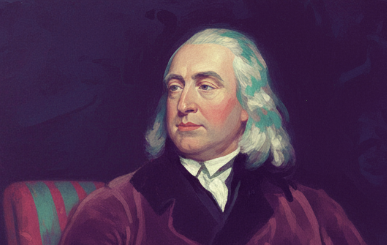
Create all the happiness you are able to create: remove all the misery you are able to remove. Every day will allow you to add something to the pleasure of others, or to diminish something of their pains. And for every grain of enjoyment you sow in the bosom of another, you shall find a harvest in your own bosom; while every sorrow which you pluck out from the thoughts and feelings of a fellow creature shall be replaced by beautiful peace and joy in the sanctuary of your soul.
▼
Source
source
Advice to a young girl, 22 June 1830
CivilSimian.com created by AxiomaticPanic, CivilSimian, Kalokagathia