

1 month 3 weeks ago
You shall find, that there cannot be a greater spur to the attaining what you would have the eldest learn, and know himself, than to set him upon teaching it his younger brothers and sisters.
▼
Source
source
Sec. 119
1 week ago
Passion is like suffering, and like suffering it creates its object. It is easier for the fire to find something to burn than for something combustible to find the fire.

1 month 2 weeks ago
Every hero becomes a bore at last.
▼
Source
source
Uses of Great Men
1 month 3 weeks ago
Change alone is eternal, perpetual, immortal.
▼
Source
source
Unverified attribution noted in Respectfully Quoted: A Dictionary of Quotations (1993), ed. Suzy Platt, Library of Congress, p. 39;

3 weeks 5 days ago
I am not so much afraid of death, as ashamed thereof; 'tis the very disgrace and ignominy of our natures, that in a moment can so disfigure us that our nearest friends, Wife, and Children stand afraid and start at us.
▼
Source
source
Section 40

1 month 3 weeks ago
On the stage on which we are observing it, - Universal History - Spirit displays itself in its most concrete reality.
1 month 3 weeks ago
Two men who differ as to the ends of life cannot hope to agree about education.
▼
Source
source
Ch. 12: Education and Discipline
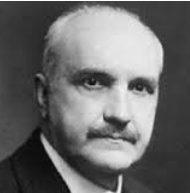
1 week 6 days ago
No system would have ever been framed if people had been simply interested in knowing what is true, whatever it may be. What produces systems is the interest in maintaining against all comers that some favourite or inherited idea of ours is sufficient and right.
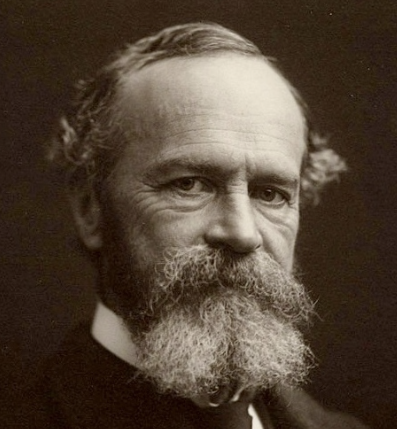
1 month 2 weeks ago
To plead the organic causation of a religious state of mind, then, in refutation of its claim to possess superior spiritual value, is quite illogical and arbitrary, unless one have already worked out in advance some psycho-physical theory connecting spiritual values in general with determinate sorts of physiological change. Otherwise none of our thoughts and feelings, not even our scientific doctrines, not even our dis-beliefs, could retain any value as revelations of the truth, for every one of them without exception flows from the state of their possessor's body at the time.
▼
Source
source
Lecture I, "Religion and Neurology"

1 month 3 weeks ago
It is very strange that men should deny a creator and yet attribute to themselves the power of creating eels.
▼
Source
source
From the Philosophic Dictionary, as quoted in The life of Pasteur, 1902

1 month 3 weeks ago
The atheist who affects to reason, and the fanatic who rejects reason, plunge themselves alike into inextricable difficulties. The one perverts the sublime and enlightening study of natural philosophy into a deformity of absurdities by not reasoning to the end. The other loses himself in the obscurity of metaphysical theories, and dishonours the Creator, by treating the study of his works with contempt. The one is a half-rational of whom there is some hope, the other a visionary to whom we must be charitable.
▼
Source
source
A Discourse, &c. &c.
1 month 2 weeks ago
Sometimes a scream is better than a thesis.
▼
Source
source
1836

3 weeks 6 days ago
A grievous crime indeed against religion has been committed by the man who imagines that Islam is defended by the denial of the mathematical sciences.
▼
Source
source
III. The Classes of Seekers, p. 23.
1 month 3 weeks ago
A man might say, with enough truth to justify a joke: "Science is what we know, and philosophy is what we don't know." But it should be added that philosophical speculation as to what we do not yet know has shown itself a valuable preliminary to exact scientific knowledge.

3 weeks ago
Frugality is founded on the principle that all riches have limits.
1 week ago
To fall into a habit is to begin to cease to be.
1 month 3 weeks ago
For a work to become immortal it must possess so many excellences that it will not be easy to find a man who understands and values them all; so that there will be in all ages men who recognise and appreciate some of these excellences; by this means the credit of the work will be retained throughout the long course of centuries and ever-changing interests, for, as it is appreciated first in this sense, then in that, the interest is never exhausted.

1 month 2 weeks ago
To be an intellectual really means to speak a truth that allows suffering to speak. That is, it creates a vision of the world that puts into the limelight the social misery that is usually hidden or concealed by the dominant viewpoints of a society. "Intellectual" in that sense simply means those who are willing to reflect critically upon themselves as well as upon the larger society and to ascertain whether there is some possibility of amelioration and betterment.
▼
Source
source
"Chekhov, Coltrane, and Democracy: Interview by David Lionel Smith." in The Cornel West Reader. Basic Books. 2000. p. 551. ISBN 978-0-465-09110-2.
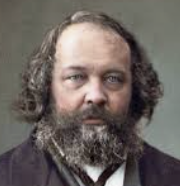
2 weeks 4 days ago
Freedom is the absolute right of every human being to seek no other sanction for his actions but his own conscience, to determine these actions solely by his own will, and consequently to owe his first responsibility to himself alone.
▼
Source
source
As quoted in Anarchism: From Theory to Practice, Daniel Guérin, New York: NY, Monthly Review Press (1970) p. 31
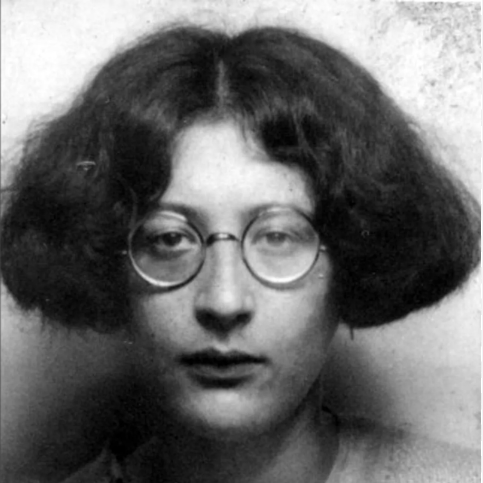
6 days ago
The essential characteristic of the first half of the twentieth century is the growing weakness, and almost the disappearance, of the idea of value.
▼
Source
source
"The responsibility of writers," p. 167
1 week 6 days ago
No man is bound by the words themselves, either to kill himselfe, or any other man.
▼
Source
source
The Second Part, Chapter 21, p. 112
1 month 3 weeks ago
Our words tend to conceal what is private and particular in our impressions, and to make us believe that different people live in a common world to a greater extent than is in fact the case.
▼
Source
source
An Outline of Philosophy Ch.15 The Nature of our Knowledge of Physics, 1927

1 month 2 weeks ago
My friend Professor Tolkien asked me the very simple question, "What class of men would you expect to be most preoccupied with, and most hostile to, the idea of escape?" and gave the obvious answer: jailers.
▼
Source
source
"On Science Fiction". Of Other Worlds: Essays and Stories. Houghton Mifflin Harcourt (2002). p. 67.
1 month 2 weeks ago
Man's chief difference from the brutes lies in the exuberant excess of his subjective propensities - his preeminence over them simply and solely in the number and in the fantastic and unnecessary character of his wants, physical, moral, aesthetic, and intellectual. Had his whole life not been a quest for the superfluous, he would never have established himself as inexpugnably as he has done in the necessary.
▼
Source
source
"Reflex Action and Theism"
2 months 5 days ago
Thus the sum of things is ever being renewed, and mortal creatures live dependent one upon another. Some species increase, others diminish, and in a short space the generations of living creatures are changed and, like runners, pass on the torch of life.
▼
Source
source
Book II, line 75 (tr. Rouse)
1 month 3 weeks ago
Faith consists in believing what reason cannot.
▼
Source
source
"The Flood", 1764

2 weeks 2 days ago
If I were to go blind, what would bother me the most would be no longer to be able to stare idiotically at the passing clouds.
1 month 3 weeks ago
A man's face as a rule says more, and more interesting things, than his mouth, for it is a compendium of everything his mouth will ever say, in that it is the monogram of all this man's thoughts and aspirations.
▼
Source
source
Vol. 2, Ch. 29, § 377

1 month 3 weeks ago
The Theophilanthropists believe in the existence of God, and the immortality of the soul.
▼
Source
source
Introduction
2 months 6 days ago
Do not despair: one thief was saved. Do not presume: one thief was damned.
▼
Source
source
Attributed to St. Augustine in The Repentance of Robert Greene, Master of Arts (1592) by Robert Greene.
2 weeks 6 days ago
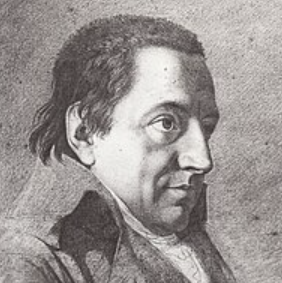
The voice in my soul in which I will have faith, and for the sake of which I have faith in all else, does not merely command me generally to act, but in every particular situation it declares what I shall do and what leave undone; it accompanies me through every event of my life, and it is impossible for me to contend against it. To listen to it and obey it honestly and impartially, without fear or equivocation, is the business of my existence. My life is no longer an empty I play without truth or significance. It is appointed that what I conscience ordains me shall be done, and for this purpose am I here. I have understanding to know, and power to execute it. By conscience alone comes truth and reality into my representations.
▼
Source
source
Jane Sinnett, trans 1846 p. 77
1 month 1 week ago
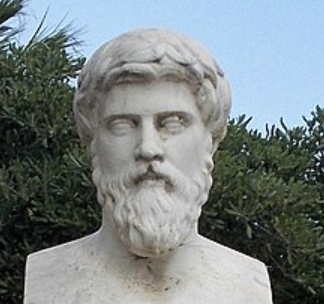
After he routed Pharnaces Ponticus at the first assault, he wrote thus to his friends: "I came, I saw, I conquered."
▼
Source
source
Cæsar
1 month 3 weeks ago
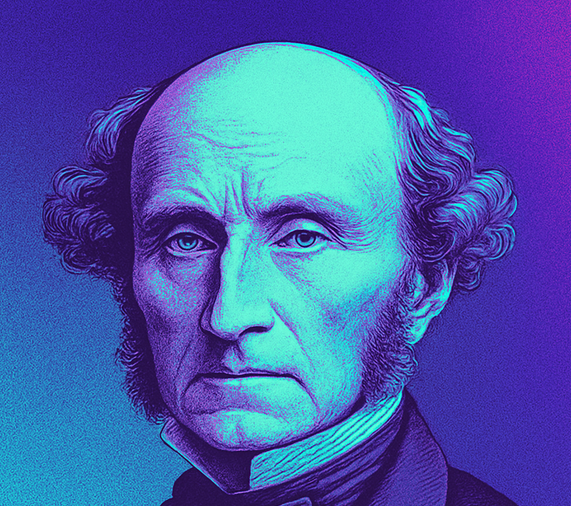
A bureaucracy always tends to become a pedantocracy.
▼
Source
source
Ch. VI: Of the Infirmities and Dangers to Which Representative Government Is Liable (p. 234)
2 weeks 3 days ago
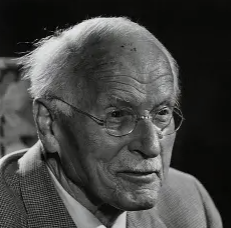
We should not pretend to understand the world only by the intellect; we apprehend it just as much by feeling. Therefore, the judgment of the intellect is, at best, only the half of truth, and must, if it be honest, also come to an understanding of its inadequacy. Variant translation: We should not pretend to understand the world only by the intellect. The judgement of the intellect is only part of the truth.
▼
Source
source
Conclusion, p. 628
2 months 1 week ago
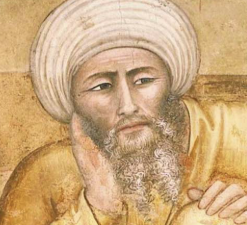
To master this instrument the religious thinker must make a preliminary study of logic, just as the lawyer must study legal reasoning. This is no more heretical in the one case than in the other. And logic must be learned from the ancient masters, regardless of the fact that they were not Muslims.

3 days ago
The supreme effort of the avant-guard is onward, ever onward.
▼
Source
source
Light and Shadows in the Life of an Avant-Guard
2 weeks 2 days ago
However intimate we may be with the operations of the mind, we cannot think more than two or three minutes a day; - unless, by taste or by profession, we practice, for hours on end, brutalizing words in order to extract ideas from them. The intellectual represents the major disgrace, the culminating failure of Homo sapiens.
1 month 3 weeks ago
One can forget everything, everything, only not oneself, one's own being.
2 weeks 2 days ago
Everyone is mistaken, everyone lives in illusion. At best, we can admit a scale of fictions, a hierarchy of unrealities, giving preference to one rather than to another; but to choose, no, definitely not that...

1 month 2 weeks ago
What should we gain by a definition, as it can only lead us to other undefined terms?
▼
Source
source
p. 26
3 weeks ago
To the Deity must be left the task of infinite perfection, while to us poor, weak, incapable mortals, there was no rule of conduct so safe as experience.
▼
Source
source
Speech in the House of Commons (6 May 1791), quoted in The Parliamentary History of England, From the Earliest Period to the Year 1803, Vol. XXIX (1817), column 388
3 days ago
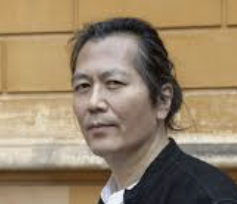
Eros and depression are opposites.
1 week 6 days ago
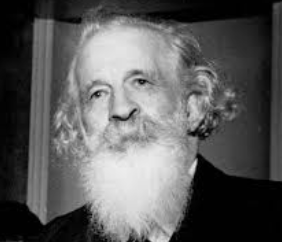
Literary imagination is an aesthetic object offered by a writer to a lover of books.
▼
Source
source
A Retrospective Glance at the Lifework of a Master of Books
2 weeks 2 days ago
How good would it be if one could die by throwing oneself into an infinite void.
2 weeks 6 days ago
Instinct is blind;-a consciousness without insight. Freedom, as the opposite of Instinct, is thus seeing, and clearly conscious of the grounds of its activity.
▼
Source
source
p. 7
1 week ago
Every peasant has a lawyer inside of him, just as every lawyer, no matter how urbane he may be, carries a peasant within himself.
▼
Source
source
Civilization is Civilism
1 month 2 weeks ago
The authority of science ... promotes and encourages the activity of observing, comparing, measuring and ordering the physical characteristics of human bodies.... Cartesian epistemology and classical ideals produced forms of rationality, scientificity and objectivity that, though efficacious in the quest for truth and knowledge, prohibited the intelligibility and legitimacy of black equality.... In fact, to "think" such an idea was to be deemed irrational, barbaric or mad.
▼
Source
source
Prophesy Deliverance!
1 month 3 weeks ago
The sentiments of men often differ with regard to beauty and deformity of all kinds, even while their general discourse is the same ... In all matters of opinion and science, the case is opposite: The difference among men is there oftener found to lie in generals than in particulars; and to be less in reality than in appearance.
2 weeks 2 days ago
Mathematical and physiological researches have shown that the space of experience is simply an actual case of many conceivable cases, about whose peculiar properties experience alone can instruct us.
▼
Source
source
p. 205; On the space of experience.
CivilSimian.com created by AxiomaticPanic, CivilSimian, Kalokagathia