


3 weeks 3 days ago
Among these widely differing families of men, the first that attracts attention, the superior in intelligence, in power, and in enjoyment, is the white, or European, the MAN pre-eminently so called, below him appear the Negro and the Indian.
▼
Source
source
Chapter XVIII.
1 month 3 weeks ago
Furthermore, how will you endure [the Romanists'] terrible idolatries? It was not enough that they venerated the saints and praised God in them, but they actually made them into gods. They put that noble child, the mother Mary, right into the place of Christ. They fashioned Christ into a judge and thus devised a tyrant for anguished consciences, so that all comfort and confidence was transferred from Christ to Mary, and then everyone turned from Christ to his particular saint. Can anyone deny this? Is it not true?
▼
Source
source
Luther's Works, 47:45; cf. also Anderson, Stafford & Burgess (1992), p. 29
1 week 5 days ago
The kingdom of heaven is like to a grain of mustard seed, which a man took, and sowed in his field: Which indeed is the least of all seeds: but when it is grown, it is the greatest among herbs, and becometh a tree, so that the birds of the air come and lodge in the branches thereof.
▼
Source
source
13:31-32 (KJV)
1 month 3 days ago
Every body is in place; but nothing essentially incorporeal, or any thing of this kind, has any locality.
1 month 3 weeks ago
What peculiar privilege has this little agitation of the brain which we call thought, that we must thus make it the model of the whole universe? Our partiality in our own favour does indeed present it on all occasions; but sound philosophy ought carefully to guard against so natural an illusion.
▼
Source
source
Philo to Cleanthes, Part II
1 month 2 weeks ago
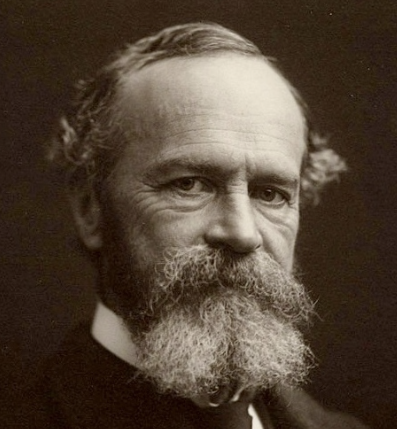
A thing forgotten on one day will be remembered on the next. Something we have made the most strenuous efforts to recall, but all in vain, will, soon after... saunter into the mind... The sphere of possible recollection may be wider than we think, and... apparent oblivion is no proof against possible recall under other conditions.
▼
Source
source
Ch. 16
2 days ago
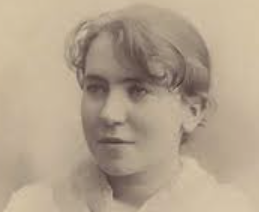
Some will ask, what about weak natures, must they not be protected? Yes, but to be able to do that, it will be necessary to realize that education of children is not synonymous with herdlike drilling and training. If education should really mean anything at all, it must insist upon the free growth and development of the innate forces and tendencies of the child. In this way alone can we hope for the free individual and eventually also for a free community, which shall make interference and coercion of human growth impossible.
2 weeks 6 days ago
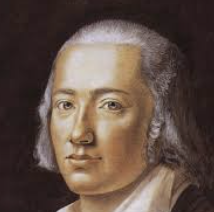
I call on Fate to give me back my soul.
2 weeks 3 days ago
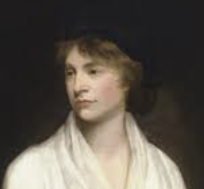
It is of great importance to observe that the character of every man is, in some degree, formed by his profession. A man of sense may only have a cast of countenance that wears off as you trace his individuality, whist the weak, common man has scarcely ever any character, but what belongs to the body; at least, all his opinions have been so steeped in the vat consecrated by authority, that the faint spirit which the grape of his own vine yields, cannot be distinguished.
▼
Source
source
Ch. 1

1 month 1 week ago
Repentance for one's evil deeds is the safeguard of life.

1 month 2 weeks ago
"And I say also this. I do not think the forest would be so bright, nor the water so warm, nor love so sweet, if there were no danger in the lakes."
▼
Source
source
Hyoi, p. 76

1 week 5 days ago
The avant-garde and the beatniks share in the function of entertaining without endangering the good conscience of the men of good will.
▼
Source
source
p. 70

2 months 2 weeks ago
And how does the God's existence emerge from the proof? Does it follow straightway, without any breach of continuity? Or have we not here an analogy to the behavior of the little Cartesian dolls? As soon as I let go of the doll it stands on its head. As soon as I let it go, I must therefore let it go. So also with the proof. As long as I keep my hold on the proof, i.e., continue to demonstrate, the existence does not come out, if for no other reason than that I am engaged in proving it; but when I let the proof go, the existence is there. But this act of letting go is surely also something; it is indeed a contribution of mine. Must not this also be taken into the account, this little moment, brief as it may be – it need not be long, for it is a leap. However brief this moment, if only an instantaneous now, this "now" must be included in the reckoning.
1 week 3 days ago
To-day the Enlightenment ideal has been changed into a reality; not only in legislation, which is the mere framework of public life, but in the heart of every individual, whatever his ideas may be, and even if he be a reactionary in his ideas, that is to say, even when he attacks and castigates institutions by which those rights are sanctioned.... The sovereignty of the unqualified individual, of the human being as such, generically, has now passed from being a juridical idea or ideal to be a psychological state inherent in the average man. And note this, that when what was before an ideal becomes a component part of reality, it inevitably ceases to be an ideal. The prestige and the magic that are attributes of the ideal are volatilised.
▼
Source
source
Chap.II: The Rise Of The Historic Level
2 months 1 week ago
Recompense hatred with justice, and recompense kindness with kindness.
1 week 5 days ago
Let him who seeks continue seeking until he finds. When he finds, he will become troubled. When he becomes troubled, he will be astonished, and he will rule over the All.
▼
Source
source
-2
1 week 3 days ago
Montaigne puts not self-satisfied understanding but a consciousness astonished at itself at the core of human existence.
▼
Source
source
Signs, trans. R. McCleary (Evanston: 1964), p. 203

1 month 2 weeks ago
The most taboo issue on U.S. campuses these days, in many instances, has to do with the vicious Israeli occupation of precious Palestinians. It's very difficult to have a respectful, robust conversation about that. And I am unequivocal in my solidarity with Palestinian brothers and sisters... I'm not in any way going to stop talking about the Palestinian plight and predicament.
▼
Source
source
Speaking in Too Radical for Harvard? Cornel West on Failed Fight for Tenure, Biden's First 50 Days & More, Democracy Now!
1 month 3 weeks ago
Where danger shews it self, apprehension cannot, without stupidity, be wanting; where danger is, sense of danger should be; and so much fear as should keep us awake, and excite our attention, industry, and vigour; but not to disturb the calm use of our reason, nor hinder the execution of what that dictates.
▼
Source
source
Sec. 115
5 months 3 weeks ago
If we merely wait for the appropriate moment we will never live to see it, because this [appropriate moment] cannot arrive without the subjective conditions of the maturity of the revolutionary force being fulfilled - it can only arrive after a series of failed attempts.
2 months 2 weeks ago
This opinion... appears to be ancient... that the one, excess and defect, are the principles of things... It is not... probable that there are more than three principles... [E]ssence is one certain genus of being: so that principles will differ from each other in prior and posterior alone, but not in genus, for in one genus there is always one contrariety, and all contrarieties appear to be referred to one. That there is neither one element, therefore, nor more than two or three, is evident.
1 day ago
The martyr sacrifices herself (himself in a few instances) entirely in vain. Or rather not in vain; for she (or he) makes the selfish more selfish, the lazy more lazy, the narrow narrower.
▼
Source
source
As quoted in Forever Yours (1990) by Martha Vicinus and Bea Nergaard , p. 275. Letter, c. 1867, to the scholar Benjamin Jowett.

2 weeks 6 days ago
No man can mortgage his injustice as a pawn for his fidelity.
2 months 5 days ago
The weakness of little children's limbs is innocent, not their souls.
▼
Source
source
I, 7
3 weeks 3 days ago
Patriotism is an ephemeral motive that scarcely ever outlasts the particular threat to society that aroused it.

1 month 2 weeks ago
I had better never see a book than to be warped by its attraction clean out of my own orbit, and made a satellite instead of a system. The one thing in the world, of value, is the active soul.
▼
Source
source
par. 15
2 months 1 week ago
I hear and I forget. I see and I remember. I do and I understand.
1 month 2 weeks ago
All mortals tend to turn into the thing they are pretending to be.
▼
Source
source
Letter X
1 week 4 days ago
The difference between the artificial and the artful in the artistic lies on the surface in the former there is a split between what is overly done and what is intended. The appearance is one of cordiality; the intent is that of gaining favor. Whenever this split between what is done and its purpose exists, there is insincerity, a trick, a simulation of an act that intrinsically has another effect. When the natural and the cultivated blend into one, acts of social intercourse are works of art. The animating impulsion of genial friendship and the deed performed completely coincide without intrusion of ulterior motive. Awkwardness may prevent adequacy of expression.
1 month 3 weeks ago
The diversity of physical arguments and opinions embraces all sorts of methods.
▼
Source
source
Book III, Ch. 13. Of Experience

2 weeks 1 day ago
An anxious man constructs his terrors, then installs himself within them: a stay-at-home in a yawning chasm.
2 weeks 5 days ago
The "I" who speaks in this book is by no means the author. Rather, the author wishes that the reader may come to see himself in this "I": that the reader may not simply relate to what is said here as he would to history, but rather that while reading he will actually converse with himself, deliberate back and forth, deduce conclusions, make decisions like his representative in the book, and through his own work and reflection, purely out of his own resources, develop and build within himself the philosophical disposition that is presented to him in this book merely as a picture.
▼
Source
source
P. Preuss, trans. (1987), p. 2
2 weeks 2 days ago
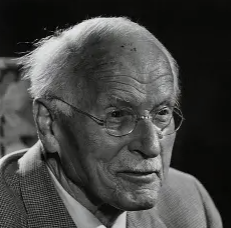
My soul, my soul, where are you? Do you hear me? I speak, I call you-are you there? I have returned, here I am again. I have shaken the dust of all the lands from my feet, and I have come to you again, I am with you. After long years of long wandering, I have come to you anew. Shall I tell you everything I have seen, experienced, and drunk in? Or do you not want to hear about all the noise of life and the world? But one thing you must know, the one thing I have learned is that one must live this life. This life is the way, the long sought-after way to the unfathomable, which we call "divine". There is no other way. All other ways are false paths.
▼
Source
source
Book 2, 12. Nov. 1913
1 month 2 weeks ago
Conversion is in its essence a normal adolescent phenomenon, incidental to the passage from the child's small universe to the wider intellectual and spiritual life of maturity.
▼
Source
source
Lecture IX, "Conversion"
2 weeks 1 day ago
A person who wakes up after a night of unbroken sleep has the illusion of beginning something new. When one instead remains awake the whole night long, nothing new begins.
1 month 3 weeks ago
Wars begin when you will, but they do not end when you please. Variant translation: Wars are begun at will but not ended at will.
▼
Source
source
Book III, Chapter 7.

3 weeks 5 days ago
We find that everything that makes up difference and number is pure accident, pure show, pure constitution. Every production, of whatever kind, is an alteration, but the substance remains always the same, because it is only one, one divine immortal being.
5 days ago
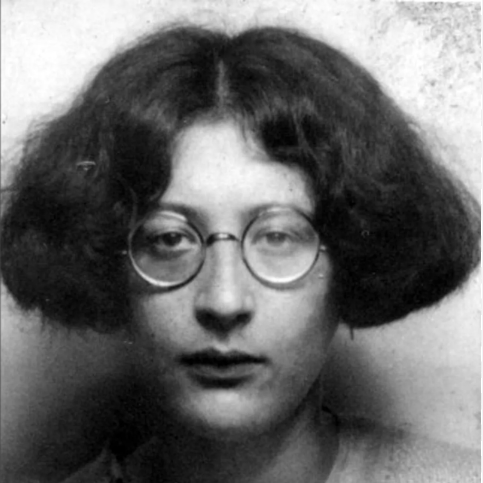
One of the most exquisite pleasures of human love - to serve the loved one without his knowing it - is only possible, as regards the love of God, through atheism.
▼
Source
source
Last Notebook (1942) p. 84
6 days ago
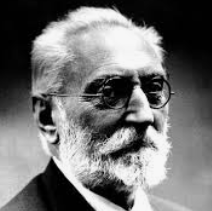
And what is its moral proof? We may formulate it thus: Act so that in your own judgment and in the judgment of others you may merit eternity, act so that you may become irreplaceable, act so that you may not merit death. Or perhaps thus: Act as if you were to die tomorrow, but to die in order to survive and be eternalized. The end of morality is to give personal, human finality to the Universe; to discover the finality that belongs to it - if indeed it has any finality - and to discover it by acting.
6 days ago
I do not understand these men who tell me that the prospect of the yonder side of death has never tormented them, that the thought of their own annihilation never disquiets them. For my part I do not wish to make peace between my heart and my head, between my faith and my reason - I wish rather that there should be war between them.
1 month 2 weeks ago
The state of society is one in which the members have suffered amputation from the trunk, and strut about so many walking monsters,-a good finger, a neck, a stomach, an elbow, but never a man.
▼
Source
source
par. 5
2 months 2 weeks ago
It is my own experience ... that commentators are far more ingenious at finding meaning than authors are at inserting it.
1 month 3 weeks ago
Ambition is not a vice of little people.
▼
Source
source
Book III, Ch. 10
2 weeks 6 days ago
Applaud us when we run, console us when we fall, cheer us when we recover.
▼
Source
source
Speech at Bristol Previous to the Election (6 September 1780), quoted in The Works of the Right Honourable Edmund Burke, Vol. II (1855), p. 129
2 weeks 1 day ago
Every thought derives from a thwarted sensation.
2 weeks 6 days ago
If not reason, then the devil.
5 days ago
In order to be exercised, the intelligence requires to be free to express itself without control by any authority. There must therefore be a domain of pure intellectual research, separate but accessible to all, where no authority intervenes. The human soul has need of some solitude and privacy and also of some social life.The human soul has need of both personal property and collective property.
1 month 2 weeks ago
The defiance of established authority, religious and secular, social and political, as a world-wide phenomenon may well one day be accounted the outstanding event of the last decade.
▼
Source
source
"Civil Disobedience"
1 month 3 weeks ago
Let us not flutter too high, but remain by the manger and the swaddling clothes of Christ, in whom dwelleth all the fulness of the Godhead bodily.
▼
Source
source
50
1 month 3 weeks ago
Truth that is naked is the most beautiful, and the simpler its expression the deeper is the impression it makes; this is partly because it gets unobstructed hold of the hearer's mind without his being distracted by secondary thoughts, and partly because he feels that here he is not being corrupted or deceived by the arts of rhetoric, but that the whole effect is got from the thing itself.
CivilSimian.com created by AxiomaticPanic, CivilSimian, Kalokagathia