

1 month 2 weeks ago
That is precisely what we should have expected, since Genet wants to live simultaneously creation, destruction, the impossibility of destroying and the impossibility of creating, since he wants both to show his rejection of the divine creation and to manifest, in the absolute, human impotence as man's reproval of God and as the testimony of his grandeur.
▼
Source
source
p. 424

2 weeks 1 day ago
When we know what words are worth, the amazing thing is that we try to say anything at all, and that we manage to do so. This requires, it is true, a supernatural nerve.
1 week 3 days ago
The discovery that mass changes with velocity, a discovery made when minute bodies came under consideration, finally forced surrender of the notion that mass is a fixed and inalienable possession of ultimate elements or individuals, so that time is now considered to be their fourth dimension.
2 weeks 6 days ago
So far as it has gone, it probably is the most pure and defecated publick good which ever has been conferred on mankind.
▼
Source
source
p. 463 On the Polish Constitution of May 3, 1791

1 month ago
Order thyself so, that thy Soul may always be in good estate; whatsoever become of thy body.

1 month 2 weeks ago
In action, in desire, we must submit perpetually to the tyranny of outside forces; but in thought, in aspiration, we are free, free from our fellowmen, free from the petty planet on which our bodies impotently crawl, free even, while we live, from the tyranny of death.
5 days ago
It is beyond dispute that the state exercises very great power over human life and it always shows a tendency to go beyond the limits laid down for it.
▼
Source
source
Slavery and Freedom (1939), p. 145
2 months 1 week ago
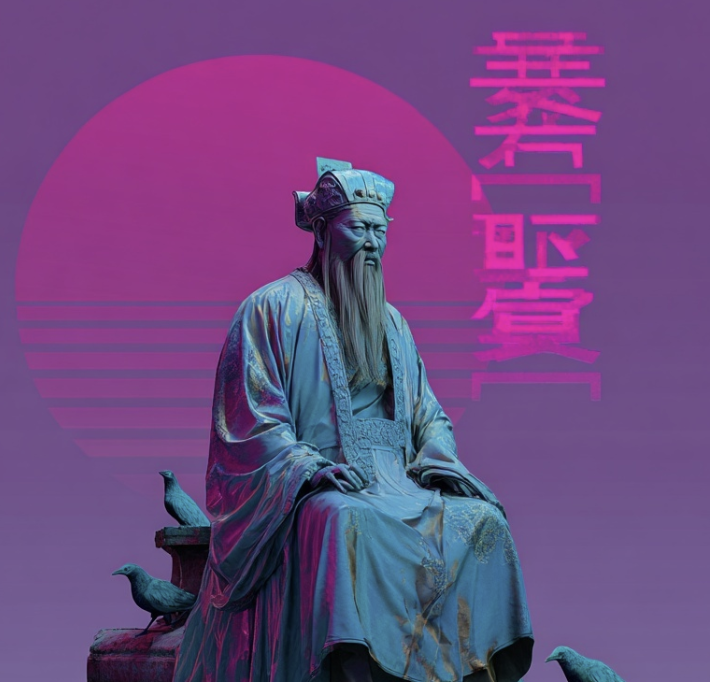
It is characteristic of the most entire sincerity to be able to foreknow. When a nation or family is about to flourish, there are sure to be happy omens; and when it is about to perish, there are sure to be unlucky omens.
5 days ago
The jargon makes it seem that ... the pure attention of the expression to the subject matter would be a fall into sin.
▼
Source
source
p. 9

1 month 2 weeks ago
A proud man is always looking down on things and people: and, of course, as long as you are looking down, you cannot see something that is above you.
▼
Source
source
Book III, Chapter 8, "The Great Sin"
2 weeks 6 days ago
We have an enemy, to whose virtues we can owe nothing; but on this occasion we are infinitely obliged to one of his vices. We owe more to his insolence than to our own precaution.
▼
Source
source
p.3
2 days ago
Power tends to reduce openness... Power tries to solidify and stabilize its position by eradicating spaces open to play, or incalculable spaces.
2 weeks 6 days ago
Those who have been once intoxicated with power, and have derived any kind of emolument from it, even though but for one year, never can willingly abandon it. They may be distressed in the midst of all their power; but they will never look to any thing but power for their relief.

1 month 2 weeks ago
Philosophical problems can be compared to locks on safes, which can be opened by dialing a certain word or number, so that no force can open the door until just this word has been hit upon, and once it is hit upon any child can open it.
▼
Source
source
Ch. 9 : Philosophy, p. 175
1 month 3 weeks ago
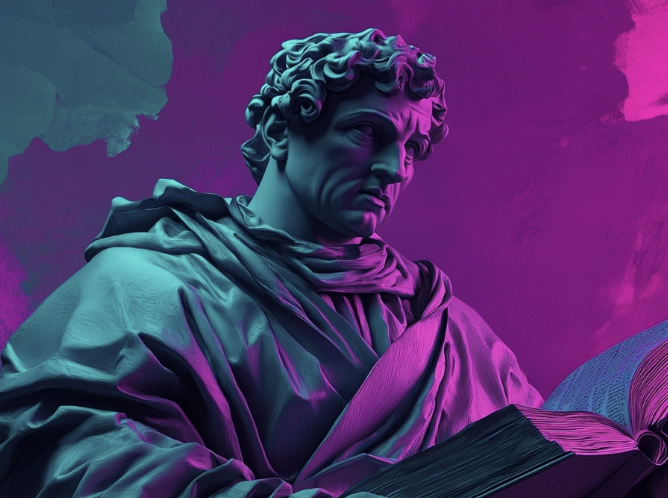
Let us not flutter too high, but remain by the manger and the swaddling clothes of Christ, in whom dwelleth all the fulness of the Godhead bodily.
▼
Source
source
50
1 month 2 weeks ago
Instead of noble men, let us have noble villages of men. If it is necessary, omit one bridge over the river, round a little there and throw one arch at least over the darker gulf of ignorance which surrounds us.
▼
Source
source
Editorial, Andhra Granthalayam, vol. 1, no. 2 (1939) p. 6
1 month 2 weeks ago
We need not suppose that when po+B40wer resides in an exclusive class, that class will knowingly and deliberately sacrifice the other classes to themselves: it suffices that, in the absence of its natural defenders, the interest of the excluded is always in danger of being overlooked: and, when looked at, is seen with very different eyes from those of the persons whom it directly concerns.
▼
Source
source
Ch. III: The Ideally Best Polity
1 week 2 days ago
In the face of the idea that truth might afford the opposite of satisfaction and turn out to be completely shocking to humanity at any given historical moment, ... the fathers of pragmatism made the satisfaction of the subject the criterion of truth. For such a doctrine there is no possibility of rejecting or even criticizing any species of belief that is enjoyed by its adherents.
▼
Source
source
p. 52.
2 weeks 1 day ago
A self-respecting man is a man without a country. A fatherland is birdlime...
2 days ago
The free expression of the hopes and aspirations of a people is the greatest and only safety in a sane society.

1 week 4 days ago
The people are led to find in the productive apparatus the effective agent of thought and action to which their personal thought and action can and must be surrendered. And in this transfer, the apparatus also assumes the role of a moral agent.
▼
Source
source
Conscience is absolved by reification. p. 79
2 months 3 days ago
But if one should guide his life by true principles, man's greatest riches is to live on a little with contented mind; for a little is never lacking.
▼
Source
source
Book V, lines 1117-1119 (tr. Rouse)

1 month 1 week ago
Beneath the humanization of the penalties, what one finds are all those rules that authorize, or rather demand, 'leniency', as a calculated economy of the powder to punish. But they also provoke a shift in the point of application of this power: it is no longer the body, with the ritual play of excessive pains, spectacular branding in the ritual of the public execution; it is the mind or rather a play of representations and sings circulating discreetly but necessarily and evidently in the minds of all. It is no longer the body, but the soul, said Mably. And we see very clearly what he meant by this term: the correlative of a technique of power. Old 'anatomies' of punishment are abandoned, But have we really entered the age of non-corporal punishment?
▼
Source
source
Chapter Two, Generalized Punishment, pp. 101
1 month 3 weeks ago
It (marriage) happens as with cages: the birds without despair to get in, and those within despair of getting out.
▼
Source
source
Ch. 5
2 weeks 3 days ago
It is of great importance to observe that the character of every man is, in some degree, formed by his profession. A man of sense may only have a cast of countenance that wears off as you trace his individuality, whist the weak, common man has scarcely ever any character, but what belongs to the body; at least, all his opinions have been so steeped in the vat consecrated by authority, that the faint spirit which the grape of his own vine yields, cannot be distinguished.
▼
Source
source
Ch. 1
1 month 2 weeks ago
For those who want 'to change life", 'to reinvent love,' God is nothing but a hindrance.
▼
Source
source
p. 500

1 month 3 weeks ago
Even in those cities which seem to enjoy the blessings of peace, and where the arts florish, the inhabitants are devoured by envy, cares and anxieties, which are greater plagues than any experienced in a town when it is under siege.

3 weeks 5 days ago
All things are in all.
▼
Source
source
V 9; as translated by Dorothea Waley Singer
2 months 2 weeks ago
The artist reconstructs the world to his plan.
1 week 4 days ago
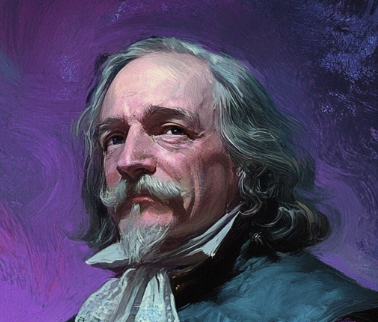
That a man be willing, when others are so too, as farre-forth, as for Peace, and defence of himself he shall think it necessary, to lay down this right to all things; and be contented with so much liberty against other men, as he would allow other men against himself.
▼
Source
source
The First Part, Chapter 14, p. 64-65

2 months 3 weeks ago
Whereas the man of action binds his life to reason and its concepts so that he will not be swept away and lost, the scientific investigator builds his hut right next to the tower of science so that he will be able to work on it and to find shelter for himself beneath those bulwarks which presently exist. And he requires shelter, for there are frightful powers which continuously break in upon him, powers which oppose scientific "truth" with completely different kinds of "truths" which bear on their shields the most varied sorts of emblems.
1 month 2 weeks ago
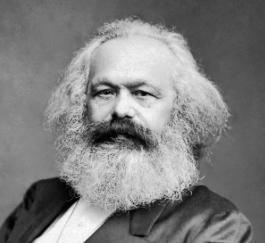
Technology discloses the active relation of man towards nature, as well as the direct process of production of his very life, and thereby the process of production of his basic societal relations, of his own mentality, and his images of society, too.
▼
Source
source
Vol. I, Ch. 13: "Machinery and Big Industry".
2 months 4 days ago
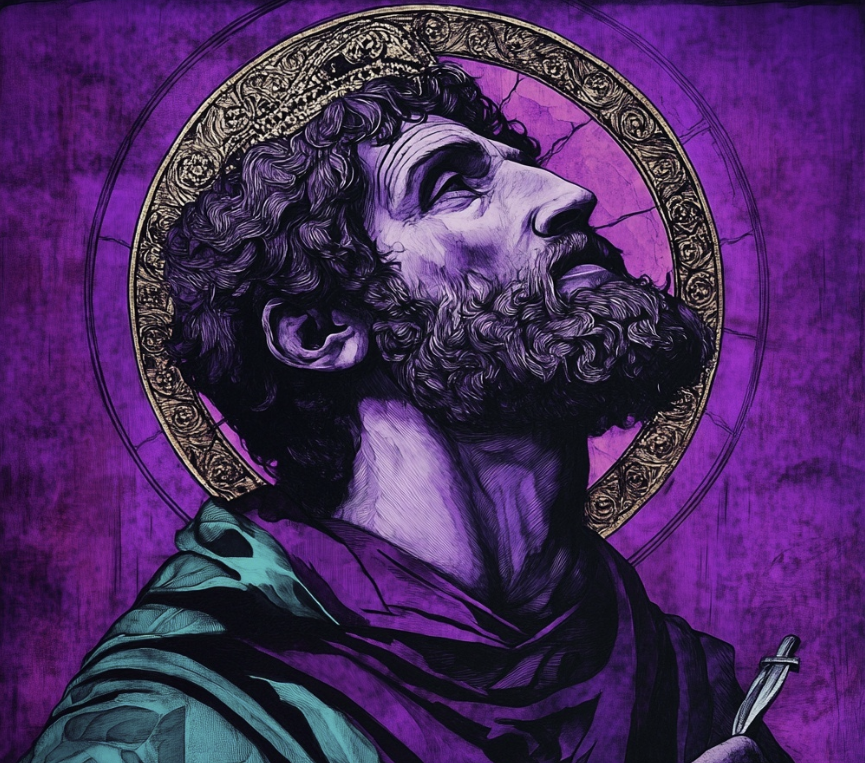
(On the Trinitarian indwelling personally experienced by Saint Augustine) But what is it that I love in loving You? Not corporeal beauty, nor the splendour of time, nor the radiance of the light, so pleasant to our eyes, nor the sweet melodies of songs of all kinds, nor the fragrant smell of flowers, and ointments, and spices, not manna and honey, not limbs pleasant to the embracements of flesh. I love not these things when I love my God; and yet I love a certain kind of light, and sound, and fragrance, and food, and embracement in loving my God, who is the light, sound, fragrance, food, and embracement of my inner man — where that light shines unto my soul which no place can contain, where that sounds which time snatches not away, where there is a fragrance which no breeze disperses, where there is a food which no eating can diminish, and where that clings which no satiety can sunder. This is what I love, when I love my God.
▼
Source
source
X, 6, 8
1 month 3 weeks ago
I opened with that which good Catholics have more than once made to Huguenots. "My dear sir," said I, "were you ever baptized?" "No, friend," replied the Quaker, "nor any of my brethren." "Zounds!" said I to him, "you are not Christians then!" "Friend," replied the old man, in a soft tone of voice, "do not swear; we are Christians, but we do not think that sprinkling a few drops of water on a child's head makes him a Christian." "My God!" exclaimed I, shocked at his impiety, "have you then forgotten that Christ was baptized by St. John?" "Friend," replied the mild Quaker, "once again, do not swear. Christ was baptized by John, but He Himself never baptized any one; now we profess ourselves disciples of Christ, and not of John." "Mercy on us," cried I, "what a fine subject you would be for the holy inquisitor! In the name of God, my good old man, let me baptize you."
▼
Source
source
Voltaire's account of his conversations with Andrew Pit
5 days ago
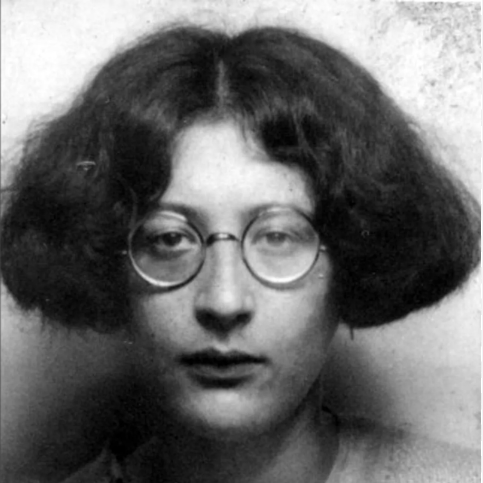
Moreover, nothing is so rare as to see misfortune fairly portrayed; the tendency is either to treat the unfortunate person as though catastrophe were his natural vocation, or to ignore the effects of misfortune on the soul, to assume, that is, that the soul can suffer and remain unmarked by it, can fail, in fact, to be recast in misfortune's image.
▼
Source
source
p. 193
1 month 2 weeks ago
Better to have beasts that let themselves be killed than men who run away.
▼
Source
source
Act 11, sc. 2
1 week 4 days ago
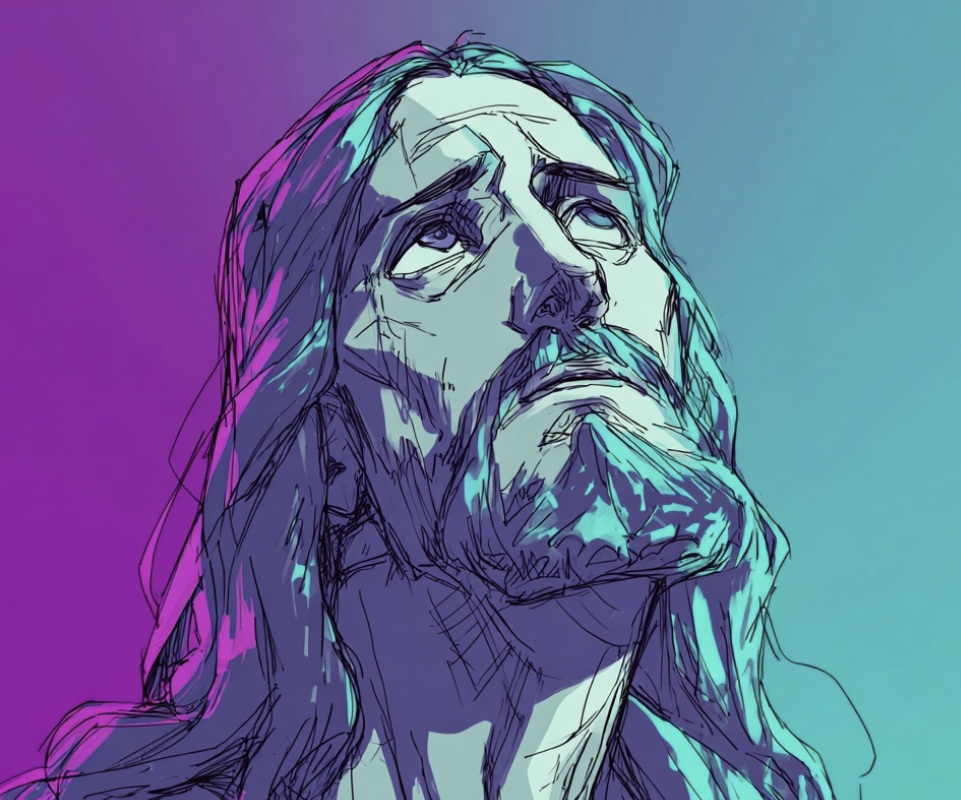
Ye fools, did not he that made that which is without make that which is within also?
▼
Source
source
11:40 (KJV)
2 weeks 1 day ago
I anticipated witnessing in my lifetime the disappearance of our species. But the Gods have been against me.
1 month 2 weeks ago
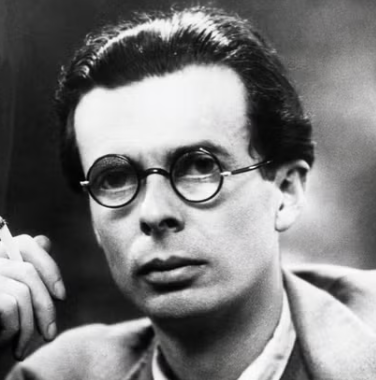
Proverbs are always platitudes until you have personally experienced the truth of them.
▼
Source
source
Part IV: America,Jesting Pilate: The Diary of a Journey, 1926
1 month 1 week ago
[W]hen a philosopher addresses himself to... a tyrant, and tells him... tyranny is incompatible with justice, then the philosopher speaks... [and] believes he is speaking the truth, and... takes a risk...
▼
Source
source
[T]hat was Plato's situation with Dionysius in Syracuse... reference... Plato's Seventh Letter, and... The Life of Dion by Plutarch. Ref: 1) Ludwig Edelstein, Plato's seventh letter (1966) 2) Plutarch, Life of Dion
2 weeks ago
All religions so far have been the expression of historical stages of development of individual peoples or groups of peoples. But communism is the stage of historical development which makes all existing religions superfluous and brings about their disappearance.
1 week 4 days ago
Although a poem be not made by counting of syllables upon the fingers, yet "numbers" is the most poetical synonym we have for verse, and "measure" the most significant equivalent for beauty, for goodness, and perhaps even for truth. Those early and profound philosophers, the followers of Pythagoras, saw the essence of all things in number, and it was by weight, measure, and number, as we read in the Bible, that the Creator first brought Nature out of the void.
▼
Source
source
Interpretations of Poetry and Religion (1900), p. 251
2 days ago
Station, power, wealth-how inadequate they have proved! How useless and insecure!
2 days ago
The people are asleep; they remain indifferent. They forge their own chains and do the bidding of their masters to crucify their Christs.
▼
Source
source
(p. 304)
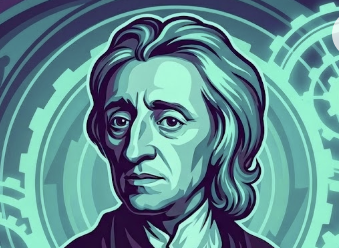
1 month 3 weeks ago
New opinions are always suspected, and usually opposed, without any other reason but because they are not already common.
▼
Source
source
Dedicatory epistle, as quoted in Fred R Shapiro (2006). The Yale Book of Quotations. Yale University Press. p. 468. ISBN 0-300-10798-6.
5 days ago
The aim of jazz is the mechanical reproduction of a regressive moment, a castration symbolism. 'Give up your masculinity, let yourself be castrated,' the eunuchlike sound of the jazz band both mocks and proclaims, 'and you will be rewarded, accepted into a fraternity which shares the mystery of impotence with you, a mystery revealed at the moment of the initiation rite.
▼
Source
source
Perennial Fashion - Jazz (1978), Prisms, p. 129, as translated by Samuel Weber and Shierry Weber
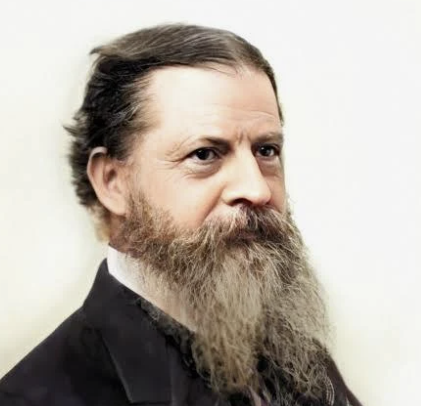
2 weeks 1 day ago
The quality of feeling is the true psychical representative of the first category of the immediate as it is in its immediacy, of the present in its direct positive presentness. Qualities of feeling show myriad-fold variety, far beyond what the psychologists admit. This variety however is in them only insofar as they are compared and gathered into collections. But as they are in their presentness, each is sole and unique; and all the others are absolute nothingness to it - or rather much less than nothingness, for not even a recognition as absent things or as fictions is accorded to them. The first category, then, is Quality of Feeling, or whatever is such as it is positively and regardless of aught else.
▼
Source
source
Lecture II : The Universal Categories, § 1 : Presentness, CP 5.44
1 week 4 days ago
Enter by the narrow gate; for wide is the gate and broad is the way that leads to destruction, and there are many who go in by it. Because narrow is the gate and difficult is the way which leads to life, and there are few who find it.
▼
Source
source
Matthew 7:13-14 (NKJV) (Also Luke 13:24)

1 month 1 week ago
It is sweet and honorable to die for one's country.
▼
Source
source
Book III, ode ii, line 13
1 month ago
Remind yourself that all men assert that wisdom is the greatest good, but that there are few who strenuously seek out that greatest good.
▼
Source
source
Pythagorean Ethical Sentences From Stobæus
CivilSimian.com created by AxiomaticPanic, CivilSimian, Kalokagathia