

1 month 2 weeks ago
...the prisoner's dreams is the guard's spirituality.
▼
Source
source
p. 400

1 month 2 weeks ago
The particularity (Jeweiligkeit) of the places and their manifoldness are grounded in space, and the particularity of the time points is grounded in time. That basic characteristic of the thing, that essential determination of the thingness of the thing to be this one (je dieses), is grounded in the essence of space and time. Our question "What is a thing?" includes, therefore, the questions "What is space?" and "What is time?" It is customary The particularity (Jeweiligkeit) os the places.
▼
Source
source
p. 16

1 month 1 week ago
Now his principal doctrines were these. That atoms and the vacuum were the beginning of the universe; and that everything else existed only in opinion. (trans. Yonge 1853) The first principles of the universe are atoms and empty space; everything else is merely thought to exist.
▼
Source
source
(trans. by Robert Drew Hicks 1925) Often paraphrased as "Nothing exists except atoms and empty space; everything else is opinion."
2 weeks 2 days ago
All religions are cruel, all founded on blood; for all rest principally on the idea of sacrifice - that is, on the perpetual immolation of humanity to the insatiable vengeance of divinity.
1 month 2 weeks ago
The consciousness of being betrayed is to the collective consciousness of a sacred group what a certain form of schizophrenia is to the individual...it is a form of madness.
▼
Source
source
p. 193

2 months 2 weeks ago
Christ speaks of two debtors, one of whom owed much and the other little, and who both found forgiveness. He asks: Which of these two ought to love more? The answer: The one who has forgiven much. When you love much, you are forgiven much-and when you are forgiven much, you love much. See here the blessed recurrence of salvation in love!
2 months 4 days ago
The inclination to seek the truth is safer than the presumption which regards unknown things as known.
▼
Source
source
(Cambridge: 2002), Book 9, Chapter 1, p. 24

1 month ago
Evil destroyeth itself.
1 month 2 weeks ago
Truth is a shining goddess, always veiled, always distant, never wholly approachable, but worthy of all the devotion of which the human spirit is capable.
▼
Source
source
Fact and Fiction (1961), Part II, Ch. 10: "University Education", p. 153
1 week 2 days ago
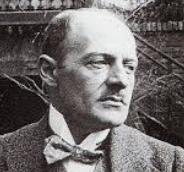
In ressentiment morality, love for the "small," the "poor," the "weak," and the "oppressed" is really disguised hatred, repressed envy, an impulse to detract, etc., directed against the opposite phenomena: "wealth," "strength," "power," "largesse." When hatred does not dare to come out into the open, it can be easily expressed in the form of ostensible love-love for something which has features that are the opposite of those of the hated object. This can happen in such a way that the hatred remains secret. When we hear that falsely pious, unctuous tone (it is the tone of a certain "socially-minded" type of priest), sermonizing that love for the "small" is our first duty, love for the "humble" inspirit, since God gives "grace" to them, then it is often only hatred posing as Christian love.
▼
Source
source
L. Coser, trans. (1961), pp. 96-97

1 month 2 weeks ago
In philosophy the race is to the one who can run slowest-the one who crosses the finish line last.
▼
Source
source
p. 40e
2 months 1 day ago
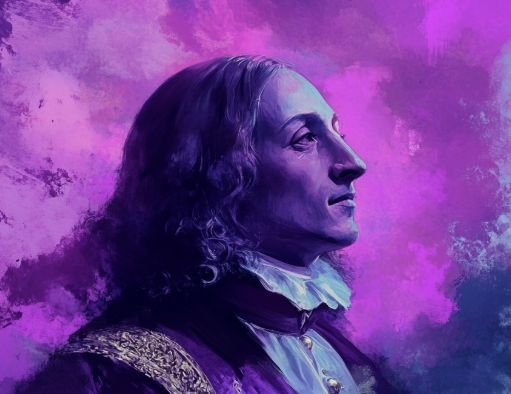
If it is pleasing to observe in nature her desire to paint God in all his works, in which we see some traces of him because they are his images, how much more just is it to consider in the productions of minds the efforts which they make to imitate the essential truth, even in shunning it, and to remark wherein they attain it and wherein they wander from it, as I have endeavored to do in this study.
2 months 1 week ago
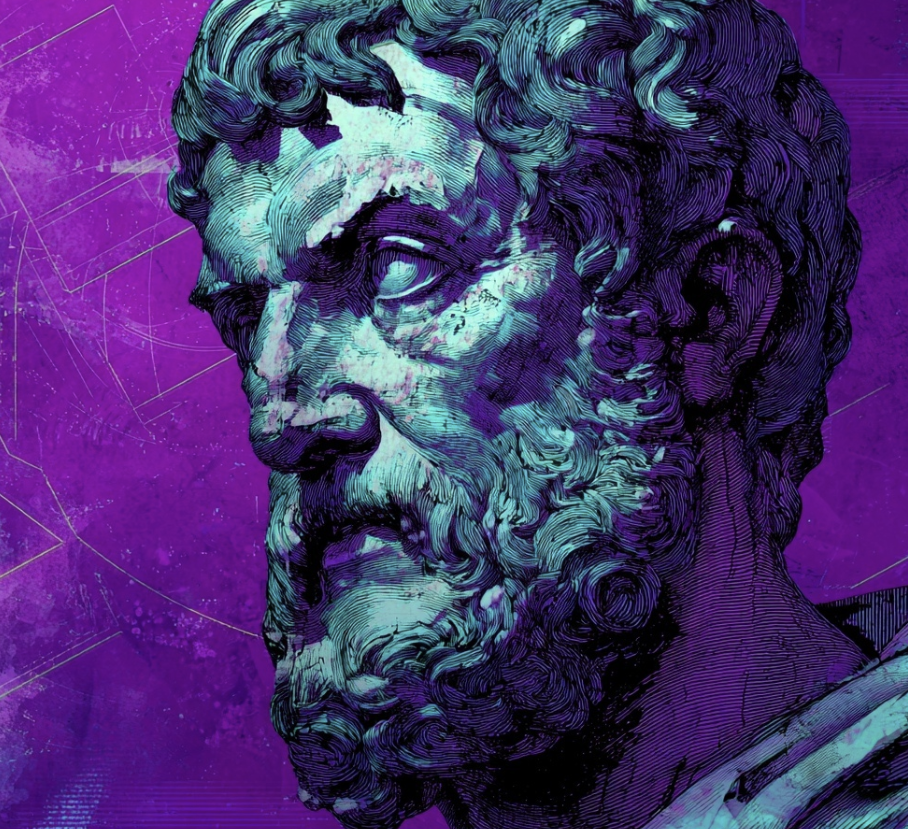
If you reject absolutely any single sensation without stopping to discriminate with respect to that which awaits confirmation between matter of opinion and that which is already present, whether in sensation or in feelings or in any immediate perception of the mind, you will throw into confusion even the rest of your sensations by your groundless belief and so you will be rejecting the standard of truth altogether. If in your ideas based upon opinion you hastily affirm as true all that awaits confirmation as well as that which does not, you will not escape error, as you will be maintaining complete ambiguity whenever it is a case of judging between right and wrong opinion.
2 weeks 5 days ago
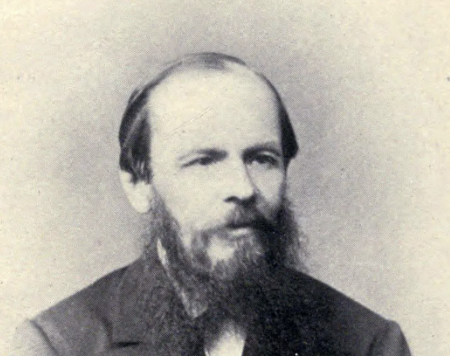
People talk sometimes of bestial cruelty, but that's a great injustice and insult to the beasts; a beast can never be so cruel as a man, so artistically cruel.

2 weeks 5 days ago
If there is to be any philosophy at all, this contradiction must be resolved - and the solution of this problem, or answer to the question: how can we think both of Presentations as conforming to objects, and objects as conforming to presentations? is, not the first, but the highest task of transcendental philosophy.
2 weeks 2 days ago
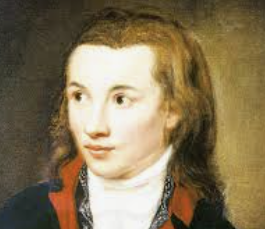
Nature is an Æolian Harp, a musical instrument; whose tones again are keys to higher strings in us.

2 days ago
Not all women, in fact, very few, have had the good fortune to live and work among women and men actively involved in the feminist movement. Many of us live in circumstances and environments where we must engage in feminist struggle alone, with only occasional support and affirmation.
▼
Source
source
Acknowledgments.
3 days ago
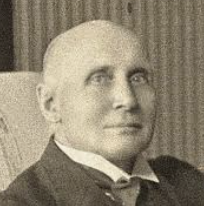
Ninety percent of our lives is governed by emotion. Our brains merely register and act upon what is telegraphed to them by our bodily experience. Intellect is to emotion as our clothes are to our bodies; we could not very well have civilized life without clothes, but we would be in a poor way if we had only clothes without bodies.
▼
Source
source
Ch. 29, June 10, 1943.
1 month 2 weeks ago
Since the great foundation of fear is pain, the way to harden and fortify children against fear and danger is to accustom them to suffer pain. This 'tis possible will be thought, by kind parents, a very unnatural thing towards their children; and by most, unreasonable...
▼
Source
source
Sec. 115
2 weeks 4 days ago
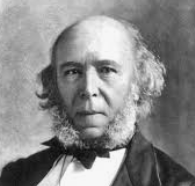
Those who cavalierly reject the Theory of Evolution, as not adequately supported by facts, seem quite to forget that their own theory is supported by no facts at all. Like the majority of men who are born to a given belief, they demand the most rigorous proof of any adverse belief, but assume that their own needs none.
5 days ago
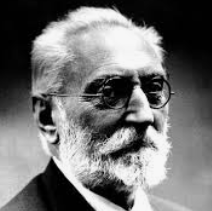
For what is specific in the Catholic religion is immortalization and not justification, in the Protestant sense. Rather is this latter ethical. It is from Kant, in spite of what orthodox Protestants may think of him, that Protestantism derived its penultimate conclusions - namely, that religion rests upon morality, and not morality upon religion, as in Catholicism.

2 months 3 weeks ago
A thinker sees his own actions as experiments and questions as attempts to find out something. Success and failure are for him answers above all.
3 weeks 2 days ago
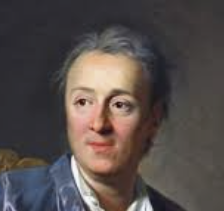
The more man ascends through the past, and the more he launches into the future, the greater he will be, and all these philosophers and ministers and truth-telling men who have fallen victims to the stupidity of nations, the atrocities of priests, the fury of tyrants, what consolation was left for them in death? This: That prejudice would pass, and that posterity would pour out the vial of ignominy upon their enemies. O Posterity! Holy and sacred stay of the unhappy and the oppressed; thou who art just, thou who art incorruptible, thou who findest the good man, who unmaskest the hypocrite, who breakest down the tyrant, may thy sure faith, thy consoling faith never, never abandon me!
▼
Source
source
As quoted in "Diderot" in The Great Infidels (1881) by Robert Green Ingersoll; The Works of Robert G. Ingersoll Vol. III (1900), p. 367
1 month 2 weeks ago
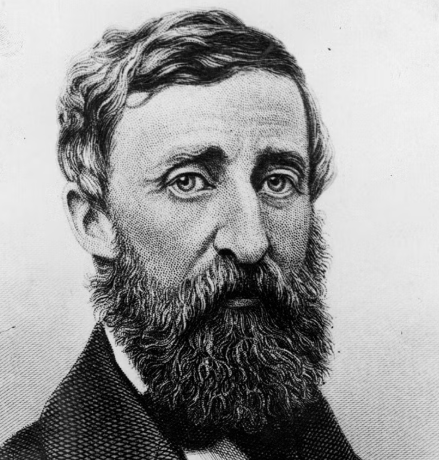
Man flows at once to God when the channel of purity is open.
1 month 3 weeks ago
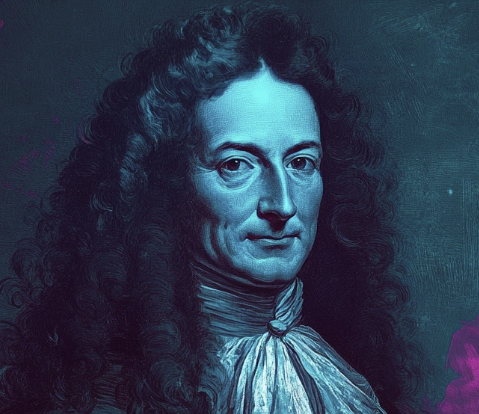
The consequences of beliefs that go against the providence of a perfectly good, wise, and just God, or against that immortality of souls which lays them open to the operations of justice.... I even find that somewhat similar opinions, by stealing gradually into the minds of men of high station who rule the rest and on whom affairs depend, and by slithering into fashionable books, are inclining everything toward the universal revolution with which Europe is threatened, and are completing the destruction of what still remains in the world of the generous Greeks and Romans who placed love of country and of the public good, and the welfare of future generations before fortune and even before life.
▼
Source
source
Nouveaux essais sur l'entendement humain, 1704

1 month 2 weeks ago
And then one babbles - 'if only I could bear it, or the worst of it, or any of it, instead of her.' But one can't tell how serious that bid is, for nothing is staked on it. If it suddenly became a real possibility, then, for the first time, we should discover how seriously we had meant it. But is it ever allowed? It was allowed to One, we are told, and I find I can now believe again, that He has done vicariously whatever can be done. He replies to our babble, 'you cannot and dare not. I could and dared.'
1 month 2 weeks ago
Olympian bards who sung Divine ideas below, Which always find us young And always keep us so.
▼
Source
source
Ode to Beauty, st. 2
2 weeks 5 days ago
You seek life, and a godly fire Gushes and gleams for you out of the earth, As, with shuddering long, you Hurl yourself down to the flames of the Etna. So by a queen's wanton whim Pearls were dissolved in wine- heed her not! What folly, poet, to cast your riches Into that bright and bubbling cup! Yet still are you holy to me, as the might of the earth That bore you away, audaciously perishing! And I would follow the hero into the depths Did love not hold me.
▼
Source
source
"Empedokles"
3 weeks 2 days ago
The most dangerous madmen are those created by religion, and ... people whose aim is to disrupt society always know how to make good use of them on occasion.

3 weeks 3 days ago
Be substantially great in thyself, and more than thou appearest unto others.
▼
Source
source
Part I, Section XIX

1 month 3 weeks ago
There is a great difference between the Idols of the human mind and the Ideas of the divine. That is to say, between certain empty dogmas, and the true signatures and marks set upon the works of creation as they are found in nature.
▼
Source
source
Aphorism 23

1 week 2 days ago
No criticism can be brought against a branch of technical science from outside; no thought fitted out with the knowledge of a period and setting its course by definite historical aims could have anything to say to the specialist. Such thought and the critical, dialectical element it communicates to the process of cognition, thereby maintaining conscious connection between that process and historical life, do not exist for empiricism; nor do the associated categories, such as the distinction between essence and appearance, identity in change, and rationality of ends, indeed, the concept of man, of personality, even of society and class taken in the sense that presupposes specific viewpoints and directions of interest.
▼
Source
source
p. 145.
2 weeks 5 days ago
They made and recorded a sort of institute and digest of anarchy, called the rights of man, in such a pedantic abuse of elementary principles as would have disgraced boys at school; but this declaration of rights was worse than trifling and pedantic in them; as by their name and authority they systematically destroyed every hold of authority by opinion, religious or civil, on the minds of the people. By this mad declaration they subverted the state; and brought on such calamities as no country, without a long war, has ever been known to suffer, and which may in the end produce such a war, and perhaps, many such.
▼
Source
source
Speech in the House of Commons (9 February 1790), quoted in The Parliamentary History of England, From the Earliest Period to the Year 1803, Vol. XXVIII (1816), column 358
1 month 1 week ago
To abjure the notion of the "truly human" is to abjure the attempt to divinize the self as a replacement for a divinized world.
▼
Source
source
Contingency, Irony, and Solidarity (1989), p. 35
2 weeks 5 days ago
We must all obey the great law of change. It is the most powerful law of nature, and the means perhaps of its conservation.
▼
Source
source
Letter to Sir Hercules Langrishe

2 months 2 weeks ago
The words that reverberate for us at the confines of this long adventure of rebellion are not formulas for optimism, for which we have no possible use in the extremities of our unhappiness, but words of courage and intelligence which, on the shores of the eternal seas, even have the qualities of virtue.
1 month 2 weeks ago
Whatever we know without inference is mental.
▼
Source
source
Human Knowledge: Its Scope and Limits (1948), p. 224
1 month 2 weeks ago
Single-mindedness is all very well in cows or baboons; in an animal claiming to belong to the same species as Shakespeare it is simply disgraceful.
▼
Source
source
Do What You Will, 1929
3 weeks 3 days ago
They that endeavour to abolish vice destroy also virtue, for contraries, though they destroy one another, are yet the life of one another.
▼
Source
source
Section 4

1 month 3 weeks ago
The Virgin Mary remains in the middle between Christ and humankind. For in the very moment he was conceived and lived, he was full of grace. All other human beings are without grace, both in the first and second conception. But the Virgin Mary, though without grace in the first conception, was full of grace in the second ... whereas other human beings are conceived in sin, in soul as well as in body, and Christ was conceived without sin in soul as well as in body, the Virgin Mary was conceived in body without grace but in soul full of grace.
▼
Source
source
As quoted in Anderson, H. George; Stafford, J. Francis; Burgess, Joseph A., eds. (1992). The One Mediator, The Saints, and Mary. Lutherans and Catholics in Dialogue. VIII. Minneapolis: Augsburg. ISBN 0-8066-2579-1., p. 236
3 weeks 2 days ago
We swallow greedily any lie that flatters us, but we sip only little by little at a truth we find bitter.
1 month 2 weeks ago
Manufacture was all the time sheltered by protective duties in the hoe market, by monopolies in the colonial market, and broad as much as possible by differential duties.
▼
Source
source
ibid, pp. 183
2 weeks 2 days ago
Freedom is the absolute right of every human being to seek no other sanction for his actions but his own conscience, to determine these actions solely by his own will, and consequently to owe his first responsibility to himself alone.
▼
Source
source
As quoted in Anarchism: From Theory to Practice, Daniel Guérin, New York: NY, Monthly Review Press (1970) p. 31
1 month 2 weeks ago
But you must see that if two things are alike, then it is a further question whether the first is copied from the second, or the second from the first, or both from a third.''What would the third be?''Some have thought that all these loves were copies of our love for the Landlord.'
▼
Source
source
Pilgrim's Regress 59
Just now
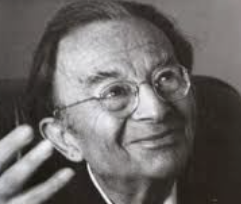
I believe that one can and must hope for a sane society that furthers man's capacity to love his fellow men, to work and create, to develop his reason and his objectivity of a sense of himself that is based on the experience of his productive energy. I believe that one can and must hope for the collective regaining of a mental health that is characterized by the capacity to love and to create...
1 week 3 days ago
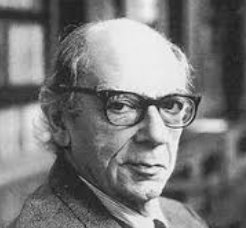
Everyone knows what made Berkeley notorious. He said that there were no material objects. He said the external world was in some sense immaterial, that nothing existed save ideas - ideas and their authors. His contemporaries thought him very ingenious and a little mad.

2 months 2 weeks ago
The purpose of aphorisms is to keep fools who have memorised them from having nothing to say.
1 month 2 weeks ago
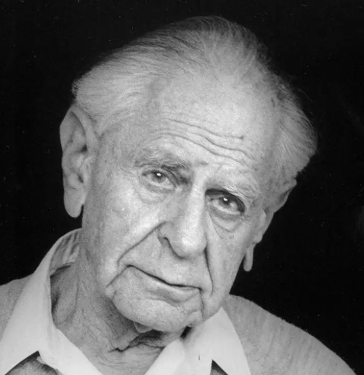
Our aim as scientists is objective truth; more truth, more interesting truth, more intelligible truth. We cannot reasonably aim at certainty. Once we realize that human knowledge is fallible, we realize also that we can never be completely certain that we have not made a mistake.

2 weeks 6 days ago
We fund wars but not healthcare, bombs but not schools, empire but not infrastructure. Military spending is jobs program for districts, profit for contractors, political power for hawks. The military-industrial complex bleeds resources that could transform lives, wasted on death.
CivilSimian.com created by AxiomaticPanic, CivilSimian, Kalokagathia