


1 month 2 weeks ago
But you must see that if two things are alike, then it is a further question whether the first is copied from the second, or the second from the first, or both from a third.''What would the third be?''Some have thought that all these loves were copies of our love for the Landlord.'
▼
Source
source
Pilgrim's Regress 59

1 month 2 weeks ago
The particularity (Jeweiligkeit) of the places and their manifoldness are grounded in space, and the particularity of the time points is grounded in time. That basic characteristic of the thing, that essential determination of the thingness of the thing to be this one (je dieses), is grounded in the essence of space and time. Our question "What is a thing?" includes, therefore, the questions "What is space?" and "What is time?" It is customary The particularity (Jeweiligkeit) os the places.
▼
Source
source
p. 16

2 months 1 week ago
To be fond of learning is to be near to knowledge. To practice with vigor is to be near to magnanimity. To possess the feeling of shame is to be near to energy.
1 week 3 days ago
Works of art express space as opportunity for movement and action.
▼
Source
source
p. 217
1 month 2 weeks ago
The hatefulness of a hated person is "real"-in hatred you see men as they are; you are disillusioned; but the loveliness of a loved person is merely a subjective haze concealing a "real" core of sexual appetite or economic association. Wars and poverty are "really" horrible; peace and plenty are mere physical facts about which men happen to have certain sentiments.
▼
Source
source
Letter XXX
1 month 2 weeks ago
The wisest man preaches no doctrines; he has no scheme; he sees no rafter, not even a cobweb, against the heavens. It is clear sky. If I ever see more clearly at one time than at another, the medium through which I see is clearer.

3 weeks 2 days ago
In no other country in the world is the love of property keener or more alert than in the United States, and nowhere else does the majority display less inclination toward doctrines which in any way threaten the way property is owned.
▼
Source
source
Book Three, Chapter XXI.

2 months 3 weeks ago
This is the mistake which I seem to make eternally, that I imagine the sufferings of others as far greater than they really are. Ever since my childhood, the proposition, my greatest dangers lie in pity, has been confirmed again and again.
1 month 2 weeks ago
Nothing contributes more to nourish elevation of sentiments in a people, than the large and free character of their habitations.
▼
Source
source
(p. 55)

3 weeks 3 days ago
I could never divide myself from any man upon the difference of an opinion, or be angry with his judgement for not agreeing with me in that, from which perhaps within a few days I should dissent myself.
▼
Source
source
Section 6
2 weeks 1 day ago
To say that authority, whether secular or religious, supplies no ground for morality is not to deny the obvious fact that it supplies a sanction.
▼
Source
source
"The Meaning of Life".
1 month 2 weeks ago
Every natural fact is a symbol of some spiritual fact.
▼
Source
source
Language
2 weeks 4 days ago
If a single cell, under appropriate conditions, becomes a man in the space of a few years, there can surely be no difficulty in understanding how, under appropriate conditions, a cell may, in the course of untold millions of years, give origin to the human race.
▼
Source
source
Vol. I, Part III: The Evolution of Life, Ch. 3 : General Aspects of the Evolution
1 month 2 weeks ago
If we must absolutely mention this state of affairs, I suggest that we call ourselves "absent", that is more proper.
▼
Source
source
Estelle, refusing to use the word "dead", Act 1, sc. 5

2 weeks ago
Woes and wonders of power, that tonic hell, synthesis of poison and panacea.
1 month 3 weeks ago
To require that a so-called layman should not use his own reason in religious matters, particularly since religion is to be appreciated as moral, but instead follow the appointed clergyman and thus someone else's reason, is an unjust demand because as to morals every man must account for all his doings. The clergyman will not and even cannot assume such a responsibility.
▼
Source
source
Kant, Immanuel (1996), pages 94-95
2 weeks ago
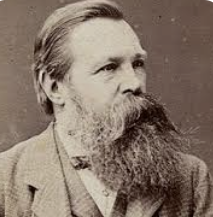
The irony of world history turns everything upside down. We, the "revolutionaries," the "rebels"-we are thriving far better on legal methods than on illegal methods and revolt. The parties of order, as they call themselves, are perishing under the legal conditions created by themselves. They cry despairingly with Odilon Barrot: la légalité notes tue, legality is the death of us; whereas we, under this legality, get firm muscles and rosy cheeks and look like eternal life.
▼
Source
source
Introduction (1895) to Marx's The Class Struggles in France (1848-50), p. 27

2 months 4 days ago
Nobody should ever doubt that in the washing of rebirth (Titus 3:5) absolutely all sins, from the least to the greatest, are altogether forgiven.
▼
Source
source
229E:2
1 month 2 weeks ago
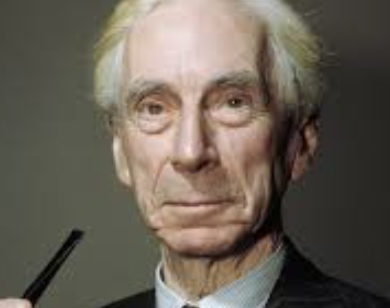
The conception of the necessary unit of all that is resolves itself into the poverty of the imagination, and a freer logic emancipates us from the straitwaistcoated benevolent institution which idealism palms off as the totality of being.
▼
Source
source
p. 9
3 weeks 2 days ago
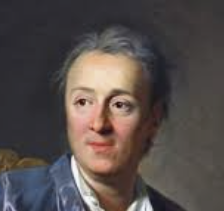
The blood of Jesus Christ can cover a multitude of sins, it seems to me.
1 month 2 weeks ago
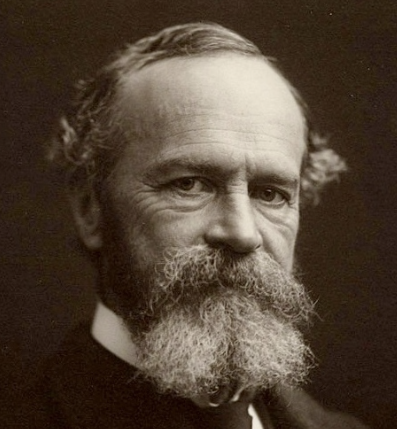
There are moments of sentimental and mystical experience. . . that carry an enormous sense of inner authority and illumination with them when they come. But they come seldom, and they do not come to everyone; and the rest of life makes either no connection with them, or tends to contradict them more than it confirms them. Some persons follow more the voice of the moment in these cases, some prefer to be guided by the average results. Hence the sad discordancy of so many of the spiritual judgments of human beings; a discordancy which will be brought home to us acutely enough before these lectures end.
▼
Source
source
Lecture I, "Religion and Neurology"

2 months 6 days ago
How long will men dare to call anything expedient that is not right? Can odium and infamy be of service to any empire, which ought to be supported by glory and by the good-will of its allies? I was often at variance even with my friend Cato. He seemed to me to guard the treasury and the revenues too obstinately, to refuse everything to the farmers of the revenue, and many things to our allies; while we ought to be generous to our allies, and to deal with the farmers of the revenue as leniently as we individually do with our own tenants, especially as the union of orders to which such a course would conduce is for the well-being of the state.
▼
Source
source
Book III, Sect. 22, as translated by Andrew P. Peabody
2 weeks ago
How important can it be that I suffer and think? My presence in this world will disturb a few tranquil lives and will unsettle the unconscious and pleasant naiveté of others. Although I feel that my tragedy is the greatest in history - greater than the fall of empires - I am nevertheless aware of my total insignificance. I am absolutely persuaded that I am nothing in this universe; yet I feel that mine is the only real existence.
1 month 6 days ago
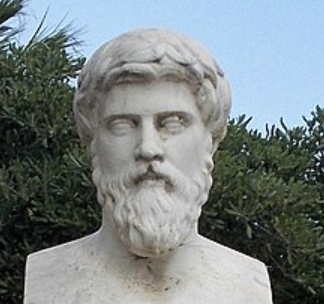
To Harmodius, descended from the ancient Harmodius, when he reviled Iphicrates [a shoemaker's son] for his mean birth, "My nobility," said he, "begins in me, but yours ends in you."
▼
Source
source
54 Iphicrates
2 weeks 2 days ago
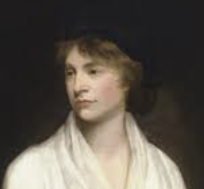
Should it be proved that woman is naturally weaker than man, from whence does it follow that it is natural for her to labour to become still weaker than nature intended her to be? Arguments of this cast are an insult to common sense, and savour of passion. The divine right of husbands, like the divine right of kings, may, it is to be hoped, in this enlightened age, be contested without danger, and though conviction may not silence many boisterous disputants, yet, when any prevailing prejudice is attacked, the wise will consider, and leave the narrow-minded to rail with thoughtless vehemence at innovation.
▼
Source
source
Ch. 3

1 month 2 weeks ago
The Theophilanthropists do not call themselves the disciples of such or such a man. They avail themselves of the wise precepts that have been transmitted by writers of all countries and in all ages.
▼
Source
source
Introduction

2 months 2 weeks ago
By such reflections and by the continuance in them of a divine nature, the qualities which we have described grew and increased among them; but when the divine portion began to fade away, and became diluted too often and too much with the mortal admixture, and the human nature got the upper hand, they then, being unable to bear their fortune, behaved unseemly, and to him who had an eye to see grew visibly debased, for they were losing the fairest of their precious gifts; but to those who had no eye to see the true happiness, they appeared glorious and blessed at the very time when they were full of avarice and unrighteous power.

1 month ago
Despise all those things which when liberated from the body you will not want; invoke the Gods to become your helpers.
▼
Source
source
Pythagorean Ethical Sentences From Stobæus
1 month 2 weeks ago
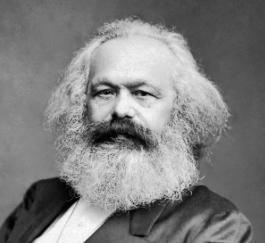
We have just seen that, apart from money-capital, circulating capital is only another name for commodity-capital. But to the extent that labour power circulates in the market,it is not capital, no form of commodity-capital. It is not capital at all; the labourer is not a capitalist, although he brings a commodity to market, namely his own skin.
▼
Source
source
Vol. II, Ch. X, p. 211.
Just now
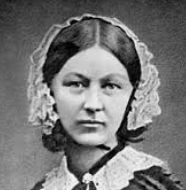
What the horrors of war are, no one can imagine - they are not wounds and blood and fever, spotted and low, or dysentery, chronic and acute, cold and heat and famine - they are intoxication, drunken brutality, demoralization and disorder on the part of the inferior, jealousies, meanness, indifference, selfish brutality on the part of the superior.
▼
Source
source
Letter (5 May 1855), published in Florence Nightingale : An Introduction to Her Life and Family (2001), edited by Lynn McDonald, p. 141
2 months 1 day ago
For as old age is that period of life most remote from infancy, who does not see that old age in this universal man ought not to be sought in the times nearest his birth, but in those most remote from it?
▼
Source
source
Preface to the Treatise on Vacuum, c.1651
1 month 2 weeks ago
Those things which now most engage the attention of men, as politics and the daily routine, are, it is true, vital functions of human society, but should be unconsciously performed, like the corresponding functions of the physical body. They are infra-human, a kind of vegetation. I sometimes awake to a half-consciousness of them going on about me, as a man may become conscious of some of the processes of digestion in a morbid state, and so have the dyspepsia, as it is called.
▼
Source
source
p. 495
2 weeks 1 day ago
Among all my patients in the second half of life-that is to say, over thirty-five-there has not been one whose problem in the last resort was not that of finding a religious outlook on life. It is safe to say that every one of them fell ill because he had lost what the living religions of every age have given their followers, and none of them has been really healed who did not regain his religious outlook.
▼
Source
source
Chap. 11 (Psychotherapists or the Clergy), p. 229

2 months 2 days ago
Men are eager to tread underfoot what they have once too much feared.
▼
Source
source
Book V, line 1140 (tr. Rouse)

2 months 2 weeks ago
The rest of the story, to Grand's thinking, was very simple. The common lot of married couples. You get married, you go on loving a bit longer, you work. And you work so hard that it makes you forget to love.
3 days ago
In the first place for over two centuries religion has been on the defensive, and on a weak defensive. The result of the repetition of this undignified retreat, during many generations, has at last almost entirely destroyed the intellectual authority of religious thinkers. Consider this contrast: when Darwin or Einstein proclaim theories which modify our ideas, it is a triumph for science. We do not go about saying that there is another defeat for science, because its old ideas have been abandoned. We know that another step of scientific insight has been gained.Religion will not regain its old power until it can face change in the same spirit as does science. Its principles may be eternal, but the expression of those principles requires continual development.
▼
Source
source
Ch. 12: "Religion and Science", p. 263
1 month 2 weeks ago
Who does not see that we are likely to ascertain the distinctive significance of religious melancholy and happiness, or of religious trances, far better by comparing them as conscientiously as we can with other varieties of melancholy, happiness, and trance, than by refusing to consider their place in any more general series, and treating them as if they were outside of nature's order altogether?
▼
Source
source
Lecture I, "Religion and Neurology"
2 weeks ago
Fourth, this supreme law, which is celestial and living harmony, does not so much as demand that the special ideas shall surrender their peculiar arbitrariness and caprice entirely; for that would be self-destructive. It only requires that they influence and be influenced by one another.
1 month 1 week ago
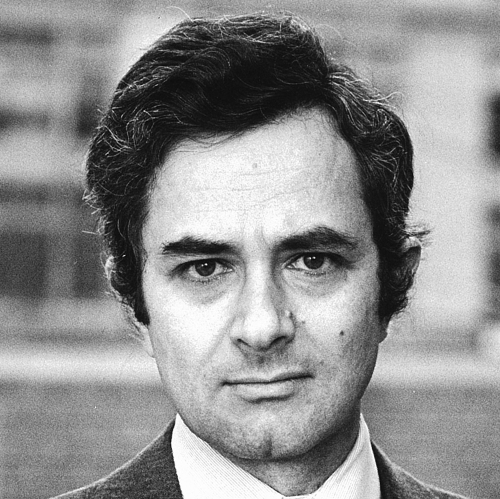
The organism does not have a point of view: the person or creature does.
▼
Source
source
"Panpsychism" (1979), p. 189.

1 month 3 weeks ago
Fear of evil is greater than the evil itself.
▼
Source
source
Act III, scene xi
4 days ago
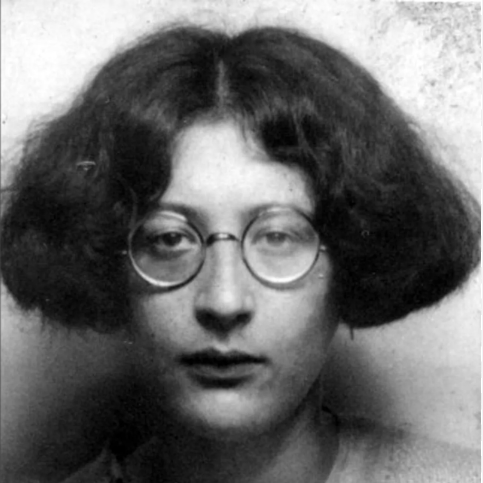
Conformity is an imitation of grace.
▼
Source
source
p. 146

1 day ago
Ritual society is a society of rules. It is based not on virtues but on a passion for rules.
1 week 4 days ago
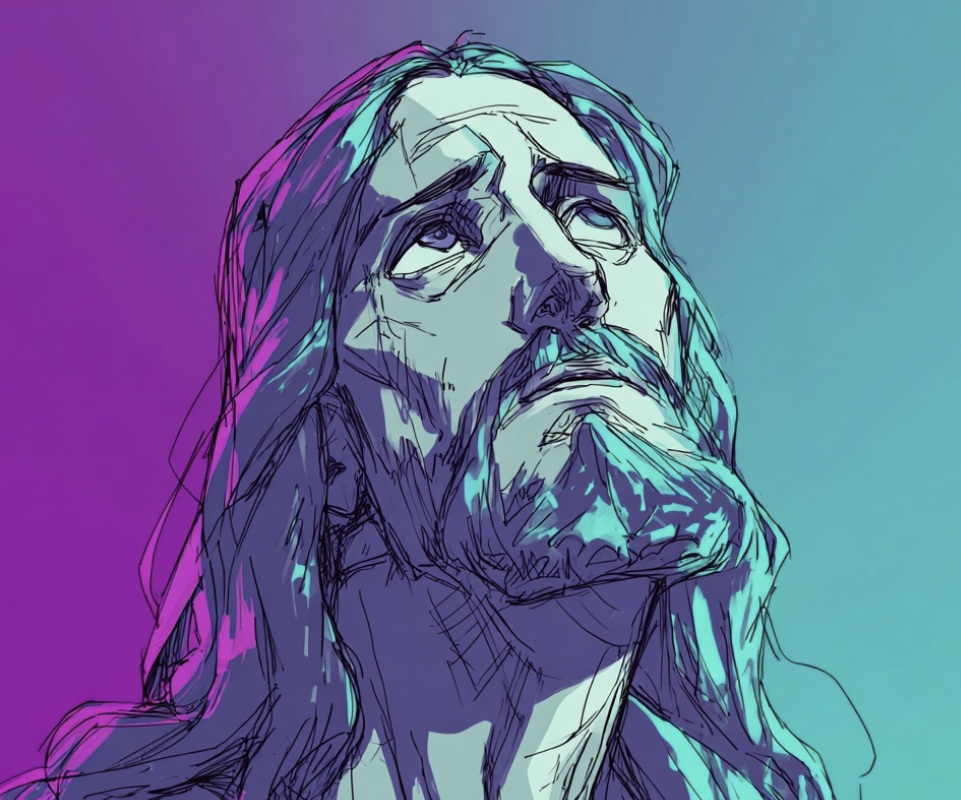
But everyone who hears these sayings of Mine, and does not do them, will be like a foolish man who built his house on the sand: and the rain descended, the floods came, and the winds blew and beat on that house; and it fell. And great was its fall.
▼
Source
source
Matthew 7:24-27 (NKJV) (Also Luke 6:47-49)
Just now
What are novels? What is the secret of the charm of every romance that ever was written? The first thing in a good novel is to place the persons together in circumstances which naturally call out the high feelings and thoughts of the character, which afford food for sympathy between them on these points - romantic events they are called. The second is that the heroine has generally no family ties (almost invariably no mother), or, if she has, these do not interfere with her entire independence. These two things constitute the main charm of reading novels.
1 month 2 weeks ago
Anyone wanting a new house picks one from among those built on speculation or still in process of construction. The builder no longer works for his customers but for the market.
▼
Source
source
Vol. II, Ch. XII, p. 237.

1 day ago
No sacrifice is lost for a great ideal!
▼
Source
source
(p. 135)
1 month 1 week ago
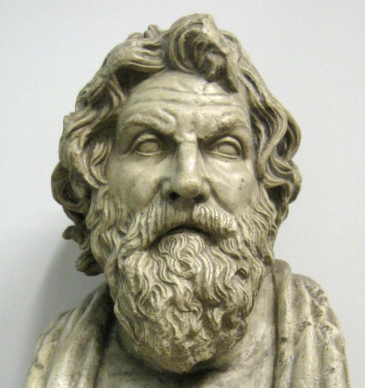
Count all wickedness foreign and alien.
▼
Source
source
§ 5
1 month 2 weeks ago
From our human experience and history, at least as far as I am informed, I know that everything essential and great has only emerged when human beings had a home and were rooted in a tradition. Today's literature is, for instance, largely destructive.
CivilSimian.com created by AxiomaticPanic, CivilSimian, Kalokagathia